
When individual investors, news anchors, and financial analysts ask, “What is the Dow doing right now?” they are rarely looking for a simple numerical value. Instead, they are seeking a pulse check on the American economy. The Dow Jones Industrial Average (DJIA) remains one of the most cited financial benchmarks in the world, serving as a shorthand for the health of the corporate landscape.
Understanding the Dow’s movement requires more than just watching a ticker; it requires an analysis of the macroeconomic forces, corporate earnings, and investor sentiment that drive its 30 constituent members. In today’s complex financial environment, the Dow’s performance is a reflection of how the world’s largest “blue-chip” companies are navigating interest rates, inflation, and shifting consumer behavior.

Decoding the Dow Jones Industrial Average
To understand what the Dow is doing right now, one must first understand what the index actually represents. Unlike the S&P 500 or the Nasdaq Composite, the Dow Jones Industrial Average is a price-weighted index of 30 prominent companies listed on stock exchanges in the United States. This unique structure influences how the index moves and why it sometimes diverges from other market benchmarks.
The Price-Weighted Model
The most critical distinction of the Dow is its price-weighted methodology. In this system, companies with higher stock prices have a greater influence on the index’s total value than those with lower stock prices, regardless of their actual market capitalization. For instance, a $1 move in a high-priced stock like UnitedHealth Group has the same impact on the Dow as a $1 move in a lower-priced stock like Coca-Cola, even if the latter has a different total valuation. When investors ask about the Dow’s movement, they are often seeing the outsized impact of its most expensive shares.
The 30 Blue-Chip Components
The Dow is comprised of “blue-chip” stocks—companies that are household names, financially stable, and leaders in their respective industries. These include giants like Apple, Microsoft, Goldman Sachs, and Home Depot. Because these companies represent a broad cross-section of the economy—from tech and healthcare to retail and finance—the “Industrial” label is largely a legacy term. Today, the Dow is a diversified snapshot of the American corporate engine. When the Dow moves, it tells a story about how these massive entities are responding to the current fiscal environment.
Analyzing Current Market Drivers
The question of what the Dow is doing is inextricably linked to the broader economic climate. The index does not move in a vacuum; it reacts to a specific set of catalysts that dictate whether the market is in a state of accumulation or distribution.
Federal Reserve Policies and Interest Rates
Perhaps the most significant factor influencing the Dow right now is the trajectory of interest rates set by the Federal Reserve. Because the Dow consists of established, often debt-carrying corporations, interest rate hikes can increase borrowing costs and compress profit margins. Conversely, when the Fed signals a pause or a pivot toward cutting rates, the Dow often rallies as investors anticipate cheaper capital and renewed growth. Watching the Dow right now is essentially watching a real-time reaction to the Fed’s battle against inflation.
Inflation and Consumer Spending
Inflation remains a primary concern for the Dow’s retail and consumer-facing components. Companies like Walmart and Procter & Gamble must balance rising input costs with the price sensitivity of the average consumer. If these companies can pass costs onto consumers without losing volume, the Dow remains resilient. However, if “sticky” inflation begins to erode consumer purchasing power, the Dow often reflects this through downward pressure on its consumer staples and discretionary sectors.
Corporate Earnings Cycles
Every quarter, the Dow’s performance is heavily dictated by earnings reports. Because there are only 30 companies, a single “miss” by a heavyweight component can drag the entire index down, even if the other 29 companies are performing well. Right now, investors are hyper-focused on forward guidance. It isn’t just about how much money these companies made in the last three months; it’s about what they expect for the next six to twelve months.
Why “What the Dow is Doing” Matters to Your Portfolio
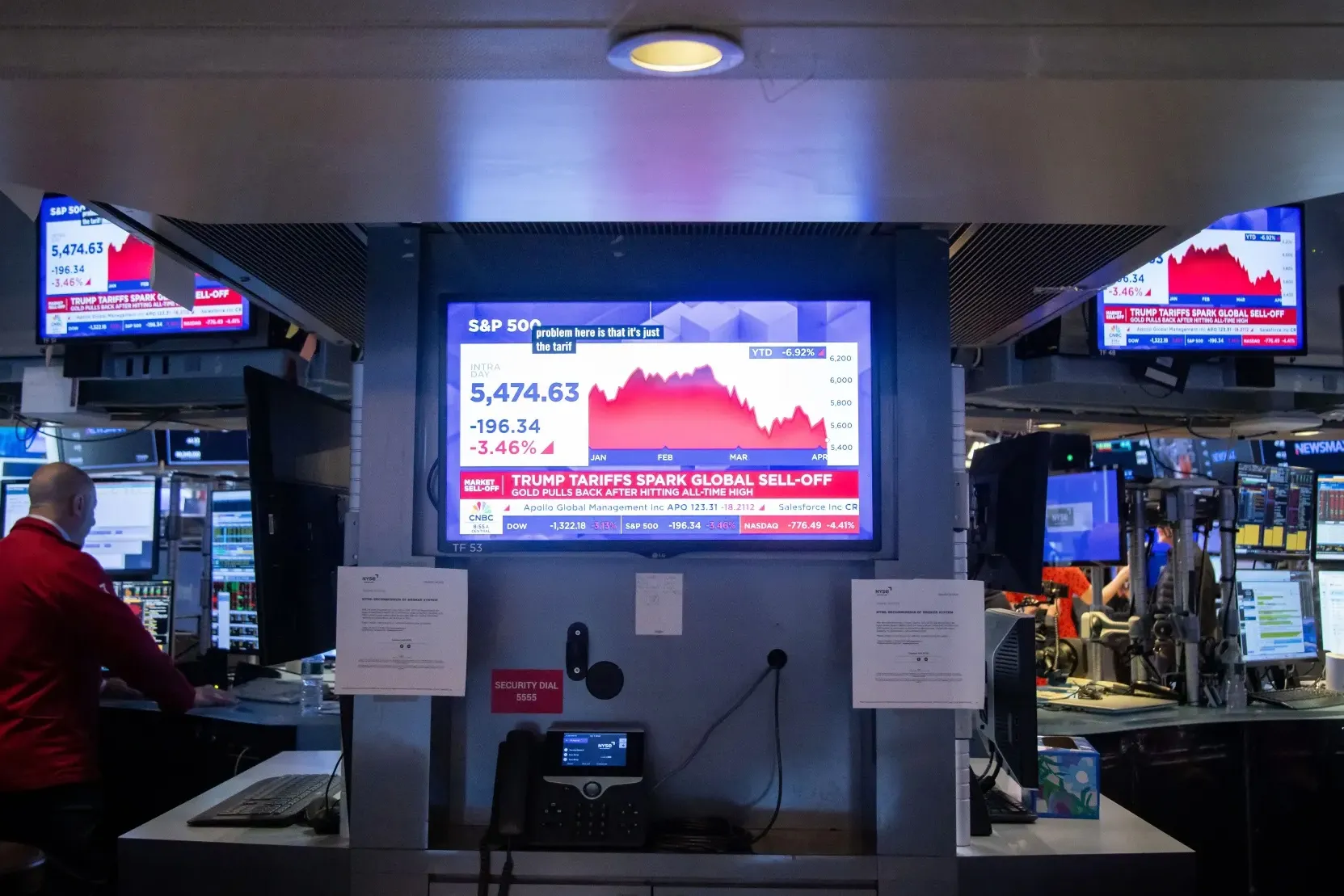
While many sophisticated investors prefer the S&P 500 for its broader representation, the Dow remains a vital tool for personal finance and retirement planning. Its movement provides specific insights that other indices might obscure.
Retirement Portfolio Health
For many Americans, the Dow is the primary indicator of their 401(k) or IRA health. Because the index focuses on stable, dividend-paying companies, it is often viewed as a “safer” barometer for long-term wealth. When the Dow is trending upward, it generally signals that value-oriented, established businesses are thriving—a positive sign for those nearing retirement who prioritize capital preservation and income over aggressive growth.
Economic Sentiment and the “Main Street” Connection
The Dow is often referred to as the “Main Street” index. While the Nasdaq is heavily tech-skewed and often speculative, the Dow contains the companies that provide the goods and services Americans use every day. When the Dow is doing well, it suggests a level of stability in the broader economy. If the Dow begins to lag while the tech-heavy indices soar, it may indicate a “K-shaped” recovery or a disconnect between the speculative market and the actual economy.
Sector Rotation Trends
Watching the Dow allows investors to identify sector rotation. In periods of economic uncertainty, investors often rotate out of high-growth tech stocks and into the “defensive” stocks found in the Dow, such as healthcare and utilities. By monitoring what the Dow is doing relative to the Nasdaq, an investor can determine if the market is in a “risk-on” or “risk-off” posture.
Strategies for Investing in a Fluctuating Market
When the Dow is volatile, the natural instinct for many is to react emotionally. However, understanding the index’s behavior should lead to more calculated financial decisions.
The Power of Dollar-Cost Averaging
Because the Dow is composed of 30 of the world’s strongest companies, it has historically recovered from every downturn it has ever faced. For the individual investor, “what the Dow is doing” on a daily basis should matter less than a consistent investment strategy. Dollar-cost averaging—investing a fixed amount of money at regular intervals—allows you to buy more shares when the Dow is “doing” poorly (prices are low) and fewer shares when it is “doing” well (prices are high).
Diversification Beyond the 30
While the Dow is a great benchmark, it should not be the entirety of an investment portfolio. Because it lacks exposure to small-cap and mid-cap companies, as well as many emerging international markets, investors should use the Dow as a foundation rather than the whole building. A balanced portfolio uses the stability of the Dow’s blue-chip stocks to anchor more aggressive investments elsewhere.
Maintaining a Long-Term Perspective
The Dow Jones Industrial Average was founded in 1896. Since then, it has survived depressions, world wars, pandemics, and various financial crises. The key to successful “Money” management is recognizing that the Dow’s short-term fluctuations are often noise. Whether the index is up 200 points or down 500 points today, the long-term trajectory of the world’s most successful companies has historically been upward.
The Future Outlook for the Industrial Average
As we look at what the Dow is doing right now and where it is headed, we must consider the evolving nature of the global economy and how the index adapts to it.
The Role of Technology in a Traditional Index
The definition of an “Industrial” company has changed. Today, some of the most influential members of the Dow are software and hardware giants. As artificial intelligence and digital transformation continue to reshape business, the Dow will likely continue to swap out “old guard” companies for those that represent the modern economy. This ensures that when people ask what the Dow is doing in ten years, the answer will still be relevant to the current economic landscape.

Global Interdependence
Finally, the Dow’s performance is increasingly tied to global events. Most Dow components derive a significant portion of their revenue from international markets. Therefore, what the Dow is doing right now is also a reflection of China’s growth, Europe’s energy stability, and the strength of the U.S. dollar on the global stage.
In conclusion, “what the Dow is doing right now” is a multifaceted question with a multifaceted answer. It is a story of corporate resilience, federal policy, and the collective psychology of millions of investors. By understanding the mechanics of the index and the forces that drive it, you can move beyond the daily headlines and make more informed, professional decisions regarding your personal finances and investment future.
aViewFromTheCave is a participant in the Amazon Services LLC Associates Program, an affiliate advertising program designed to provide a means for sites to earn advertising fees by advertising and linking to Amazon.com. Amazon, the Amazon logo, AmazonSupply, and the AmazonSupply logo are trademarks of Amazon.com, Inc. or its affiliates. As an Amazon Associate we earn affiliate commissions from qualifying purchases.