
The question “What is a good salary?” is perhaps one of the most subjective inquiries in the realm of personal finance. To a recent college graduate in a rural town, $50,000 might feel like a windfall. To a mid-career professional in a metropolitan hub like New York or San Francisco, $150,000 might feel like barely scraping by.
Ultimately, a “good” salary is not just a raw number; it is a tool. Its quality is measured by its ability to cover your essential needs, fund your lifestyle choices, provide a safety net for the future, and allow for the accumulation of wealth. To define what a good salary looks like for you, we must move beyond the paycheck and look at the intersection of geography, life stage, and financial discipline.

The Relativity of “Good”: Defining Your Financial Baseline
The first step in determining whether a salary is “good” is establishing a baseline for financial health. In professional financial planning, we often look at the functionality of the income rather than the figure itself. A good salary should, at a minimum, satisfy the “50/30/20” rule of thumb while leaving room for inflation-adjusted growth.
The 50/30/20 Framework
A salary is objectively “good” if it allows you to follow the 50/30/20 budget without significant stress. This means 50% of your take-home pay covers “needs” (housing, utilities, groceries, transport), 30% goes toward “wants” (dining out, hobbies, travel), and 20% is directed toward savings and debt repayment. If your salary is so low that “needs” consume 70% or 80% of your income, it cannot be classified as a good salary, regardless of how it compares to the national average.
The Buffer for Inflation and Emergencies
In an era of fluctuating inflation, a good salary must have “purchasing power resilience.” If your income remains stagnant while the cost of eggs, fuel, and rent rises by 5-10%, your salary is effectively shrinking. A truly good salary provides a “buffer”—an excess of income that can absorb price hikes without forcing you to dip into your emergency fund. Furthermore, a good salary should allow you to build an emergency fund of three to six months of expenses within a reasonable timeframe (usually 12 to 18 months).
Psychological Comfort and the “Happiness Ceiling”
Research has often pointed to a “happiness ceiling”—a point where additional income has diminishing returns on daily emotional well-being. While the specific number varies by study (often cited around $75,000 to $105,000 depending on the year and region), a good salary is one that removes “financial noise” from your life. When you no longer have to check your bank balance before buying groceries or a modest dinner out, you have reached the threshold of a good salary.
The Geographic Variable: Purchasing Power Across the Map
You cannot discuss salary without discussing the Cost of Living (COL). A “good” salary is entirely dependent on where you lay your head at night. This is the difference between nominal income (the number on your contract) and real income (what that money actually buys in your local economy).
Regional Disparities and Housing Ratios
The largest expenditure for most individuals is housing. Financial experts generally recommend that you spend no more than 30% of your gross income on housing. In a city where a one-bedroom apartment costs $3,000, a “good” salary must be at least $120,000 to maintain that ratio. However, in a city where that same apartment costs $1,000, a salary of $40,000 provides the same relative standard of living. When evaluating a job offer, one must always calculate the “Real Value” by adjusting for local taxes and cost-of-living indices.
The Impact of the Remote Work Revolution
The rise of remote work has decoupled geography from earning potential, creating a phenomenon where “good” is redefined by arbitrage. If an individual earns a “Silicon Valley salary” while living in a low-cost Midwestern town, their salary moves from “good” to “extraordinary.” This geographic arbitrage is one of the fastest ways to accelerate the path toward Financial Independence (FI). For those in this position, a good salary is one that maintains its high nominal value while the expenses are minimized by location.
Urban vs. Rural Living Expenses
It isn’t just rent that changes; it’s the hidden costs of the environment. Urban living often involves higher costs for services, parking, and food, but might eliminate the need for a car. Rural living might offer cheap land but require high fuel costs and vehicle maintenance. A good salary accounts for these environmental variables, ensuring that your disposable income remains healthy after all localized costs are settled.
Life Stages and Financial Obligations
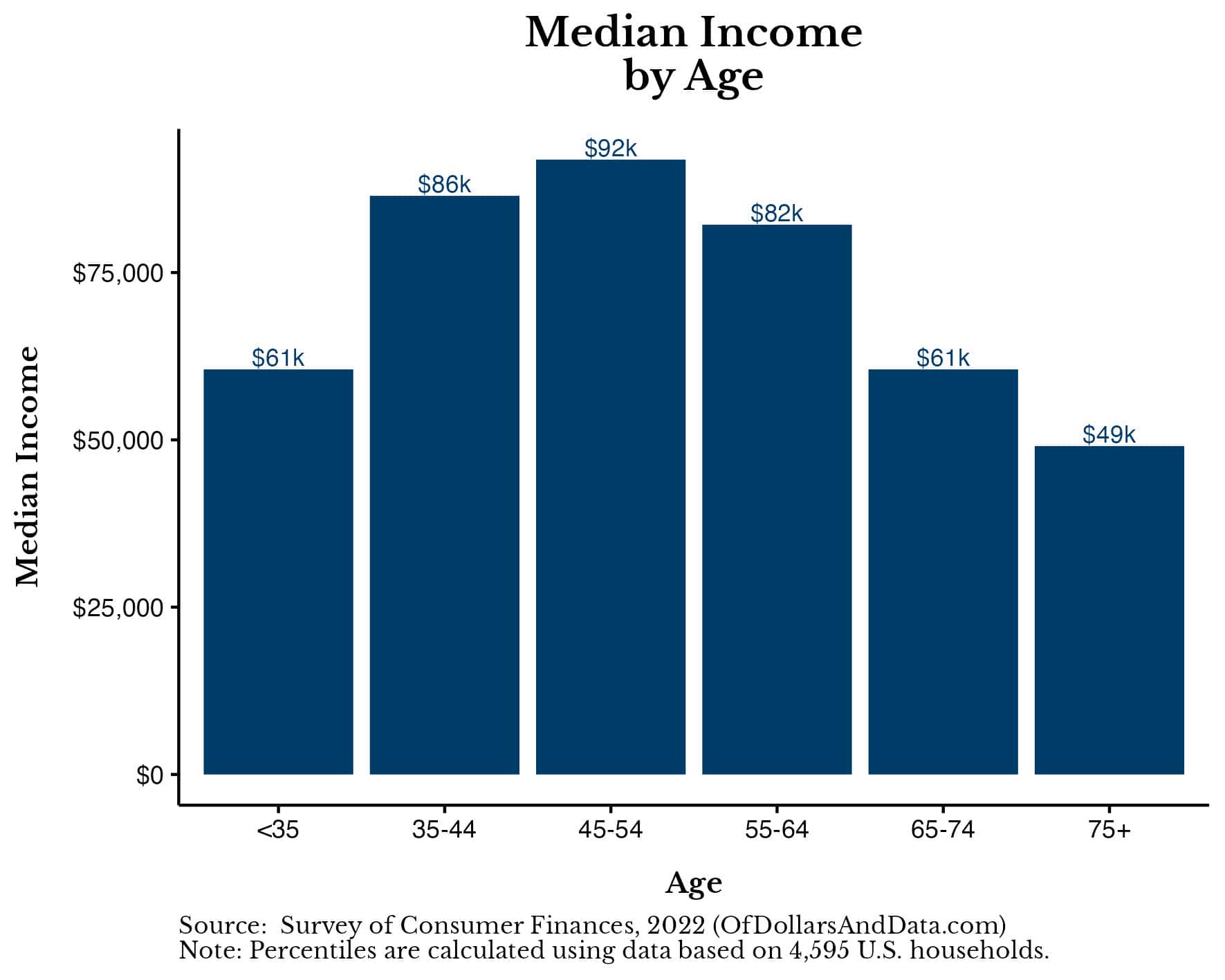
A salary that is “good” for a 22-year-old single person is often “insufficient” for a 40-year-old with three children and a mortgage. To evaluate your earnings, you must look through the lens of your current and upcoming life stages.
The Single Professional vs. The Family Unit
For a single individual, a good salary is one that fosters independence. For a family, the definition shifts toward stability and legacy. A good family salary must cover childcare (which in many regions rivals the cost of a mortgage), education savings, and comprehensive family health insurance. When moving from a single lifestyle to a family-oriented one, a “good” salary requirement often needs to increase by 40-60% to maintain the same quality of life.
Debt Management and Student Loans
A salary of $100,000 is excellent if you have zero debt. However, if you are a medical or law school graduate with $250,000 in student loans, that $100,000 salary is merely a starting point. In this context, a good salary is one that allows for aggressive debt amortization without sacrificing a basic standard of living. If your debt-to-income ratio is skewed, your “nominal” salary might be high, but your “financial health” salary is low.
Planning for the “Third Act”: Retirement
A salary is only good if it accounts for the time when you will no longer be working. If you are earning $80,000 but cannot afford to contribute 15% to your retirement accounts (401k, IRA, or pension), then your salary is not meeting the long-term definition of “good.” A good salary must fund your present and your future simultaneously. As you age, the definition of a good salary often increases because the window for compound interest to work its magic begins to close, requiring higher absolute dollar contributions.
Deconstructing Total Compensation: Beyond the Paycheck
When professionals ask “What is a good salary?”, they often make the mistake of looking only at the “Base Pay” line on a contract. In modern personal finance, total compensation is the more accurate metric of a “good” deal.
The Value of Benefits and Insurance
Health insurance premiums and out-of-pocket maximums can vary by thousands of dollars between employers. A $90,000 salary with a fully funded premium and a low deductible is often financially superior to a $100,000 salary where the employee pays $800 a month for a high-deductible health plan. A good salary package includes high-quality “invisible” income: insurance, dental, vision, and health savings account (HSA) contributions.
Retirement Matching and Bonuses
Employer matching is essentially a guaranteed 100% return on investment. If a company offers a 6% 401k match, that is an immediate 6% raise on your gross income that is often overlooked. Additionally, performance bonuses and profit-sharing can turn a “standard” salary into a “good” one. When calculating if your salary is sufficient, always add the employer’s retirement contributions to your total figure.
Equity, RSUs, and Stock Options
For those in the corporate or startup world, a “good” salary often includes equity. While riskier than cash, Restricted Stock Units (RSUs) or Employee Stock Purchase Plans (ESPPs) can significantly increase your net worth over time. A salary might be lower in cash, but if it includes a significant equity stake in a growing company, it may be the “best” salary you ever earn in terms of long-term wealth creation.
Strategies for Elevating Your Earning Potential
If you have concluded that your current salary is not “good” based on your needs and goals, the focus must shift to wealth-building strategies and income optimization.
Market Research and Skill Up-Leveling
The market pays for value, not for time. To move into a “good” salary bracket, one must identify high-value skills that are in demand. This involves researching industry benchmarks using tools like the Bureau of Labor Statistics, Glassdoor, or Payscale. If your salary is below the 50th percentile for your role and location, it is time to negotiate or move. Continuous learning—obtaining certifications or advanced degrees—is often the catalyst for jumping from an “average” salary to a “good” one.
The Power of Negotiation
Many people miss out on a “good” salary simply because they did not ask for one. Negotiation is a fundamental financial skill. A good salary is often the result of a well-timed conversation backed by data. When negotiating, focus on the ROI (Return on Investment) you bring to the business. By framing your salary in terms of the revenue you generate or the costs you save, you make it easier for the organization to justify a higher pay grade.

Diversifying Income Streams
Finally, a “good” salary is often supplemented by side hustles or passive income. In the modern economy, relying on a single source of income—even a high one—can be a risk. Many of the most financially secure individuals view their “good” salary as the seed money for investments. By using a portion of a healthy salary to buy dividend-paying stocks, real estate, or build a side business, you ensure that your definition of a “good” income eventually transitions from “active labor” to “passive wealth.”
In conclusion, a good salary is a personal metric. It is the amount that allows you to live with dignity today while building a fortress of security for tomorrow. It is not a fixed destination, but a moving target that evolves as your life, your location, and your ambitions grow. By understanding the components of purchasing power, total compensation, and life-stage needs, you can move beyond the surface-level question and start building a financial life that truly supports your goals.
aViewFromTheCave is a participant in the Amazon Services LLC Associates Program, an affiliate advertising program designed to provide a means for sites to earn advertising fees by advertising and linking to Amazon.com. Amazon, the Amazon logo, AmazonSupply, and the AmazonSupply logo are trademarks of Amazon.com, Inc. or its affiliates. As an Amazon Associate we earn affiliate commissions from qualifying purchases.