
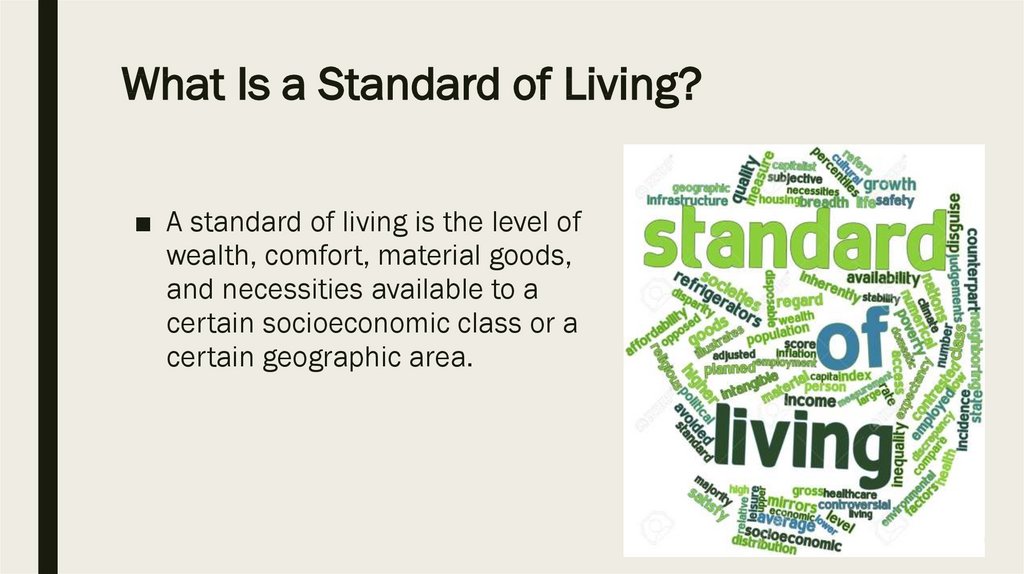
The concept of “standard of living” is a fundamental pillar in the world of finance, economics, and personal wealth management. While it is often used interchangeably with “quality of life,” the two are distinct. In financial terms, the standard of living refers to the level of wealth, comfort, material goods, and necessities available to a certain socioeconomic class or a geographic area. It is a measurable metric that allows economists and individuals to assess financial health, track progress over time, and compare the prosperity of different nations or households.
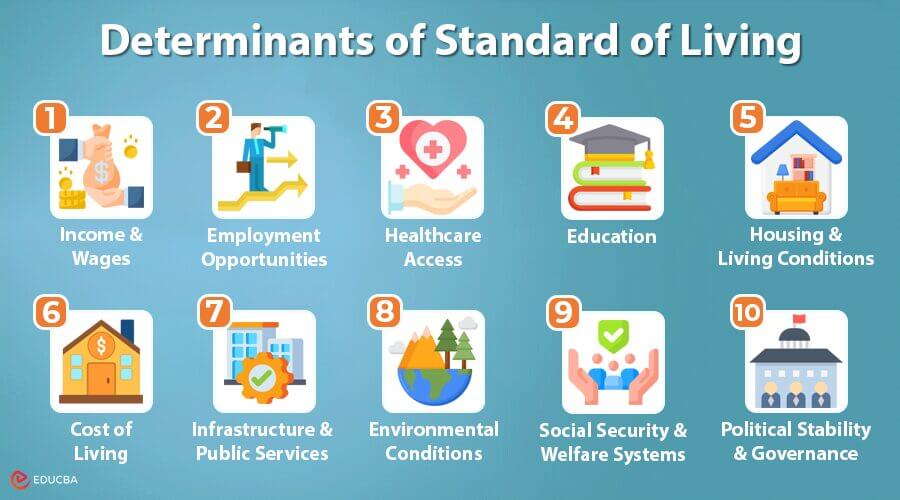
For the modern investor and professional, understanding the nuances of the standard of living is essential. It dictates market trends, influences central bank policies, and serves as a benchmark for personal financial success. By examining the components that make up this metric, we can better navigate the complexities of wealth accumulation and economic stability.
Defining the Standard of Living in a Financial Context
To understand the standard of living, one must look at the quantitative data that defines how well a population lives. Unlike “quality of life,” which includes subjective factors like happiness and emotional well-being, standard of living is rooted in hard numbers and economic capacity.
GDP per Capita: The Traditional Yardstick
The most common way to measure a country’s standard of living is through Gross Domestic Product (GDP) per capita. By dividing a nation’s total economic output by its population, we get an average figure of economic productivity per person. While GDP per capita does not account for income inequality, it serves as a high-level indicator of the resources available to the average citizen. A rising GDP per capita generally suggests that a nation is becoming wealthier, which often correlates with higher consumption and better infrastructure.
Purchasing Power Parity (PPP)
A dollar in New York City does not buy the same amount of goods as a dollar in Mumbai. This is where Purchasing Power Parity (PPP) becomes crucial. PPP is an economic theory that allows for the comparison of the purchasing power of various currencies. When measuring the standard of living, economists use PPP to adjust income levels, providing a more accurate picture of what people can actually afford within their local economies. For investors, PPP is a vital tool for assessing the true value of emerging markets.
Personal Income vs. Disposable Income
On an individual level, the standard of living is dictated by income levels. However, gross income is less important than disposable income—the money left over after taxes. Furthermore, “discretionary income” represents the funds available after paying for essential costs like housing, food, and healthcare. A high standard of living is characterized by a significant gap between total income and essential expenditures, allowing for savings, investment, and luxury consumption.
Factors Influencing Individual and National Standards of Living
The standard of living is never static; it is influenced by a myriad of economic forces that can either elevate a population or plunge it into financial hardship. Understanding these drivers is key to long-term financial planning.
Inflation and Its Erosion of Wealth
Inflation is perhaps the most significant threat to a sustained standard of living. When the prices of goods and services rise faster than wages, the “real” standard of living declines. Even if an individual receives a 3% annual raise, they are effectively becoming poorer if the inflation rate is 5%. For this reason, protecting purchasing power through inflation-hedged investments—such as real estate, commodities, or Treasury Inflation-Protected Securities (TIPS)—is a cornerstone of sophisticated financial management.
Employment Rates and Quality of Labor
The health of the labor market is a direct driver of economic well-being. High employment rates generally lead to increased consumer spending and higher standards of living. However, the quality of employment matters just as much as the quantity. A shift toward high-skilled, high-wage jobs in sectors like finance, technology, and specialized manufacturing can lift the median standard of living significantly more than an increase in low-wage service jobs.
Access to Financial Markets and Credit
The ability to access credit and participate in financial markets is a powerful multiplier for the standard of living. In developed economies, the ability to take out a mortgage allows families to build equity in an asset rather than paying rent. Similarly, access to brokerage accounts enables individuals to grow their wealth through compound interest. Conversely, in regions where financial inclusion is low, the standard of living often remains stagnant because individuals lack the tools to leverage their income into long-term wealth.
Measuring Quality Beyond the Balance Sheet
While the standard of living is primarily a financial metric, it is inextricably linked to certain socio-economic outcomes that require a broader lens to fully grasp. These factors often determine the sustainability of economic growth.
The Human Development Index (HDI)
To provide a more holistic view, the United Nations uses the Human Development Index (HDI). This index combines GNI (Gross National Income) per capita with indicators for education and life expectancy. From a financial perspective, a high HDI suggests a “healthy” economy where the workforce is educated and long-lived—traits that correlate with high productivity and lower long-term social costs. Investors often look at HDI trends to identify countries with a maturing, stable consumer base.
Healthcare Costs and Life Expectancy
In many developed nations, the standard of living is heavily influenced by the cost and accessibility of healthcare. Even with a high income, a family’s financial stability can be wiped out by a medical crisis if the healthcare system is inefficient or prohibitively expensive. Therefore, the “standard” isn’t just about what you earn, but how much of that earning you can retain in the face of life’s risks.
Education as a Financial Multiplier
Education is the most consistent predictor of a high standard of living. On a macro level, an educated workforce attracts high-value industries and foreign investment. On a micro level, higher education or specialized trade skills significantly increase an individual’s lifetime earning potential. In the context of “Money,” education is an investment in human capital that yields the highest long-term dividends.
Strategies for Elevating Your Personal Standard of Living
For the individual, the goal is often not just to maintain a standard of living but to improve it. This requires a transition from being a consumer to being a strategist.
Strategic Investing and Asset Allocation
To move beyond a baseline standard of living, one must put their money to work. Strategic asset allocation—balancing risk and reward by apportioning a portfolio’s assets according to an individual’s goals—is essential. By diversifying into equities, bonds, and alternative assets, individuals can create a “wealth engine” that generates income independent of their primary job. This passive income is the ultimate key to a high and sustainable standard of living.
Tax Planning and Efficiency
It is not how much you make, but how much you keep. High-net-worth individuals maintain their standard of living through meticulous tax planning. Utilizing tax-advantaged accounts (like 401(k)s or IRAs in the US), understanding capital gains structures, and leveraging legal deductions can save a household thousands of dollars annually. These “found” funds can then be reinvested to further accelerate wealth growth.
Building Resilient Income Streams
Relying on a single source of income is a risk to one’s standard of living. The most financially resilient individuals develop multiple streams of income, such as rental properties, dividend-paying stocks, or side businesses. In an era of economic volatility and corporate restructuring, diversification of income ensures that a downturn in one sector does not lead to a collapse in one’s personal standard of living.
The Global Perspective: Why Standards of Living Diverge
As we look across the globe, the disparity in the standard of living is stark. These differences provide valuable lessons for both policymakers and international investors.
Technological Adoption in Emerging Markets
Technology acts as a “leapfrog” mechanism for the standard of living in developing nations. For example, the widespread adoption of mobile banking in Sub-Saharan Africa has provided millions with access to financial services that were previously unavailable. This digital infrastructure facilitates trade, encourages savings, and raises the overall economic ceiling of the region.
Political Stability and Economic Policy
A stable political environment is a prerequisite for a high standard of living. Investors require a predictable legal framework to commit capital. Countries with strong property rights, low levels of corruption, and sound monetary policies tend to attract the investment necessary to build infrastructure and create high-paying jobs. Conversely, political upheaval often leads to capital flight and a rapid degradation of the standard of living.

The Impact of Global Trade
Participation in global trade allows countries to specialize in what they do best, leading to greater efficiency and lower prices for consumers. This “comparative advantage” has been a primary driver in lifting billions of people out of poverty over the last half-century. By importing cheaper goods and exporting high-value services, nations can provide a standard of living to their citizens that would be impossible in an isolationist economy.
In conclusion, the standard of living is a multi-faceted metric that serves as the pulse of an economy. Whether viewed through the lens of national GDP or a personal brokerage account, it represents the tangible manifestation of financial health. By understanding the factors that drive it—from inflation and education to investment strategy and global trade—individuals and businesses can better position themselves to thrive in an ever-changing economic landscape. Raising the standard of living is not merely about accumulating more; it is about the strategic management of resources to ensure lasting prosperity and security.
aViewFromTheCave is a participant in the Amazon Services LLC Associates Program, an affiliate advertising program designed to provide a means for sites to earn advertising fees by advertising and linking to Amazon.com. Amazon, the Amazon logo, AmazonSupply, and the AmazonSupply logo are trademarks of Amazon.com, Inc. or its affiliates. As an Amazon Associate we earn affiliate commissions from qualifying purchases.