
In the world of finance, percentages are the universal language. Whether you are calculating the interest on a high-yield savings account, determining the impact of inflation on your purchasing power, or analyzing the profit margins of a burgeoning startup, the ability to calculate percentages accurately is an indispensable skill. While many rely on digital calculators, understanding the underlying logic of percentage calculations empowers you to make faster, more informed decisions in real-time.
For the savvy investor or the disciplined budgeter, a percentage is more than just a fraction of 100; it is a metric of growth, risk, and efficiency. This guide will walk you through the fundamental mechanics of percentage calculations and demonstrate how to apply these formulas to various financial scenarios, from personal budgeting to complex investment analysis.

The Fundamental Mechanics: Understanding Percentages in Finance
At its core, the word “percent” comes from the Latin per centum, meaning “by the hundred.” When we talk about a percentage, we are essentially looking at a ratio where the denominator is 100. In financial terms, this allows us to standardize different values so they can be compared easily. For example, a $500 profit on a $5,000 investment and a $5,000 profit on a $50,000 investment both represent a 10% return, despite the vastly different dollar amounts.
The Basic Formula for Finding a Percentage
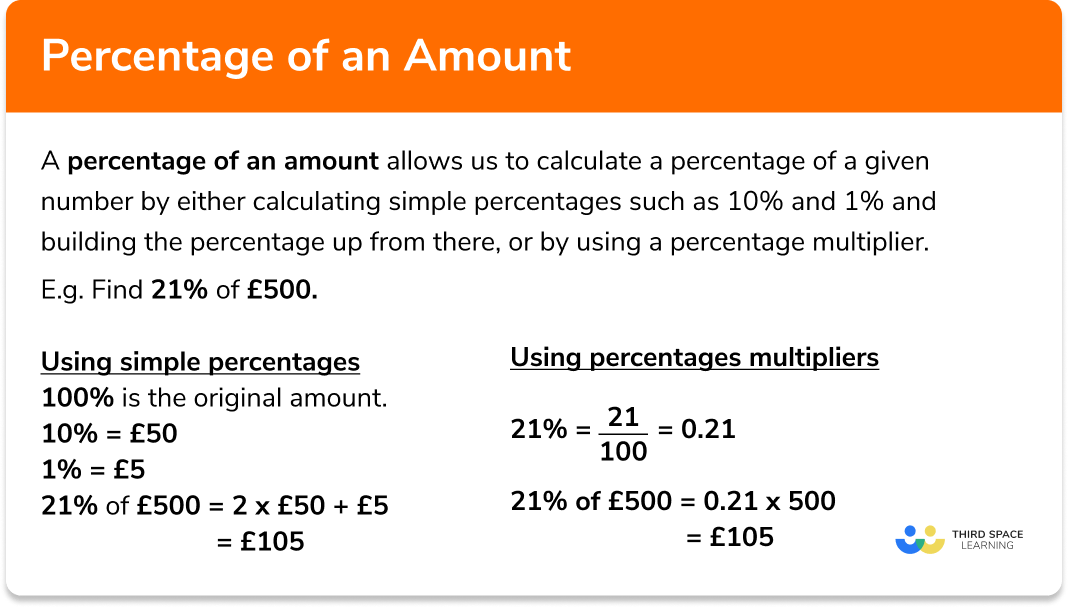
The most common task is finding a specific percentage of a known total. The formula is straightforward:
Value = (Percentage / 100) × Total Amount
For instance, if you are told that a business expense represents 15% of a $4,000 budget, you would calculate it as follows:
- Divide 15 by 100 to get 0.15.
- Multiply 0.15 by 4,000.
- The result is $600.
Converting Percentages to Decimals for Faster Calculation
In professional finance, rarely do analysts use the “100” divisor in every step. Instead, they mentally convert percentages to decimals. This is done by moving the decimal point two places to the left.
- 5% becomes 0.05
- 25% becomes 0.25
- 125% becomes 1.25
Mastering this mental shift allows you to perform “back-of-the-envelope” math during meetings or negotiations. If you know your firm takes a 3% commission on a $1.2 million deal, you can quickly multiply $1,200,000 by 0.03 to arrive at $36,000.
Calculating the Percentage Difference
Another vital calculation in money management is finding the percentage increase or decrease between two values. This is used to track portfolio growth or expense spikes.
Formula: [(New Value – Old Value) / Old Value] × 100
If your stock portfolio was worth $10,000 last year and is worth $11,500 today, the calculation would be:
($11,500 – $10,000) / $10,000 = 0.15.
Multiplying by 100 gives you a 15% increase.
Practical Applications in Personal Finance
Mastering percentage calculations is the first step toward total control over your personal economy. Daily financial decisions—from the grocery store to the bank—are governed by these ratios.
Budgeting with the 50/30/20 Rule
One of the most popular personal finance frameworks is the 50/30/20 rule. This strategy suggests allocating your after-tax income into three categories: 50% for needs, 30% for wants, and 20% for savings and debt repayment.
To implement this, you must first calculate the percentage of your total net income for each category. If your monthly take-home pay is $5,500:
- Needs (50%): $5,500 × 0.50 = $2,750
- Wants (30%): $5,500 × 0.30 = $1,650
- Savings (20%): $5,500 × 0.20 = $1,100
By calculating these figures, you create a concrete financial roadmap that prevents overspending in non-essential categories.
Mastering Discounts and Sales Tax
When shopping, understanding how to calculate percentages on the fly can save you from “sale fatigue.” If an item is marked “25% off” from a price of $80, you can find the discount by multiplying $80 by 0.25 ($20). However, a faster way to find the final price is to multiply by the remaining percentage. If you save 25%, you are paying 75%.
$80 × 0.75 = $60.

Adding sales tax follows the same logic in reverse. If your local sales tax is 8%, you multiply the price by 1.08. This “1” represents the original price, and the “.08” represents the additional tax.
Understanding the Impact of Inflation
Inflation is expressed as a percentage, representing the rate at which the general level of prices for goods and services is rising. If the annual inflation rate is 4%, a basket of goods that cost $100 last year will cost $104 this year. Over time, these percentages compound, drastically reducing your purchasing power. Calculating the percentage impact of inflation is crucial when determining how much you need to earn from your investments to actually “break even” in terms of real value.
Advanced Financial Calculations: Interest and ROI
For those looking to build wealth, percentage calculations move from basic arithmetic to a tool for strategic growth. Interest rates and Return on Investment (ROI) are the primary indicators of financial health.
Calculating Annual Percentage Rate (APR) on Debt
When you take out a loan or carry a credit card balance, the bank charges you an Annual Percentage Rate (APR). However, credit cards often charge interest daily. To find your daily periodic rate, you divide the APR by 365.
If your credit card has an 18% APR:
0.18 / 365 = 0.00049 (or 0.049% per day).
While this percentage seems minuscule, it is applied to your balance every single day, which is why high-interest debt can become unmanageable so quickly.
Return on Investment (ROI) Analysis
ROI is a percentage used to evaluate the efficiency of an investment. It is the gold standard for comparing different asset classes, such as real estate versus stocks.
ROI = (Net Profit / Cost of Investment) × 100
Suppose you buy a rental property for $200,000. After a year, you have collected $12,000 in rent and paid $4,000 in expenses, leaving a net profit of $8,000.
($8,000 / $200,000) × 100 = 4% ROI.
Comparing this 4% to the average 7-10% return of the stock market helps you decide where your capital is most productive.
The Power of Compound Interest
Compound interest is often called the eighth wonder of the world. It is the result of reinvesting interest, so that you earn interest on your interest. The formula involves percentages as exponents:
A = P(1 + r/n)^{nt}
Where r is the annual interest rate (as a decimal). Even a 1% difference in your interest rate can result in hundreds of thousands of dollars in difference over a 30-year investment horizon. Understanding the math behind this percentage allows you to appreciate why starting early is more important than the amount of money you start with.
Business Finance: Profit Margins and Growth Metrics
In a corporate or entrepreneurial setting, calculating percentages is essential for measuring the viability of a business model. Revenue alone doesn’t tell the whole story; percentages do.
Calculating Gross and Net Profit Margins
A business might generate millions in revenue but still be losing money. This is why profit margins are critical.
- Gross Profit Margin: [(Total Revenue – Cost of Goods Sold) / Total Revenue] × 100. This shows how efficiently a company produces its products.
- Net Profit Margin: (Net Income / Total Revenue) × 100. This is the “bottom line”—how much of every dollar earned actually stays in the company’s pocket after all taxes and expenses.
A software company might have a high net profit margin (e.g., 30%), whereas a grocery store might operate on a very slim margin (e.g., 2%). Investors use these percentages to judge the health of a company within its specific industry.
Measuring Year-over-Year (YoY) Growth
Businesses use YoY growth to smooth out seasonal fluctuations. If a retail business earned $500,000 in Q4 of 2022 and $600,000 in Q4 of 2023, the percentage growth is calculated by the difference ($100,000) divided by the original amount ($500,000), resulting in a 20% YoY growth rate. This percentage is the primary figure reported to shareholders and used to secure business loans.
Digital Financial Tools and Automation
While mental math is a powerful asset, precision is paramount in finance. Utilizing digital tools to calculate percentages ensures that human error doesn’t lead to costly financial mistakes.
Using Spreadsheet Formulas (Excel and Google Sheets)
Spreadsheets are the backbone of the financial world. Calculating percentages in Excel is simplified by built-in formatting.
- To find 10% of a value in cell A1, you would enter
=A1*0.1. - To find the percentage change between A1 (old) and B1 (new), you would enter
=(B1-A1)/A1and then click the “Percent Style” button in the toolbar.
Using spreadsheets allows you to run “what-if” scenarios, such as seeing how a 1% increase in interest rates would affect your monthly mortgage payment.
The Role of Financial Calculators
For complex tasks like mortgage amortization or retirement planning, specialized financial calculators are superior to standard ones. These tools use the time-value-of-money formulas to calculate how percentages interact with time. Whether you are using a physical HP 12C calculator or an online tool, the goal is the same: to understand how a small percentage change in a variable—like an annual fee or a dividend yield—impacts the long-term trajectory of your wealth.
In conclusion, the ability to calculate the percentage of a number is more than a mathematical chore; it is a fundamental pillar of financial literacy. By mastering these formulas and understanding their applications in personal and professional finance, you gain the clarity needed to navigate a world driven by numbers. Whether you are budgeting for your family’s future or scaling a global enterprise, the power of the percentage is your greatest ally in achieving financial success.
aViewFromTheCave is a participant in the Amazon Services LLC Associates Program, an affiliate advertising program designed to provide a means for sites to earn advertising fees by advertising and linking to Amazon.com. Amazon, the Amazon logo, AmazonSupply, and the AmazonSupply logo are trademarks of Amazon.com, Inc. or its affiliates. As an Amazon Associate we earn affiliate commissions from qualifying purchases.