
The S&P 500, often simply referred to as “the S&P,” stands as one of the most widely recognized and influential stock market indices globally. More than just a collection of company names, it serves as a critical barometer for the health of the U.S. economy and a cornerstone for countless investment strategies. For new investors, seasoned financial professionals, and anyone tracking economic trends, understanding the S&P 500 is fundamental. It represents a dynamic cross-section of American corporate power, reflecting the collective performance of 500 of the largest publicly traded companies in the United States, carefully selected to be representative of the broader market. This index isn’t merely an academic construct; it’s a living, breathing entity that mirrors the triumphs and challenges of the nation’s most impactful businesses, shaping retirement plans, market analyses, and financial news headlines every single day.

The Foundation: Understanding the S&P 500 Index
At its core, the S&P 500 is an index—a statistical measure of change in an economy or a stock market. However, its significance extends far beyond a simple numerical value. It’s a meticulously crafted tool designed to offer a clear, comprehensive snapshot of the large-cap U.S. equities market. Understanding its design and historical context is crucial for appreciating its pervasive influence.
What Exactly is an Index?
In the financial world, an index is a portfolio of hypothetical investments representing a particular market or a segment of it. It’s not something you can directly invest in, but rather a benchmark that tracks the performance of a specific group of assets, such as stocks, bonds, or commodities. For instance, the Dow Jones Industrial Average (DJIA) tracks 30 large companies, while the Nasdaq Composite tracks all stocks listed on the Nasdaq exchange. The S&P 500, however, distinguishes itself through its breadth and methodology, focusing on 500 of the largest and most liquid U.S. companies. The value of an index rises or falls based on the collective performance of its underlying components, weighted according to specific criteria. This allows investors and analysts to gauge the overall sentiment and direction of the market it represents without having to track thousands of individual securities. An index simplifies complex market data into an easily digestible figure, making it an invaluable tool for performance comparison and economic analysis.
A Brief History and Evolution
The roots of the S&P 500 stretch back to 1923, when Standard Statistics Company (which later merged with Poor’s Publishing to form Standard & Poor’s) introduced a stock index tracking a small number of companies. This early iteration expanded over time, and by 1957, it had evolved into the S&P 500, covering 500 of the largest U.S. companies. This expansion was a pivotal moment, as it allowed the index to become a more robust and representative measure of the broader U.S. economy compared to its predecessors.
The post-war economic boom provided fertile ground for its growth, and as the U.S. solidified its position as a global economic powerhouse, the S&P 500 became the de facto benchmark for large-cap American stocks. Its introduction coincided with the rise of modern portfolio theory and index investing, concepts that would profoundly shape the financial landscape. Over the decades, the methodology for selecting and weighting companies has been refined, adapting to changing market structures and economic realities, ensuring its continued relevance and accuracy as a market bellwether.
The Role of S&P Dow Jones Indices
The S&P 500 is maintained and published by S&P Dow Jones Indices, a joint venture between S&P Global and CME Group. This organization is responsible for calculating, maintaining, and licensing various market indices, including the S&P 500, the Dow Jones Industrial Average, and thousands of others across different asset classes and geographies. Their role is critical: they establish the stringent criteria for company inclusion, ensure the index accurately reflects market dynamics through regular rebalancing, and provide the data and methodologies that financial professionals and investors rely upon.
The governance and oversight provided by S&P Dow Jones Indices ensure the index remains independent, objective, and transparent. Their decisions, though based on predefined rules, have significant implications, as a company’s inclusion or exclusion from the S&P 500 can trigger substantial buying or selling activity from index funds and ETFs that track it. This makes their stewardship a foundational element of the index’s integrity and its utility as a reliable market indicator.
How the S&P 500 Works: Mechanics and Methodology
The S&P 500 is not simply a list of the 500 largest companies by market capitalization. Its construction involves a sophisticated methodology that aims to ensure it is both representative and investable. This careful design is what gives the index its authority and reliability.
Selection Criteria for Component Companies
Inclusion in the S&P 500 is not automatic, even for large companies. S&P Dow Jones Indices employs a committee that applies a set of strict criteria, going beyond mere market capitalization. Key considerations include:
- U.S. Company: The company must be domiciled in the United States.
- Market Cap: While there isn’t a fixed threshold, companies generally need a market capitalization of at least $14.6 billion (as of late 2023, subject to change).
- Liquidity: The company’s stock must be highly liquid, meaning there’s enough trading volume to allow for easy buying and selling without significantly impacting its price. This ensures the index is investable.
- Public Float: A minimum of 50% of the company’s shares must be available to the public (not held by insiders or restricted stock).
- Financial Viability: Companies must have positive reported earnings in their most recent quarter and positive aggregate earnings over the past four consecutive quarters. This criterion ensures the inclusion of fundamentally sound businesses.
- Sector Representation: The committee also considers sector balance to ensure the index accurately reflects the diversity of the U.S. economy. While not a rigid quota, they aim for representation across various industries.
These criteria ensure that the S&P 500 comprises mature, stable, and economically significant companies, rather than volatile, speculative ventures.
Market-Capitalization Weighting Explained
One of the defining characteristics of the S&P 500 is its market-capitalization weighting (often called “cap-weighting”). This means that companies with larger market capitalizations (stock price multiplied by the number of outstanding shares) have a greater impact on the index’s movement than smaller companies within the index. For example, Apple (AAPL) and Microsoft (MSFT), with their enormous market caps, will influence the S&P 500’s daily performance more significantly than, say, General Motors (GM) or Ford (F), even though all are part of the index.
This weighting scheme reflects the total value of each company that is available to public investors. The rationale behind cap-weighting is that larger companies represent a greater proportion of the overall market’s value, and therefore, their performance should carry more weight in a broad market index. While this approach effectively tracks the total value of the market, it also means that the index can become top-heavy, with the performance of a few mega-cap companies dominating the index’s returns.
Regular Rebalancing and Adjustments
The S&P 500 is not static. The committee regularly monitors its components to ensure they continue to meet the inclusion criteria and that the index remains representative of the market. This involves:
- Quarterly Rebalancing: The index is reviewed and rebalanced quarterly to adjust for changes in market capitalization, corporate actions (like mergers, acquisitions, stock splits), and the entry or exit of companies.
- Additions and Deletions: Companies are added or removed from the index as they meet or cease to meet the criteria, or in cases of significant corporate events. For instance, a company might be removed if its market cap shrinks substantially, it is acquired, or if it no longer meets the profitability requirements. Conversely, a rapidly growing company that meets all criteria might be added.
These ongoing adjustments are crucial for maintaining the S&P 500’s accuracy and relevance. They prevent the index from becoming outdated and ensure it continues to reflect the current landscape of the U.S. large-cap equity market, albeit with some lag.
Why the S&P 500 Matters to Investors and the Economy
The S&P 500’s influence extends far beyond mere tracking. It plays a pivotal role in economic analysis, investment strategy, and even public perception of financial health. Its significance stems from its ability to serve as a reliable, comprehensive benchmark.
A Barometer for the U.S. Economy
Often referred to as a “bellwether” for the U.S. economy, the S&P 500’s performance is widely seen as an indicator of overall economic health. Because it includes companies from virtually every major sector—technology, healthcare, finance, consumer discretionary, industrials, energy, and more—its collective movements offer insights into the broader economic landscape.
When the S&P 500 is rising, it often signals investor confidence, corporate profitability, and economic growth. Conversely, a declining S&P 500 can suggest economic slowdown, market uncertainty, or declining corporate earnings. While it’s important to remember that the stock market is not the entire economy (and can sometimes diverge from real economic conditions due to speculation or future expectations), its broad representation makes it an invaluable tool for economists, policymakers, and businesses to gauge prevailing trends and anticipate potential shifts. Major shifts in the S&P 500 often correlate with significant economic events, reflecting investor sentiment about corporate prospects and, by extension, the economic future.
Diversification and Risk Management
For individual investors, the S&P 500 offers an inherent level of diversification. By tracking 500 different companies across numerous industries, an investment tied to the S&P 500 automatically spreads risk across a wide array of businesses. This means that a poor performance by one or a few companies will likely have a muted impact on the overall index, unlike investing in a single stock.
This broad diversification is a cornerstone of prudent risk management. It helps mitigate “single-stock risk”—the risk that a company you invest in performs poorly or even goes bankrupt. While it doesn’t eliminate market risk (the risk that the entire market declines), it significantly reduces idiosyncratic risk, making S&P 500-linked investments a relatively safer option for broad market exposure compared to concentrated portfolios. This principle underpins the popularity of S&P 500 index funds for long-term investors aiming for stable, diversified growth.
Benchmarking Investment Performance
One of the S&P 500’s most crucial functions is serving as a benchmark. Professional money managers, mutual funds, and even individual investors often compare their portfolio’s returns against the S&P 500. If an active fund manager, for example, aims to outperform the market, their success is typically measured by how well their returns compare to the S&P 500 over a given period.
This benchmarking allows for an objective assessment of investment performance. If a fund claims to be superior but consistently underperforms the S&P 500, investors can use this information to reconsider their choices. For passive investors, tracking the S&P 500 means accepting market returns, which have historically been robust over the long term. The concept of “beating the market” almost universally refers to outperforming the S&P 500, highlighting its status as the default yardstick for large-cap U.S. equity performance.
Investing in the S&P 500: Practical Approaches
While you cannot directly buy the S&P 500 index itself, there are several highly accessible and popular ways for both individual and institutional investors to gain exposure to its performance. These methods allow investors to effectively “own” a piece of all 500 companies without having to buy each stock individually.
Index Funds: The Accessible Gateway
Index funds are mutual funds designed to mimic the performance of a specific market index, such as the S&P 500. When you invest in an S&P 500 index fund, your money is pooled with other investors’ funds and used to purchase shares in the same 500 companies that make up the index, in the same proportions. This “passive” investment strategy contrasts with “active” funds, where managers try to pick individual stocks to outperform the market.
The primary advantages of S&P 500 index funds include:
- Diversification: Instant diversification across 500 companies.
- Low Costs: Because they don’t require active stock picking or extensive research, index funds typically have very low expense ratios (annual fees), which can significantly boost long-term returns.
- Simplicity: They offer a straightforward way to invest in the broad U.S. stock market.
- Consistent Performance: They aim to match the market’s return, which, over long periods, has proven to be a highly effective strategy for wealth creation.
These funds are available through brokerage firms and typically have minimum investment requirements, though some offer low-cost entry points.
Exchange-Traded Funds (ETFs)
Exchange-Traded Funds (ETFs) are similar to index funds in that they aim to track an index, but they trade on stock exchanges like individual stocks. This means you can buy and sell ETF shares throughout the trading day at market prices, unlike mutual funds which are priced once at the end of the day. S&P 500 ETFs are immensely popular, offering similar benefits to index funds with added flexibility.
Key features of S&P 500 ETFs:
- Real-time Trading: Buy and sell at any point during market hours.
- Low Expense Ratios: Like index funds, they are known for their low management fees.
- Diversification: Provide broad market exposure with a single purchase.
- Tax Efficiency: ETFs often have certain tax advantages over traditional mutual funds due to their creation/redemption mechanism.
Some of the most well-known S&P 500 ETFs include SPY (SPDR S&P 500 ETF Trust), IVV (iShares Core S&P 500 ETF), and VOO (Vanguard S&P 500 ETF). They are a cornerstone of many investors’ portfolios due to their efficiency and ease of use.
Direct Stock Ownership vs. Index Investing
While theoretically possible, directly replicating the S&P 500 by buying shares of all 500 component companies is impractical for most individual investors. It would require substantial capital, frequent rebalancing, significant transaction costs, and constant monitoring. The administrative burden alone would be immense.
This is where index funds and ETFs shine. They democratize access to the S&P 500’s diversified performance, making it feasible for investors with various capital levels to gain broad market exposure. While direct stock ownership can offer the potential for outsized returns (if you pick winning stocks) or losses (if you pick poorly), it comes with much higher risk and complexity. Index investing, by contrast, is a strategy of accepting market returns, betting on the long-term growth of the overall economy rather than the specific success of individual companies. For the vast majority of investors seeking diversified, low-cost exposure to the U.S. stock market, S&P 500 index funds and ETFs are the superior choice.
Performance, Risks, and Considerations
Understanding the S&P 500 also requires an appreciation of its historical performance, the inherent risks associated with equity investing, and the mindset required for long-term success.
Historical Returns and Long-Term Growth
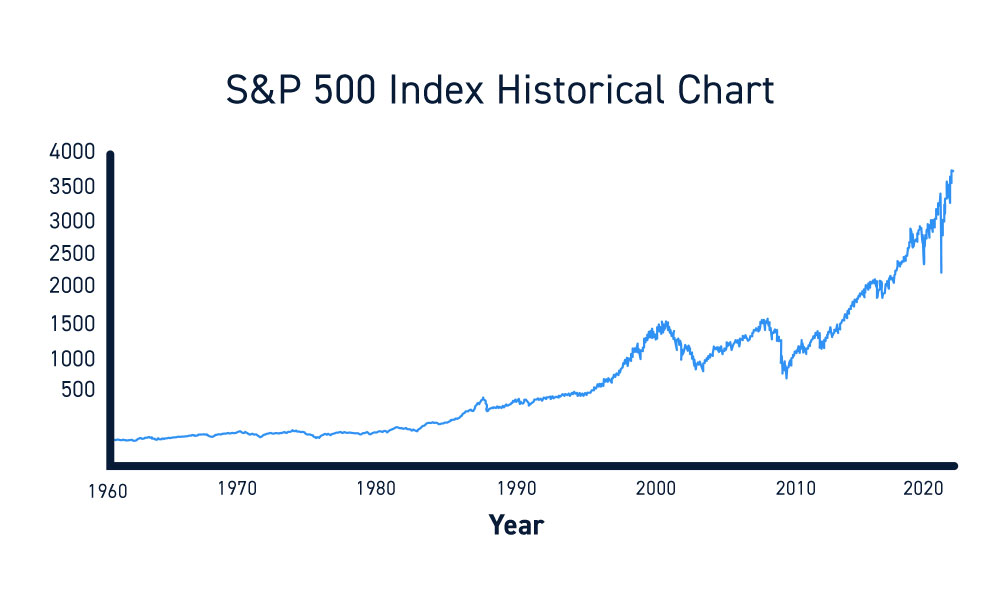
Over its long history, the S&P 500 has delivered impressive average annual returns, typically in the range of 10-12% before inflation, when measured over several decades. This track record of robust growth has made it a powerful engine for wealth creation, particularly for those who invest consistently over long periods. The power of compounding returns means that even modest annual growth can lead to substantial wealth accumulation over 20, 30, or 40 years.
However, it’s crucial to remember that “average annual returns” smooth out significant volatility. There have been periods of substantial decline (e.g., dot-com bubble burst, 2008 financial crisis, COVID-19 pandemic) interspersed with periods of rapid growth. The market moves in cycles, but the long-term trend for the S&P 500 has been upward, reflecting the underlying growth and innovation of the U.S. economy. Past performance is not indicative of future results, but the historical data provides a compelling argument for the resilience and long-term potential of diversified equity investing.
Inherent Market Risks
Despite its historical performance, investing in the S&P 500 is not without risk. Equity markets are inherently volatile, and several factors can lead to declines:
- Systematic Risk (Market Risk): This is the risk that the entire market will decline due to macroeconomic factors like recessions, inflation, interest rate hikes, geopolitical events, or widespread investor fear. Even a diversified S&P 500 portfolio is susceptible to these broad market movements.
- Economic Downturns: Recessions or slowdowns typically lead to lower corporate earnings, which can depress stock prices across the board.
- Interest Rate Changes: Rising interest rates can make bonds more attractive relative to stocks and increase borrowing costs for companies, potentially hurting profitability.
- Inflation: High inflation can erode the purchasing power of returns, and if not offset by stock appreciation, can lead to real losses.
- Black Swan Events: Unforeseen, high-impact events (like global pandemics or natural disasters) can cause sudden and severe market corrections.
While diversification within the S&P 500 mitigates company-specific risk, it does not eliminate these broader market risks. Investors must be prepared for fluctuations and potential drawdowns.
The Importance of a Long-Term Perspective
Given the inherent volatility, the most critical consideration for S&P 500 investors is the adoption of a long-term perspective. Short-term market movements are unpredictable and often driven by sentiment rather than fundamentals. Trying to time the market (buying low and selling high in the short term) is notoriously difficult and often leads to worse outcomes than simply staying invested.
A long-term strategy (typically 10 years or more) allows investors to ride out market downturns, benefit from the power of compounding, and capture the market’s upward trend over time. Historically, every major market downturn in the S&P 500 has eventually been followed by a recovery, often reaching new highs. By focusing on long-term goals and resisting the urge to react to daily market noise, investors can harness the S&P 500’s potential for significant wealth accumulation. This often means consistent investing (dollar-cost averaging) and remaining invested through both bull and bear markets.
Conclusion
The S&P 500 is far more than just a list of companies; it is a meticulously constructed financial instrument that serves as a cornerstone of modern investing and economic analysis. From its rigorous selection criteria and market-capitalization weighting to its role as a crucial economic barometer and benchmark for investment performance, its influence is undeniable. For individuals, S&P 500 index funds and ETFs offer a simple, cost-effective, and highly diversified gateway to participate in the long-term growth of the U.S. economy. While market risks are inherent, a disciplined, long-term approach to investing in the S&P 500 has historically proven to be one of the most effective strategies for wealth creation. Understanding “what is the S&P 500” is not merely about knowing a definition; it’s about grasping the mechanics of the market, the pillars of the U.S. economy, and the pathways to financial growth.
aViewFromTheCave is a participant in the Amazon Services LLC Associates Program, an affiliate advertising program designed to provide a means for sites to earn advertising fees by advertising and linking to Amazon.com. Amazon, the Amazon logo, AmazonSupply, and the AmazonSupply logo are trademarks of Amazon.com, Inc. or its affiliates. As an Amazon Associate we earn affiliate commissions from qualifying purchases.