
In the intricate world of computer networking, where vast amounts of data flow seamlessly between devices, the concept of a “socket” stands as a fundamental yet often overlooked pillar. Far from being a mere physical connector, a network socket is a crucial software construct that serves as an endpoint for sending and receiving data across a network. It’s the programmatic interface that applications use to interact with network protocols, effectively abstracting the complexities of underlying communication mechanisms. Without sockets, the internet as we know it—from browsing a website to sending an email or streaming a video—simply wouldn’t function. This article delves into the core definition, types, lifecycle, and profound significance of sockets in modern computing.
The Foundation of Network Communication
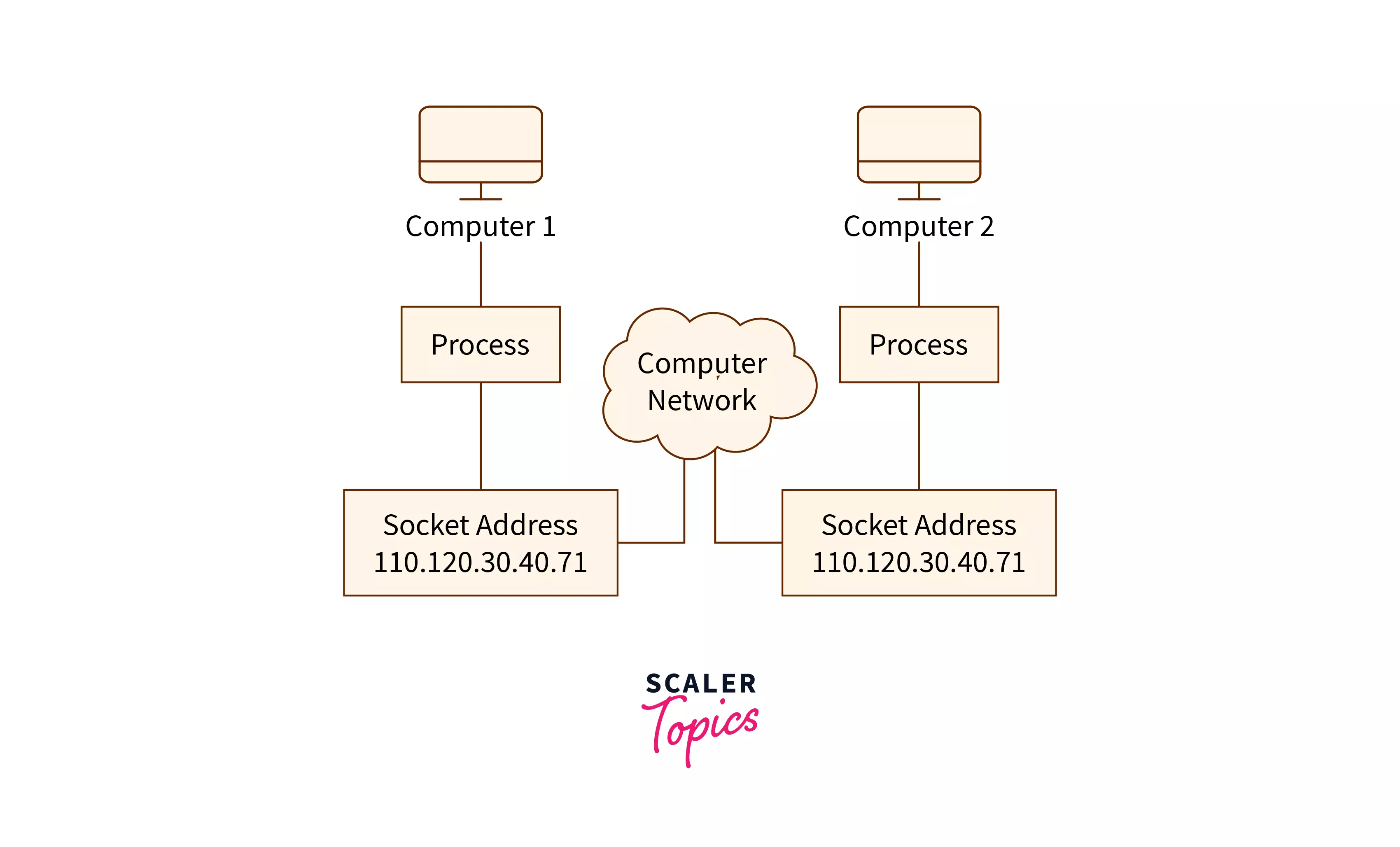
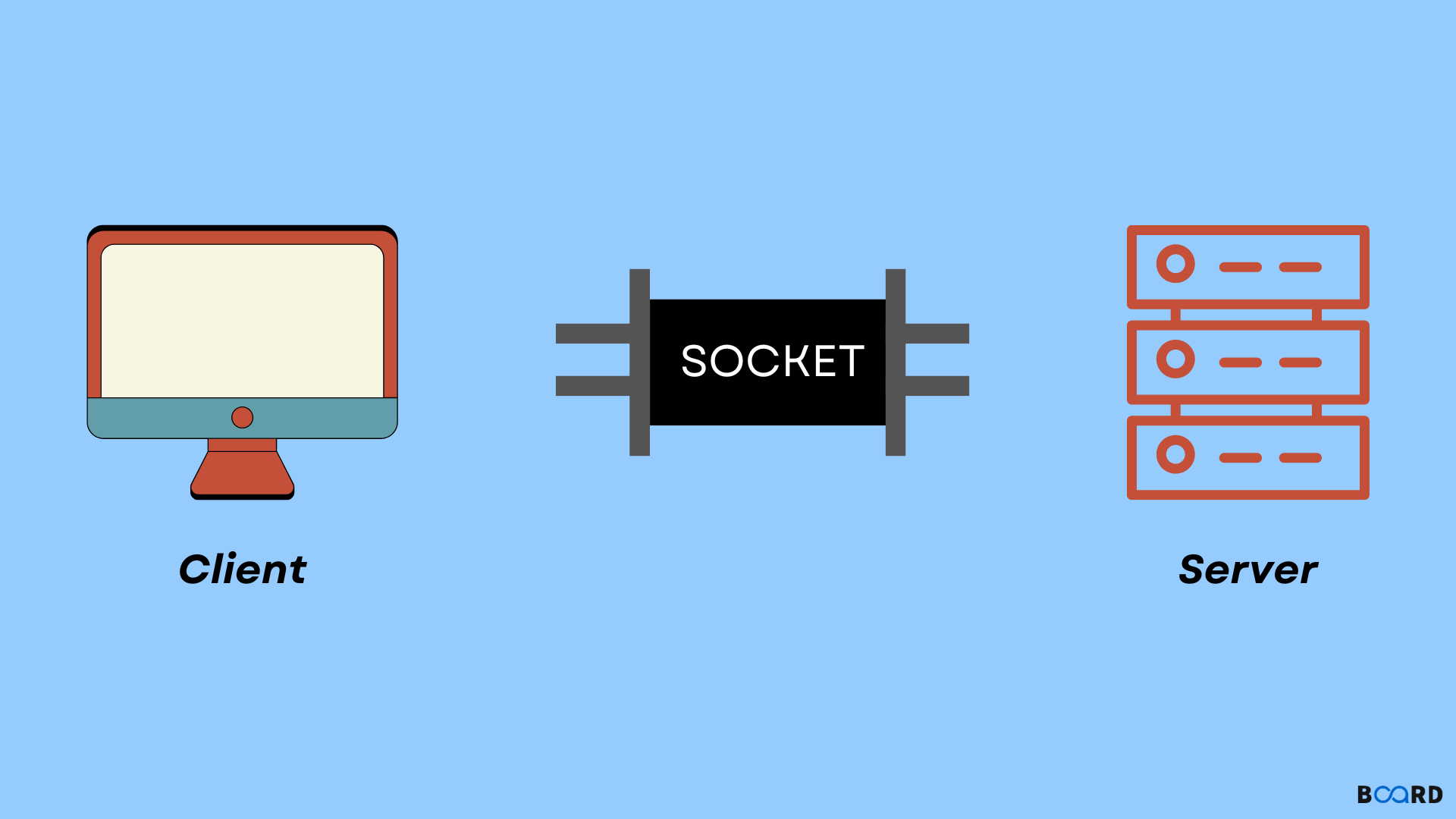
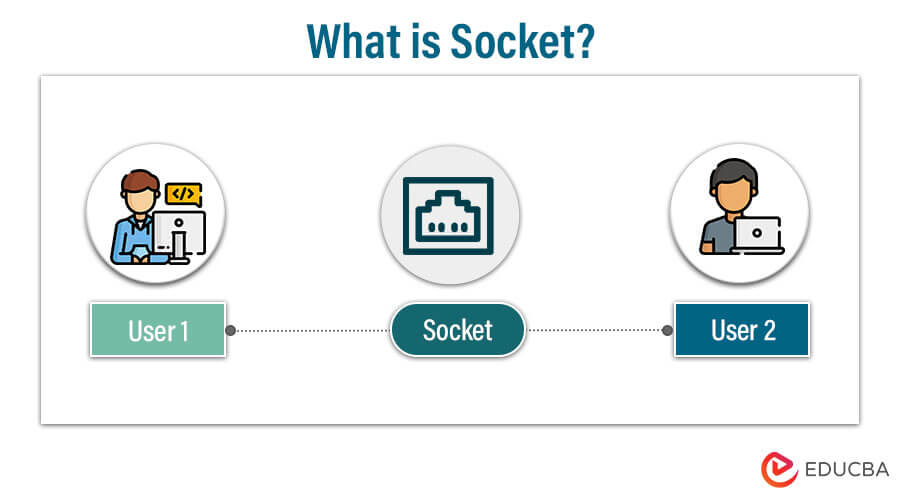
At its heart, a network socket is a software abstraction, a logical endpoint that enables inter-process communication (IPC) within the same machine or between different machines over a network. It provides a standardized way for applications to send and receive data, acting as a gateway between the application layer and the transport layer of the TCP/IP model.
Defining the Network Endpoint
Imagine a busy post office where letters and packages are sorted and routed. Each unique address where mail can be received is an endpoint. In computer networking, a socket is precisely that: a unique addressable endpoint for communication. It’s uniquely identified by a combination of an IP address and a port number. The IP address specifies the particular host (computer or device) on the network, while the port number identifies a specific application or service running on that host. This dual identification ensures that data not only reaches the correct device but also the correct process or program within that device. For example, if you open a web browser and navigate to a website, your browser is using a socket to connect to a web server’s socket, typically on port 80 for HTTP or port 443 for HTTPS.
Bridging Applications and the Network Layer
One of the most powerful aspects of sockets is their ability to abstract the underlying complexities of network protocols. Developers don’t need to write code that directly manipulates network packets, handles retransmissions, or manages connection states at a low level. Instead, they interact with the socket API (Application Programming Interface), which provides a high-level set of functions to create, bind, listen, connect, send, and receive data. The operating system, through its network stack, takes care of translating these high-level socket operations into the specific actions required by protocols like TCP (Transmission Control Protocol) or UDP (User Datagram Protocol) and subsequently by the network interface hardware. This abstraction significantly simplifies application development, allowing programmers to focus on application logic rather than intricate network minutiae.
The Role of IP Addresses and Port Numbers
To truly grasp sockets, it’s essential to understand their constituent parts: IP addresses and port numbers. An IP address is a numerical label assigned to each device connected to a computer network that uses the Internet Protocol for communication. It serves two principal functions: host or network interface identification and location addressing. Just as a street address directs mail to a specific building, an IP address directs data packets to a specific network device. Port numbers, on the other hand, are 16-bit numbers (0-65535) used to identify specific processes or services running within a host. Certain port numbers are “well-known” (0-1023) and are reserved for common services (e.g., 20/21 for FTP, 22 for SSH, 25 for SMTP, 53 for DNS, 80 for HTTP, 443 for HTTPS). Registered ports (1024-49151) are assigned by ICANN for specific services, while dynamic or private ports (49152-65535) are often used by client applications when initiating connections. The combination of an IP address and a port number forms a unique socket pair, enabling precise communication between a client application’s process and a server application’s process.
Types of Sockets and Their Characteristics
Not all network communication is identical; some scenarios demand high reliability, while others prioritize speed. To cater to these diverse needs, different types of sockets have evolved, primarily categorized by the underlying transport layer protocol they utilize.
Stream Sockets (TCP)
Stream sockets are built upon the Transmission Control Protocol (TCP), making them the backbone of reliable, connection-oriented communication. When using a stream socket, a virtual connection is established between the two endpoints before any data is exchanged. This connection remains active throughout the communication session and is only terminated once all data has been transmitted and acknowledged.
Key characteristics of stream sockets:
-
Connection-oriented: A handshake process (SYN, SYN-ACK, ACK) establishes a dedicated logical connection.
-
Reliable: TCP guarantees that data sent will arrive at its destination, and if it doesn’t, it will be retransmitted.
-
Ordered delivery: Data packets are guaranteed to arrive in the same order they were sent, preventing data corruption or misinterpretation.
-
Flow control: TCP manages the rate of data transmission to prevent a fast sender from overwhelming a slow receiver.
-
Congestion control: TCP dynamically adjusts transmission rates to avoid network congestion.
Examples: Web browsing (HTTP/HTTPS), file transfer (FTP, SFTP), secure shell (SSH), email (SMTP, POP3, IMAP), and most database connections rely on stream sockets due to their need for data integrity and sequential delivery.
Datagram Sockets (UDP)
In contrast, datagram sockets utilize the User Datagram Protocol (UDP). UDP is a simpler, connectionless protocol that prioritizes speed over reliability. With datagram sockets, no prior connection is established; data is simply sent as individual packets (datagrams) to the destination.
Key characteristics of datagram sockets:
-
Connectionless: No handshake is required before sending data, making it faster to initiate communication.
-
Unreliable: There are no guarantees that data will arrive, nor that it will arrive in order. Packets can be lost, duplicated, or arrive out of sequence without notification to the sender.
-
No flow control or congestion control: Data is sent at the application’s pace, which can potentially overwhelm the receiver or exacerbate network congestion.
-
Lightweight overhead: Due to its simplicity, UDP adds less overhead to data packets compared to TCP.
Examples: Datagram sockets are ideal for applications where occasional data loss is acceptable, or where speed and low latency are paramount. These include DNS queries, online gaming, Voice over IP (VoIP), live video streaming, and network management protocols like SNMP. For instance, in a video call, a dropped frame is often preferable to delaying the entire stream while waiting for retransmission.
Raw Sockets
Raw sockets offer a more direct interface to the underlying network protocols, bypassing the transport layer (TCP/UDP) entirely. They allow applications to read and write entire IP packets, giving developers fine-grained control over network communication.
Key characteristics of raw sockets:
-
Direct IP layer access: Applications can craft their own IP headers and even inject packets directly onto the network.
-
No transport layer processing: Bypasses TCP/UDP processing, meaning applications must handle all aspects of reliability, ordering, etc.
-
Requires elevated privileges: Often requires administrative rights to create and use due to the potential for network manipulation.
Examples: Raw sockets are typically used for specialized purposes such as network monitoring tools (e.g., tcpdump, Wireshark), implementing custom routing protocols, developing network diagnostics utilities (like ping or traceroute), or for security research. They are not generally used for everyday application communication due to their complexity and potential security risks.
The Socket Lifecycle: From Creation to Closure
Understanding how sockets work involves appreciating their lifecycle, a sequence of steps that both server and client applications follow to establish, maintain, and terminate network communication. While the specifics can vary between stream and datagram sockets, and between server and client roles, a general pattern emerges.
Server-Side Socket Operations
A server application’s primary role is to listen for and accept incoming connections or data requests from clients.
-
socket(): The first step is to create a socket descriptor, which is an integer handle to the socket. This function specifies the address family (e.g., IPv4 or IPv6), the socket type (stream, datagram, or raw), and the protocol (usually 0 for default). -
bind(): The newly created socket is then associated with a specific local IP address and port number. This tells the operating system which network interface and service the socket will represent. For servers, binding toINADDR_ANY(or equivalent) allows the server to listen on all available network interfaces. -
listen()(TCP only): For stream sockets, the server must put the socket into a listening state. This function marks the socket as passive, indicating that it will accept incoming connection requests. It also specifies a backlog queue size, defining how many pending connection requests the operating system should queue while the server is busy processing existing ones. -
accept()(TCP only): This is a blocking call (unless configured otherwise) that waits for an incoming client connection. When a client attempts to connect,accept()extracts the first connection request from the queue and creates a new socket descriptor for that specific client connection. The original listening socket remains open and continues to listen for new connections. -
send()/recv()orread()/write(): Once a connection is established (for TCP) or for datagram sockets afterbind(), these functions are used to exchange data between the server and the connected client(s).send()transmits data, andrecv()receives data. -
close(): After all communication is complete, the socket must be closed to release system resources associated with it. For TCP, this involves a graceful shutdown of the connection.
Client-Side Socket Operations
A client application initiates communication by attempting to connect to a server.
-
socket(): Similar to the server, the client first creates a socket descriptor, specifying the address family and socket type. -
connect()(TCP only): For stream sockets, the client usesconnect()to establish a connection with the server. This function takes the server’s IP address and port number as arguments and initiates the TCP three-way handshake. If successful, a connection is established between the client’s socket and the server’s accepted socket. For UDP,connect()can optionally be used to specify a default destination, but it doesn’t establish a persistent connection. -
send()/recv()orread()/write(): After a successfulconnect()(TCP) or directly aftersocket()(UDP), the client uses these functions to send requests to the server and receive responses. -
close(): Once the client has completed its interaction with the server, it closes its socket, releasing its local resources.
Practical Applications and Significance
Sockets are not merely theoretical constructs; they are the bedrock upon which virtually all networked applications are built. Their pervasive utility underscores their fundamental importance in the digital ecosystem.
Web Servers and Browsers
Every time you access a website, your web browser (client) uses a stream socket to connect to the web server’s (server) socket, typically on port 80 (HTTP) or 443 (HTTPS). The browser sends an HTTP GET request through its socket, and the server processes it, fetches the requested webpage, and sends the HTML, CSS, JavaScript, and images back through its socket. This entire interaction is mediated by a pair of sockets, facilitating the exchange of information that renders your browsing experience.
Email Systems (SMTP, POP3, IMAP)
Email communication relies heavily on stream sockets. When you send an email, your email client (or a mail server acting on your behalf) opens a socket to an SMTP (Simple Mail Transfer Protocol) server, usually on port 25 or 587. The email content is then transmitted over this connection. When you retrieve emails, your client connects to a POP3 (Post Office Protocol 3) server (port 110) or an IMAP (Internet Message Access Protocol) server (port 143 or 993 for secure IMAPS) using sockets to download your messages.
Real-time Communication
Applications demanding real-time interaction often leverage sockets. Online multiplayer games frequently use UDP sockets for fast, low-latency updates of player positions and actions, where occasional packet loss is less disruptive than delay. Voice over IP (VoIP) services like Skype or Zoom also utilize UDP for voice and video streams, prioritizing timely delivery over absolute reliability, complemented by TCP for control signals and session management. Chat applications, too, use sockets to send and receive instant messages.
Distributed Systems and Microservices
In modern software architectures, particularly those built on distributed systems and microservices, inter-process communication across networks is paramount. Sockets provide the foundational mechanism for these services to communicate, whether through direct TCP/IP connections, or via higher-level communication protocols built on top of sockets, such as gRPC, REST APIs over HTTP, or message queues. Each microservice might expose its API endpoints via sockets, allowing other services to discover and interact with it seamlessly.
Digital Security Implications
Sockets, by their nature, are entry and exit points for data, making them critical components in digital security. Firewalls, for instance, operate by monitoring and controlling incoming and outgoing network traffic based on source/destination IP addresses and port numbers (i.e., socket endpoints). Secure communication protocols like SSL/TLS (used in HTTPS) encrypt data transmitted over stream sockets, protecting privacy and integrity. Conversely, unpatched applications or poorly configured servers with open sockets can become vulnerabilities, allowing attackers to exploit services or gain unauthorized access. Secure coding practices and careful network configuration around sockets are therefore essential for maintaining robust cybersecurity.
Sockets in Modern Programming Paradigms
The underlying socket API, often referred to as Berkeley Sockets or POSIX Sockets, provides a C-based interface that is highly influential. However, modern programming environments offer more user-friendly and powerful abstractions.
Socket APIs and Libraries
Almost every contemporary programming language offers a wrapper or a specialized library that encapsulates the native socket calls.
-
C/C++: Directly uses the POSIX Sockets API (e.g.,
sys/socket.h,netinet/in.h). -
Python: The built-in
socketmodule provides a powerful and accessible interface for creating both TCP and UDP clients/servers. -
Java: The
java.netpackage offersSocketandServerSocketclasses for TCP, andDatagramSocketandDatagramPacketfor UDP, abstracting many low-level details. -
Node.js: The
netmodule handles TCP sockets, while thedgrammodule is for UDP.
These high-level APIs simplify network programming, allowing developers to write cross-platform networked applications with relative ease.
Asynchronous Sockets and Non-Blocking I/O
Traditional socket operations are often blocking, meaning the program execution pauses until an operation (like accept() or recv()) completes. In high-performance servers handling thousands of concurrent connections, blocking I/O can lead to scalability issues. Modern programming paradigms often employ asynchronous sockets and non-blocking I/O, where network operations return immediately, and the application is notified later when data is available or an operation completes. This allows a single process or thread to handle many concurrent connections efficiently, using techniques like event loops (e.g., Node.js event loop, Python’s asyncio), select(), poll(), or epoll().
Higher-Level Abstractions
While sockets remain the fundamental building blocks, many developers work with even higher-level abstractions that manage socket operations implicitly.
-
HTTP Libraries: Libraries like
requestsin Python,fetchin JavaScript, orHttpClientin Java handle the underlying socket communication for HTTP/HTTPS, allowing developers to make web requests with simple function calls. -
Message Queues: Technologies like RabbitMQ, Kafka, or ZeroMQ provide robust messaging systems that abstract network communication, offering features like durable messaging, load balancing, and complex routing patterns over underlying socket connections.
-
Remote Procedure Call (RPC) Frameworks: Frameworks like gRPC, Apache Thrift, or CORBA allow processes to call functions on remote servers as if they were local, with the framework transparently handling the serialization, network transport (often over sockets), and deserialization.
In essence, while direct socket programming offers ultimate control, modern development often leverages these layers of abstraction to enhance productivity, simplify code, and improve application resilience and scalability.
In conclusion, the humble socket, as a software endpoint defined by an IP address and port, is far more than a mere technical detail; it is the fundamental mechanism that underpins virtually all computer networking. From the simplest client-server interaction to the most complex distributed systems, sockets provide the essential interface for applications to exchange data across networks. Understanding their types, lifecycle, and practical applications is crucial for anyone delving into network programming, system administration, or the architecture of modern digital services. As technology evolves, the principles of socket communication remain steadfast, ensuring the seamless flow of information that drives our interconnected world.
aViewFromTheCave is a participant in the Amazon Services LLC Associates Program, an affiliate advertising program designed to provide a means for sites to earn advertising fees by advertising and linking to Amazon.com. Amazon, the Amazon logo, AmazonSupply, and the AmazonSupply logo are trademarks of Amazon.com, Inc. or its affiliates. As an Amazon Associate we earn affiliate commissions from qualifying purchases.