
In the complex world of global markets, intricate tax codes, and the meticulous art of bookkeeping, professionals often seek a sense of grounding and historical perspective. For those navigating the volatile tides of the financial sector, the figure of Saint Matthew stands as a foundational symbol. While many recognize him as an apostle and evangelist, within the professional spheres of money, business, and economic stewardship, he is revered as the patron saint of accountants, bankers, bookkeepers, stockbrokers, and tax collectors.
His story represents a profound transition from the mechanics of wealth accumulation to the higher principles of stewardship and ethics. To understand what Saint Matthew is the patron saint of is to understand the very evolution of our relationship with money—from a tool of personal gain to a vehicle for societal stability and ethical growth.

The Patronage of Financial Professionals
Saint Matthew’s patronage is not accidental; it is deeply rooted in his professional life before his spiritual calling. As a publican—a tax collector for the Roman Empire in the city of Capernaum—Matthew operated at the intersection of commerce and government. This role required a high level of literacy, mathematical proficiency, and a disciplined approach to record-keeping.
Accountants and Bookkeepers
For the modern CPA or bookkeeper, Saint Matthew represents the core tenets of the profession: precision and transparency. In the Roman era, tax collectors were often viewed with suspicion, as the system was prone to extortion and “padding” for personal profit. Matthew’s departure from this life and his subsequent dedication to a cause defined by integrity serves as a powerful metaphor for the modern accounting standards we rely on today, such as GAAP (Generally Accepted Accounting Principles) or IFRS (International Financial Reporting Standards).
His patronage reminds financial professionals that behind every spreadsheet and ledger lies a moral obligation to truth. Accuracy in financial reporting is not merely a regulatory requirement; it is the bedrock of trust upon which the entire global economy is built.
Bankers and Stockbrokers
The banking and investment sectors often operate under immense pressure to deliver returns. Saint Matthew is recognized as the patron saint of these professionals to provide a steadying influence. In an industry where high-risk speculation can sometimes lead to systemic instability, the legacy of Saint Matthew encourages a balanced view of wealth.
For the investment professional, his story is a reminder that wealth is most effective when it is managed with a sense of purpose and long-term vision. His transition from an agent of a self-serving empire to a steward of a communal mission reflects the shift many modern firms are making toward stakeholder capitalism—prioritizing not just shareholders, but the health of the broader economic ecosystem.
The Ethical Transition: From Tax Collector to Steward
The historical context of Matthew’s career is essential to understanding why he remains relevant to the “Money” category today. In the first century, a tax collector was more than just a bureaucrat; they were independent contractors who bought the right to collect taxes in a specific region. Any amount they collected over the government’s quota was theirs to keep. This system invited corruption and greed.
Redefining Personal Success
Matthew’s decision to leave his toll booth signifies a rejection of predatory financial practices. For the modern entrepreneur or executive, this narrative poses a vital question: Is your wealth-building strategy sustainable and ethical?
In the world of personal finance and side hustles, it is easy to get caught up in the “hustle culture” that prioritizes profit at any cost. Saint Matthew’s legacy serves as a check against this impulse. It encourages a shift from “extraction”—taking as much value as possible from a system—to “contribution”—adding value to the market through services and integrity.
Fiscal Responsibility and Public Trust
As the patron saint of tax collectors, Matthew also represents the necessity of fiscal responsibility on a national level. Taxes are the lifeblood of infrastructure, security, and social services. When tax professionals and auditors approach their work through the lens of patronage and duty, they uphold the social contract.
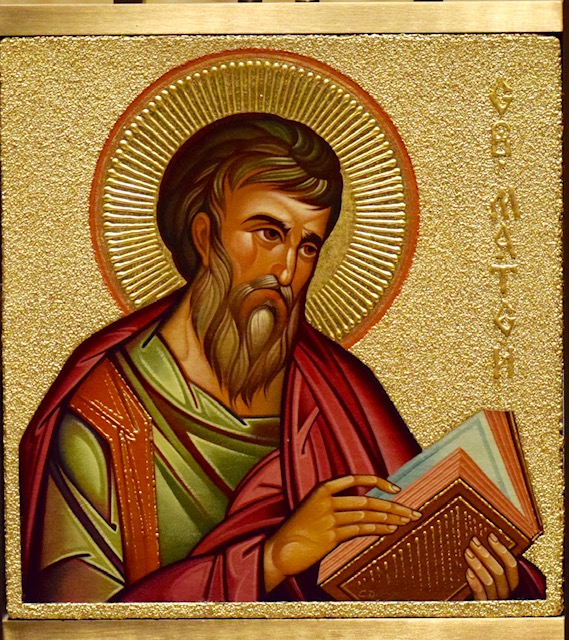
Matthew’s dual identity as both a former “insider” of the tax system and a man who sought higher truth makes him a uniquely relatable figure for those working in regulatory compliance and financial law. He understands the mechanics of the system but advocates for its reform and honest execution.
The “Matthew Effect” and Economic Theory
Beyond his personal history, the writings attributed to Matthew have had a lasting impact on how we discuss wealth inequality and capital accumulation. Sociologists and economists often refer to the “Matthew Effect,” a term coined by Robert K. Merton in 1968, based on a verse in the Gospel of Matthew: “For unto every one that hath shall be given, and he shall have abundance: but from him that hath not shall be taken away even that which he hath.”
Accumulated Advantage in Investing
In the context of modern investing, the Matthew Effect describes the phenomenon where the rich get richer and the poor get poorer. This is a cold reality of compound interest and capital gains. Those with the initial capital to invest can leverage their assets to generate exponential growth, while those without capital are often left behind by inflation and the rising cost of living.
Understanding this principle is crucial for any personal finance enthusiast. It highlights the importance of:
- Early Entry: The earlier one starts investing, the more they benefit from the “abundance” created by time and interest.
- Asset Allocation: Having diverse assets ensures that one is on the “receiving” side of the economic equation.
- Financial Literacy: Education acts as the catalyst that allows individuals to break the cycle of “having not” and enter the cycle of “having.”
Socially Responsible Investing (SRI)
By recognizing Saint Matthew’s patronage, many investment funds have adopted principles of social responsibility. If the “Matthew Effect” suggests a natural tendency toward wealth concentration, then ethical finance seeks to balance this through philanthropic efforts and impact investing. Modern “Money” strategies aren’t just about accumulation; they are about using that accumulated “abundance” to solve systemic issues, mirroring Matthew’s shift from private gain to public service.
Practical Lessons for the Modern Side Hustler and Entrepreneur
Even for those who do not work in traditional banking or accounting, Saint Matthew offers a blueprint for financial management in the digital age. Whether you are managing a side hustle or building a corporate brand, the “Matthew mindset” involves three key pillars:
1. Diligent Documentation
Matthew was chosen as an apostle partly because his skills as a record-keeper were invaluable. In the modern economy, data is the new currency. Whether it is tracking your expenses for tax deductions or analyzing the ROI of a marketing campaign, the ability to maintain precise records is what separates successful businesses from failing ones.
2. Radical Transparency
The stigma of the “tax collector” was one of secrecy and hidden fees. Today’s successful brands and financial tools are built on transparency. Users want to know how their data is used, how their fees are calculated, and what the true cost of a financial product is. Following in the footsteps of a patron who moved from the shadows of Roman tax booths into the light of public ministry means embracing a “full-disclosure” approach to business.
3. The Power of Pivot
Matthew’s career change is one of the most famous “pivots” in history. He didn’t just change jobs; he changed his entire financial philosophy. For the modern professional, this illustrates that a career path is not fixed. Many of today’s most successful financial tech (FinTech) founders came from traditional banking backgrounds but realized the system needed a different approach. Being able to recognize when a current path is no longer serving your values or the market is a hallmark of entrepreneurial success.
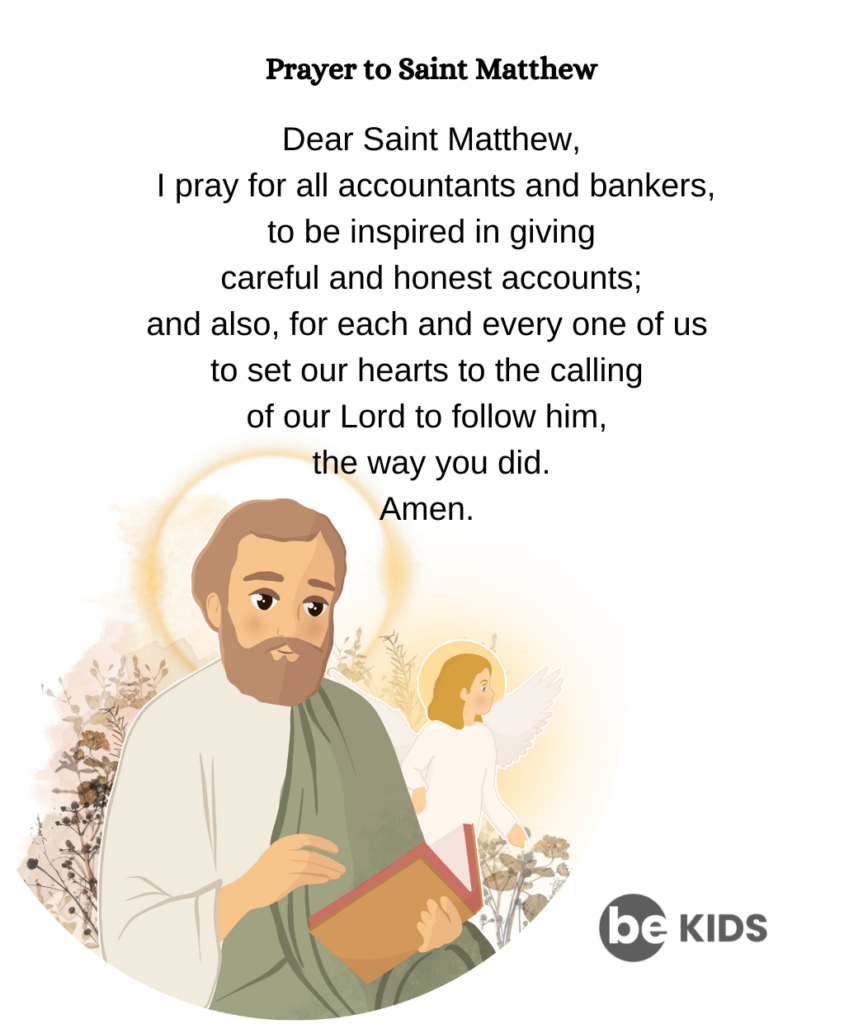
Conclusion: The Enduring Relevance of Saint Matthew in Finance
When we ask “what is saint matthew the patron saint of,” we are really asking how we can find meaning and ethics in the often-sterile world of numbers. Matthew’s patronage provides a bridge between the pragmatic world of wealth and the philosophical world of value.
For the accountant during tax season, the banker managing a portfolio, or the individual investor looking at their retirement account, Saint Matthew stands as a reminder that money is a tool, not an end in itself. He represents the possibility of transformation—that someone once defined by the collection of debt can become a symbol of integrity and communal benefit.
In an era of AI-driven trading, blockchain ledgers, and complex global finance, the human element remains paramount. The values of honesty, precision, and stewardship that Saint Matthew embodies are the very qualities that define a sustainable and prosperous financial future. By looking to this historical figure, modern money managers can find a timeless guide for navigating the challenges and opportunities of the 21st-century economy.
aViewFromTheCave is a participant in the Amazon Services LLC Associates Program, an affiliate advertising program designed to provide a means for sites to earn advertising fees by advertising and linking to Amazon.com. Amazon, the Amazon logo, AmazonSupply, and the AmazonSupply logo are trademarks of Amazon.com, Inc. or its affiliates. As an Amazon Associate we earn affiliate commissions from qualifying purchases.