
Finding the “best” internet service is rarely a matter of identifying a single global winner. Because infrastructure deployment is localized, the optimal choice for your household depends on a complex interplay of geography, technology types, and your specific digital lifestyle. To determine which provider reigns supreme for your address, you must move beyond generic speed tests and evaluate the underlying connectivity landscape.
Assessing Connectivity Infrastructure Types
Before comparing providers, you must understand the delivery method. The physical medium—fiber, cable, satellite, or 5G—dictates the reliability, latency, and symmetrical capabilities of your connection.

Fiber Optic (FTTH)
Fiber-to-the-Home (FTTH) is the gold standard of modern connectivity. Unlike legacy copper systems, fiber uses light to transmit data through glass strands. This results in incredibly low latency and, crucially, symmetrical speeds. If you upload large files, participate in high-definition video conferences, or manage a cloud-based server, fiber is undisputed in its performance. When checking local availability, fiber should always be your top priority.
Cable Broadband (DOCSIS)
Cable internet remains the most widespread high-speed solution in suburban and urban environments. It utilizes existing coaxial cable infrastructure—the same lines that deliver television signals. Modern iterations, such as DOCSIS 3.1 and 4.0, provide multi-gigabit download speeds. However, cable is typically asynchronous, meaning your download speeds significantly outperform your upload speeds. Furthermore, cable is a “shared medium” architecture; if your neighbors are heavy users during peak evening hours, you may experience congestion-related slowdowns.
Fixed Wireless and 5G Home Internet
Over the last few years, 5G Home Internet has disrupted the market by utilizing cellular towers to provide home connectivity. This is an excellent solution for areas where trenching fiber is cost-prohibitive. While performance is generally impressive, it is highly dependent on your proximity to the nearest cellular tower and environmental factors. It is an ideal “middle-ground” service for those who need reliable streaming and web browsing without the permanence of a wired installation.
Satellite and DSL
Satellite internet, particularly Low Earth Orbit (LEO) constellations, is a revolutionary step forward for rural residents who were previously tethered to slow DSL or dial-up. While latency remains higher than fiber, LEO systems have made remote work and streaming viable in areas previously considered “digital deserts.” DSL (Digital Subscriber Line), conversely, is rapidly becoming obsolete as telcos shift their focus to fiber upgrades.
Analyzing Your Household’s Data Requirements
The best internet service for a high-intensity professional creative is drastically different from the best service for a retiree who primarily checks email and watches the occasional news clip. Defining your “bandwidth persona” prevents overpaying for speed tiers you cannot utilize.
Defining “Power User” Needs
If your household hosts multiple streamers, competitive gamers, and remote employees, you require high bandwidth and consistent low latency. For gaming, ping (the time it takes for data to travel to a server) is more important than raw speed. A 100Mbps fiber connection will provide a superior gaming experience to a 1Gbps cable connection because the fiber’s latency consistency is vastly more stable.
The Impact of Connected Devices (IoT)
Modern homes are filled with “smart” devices—thermostats, cameras, smart speakers, and appliances. Each device maintains a small, persistent connection to the internet. If you have 30+ connected devices, you need a router capable of handling high traffic volume and a service tier that doesn’t bottleneck when your background devices synchronize with the cloud. Look for providers that offer integrated Wi-Fi 6 or 7 equipment, as these protocols are designed specifically for high-density device environments.
Data Caps and Net Neutrality
Always inspect the fine print regarding data caps. Many cable providers implement “soft caps,” where exceeding a certain threshold (usually 1TB to 1.2TB) results in overage fees or bandwidth throttling. If you stream 4K video daily or perform frequent large-scale backups to the cloud, ensure your chosen plan offers truly unlimited data to avoid unexpected monthly billing spikes.
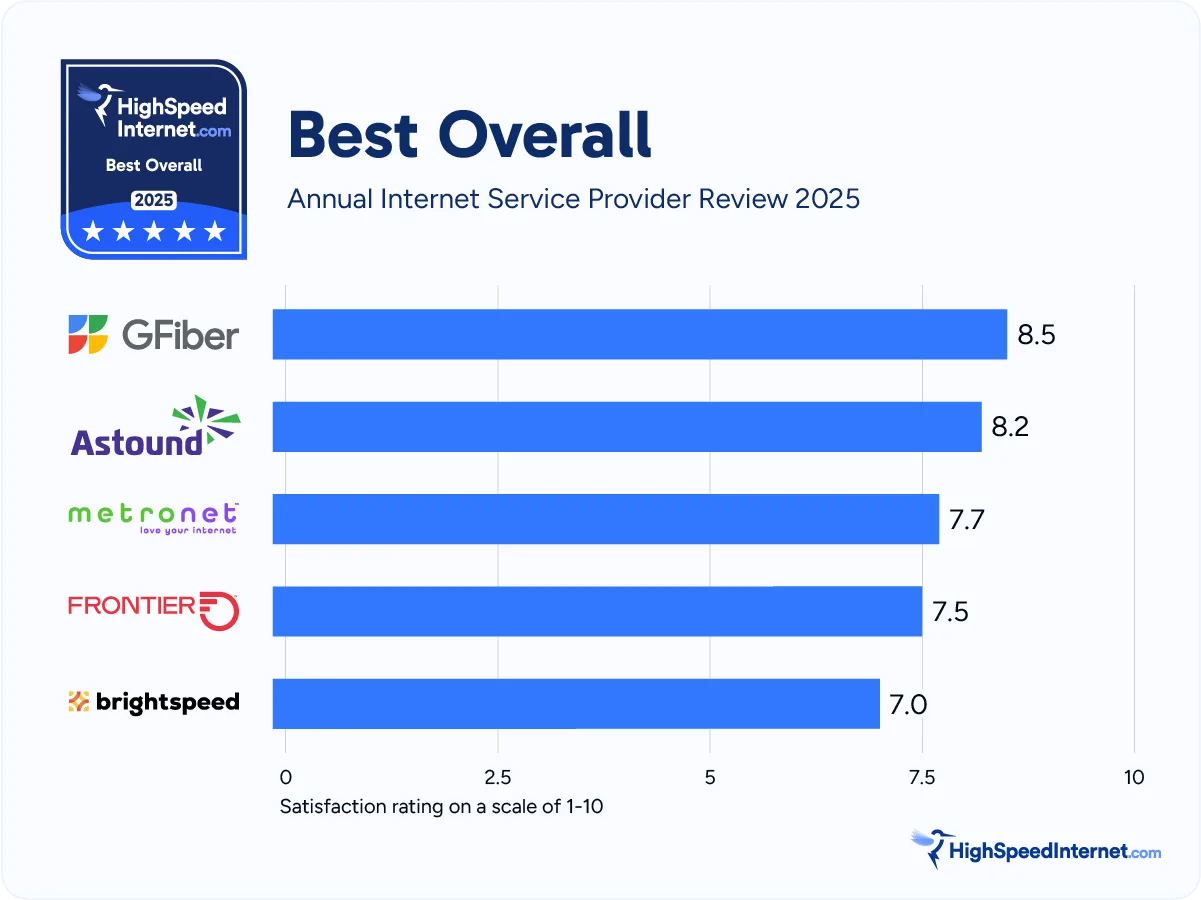
Navigating Local Pricing and Contract Structures
Internet service providers (ISPs) often engage in aggressive pricing strategies that can make comparing “the best” feel like a shell game. Distinguishing between promotional rates and the “real” cost of ownership is essential.
The Promotional Pricing Trap
Many providers advertise low monthly rates that expire after 12 or 24 months. These contracts often come with hidden costs, including modem rental fees, installation charges, and early termination penalties. When calculating your budget, ask for the “standard” or “post-promotional” pricing to understand the long-term impact on your finances.
Bundling vs. Unbundling
Historically, bundling internet with cable TV or landline phone service was the only way to secure a discount. Today, the rise of streaming services has pushed many consumers toward “unbundling.” Evaluate whether your ISP offers a lower price for “internet-only” plans. Often, it is more cost-effective to pay a higher rate for a standalone high-speed connection and subscribe to your preferred streaming platforms independently.
The Importance of Customer Service Metrics
Performance is not merely about speed; it is about uptime and support. Before signing a long-term contract, consult local community forums, neighborhood social media groups, or regional Better Business Bureau ratings. A provider that offers 2Gbps speeds is useless if they have a reputation for week-long outages and unresponsive customer support. Reliability—measured by the consistency of your connection over time—is the most valuable feature of any ISP.
How to Conduct Your Own Local Research
To find the actual best service at your specific address, bypass the television advertisements and use data-driven investigation tools.
Utilizing FCC and Third-Party Maps
Start by consulting the FCC’s National Broadband Map. This database requires ISPs to report their coverage areas, providing a fairly accurate bird’s-eye view of what is available at your exact coordinates. Follow this by using independent comparison websites that allow you to enter your ZIP code to see a list of providers, their max advertised speeds, and starting prices.
The “Door-Knock” Strategy
Online databases sometimes lag behind real-world infrastructure deployments. New fiber lines are frequently laid in neighborhoods without immediate updates to national maps. If you are uncertain about fiber availability, contact the major regional providers directly and ask if they have “lit” your specific street. Often, a customer service representative can provide a more accurate answer than an automated web form.
Testing Latency and Jitter
If you are moving into a new residence, ask current neighbors what service they use and if they have experienced recurring outages. Specifically, ask them about “jitter”—the variation in latency. High jitter causes buffering in video calls and lag in gaming, even if your download speed is technically fast.

Final Decision Framework: Making the Choice
To finalize your decision, create a simple matrix based on the following three criteria:
- Availability: Does the provider offer a physical line to my specific building? (Verify this with the provider’s portal, not just a map).
- Speed-to-Latency Ratio: Does the connection type support my household’s specific usage patterns (e.g., fiber for gamers/creatives, cable for streamers/browsers)?
- Total Cost of Ownership: What is the price after the promotional period ends, and what are the equipment/installation fees?
The “best” internet service is the one that provides the highest possible reliability and speed at a price point that fits your budget. Because the industry is constantly evolving, it is advisable to revisit your plan once every two years. Technology cycles in telecommunications move fast, and a provider that wasn’t available in your area 24 months ago may have recently completed a major infrastructure rollout, offering you a faster, more stable alternative to your current contract. By prioritizing infrastructure type and total long-term cost over introductory offers, you ensure your home remains digitally equipped for the demands of the modern era.
aViewFromTheCave is a participant in the Amazon Services LLC Associates Program, an affiliate advertising program designed to provide a means for sites to earn advertising fees by advertising and linking to Amazon.com. Amazon, the Amazon logo, AmazonSupply, and the AmazonSupply logo are trademarks of Amazon.com, Inc. or its affiliates. As an Amazon Associate we earn affiliate commissions from qualifying purchases.