
In the rapidly evolving landscape of healthcare technology, few innovations have had as direct an impact on patient survival rates as Resuscitation Quality Improvement, commonly known as RQI. While traditional medical training often relied on periodic, manual workshops, RQI represents a digital-first paradigm shift. It is a sophisticated ecosystem that blends smart hardware, cloud-based software, and data analytics to ensure that healthcare providers maintain high-quality CPR (Cardiopulmonary Resuscitation) skills.
At its core, RQI is a response to a well-documented technical problem: human skill decay. Studies have shown that the physical and cognitive skills required for effective resuscitation begin to decline significantly just months after a traditional two-year certification course. By leveraging the Internet of Things (IoT) and adaptive learning algorithms, RQI provides a “low-dose, high-frequency” training model that keeps lifesaving skills sharp through constant, tech-enabled reinforcement.
The Evolution of Resuscitation: Moving from Manual to Data-Driven Training
To understand what RQI is, one must first understand the limitations of the traditional training models that preceded it. For decades, CPR certification followed a “one-and-done” methodology. Healthcare professionals would attend an intensive eight-hour course once every two years, demonstrate their proficiency on a static mannequin, and receive a paper card.
The Limitations of Traditional CPR Certification
The primary flaw in the traditional model was the lack of objective measurement. Instructors had to rely on visual observation to judge whether a chest compression was deep enough or if the rate was optimal. This subjectivity led to a “competency gap,” where providers felt confident but were technically underperforming during real-world cardiac arrests. Furthermore, the two-year cycle ignored the physiological reality of muscle memory loss.
The Birth of the RQI Digital Platform
Developed through a partnership between the American Heart Association and Laerdal Medical, the RQI platform was designed to replace the episodic training model with a continuous, tech-driven solution. By integrating software directly into the training hardware, RQI turned a manual physical task into a measurable digital event. This transition allowed for the collection of granular data on every single compression and ventilation, moving medical education into the era of Big Data.
How RQI Technology Works: Sensors, Software, and Real-Time Feedback
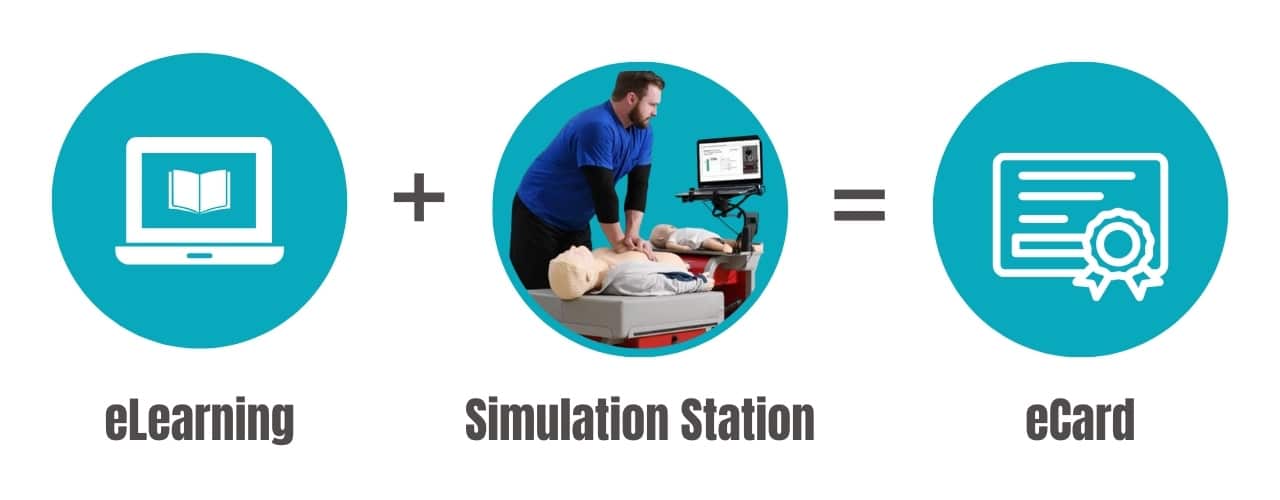
The RQI system is a masterclass in the integration of hardware and software. It is not merely a mannequin; it is a networked “smart station” that functions as a sophisticated peripheral device connected to a centralized cloud platform.
Smart Mannequins and Precision Sensors
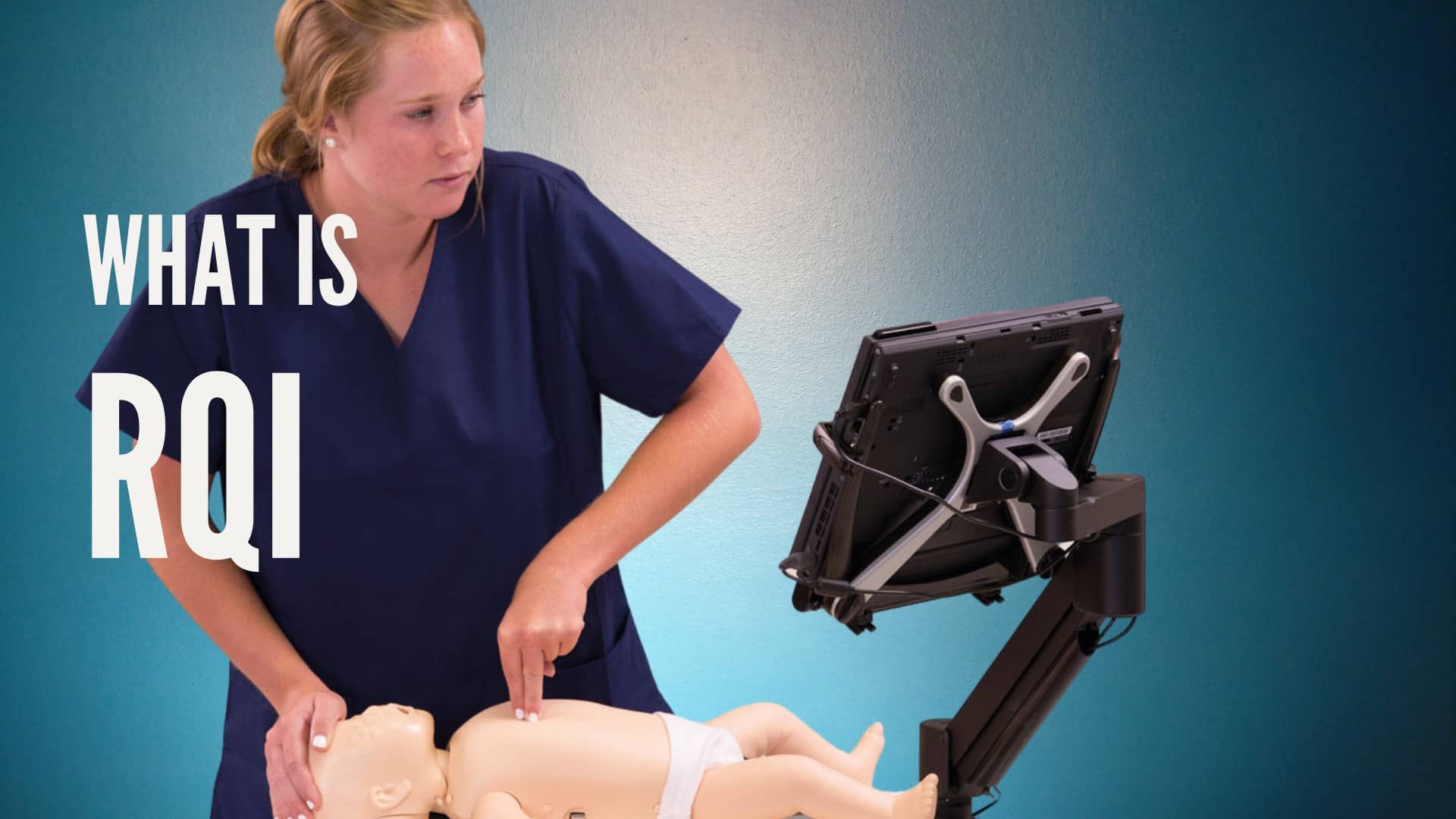
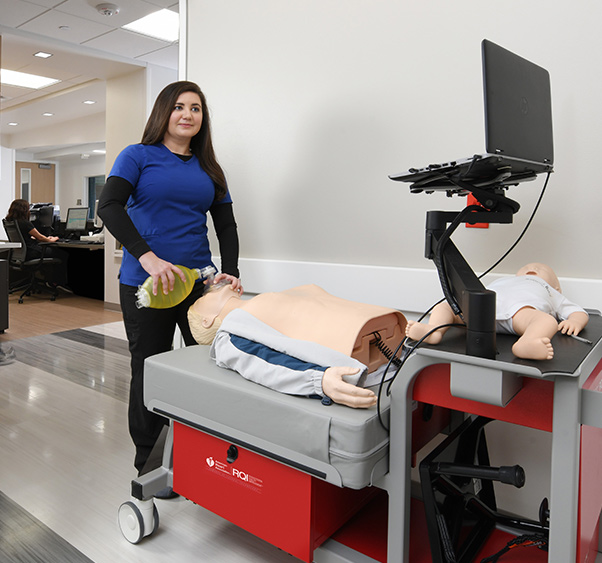
The physical component of the RQI system consists of adult and infant mannequins equipped with high-precision haptic sensors. These sensors measure the depth of compressions to the millimeter and the rate of compressions to the millisecond. When a user interacts with the mannequin, the hardware captures the mechanical energy and converts it into digital data points.
The Role of Cloud Computing and Analytics
All data captured by the RQI stations is uploaded in real-time to a secure cloud database. This allows hospital administrators and department heads to monitor the readiness of their entire staff through a centralized dashboard. This SaaS (Software as a Service) model ensures that compliance is tracked automatically. If a nurse’s skills begin to drift below the required threshold, the system flags the performance, and the software assigns corrective modules.
Adaptive Learning Algorithms
One of the most impressive “Tech” aspects of RQI is its use of adaptive learning. The software does not deliver the same content to every user. Instead, it uses algorithms to analyze a provider’s performance and tailor the instructional video and audio feedback to their specific weaknesses. If a user is consistently failing to allow for full chest recoil, the software identifies this pattern and focuses the “micro-learning” session on that specific technical error.
The Benefits of Low-Dose, High-Frequency Digital Learning
The pedagogical brilliance of RQI lies in its “low-dose, high-frequency” (LDHF) approach, which is made possible only through mobile and modular technology. Instead of an eight-hour session once every two years, users spend 10 to 15 minutes at an RQI station every quarter.
Combating “Skill Decay” with On-Demand Tech
Because the RQI stations are decentralized and placed directly within hospital units (e.g., in the breakroom or near the nursing station), the technology is available 24/7. This “on-demand” access mimics the convenience of modern mobile apps. By engaging with the tech frequently, healthcare providers move the mechanics of CPR from short-term memory to long-term “autonomous” memory. From a technical standpoint, this is a continuous reinforcement loop that ensures the “human hardware” remains as updated as the software it is using.
Mobile and Modular Hardware Integration
RQI systems are designed to be modular. As new resuscitation guidelines are released by global authorities, the software can be updated over-the-air (OTA), similar to a smartphone operating system update. This ensures that every hospital in the network is practicing the most current, evidence-based techniques without the need for manual retraining of instructors or physical replacement of equipment.
Digital Security and Data Privacy in Medical Training Platforms
As with any cloud-based platform operating within the healthcare sector, data security is paramount. RQI systems must balance the need for detailed performance analytics with the strict requirements of patient and provider privacy.
Managing Institutional Compliance via the Cloud
The RQI platform functions as a robust Learning Management System (LMS). It integrates with a hospital’s existing HR software via APIs to track employee certifications. The security architecture of these platforms uses enterprise-grade encryption to ensure that individual performance data—which could be sensitive—is only accessible to authorized personnel. This digital record-keeping eliminates the risk of lost paper certifications and provides an immutable audit trail that can be vital during hospital accreditation processes.
The Future of RQI: AI, VR, and Beyond
As we look toward the future of RQI, the roadmap involves even deeper integration of emerging technologies. The goal is to move beyond simple haptic feedback and into fully immersive simulation environments.
Integrating Augmented Reality (AR) and Virtual Reality (VR)
The next generation of RQI is expected to incorporate AR and VR headsets. While the current tech focuses on the physical mechanics of CPR, VR can simulate the high-stress environment of a crowded emergency room. By syncing the smart mannequin with a VR headset, a provider could practice their compressions while visually experiencing the chaos of a “Code Blue,” complete with digital avatars of other team members and realistic auditory triggers.
Predictive Analytics for Patient Outcomes
As the RQI database grows, AI and machine learning will likely be used to correlate training data with actual patient outcomes. By analyzing millions of data points, researchers may discover subtle technical nuances in compression patterns that lead to higher survival rates. This would allow the RQI software to evolve from a training tool into a predictive engine, recommending specific training tweaks that could save thousands more lives annually.
In conclusion, RQI is far more than a medical training program; it is a sophisticated technological solution to a biological problem. By replacing inconsistent human instruction with precise sensors, cloud analytics, and adaptive software, RQI ensures that when a life is on the line, the person performing CPR isn’t relying on a two-year-old memory, but on a digitally-honed, data-verified skill set. As AI and IoT continue to mature, the RQI platform stands as a prime example of how technology can be harnessed to improve the most critical “metric” of all: human survival.
aViewFromTheCave is a participant in the Amazon Services LLC Associates Program, an affiliate advertising program designed to provide a means for sites to earn advertising fees by advertising and linking to Amazon.com. Amazon, the Amazon logo, AmazonSupply, and the AmazonSupply logo are trademarks of Amazon.com, Inc. or its affiliates. As an Amazon Associate we earn affiliate commissions from qualifying purchases.