
In the realm of computer science and digital engineering, numbers are the fundamental building blocks of every operation, from the simplest script to the most complex artificial intelligence model. However, not all numbers are created equal. The mathematical distinction between rational and irrational numbers is not merely a theoretical exercise for high school algebra; it is a core constraint that shapes how software is written, how hardware is designed, and how data is secured.
To understand how technology interacts with the physical world, we must first understand the divide between the numbers we can perfectly represent and those that defy finite logic.
1. Decoding the Mathematical Foundations: Rational vs. Irrational
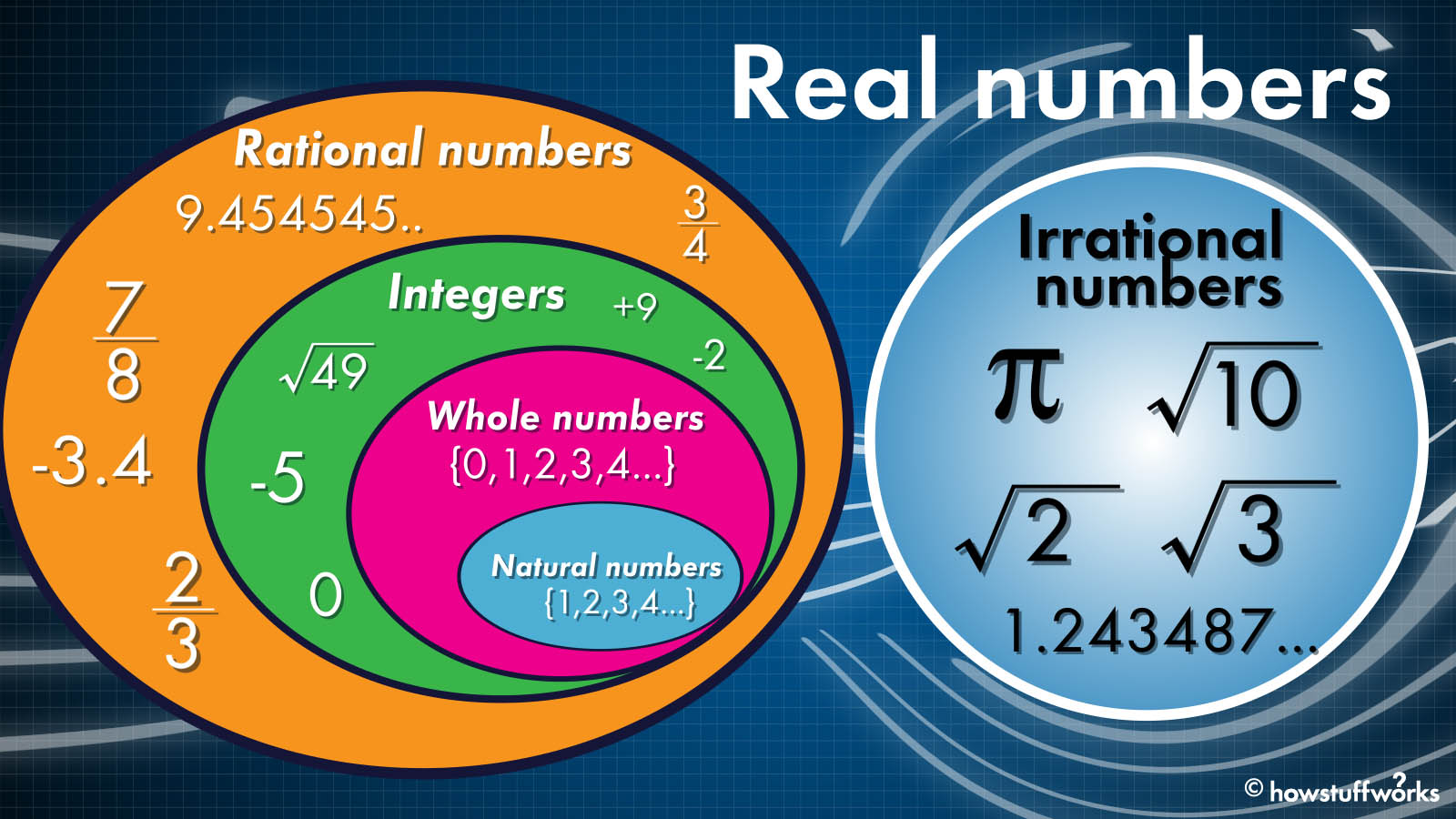
Before diving into the technological implications, we must define the parameters of our mathematical landscape. In the world of computation, we categorize numbers based on their predictability and representability.
The Nature of Rational Numbers
A rational number is any number that can be expressed as a fraction $p/q$, where both $p$ and $q$ are integers and $q$ is not zero. In technical terms, rational numbers are “terminating” or “repeating.” For instance, $1/2$ becomes $0.5$ (terminating), and $1/3$ becomes $0.333…$ (repeating).
From a software engineering perspective, rational numbers are the “safe” zone. They represent discrete values—quantities that can be counted, indexed, and stored with absolute certainty, provided the denominator isn’t too large for the allocated memory.
The Mystery of Irrational Numbers
Irrational numbers are the outliers. They cannot be expressed as a simple fraction, and their decimal expansions go on forever without ever settling into a repeating pattern. The most famous examples include $pi$ (Pi), $e$ (Euler’s number), and $sqrt{2}$.
In technology, irrational numbers represent a unique challenge: they are infinite. Because a computer has finite memory (RAM) and finite storage, it is physically impossible for a digital system to store the true value of an irrational number. Every time a computer calculates an irrational number, it is, by necessity, lying—or at least, approximating.
2. The Computational Dilemma: Floating-Point Math and Precision Errors
The divide between rational and irrational numbers creates a significant hurdle in software development, particularly in the implementation of “Floating-Point Arithmetic.” This is the method computers use to represent a wide range of real numbers.
The IEEE 754 Standard
Most modern programming languages (Python, Java, C++) and hardware processors follow the IEEE 754 standard for floating-point computation. This system represents numbers in binary (base-2). While this is efficient for hardware, it introduces a “translation” problem.
Many rational numbers in base-10 (like $0.1$) become repeating decimals in base-2. This means that even a “simple” rational number can behave like an irrational number within the confines of a computer’s binary brain. When you add $0.1 + 0.2$ in many programming environments, the result is $0.30000000000000004$. This tiny discrepancy is a direct result of the computer’s inability to store certain rational fractions perfectly, leading to “rounding errors.”
High-Precision Computing and Scientific Simulation
In fields like aerospace engineering or quantum computing, these minor errors can lead to catastrophic failures. To handle irrational numbers or extremely precise rational fractions, developers use “Arbitrary-Precision Arithmetic” libraries.
Unlike standard floating-point operations that use fixed 32-bit or 64-bit segments of memory, arbitrary-precision software allows the computer to use as much memory as needed to represent a number. While this still cannot “solve” an irrational number, it allows for calculations to millions of decimal places, ensuring that the approximation is close enough to reality to land a rover on Mars.
3. Irrational Numbers in Digital Security and Cryptography
While irrational numbers are a headache for precision, they are a godsend for security. The unpredictability and infinite nature of irrationality are foundational to how we protect data in the 21st century.
Entropy and Random Number Generation
True randomness is incredibly difficult to achieve in a deterministic system like a computer. Most “random” numbers in tech are actually “pseudo-random,” generated by algorithms. However, irrational numbers provide a source of “high entropy.”
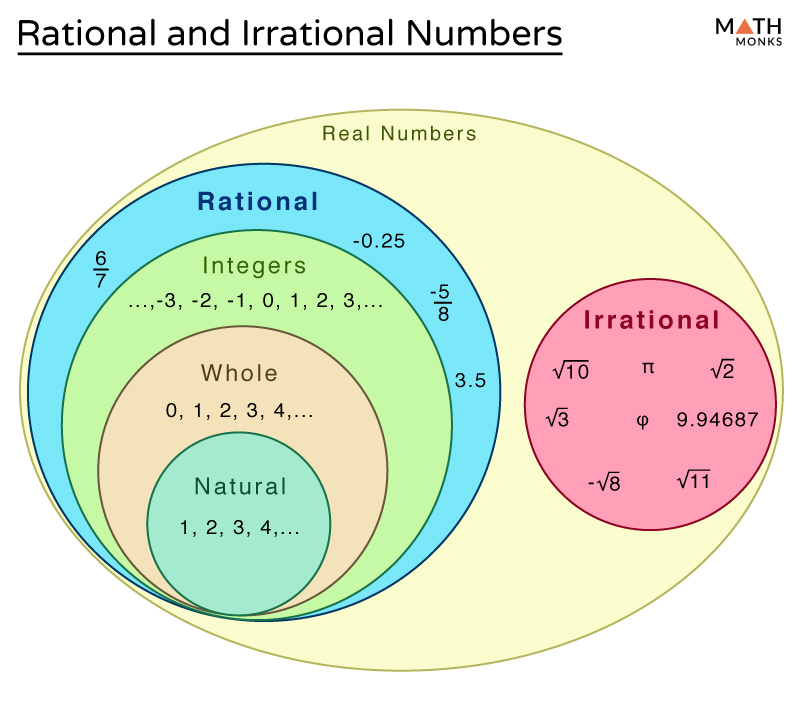
By sampling digits deep within the decimal expansion of irrational constants like $pi$ or $sqrt{3}$, cryptographers can generate sequences that appear entirely random to an outside observer. Because there is no repeating pattern, an attacker cannot easily predict the next digit in the sequence, making these numbers vital for creating secure encryption keys.
The Role of Transcendental Numbers in Hashing
Irrational numbers that are also “transcendental” (meaning they are not the root of any algebraic equation with rational coefficients), such as $e$ or $pi$, are often used as “nothing-up-my-sleeve numbers” in cryptography.
In the design of cryptographic hash functions or digital signatures, developers use these constants to prove that the algorithm hasn’t been “fixed” with a back door. By using the digits of an irrational number as a seed for a security protocol, the developer demonstrates that the starting parameters are derived from a universal mathematical constant rather than a pre-calculated vulnerability.
4. Graphics, Signal Processing, and the Physical World
Irrational numbers are the bridge between the digital world (which is discrete and rational) and the physical world (which is continuous and often irrational).
Trigonometry and 3D Rendering
If you have ever played a high-end video game or watched a CGI movie, you are seeing irrational numbers in action. 3D rendering relies heavily on trigonometry—sines, cosines, and tangents. These functions almost always result in irrational values.
When a GPU (Graphics Processing Unit) calculates the lighting on a character’s face or the trajectory of a falling object, it is performing millions of calculations per second involving $pi$. The smoothness of the curves and the realism of the motion depend on how efficiently the hardware can approximate these irrational transitions from one rational coordinate to the next.
Digital Signal Processing (DSP)
Irrational numbers are equally important in audio and video compression. The Fourier Transform, a mathematical formula used to turn raw data into formats like MP3s or JPEGs, relies on the irrational constant $e$.
By using Euler’s number ($e$) to map signals into frequency domains, technology can strip away the data that the human ear or eye can’t perceive, allowing for the high-speed streaming we take for granted today. Without the ability to manipulate these irrational constants, our digital files would be too massive to share over the internet.
5. The Future of Computing: Moving Beyond Approximation
As we look toward the future of technology, the way we handle the divide between rational and irrational numbers is evolving. We are moving from a period of “best guesses” to a period of “symbolic intelligence.”
Symbolic Computation and AI
Traditional computing treats $sqrt{2}$ as $1.414…$ (an approximation). However, modern Computer Algebra Systems (CAS) and advanced AI models are increasingly using “Symbolic Computation.” In this approach, the computer doesn’t convert the irrational number into a decimal. Instead, it treats “$sqrt{2}$” as a symbol, much like a human mathematician would.
By maintaining the symbolic integrity of irrational numbers throughout a calculation and only approximating at the very last step, AI-driven tools in fields like drug discovery and structural engineering can maintain a level of accuracy that was previously impossible.
Quantum Computing’s Rational Edge
Quantum computers operate on qubits, which exist in a superposition of states. The math governing these states often involves complex numbers and irrational probabilities. Interestingly, quantum algorithms may eventually offer ways to solve problems involving irrational constants more efficiently than classical “rational” binary systems.
As quantum hardware matures, our ability to simulate the irrational complexities of nature—such as the way a protein folds or the way a market fluctuates—will move from rough digital approximations to precise quantum realities.

Conclusion
The distinction between rational and irrational numbers is more than a mathematical curiosity; it is a defining boundary of technology. Rational numbers provide the structure, logic, and countability required for database management and basic logic. Irrational numbers provide the infinite complexity required for graphics, encryption, and the simulation of the physical universe.
For the modern tech professional, understanding this divide is crucial. It informs why our code might glitch at the fifteenth decimal place, how our data remains secure from hackers, and how we can continue to push the boundaries of what is possible in a digital landscape built on finite machines but inspired by infinite mathematics. In the end, the history of computing is the history of our attempt to map the infinite irrationality of the world into the rational order of the machine.
aViewFromTheCave is a participant in the Amazon Services LLC Associates Program, an affiliate advertising program designed to provide a means for sites to earn advertising fees by advertising and linking to Amazon.com. Amazon, the Amazon logo, AmazonSupply, and the AmazonSupply logo are trademarks of Amazon.com, Inc. or its affiliates. As an Amazon Associate we earn affiliate commissions from qualifying purchases.