
For many, the concept of retirement is a distant, often hazy dream—a vague notion of freedom from the daily grind. Yet, as life expectancies rise and the traditional employer-sponsored pension becomes a relic of the past, actively planning for retirement has shifted from a luxury to an absolute necessity. The question “When can I retire?” is no longer a rhetorical musing but a critical query demanding a concrete, data-driven answer. This is where the ‘When Do I Retire Calculator’ steps in, transforming a daunting financial unknown into a quantifiable, actionable projection.

This article delves into the critical role these calculators play in modern financial planning, exploring their mechanics, how to interpret their insights, and what holistic strategies you can employ to turn your retirement aspirations into a tangible reality. It’s not just about a number; it’s about understanding the journey to financial independence and ensuring your golden years are truly golden.
The Imperative of Retirement Planning in Today’s Economic Landscape
The landscape of retirement has undergone a seismic shift over the past few decades. Gone are the days when a lifelong career with one company guaranteed a comfortable pension. Today’s retirees navigate a complex web of personal savings, investments, and government benefits, making proactive planning more crucial than ever before.
Shifting Paradigms: From Pensions to Personal Responsibility
Historically, many workers could rely on defined benefit pension plans, where employers promised a specific monthly income during retirement. This model largely absolved individuals of the intricate details of investment and savings management. However, as global economies evolved and companies sought to reduce long-term liabilities, defined benefit plans have been largely replaced by defined contribution plans, such as 401(k)s and 403(b)s. In these plans, the employer often contributes to an employee’s individual retirement account, but the responsibility for managing investments, understanding risk, and ensuring adequate savings ultimately falls squarely on the individual. This shift mandates a greater degree of financial literacy and engagement from every working professional. It means understanding investment vehicles, asset allocation, and the power of compound interest—concepts that were once primarily the domain of financial professionals are now essential knowledge for anyone aiming for a secure retirement. The ‘When Do I Retire’ calculator becomes an indispensable tool in this new paradigm, empowering individuals to take control of their financial destiny by providing a clear framework for setting and achieving retirement goals.
The Dual Challenge: Longevity and Inflation
Two formidable forces further complicate modern retirement planning: increasing longevity and persistent inflation. Advances in healthcare and lifestyle improvements mean people are living longer, healthier lives than ever before. While this is undoubtedly a positive development, it means that retirement savings need to stretch further, potentially covering 20, 30, or even 40 years of post-work life. A longer retirement period naturally demands a larger savings nest egg. Compounding this challenge is inflation, the gradual erosion of purchasing power over time. A dollar today will buy less in 20 or 30 years. What seems like a sufficient sum for retirement today might be significantly inadequate due to inflation’s relentless march. Retirement calculators must therefore account for future inflation rates to provide a realistic picture of the purchasing power of your future savings. Ignoring these two factors can lead to a significant miscalculation of what’s truly needed, underscoring the necessity of using sophisticated tools that incorporate these long-term economic realities into their projections.
Why Procrastination is the Ultimate Retirement Saboteur
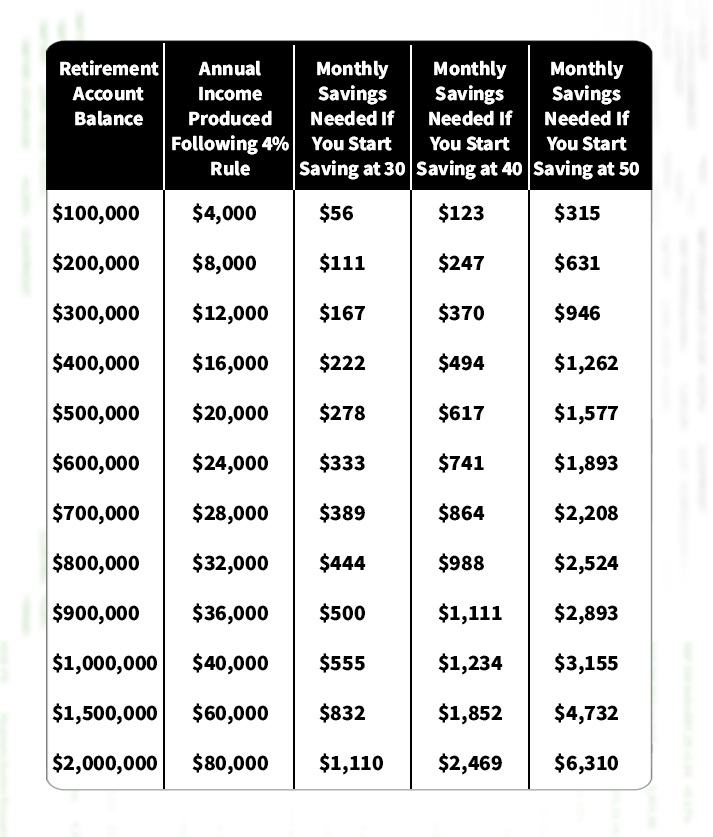
Perhaps the most insidious threat to a comfortable retirement is procrastination. The human tendency to defer unpleasant or complex tasks often leads individuals to postpone retirement planning, assuming they have ample time. However, time is the single most powerful ally in wealth accumulation, especially for retirement savings. The magic of compound interest—earning returns on your initial investment and on the accumulated interest—works best over extended periods. A small, consistent contribution made early in one’s career can grow into a substantial sum over decades, often far outweighing much larger contributions made later in life. Delaying even by a few years can necessitate dramatically higher savings rates later on just to catch up, often to an unsustainable level. The ‘When Do I Retire’ calculator can serve as a powerful wake-up call, illustrating the significant impact of starting early versus delaying, and providing a stark, data-driven motivation to begin planning and saving today.
Understanding the “When Do I Retire” Calculator
At its core, a ‘When Do I Retire’ calculator is a sophisticated financial model designed to project the future value of your savings and investments, then determine how long those funds will last based on your desired retirement lifestyle. It’s not a crystal ball, but a powerful simulation tool that brings clarity to your financial future.
What Inputs Do These Calculators Require?
To provide an accurate projection, these calculators rely on a set of critical inputs from the user. The more precise your inputs, the more reliable the output will be.
- Current Age & Desired Retirement Age: Your starting point and your goal.
- Current Savings & Investments: The total amount you’ve accumulated so far across all retirement accounts (401k, IRA, brokerage, etc.).
- Annual Savings & Contribution Rate: How much you currently save and invest each year, and often, what percentage of your income you contribute.
- Expected Annual Investment Rate of Return: This is an estimate of how much your investments will grow each year. It’s crucial to be realistic here, often using historical averages for diversified portfolios (e.g., 6-8% after inflation).
- Expected Annual Retirement Expenses: A critical input – how much money you anticipate needing per year during retirement. This is often the hardest to estimate but consider your current spending, future healthcare costs, travel aspirations, etc.
- Inflation Rate: The average rate at which the cost of living increases. A standard assumption is around 2-3% per year.
- Social Security/Pension Estimates: Any other guaranteed income streams you expect to receive in retirement.
How Do They Work?
Once you input these variables, the calculator goes to work using a series of complex financial algorithms:
- Future Value Projections: It calculates the future value of your current savings and ongoing contributions, applying your expected rate of return and accounting for compound interest over your remaining working years.
- Inflation Adjustment: It adjusts your expected retirement expenses for inflation, ensuring the projected future cost of living is accurately represented.
- Withdrawal Rate Simulation: It then simulates withdrawing funds from your projected retirement nest egg, typically using a sustainable withdrawal rate (e.g., the 4% rule, which suggests withdrawing 4% of your initial portfolio balance, adjusted for inflation, each year).
- Longevity & Depletion: The calculator continues to project how long your funds will last, often until a high age like 90 or 95, to account for increasing life expectancies. Some advanced calculators may even employ Monte Carlo simulations, running thousands of different market scenarios to provide a probability of your money lasting, rather than a single deterministic outcome.
Beyond the Numbers: The Behavioral Aspect of Planning
While the calculator provides objective financial projections, its true power lies in its ability to influence behavior. Seeing a clear projection of your retirement date—or the lack thereof—can be a potent motivator. It transforms abstract financial goals into concrete numbers, making the need to save more, invest smarter, or adjust lifestyle choices palpable. The process of inputting data forces self-reflection on current spending habits, future aspirations, and financial discipline. This engagement can bridge the gap between intention and action, driving individuals to make the necessary changes to achieve their desired retirement timeline.
Maximizing the Value of Your Retirement Calculator Results
A ‘When Do I Retire’ calculator is more than just an answer machine; it’s a dynamic planning tool. To truly leverage its potential, you must actively engage with its output and use it as a basis for strategic financial adjustments.
Interpreting the Output: Your Retirement “Gap” or “Surplus”
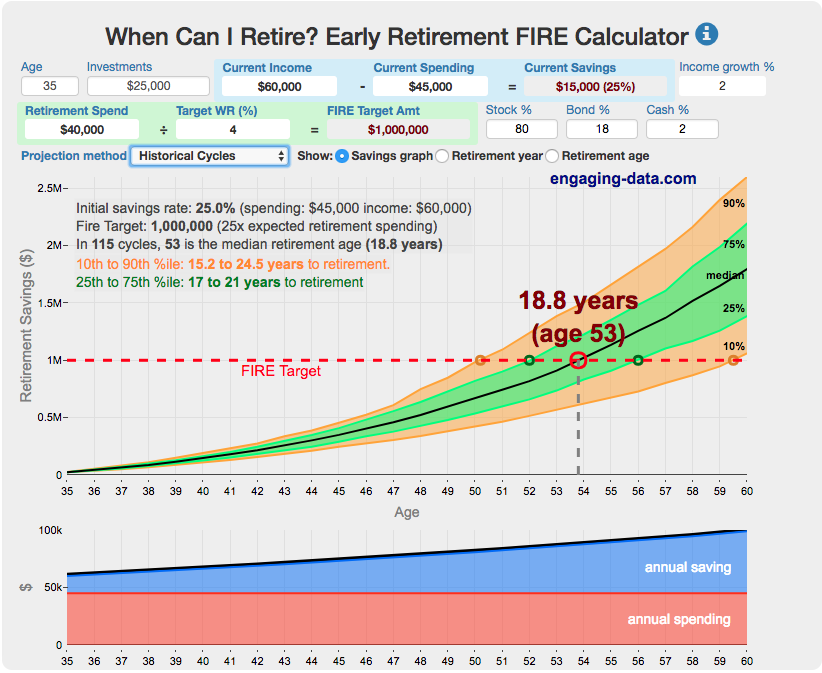
The primary output of the calculator is typically a projected retirement date, an estimated amount you’ll have saved by then, and how long that money is expected to last. More importantly, it can reveal a critical “gap” or “surplus.” A gap indicates that, based on your current trajectory, you won’t have enough funds to sustain your desired lifestyle for the duration of your retirement. Conversely, a surplus suggests you might be on track to retire earlier or with more comfort than initially anticipated. Understanding this gap or surplus is the first step towards actionable planning. It’s crucial to look beyond just the final date. Does the projected retirement income align with your desired lifestyle? Will you have enough flexibility for unexpected expenses or the opportunity to leave a legacy? These qualitative considerations are just as important as the quantitative figures.
Scenario Planning: What-If Analysis for Different Variables
One of the most powerful features of these calculators is the ability to perform “what-if” analyses. Instead of accepting the initial projection, you can manipulate various inputs to see their immediate impact on your retirement timeline.
- Save More: What if you increase your annual contributions by 1% or 5% of your income? How much earlier could you retire?
- Retire Later: If you push your retirement age back by a few years, how significantly does your nest egg grow due to extra saving and compounding?
- Invest Differently: What if you optimize your investment portfolio for a slightly higher (or lower, more conservative) rate of return?
- Reduce Retirement Expenses: If you’re willing to scale back your projected retirement spending, how does that affect the longevity of your funds?
- Work Part-Time: How does a few years of part-time work in early retirement impact your overall financial picture?
This scenario planning is invaluable for understanding the levers you can pull to accelerate or secure your retirement. It transforms the planning process from a static calculation into an interactive strategic exercise.
From Calculation to Action: Building a Personalized Roadmap
Interpreting the results and running scenarios are vital, but the ultimate goal is to translate these insights into a personalized, actionable roadmap.
- Set SMART Goals: Based on your calculator’s output, establish Specific, Measurable, Achievable, Relevant, and Time-bound goals. For example, “I will increase my 401(k) contributions by 2% of my salary by the end of this quarter, aiming to retire by age 62.”
- Automate Savings: The easiest way to ensure consistency is to automate your contributions to retirement accounts. Set up recurring transfers or adjust your payroll deductions.
- Review and Rebalance Investments: Periodically assess your investment portfolio to ensure it aligns with your risk tolerance and projected rate of return. Rebalance as needed to maintain your desired asset allocation.
- Track Progress: Regularly revisit your calculator (annually or whenever significant life changes occur) to track your progress and make necessary adjustments to your plan. The roadmap is not static; it evolves with your life. This continuous engagement ensures you remain on track and can adapt to unforeseen circumstances.
Key Factors Influencing Your Retirement Timeline
While the calculator provides a framework, understanding the underlying factors that drive its projections is crucial for making informed decisions and optimizing your path to retirement.
The Power of Early Investment and Compounding
The single most significant determinant of your retirement timeline is often the power of compound interest, especially when coupled with early investment. Starting to save and invest in your 20s, even small amounts, allows your money decades to grow exponentially. Each dollar invested earns returns, and those returns then earn their own returns, creating a snowball effect. The difference in accumulated wealth between someone who starts saving at 25 versus 35, even if the later saver contributes more per year, can be staggering. This principle underscores why the ‘When Do I Retire’ calculator often shows a dramatic shift in retirement age with even minor adjustments to an early savings start date. It’s a testament to the adage, “Time in the market beats timing the market.”
Lifestyle Choices and Their Financial Implications
Your current and desired future lifestyle choices have a profound impact on your retirement needs. A high-spending lifestyle today often means a lower savings rate, pushing out your retirement date. Conversely, a more frugal approach, whether by choice or necessity, can significantly accelerate your timeline. During retirement, your desired lifestyle—travel, hobbies, dining out, housing—will dictate your annual spending. The more luxurious your vision, the larger your required nest egg. Therefore, realistically assessing and perhaps adjusting both your pre-retirement spending (to increase savings) and your post-retirement spending (to reduce capital needed) are critical levers in the ‘When Do I Retire’ calculation. Small changes in daily habits can translate into years gained or lost in your retirement horizon.
Navigating Market Volatility and Economic Downturns
Investment returns are rarely linear; markets experience cycles of boom and bust. While retirement calculators typically use an average expected rate of return, real-world returns can fluctuate significantly year to year. Economic downturns or market crashes can temporarily reduce the value of your portfolio, potentially impacting your projected retirement date. It’s vital to have a diversified portfolio that can weather these storms and to resist the urge to panic sell during downturns. Long-term investors who stay the course often recover and continue to grow their wealth. Some advanced calculators incorporate Monte Carlo simulations to account for market volatility, providing a more probabilistic rather than deterministic outcome, giving you a better sense of the range of possible retirement dates.
The Role of Social Security and Other Income Streams
For many, Social Security will form a foundational component of retirement income. The age at which you claim Social Security benefits (ranging from 62 to 70) significantly impacts the monthly amount you receive, which in turn affects how much you need to draw from your personal savings. Similarly, any other guaranteed income streams, such as a traditional pension, rental income, or annuity payments, can substantially reduce the burden on your personal investment portfolio. Factoring these reliable income sources into your ‘When Do I Retire’ calculator inputs is crucial for an accurate projection. Maximizing these external income streams can significantly enhance your financial security and potentially allow for an earlier or more comfortable retirement.
Beyond the Calculator: Holistic Retirement Planning
While a ‘When Do I Retire’ calculator is an indispensable tool, it’s just one piece of a much larger, more intricate puzzle. True financial freedom in retirement requires a holistic approach that extends beyond mere numbers.
The Importance of Professional Financial Advice
For many, navigating the complexities of investment strategies, tax planning, estate planning, and withdrawal strategies can be overwhelming. This is where a qualified financial advisor becomes invaluable. An advisor can help you interpret your calculator results, refine your inputs for greater accuracy, build a personalized financial plan, and guide you through various market conditions. They can offer tailored advice on asset allocation, tax-efficient savings, and strategies to mitigate risk, often identifying opportunities or potential pitfalls you might overlook. While the calculator empowers self-service, a professional offers expertise, accountability, and peace of mind, ensuring your plan is robust and adaptive.
Estate Planning and Legacy Considerations
Retirement planning isn’t just about ensuring you have enough money for yourself; it’s also about what happens to your assets after you’re gone. Estate planning, which includes wills, trusts, and beneficiary designations, ensures your wealth is distributed according to your wishes, minimizing taxes and avoiding probate. While not directly influencing your retirement date, sound estate planning integrates with your overall financial picture, impacting the legacy you leave. Discussions with an estate planning attorney should go hand-in-hand with your financial planning, ensuring a comprehensive approach to your lifetime of earnings.
Health, Wellness, and Non-Financial Preparations
Retirement is not solely a financial event; it’s a profound life transition. Your physical and mental health during retirement will significantly impact your quality of life and potentially your financial needs (e.g., healthcare costs). Prioritizing wellness throughout your working life and into retirement is paramount. Furthermore, non-financial preparations are just as crucial. What will you do with your time? How will you maintain social connections? Exploring hobbies, volunteer opportunities, and social activities well before retirement can ease the transition and ensure a fulfilling post-work life. A calculator can tell you when you can retire financially, but your personal preparations dictate how you retire emotionally and socially.
Continuous Review and Adjustment
Finally, a retirement plan is not a “set it and forget it” endeavor. Life is dynamic, with unexpected twists and turns—marriage, children, career changes, market fluctuations, health issues, and evolving goals. Your retirement plan, including your ‘When Do I Retire’ calculator projections, needs continuous review and adjustment. Aim for an annual check-up, or whenever significant life events occur. This iterative process allows you to stay on track, adapt to new circumstances, and refine your path toward achieving the retirement you envision, ensuring that the answer to “When do I retire?” remains accurate and achievable throughout your journey.
aViewFromTheCave is a participant in the Amazon Services LLC Associates Program, an affiliate advertising program designed to provide a means for sites to earn advertising fees by advertising and linking to Amazon.com. Amazon, the Amazon logo, AmazonSupply, and the AmazonSupply logo are trademarks of Amazon.com, Inc. or its affiliates. As an Amazon Associate we earn affiliate commissions from qualifying purchases.