
For the majority of individuals and households, a vehicle represents the second largest purchase they will ever make, trailing only the acquisition of real estate. From a personal finance perspective, a car is a high-cost, rapidly depreciating asset. Therefore, understanding what car maintenance entails is not merely a technical necessity for mechanical longevity; it is a critical strategy in wealth preservation and cash flow management. Maintenance is the systematic process of preserving a vehicle’s functional integrity and market value through periodic inspections, part replacements, and fluid management.
When viewed through a financial lens, maintenance is an insurance policy against catastrophic capital loss. By allocating small, predictable amounts of capital toward upkeep, an owner prevents the sudden, massive outflows of cash required to fix neglected systems. To master the financial side of vehicle ownership, one must move beyond viewing maintenance as a chore and begin viewing it as a disciplined investment in asset protection.
The Economics of Preventive Maintenance: Cost vs. Benefit
The core of vehicle maintenance lies in the principle of preventive care. In the world of finance, this is analogous to risk mitigation. You are spending a marginal amount of money today to eliminate the high probability of a significant expense in the future. The ROI (Return on Investment) on basic maintenance is among the highest of any personal finance activity.
Avoiding Catastrophic Expenses
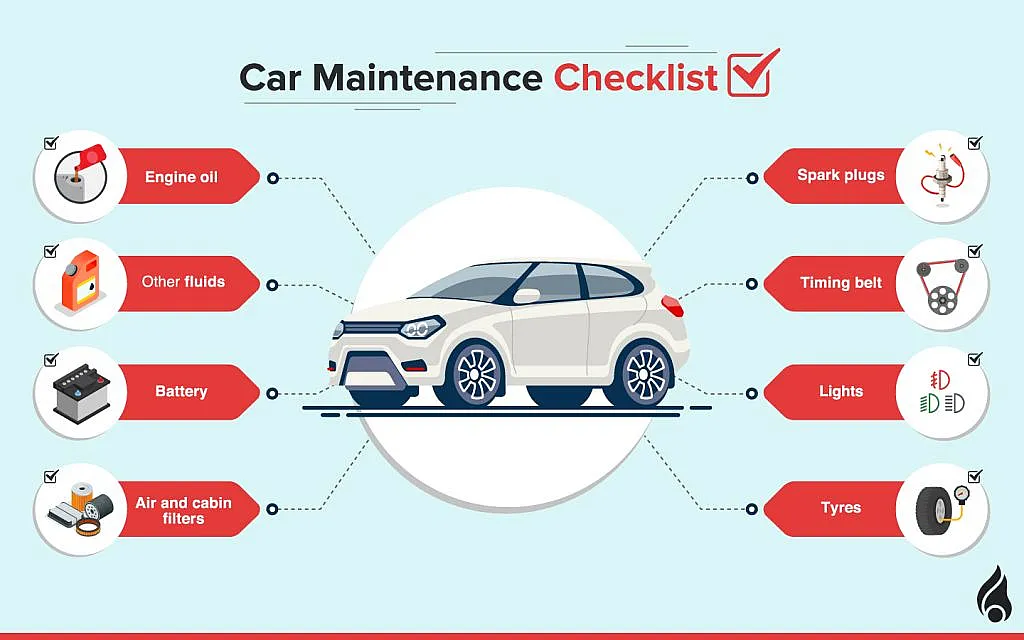
The most common maintenance task is the oil change. From a mechanical standpoint, it lubricates the engine; from a financial standpoint, it protects a component that costs between $4,000 and $10,000 to replace. Spending $60 to $100 twice a year to protect a multi-thousand-dollar asset is a textbook example of efficient capital allocation.
Similarly, timing belt replacements are often ignored because they are relatively expensive ($500–$1,000). However, if a timing belt snaps in an interference engine, the resulting damage often exceeds the total book value of the car. In this scenario, maintenance is the difference between a controlled expense and the total loss of the asset’s utility.
The Impact on Fuel Efficiency and Daily Operating Costs
Maintenance also influences your monthly cash flow via fuel consumption. Neglected maintenance—such as clogged air filters, fouled spark plugs, or improper tire pressure—can reduce fuel economy by as much as 10% to 15%. For a driver spending $3,000 annually on fuel, poor maintenance acts as a “hidden tax” of $450 per year. Correcting these minor issues ensures that your operating expenses remain optimized, allowing that capital to be redirected toward savings or investments.
Protecting Your Investment: Resale Value and Asset Depreciation
Depreciation is the silent killer of wealth in car ownership. Most new vehicles lose approximately 20% of their value in the first year and 60% within the first five years. While you cannot stop the passage of time, you can significantly influence the rate of depreciation through meticulous maintenance.
The “Service History” Premium
When it comes time to liquidate the asset—whether through a private sale or a trade-in—the documentation of maintenance becomes your strongest negotiating lever. A vehicle with a comprehensive, chronological service history (often called “Full Service History” or FSH) commands a premium on the secondary market.
Potential buyers view a well-documented car as a lower-risk investment. Statistically, vehicles with verified maintenance records sell for 10% to 20% more than identical models with “gap” histories. In the context of a $20,000 used car, that documentation is worth $2,000 to $4,000 in recovered equity.
Combatting the Rapid Rate of Vehicle Depreciation
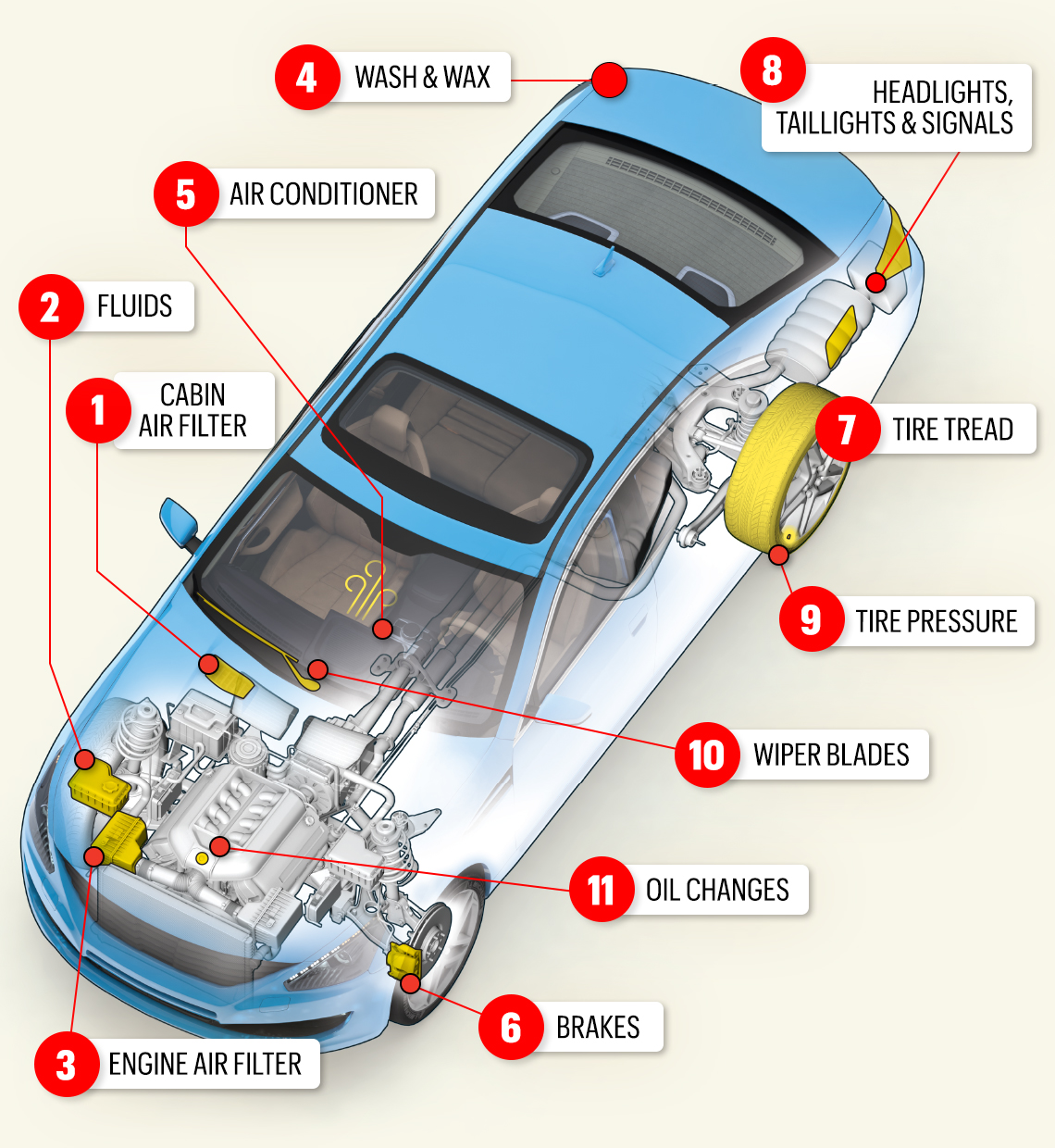
Physical upkeep, such as detailing, rust proofing, and paint protection, falls under the umbrella of maintenance as well. While these seem like aesthetic choices, they are actually measures to prevent “structural depreciation.” A car with a pristine interior and a rust-free chassis remains a viable asset for a much longer duration. By extending the functional life of a car from 8 years to 12 years through proper maintenance, you effectively lower your “cost per year” of ownership, which is one of the most important metrics in personal transportation finance.
Strategic Budgeting for Maintenance and Repairs
A common financial pitfall is treating car repairs as “emergencies.” In reality, wear and tear is a mathematical certainty. Financial stability requires moving these costs from the “unexpected” category to the “planned” category of your budget.
The 1% Rule for Car Maintenance
A useful heuristic in personal finance is the 1% rule: budget approximately 1% of the car’s original purchase price for annual maintenance. For a $35,000 vehicle, this equates to $350 per year—a figure that usually covers oil changes, rotations, and filters. However, as the vehicle ages, this percentage must scale. A more conservative approach for older vehicles is the “mileage-based sinking fund,” where you set aside five to ten cents for every mile driven.
Sinking Funds: Preparing for the Inevitable
The most effective way to handle car maintenance is through a “sinking fund.” This is a dedicated savings sub-account where you deposit a fixed monthly amount specifically for vehicle upkeep. When a $800 set of tires is needed, the money is already there, preventing the need to rely on high-interest credit cards or predatory “buy now, pay later” financing options offered by many repair shops. By self-insuring through a sinking fund, you avoid the interest costs that often turn a simple repair into a long-term debt burden.
Maintenance as a Business Strategy for Fleet Owners and Solopreneurs
For those who use their vehicles for business purposes—such as contractors, real estate agents, or delivery partners—car maintenance is a direct factor in the profitability of the enterprise. In this context, maintenance is not just a personal expense; it is an operational necessity.
Tax Implications and Deductions
In many jurisdictions, the costs associated with maintaining a business vehicle are tax-deductible. Whether you take the standard mileage rate or deduct actual expenses, keeping meticulous records of every cent spent on maintenance is essential for maximizing tax efficiency. From a business finance perspective, maintenance reduces your taxable income while simultaneously ensuring that your primary tool of production remains operational.
Minimizing Downtime and Opportunity Costs
For a professional, the true cost of a car breakdown is not just the repair bill; it is the opportunity cost of lost work. If a consultant cannot meet a client because their car won’t start, the financial loss includes the billable hours and the potential for future contracts. Preventive maintenance is a strategy to minimize “downtime.” In business, reliability is a form of currency. Spending capital on maintenance ensures that the “revenue-generating” capability of the vehicle is never compromised.

The True Cost of Neglect: A Long-Term Financial Analysis
To fully understand what maintenance is, one must look at the inverse: what is the cost of neglect? A “run-to-fail” strategy—where an owner only addresses issues once the vehicle stops moving—is the most expensive way to own a car.
Consider the braking system. A standard brake pad replacement might cost $200. If neglected, the pads wear down to the metal, destroying the rotors and potentially the calipers. What was a $200 maintenance task escalates into a $1,200 repair. Furthermore, the failure of one system often places undue stress on others. Bad suspension components lead to uneven tire wear, which leads to poor fuel economy and potential drivetrain strain.
In conclusion, car maintenance is the disciplined management of a depreciating asset. It is a multi-faceted financial tool that reduces risk, optimizes daily cash flow, and maximizes the eventual recovery of equity. By reframing “what is maintenance on a car” from a mechanical question to a financial one, owners can transform their vehicle from a source of financial stress into a stable, well-managed component of their overall wealth strategy. Maintenance is not an expense; it is the cost of preserving your capital.
aViewFromTheCave is a participant in the Amazon Services LLC Associates Program, an affiliate advertising program designed to provide a means for sites to earn advertising fees by advertising and linking to Amazon.com. Amazon, the Amazon logo, AmazonSupply, and the AmazonSupply logo are trademarks of Amazon.com, Inc. or its affiliates. As an Amazon Associate we earn affiliate commissions from qualifying purchases.