
Keynesian economic theory, named after the British economist John Maynard Keynes, represents a fundamental shift in understanding how modern economies function and, crucially, how they can be managed. Developed largely in response to the Great Depression of the 1930s, Keynesianism challenged classical economic thought, which posited that free markets would naturally self-correct from downturns without significant government intervention. Instead, Keynes argued that economic downturns, particularly severe ones, are often characterized by insufficient aggregate demand, requiring active government involvement to stabilize the economy, protect employment, and foster growth. For anyone navigating the world of personal finance, investing, or business operations, understanding Keynesian principles is crucial, as they underpin much of the macroeconomic policy that shapes market conditions and financial opportunities.
The Genesis of Keynesian Thought: Responding to Crisis
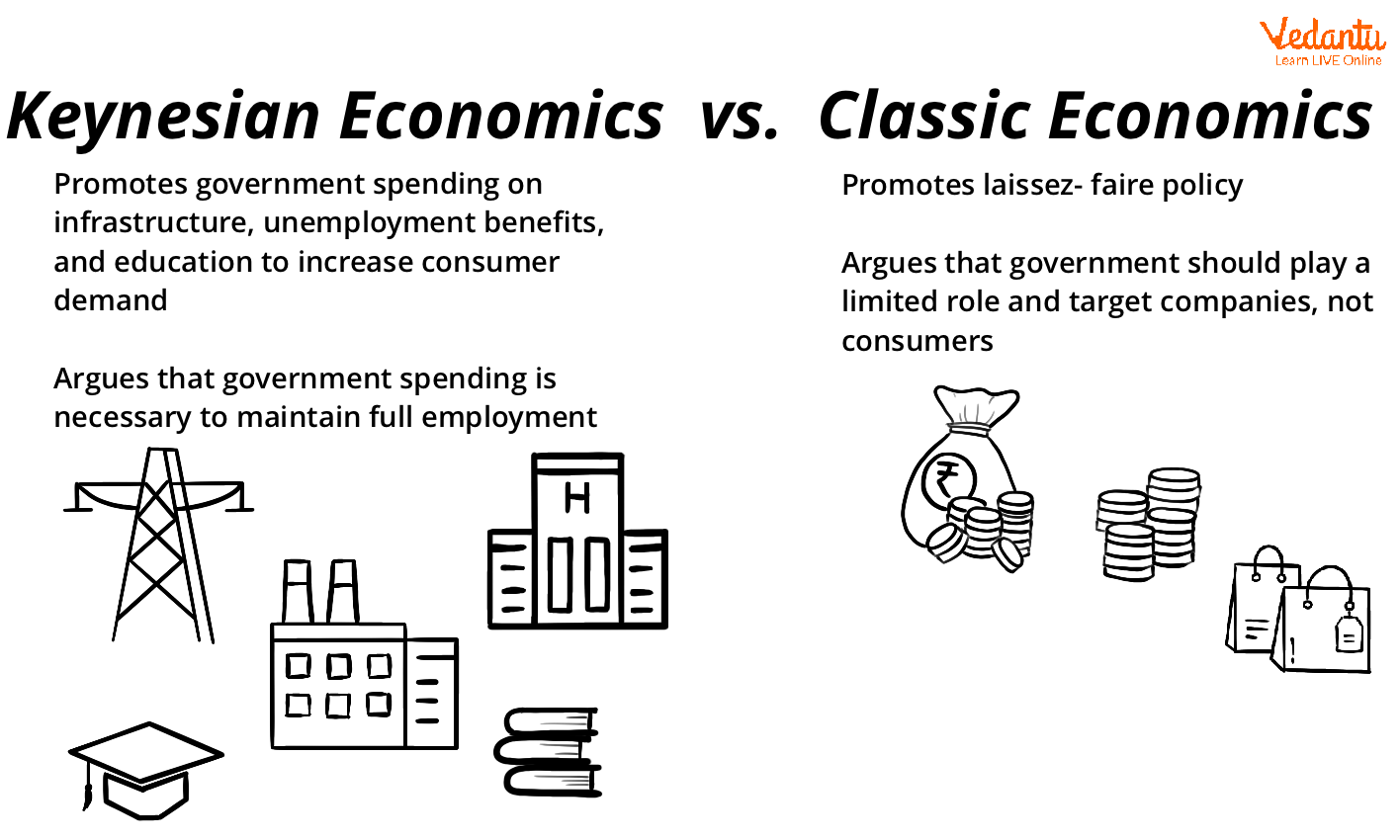
Before Keynes, the prevailing economic wisdom, often referred to as classical economics, held a strong belief in Say’s Law: “supply creates its own demand.” This implied that production would always generate enough income to purchase all goods and services produced, and any temporary imbalances would be quickly resolved by flexible prices and wages. Recessions were seen as short-term adjustments, with full employment as the natural equilibrium.
The Great Depression shattered this conventional view. Markets failed to self-correct; unemployment soared, factories lay idle, and a pervasive lack of demand persisted for years despite falling prices. Keynes observed that economies could get stuck in prolonged periods of high unemployment and underutilized capacity due to a “deficiency of effective demand.” This meant that even if businesses were willing to produce, and workers were willing to work, a lack of overall spending from consumers, businesses, and government led to a downward spiral. His seminal work, “The General Theory of Employment, Interest and Money” (1936), provided a theoretical framework to explain this phenomenon and, more importantly, offered a blueprint for government action.
Core Tenets of Keynesian Economics
Keynesian theory diverged from classical thought on several critical points, forming the bedrock of its prescriptions for economic management. These tenets directly influence the financial landscape, affecting everything from investment decisions to employment prospects.
The Primacy of Aggregate Demand
At the heart of Keynesian economics is the concept of aggregate demand, which is the total spending on goods and services in an economy. Keynes argued that aggregate demand is the primary driver of economic activity, including national income, employment levels, and output. When aggregate demand is too low, it leads to underemployment and recession; when it’s too high, it can cause inflation.
Aggregate demand is composed of four main components:
- Consumption (C): Spending by households on goods and services.
- Investment (I): Spending by businesses on capital goods, such as factories, machinery, and inventory, and by households on new housing.
- Government Spending (G): Spending by the government on goods and services, infrastructure, and public works.
- Net Exports (NX): The difference between a country’s exports and imports.
Keynes posited that individual decisions, particularly during times of uncertainty, can lead to a collective outcome that is suboptimal. For instance, in a recession, individuals might save more (the “paradox of thrift”), which, while rational for an individual, reduces aggregate demand and can worsen the recession for everyone.
The Role of Government Intervention
Unlike classical economists who advocated for minimal government involvement, Keynes argued for an active and counter-cyclical role for the government to manage aggregate demand. This intervention is not about controlling all aspects of the economy but rather about stabilizing it, particularly during periods of recession or economic instability.
Wage and Price Stickiness
Classical economics assumed that wages and prices are flexible and adjust quickly to bring markets back to equilibrium. Keynes, however, observed that in the real world, wages and prices are often “sticky.” Union contracts, minimum wage laws, and psychological factors can prevent wages from falling quickly during a recession. Similarly, businesses may be reluctant to cut prices due to various costs and competitive concerns. This stickiness means that adjustments in output and employment, rather than prices, bear the brunt of changes in aggregate demand. This concept explains why unemployment can persist even when there is excess labor supply.
The Multiplier Effect
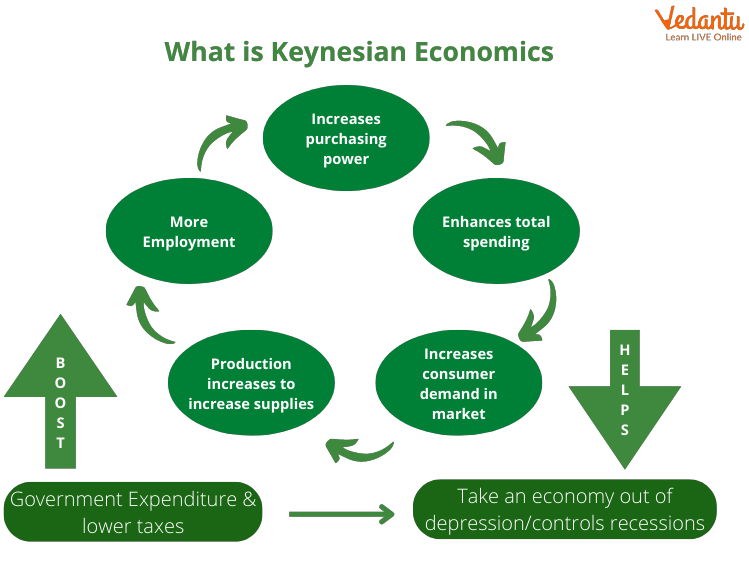
A crucial concept in Keynesian theory is the multiplier effect. It suggests that an initial change in spending (e.g., government spending, investment, or consumption) can lead to a proportionally larger change in national income. For example, if the government invests in an infrastructure project, the money paid to construction workers and suppliers is then spent by them, generating income for others, who in turn spend a portion of that income, and so on. This ripple effect means that a targeted injection of funds can stimulate broader economic activity, a principle often invoked when discussing fiscal stimulus packages.
Keynesianism in Practice: Fiscal and Monetary Policy
Keynesian theory provides the intellectual foundation for modern macroeconomic policy, primarily through the use of fiscal and monetary tools designed to influence aggregate demand. These policies directly impact financial markets, business profitability, and household budgets.
Fiscal Policy
Fiscal policy refers to the government’s use of spending and taxation to influence the economy. It is the most direct application of Keynesian principles.
-
Expansionary Fiscal Policy: During a recession or period of low economic growth, an expansionary fiscal policy aims to boost aggregate demand. This can involve:
- Increasing Government Spending: Investing in infrastructure, education, or defense creates jobs and injects money into the economy.
- Decreasing Taxes: Lower income taxes leave households with more disposable income, encouraging consumption. Lower corporate taxes can incentivize business investment.
- Increasing Transfer Payments: Unemployment benefits, social security, and welfare payments provide income to those who need it most, helping to maintain demand.
-
Contractionary Fiscal Policy: If the economy is overheating, leading to high inflation, a contractionary fiscal policy aims to cool demand. This involves:
- Decreasing Government Spending: Reducing public projects or government programs.
- Increasing Taxes: Raising income or corporate taxes to reduce disposable income and profits.
The effectiveness of fiscal policy can be debated, especially concerning government debt levels and the potential for “crowding out” (where increased government borrowing raises interest rates, reducing private investment). However, its ability to provide a direct injection of demand during crises makes it a powerful tool.
Monetary Policy
Monetary policy is managed by central banks (like the Federal Reserve in the U.S.) and involves influencing the money supply and credit conditions to impact aggregate demand. While not purely Keynesian in its inception (central banking predates Keynes), its application in managing aggregate demand aligns well with Keynesian principles.
-
Expansionary Monetary Policy: During a downturn, the central bank aims to make borrowing cheaper and more accessible to encourage spending and investment. This includes:
- Lowering Interest Rates: Reducing the federal funds rate (or equivalent) makes it cheaper for banks to borrow, which translates to lower interest rates for consumers (mortgages, car loans) and businesses (investment loans).
- Quantitative Easing (QE): Purchasing government bonds and other securities to inject liquidity into the financial system and further lower long-term interest rates.
-
Contractionary Monetary Policy: When inflation is a concern, the central bank aims to reduce the money supply and make borrowing more expensive. This includes:
- Raising Interest Rates: Making borrowing more costly to dampen consumption and investment.
- Quantitative Tightening (QT): Selling government bonds and reducing its balance sheet to remove liquidity from the financial system.
Monetary policy, particularly interest rate adjustments, influences everything from the cost of capital for businesses to the returns on savings and investments, making it a critical factor for financial planning and wealth management.
Criticisms and Evolution of Keynesianism
Despite its widespread acceptance, Keynesian theory has faced considerable criticism and has evolved significantly over time.
Inflation and Stagflation
One major critique emerged in the 1970s with the phenomenon of “stagflation,” where high inflation coincided with high unemployment and stagnant economic growth. Traditional Keynesian models struggled to explain this, as they generally predicted a trade-off between inflation and unemployment (the Phillips Curve). Critics argued that excessive government spending could lead to inflation without necessarily solving unemployment, especially if the root causes were supply-side issues rather than demand deficiency.
Government Debt and Crowding Out
Critics also point to the potential for large government deficits and accumulating national debt resulting from sustained expansionary fiscal policy. They argue that government borrowing can “crowd out” private investment by increasing competition for loanable funds and pushing up interest rates, thereby negating some of the positive effects of stimulus.
Rational Expectations and Supply-Side Economics
Other schools of thought, such as New Classical economics and Supply-Side economics, emerged to challenge Keynesian dominance. New Classical economists emphasize rational expectations, suggesting that individuals and businesses anticipate government policies and adjust their behavior, potentially rendering those policies ineffective. Supply-siders argue that economic growth is best fostered by policies that focus on increasing the productive capacity of the economy (e.g., tax cuts on businesses and individuals to incentivize work and investment), rather than solely stimulating demand.
New Keynesian Economics
In response to these criticisms, New Keynesian economics emerged, incorporating elements of rational expectations and microeconomic foundations into the Keynesian framework. New Keynesians acknowledge that markets are not perfectly competitive and that imperfections like “sticky wages” and “sticky prices” (due to menu costs, psychological factors, or implicit contracts) can explain why the economy might not always return quickly to full employment equilibrium. This modern iteration still supports active stabilization policy but with a more nuanced understanding of market dynamics and the potential limitations of policy.

Relevance Today: Navigating Modern Financial Challenges
In the 21st century, Keynesian economic principles continue to be highly relevant, particularly in response to major economic shocks. The Global Financial Crisis of 2008 and the COVID-19 pandemic saw governments worldwide implement massive fiscal stimulus packages and central banks engage in unprecedented monetary easing, directly echoing Keynesian prescriptions.
For individuals and businesses, understanding Keynesian thought offers insights into:
- Market Cycles: How government and central bank actions attempt to smooth out recessions and boom periods, influencing investment timing and risk.
- Policy Implications: How fiscal policies (e.g., infrastructure spending, tax changes) and monetary policies (e.g., interest rate hikes, quantitative easing) affect borrowing costs, investment returns, inflation, and employment.
- Investment Decisions: Awareness of macroeconomic trends driven by Keynesian policies can inform decisions in real estate, equity markets, and fixed-income investments. For instance, anticipating government stimulus might lead investors to position themselves in sectors expected to benefit, while concerns about inflation from excessive stimulus might push them towards inflation-hedging assets.
- Business Planning: Businesses need to factor in potential shifts in aggregate demand, interest rates, and government spending when planning expansion, hiring, and pricing strategies.
Keynesian economic theory, therefore, remains a cornerstone of economic policy and a critical lens through which to understand the forces shaping global and local financial landscapes. While debates continue about the optimal degree and nature of intervention, the fundamental idea that governments can and should play an active role in stabilizing the economy continues to guide policymakers, profoundly affecting the financial well-being of individuals and the operational environment for businesses.
aViewFromTheCave is a participant in the Amazon Services LLC Associates Program, an affiliate advertising program designed to provide a means for sites to earn advertising fees by advertising and linking to Amazon.com. Amazon, the Amazon logo, AmazonSupply, and the AmazonSupply logo are trademarks of Amazon.com, Inc. or its affiliates. As an Amazon Associate we earn affiliate commissions from qualifying purchases.