
In the vast and ever-evolving landscape of digital technology, certain innovations stand out as fundamental pillars, quietly enabling much of our daily digital experience. H.264 is precisely one such technology. Often heard in contexts ranging from streaming services and video calls to digital cameras and security systems, H.264, also known as MPEG-4 Part 10 or AVC (Advanced Video Coding), is a widely recognized and incredibly influential video compression standard. It revolutionized how we create, transmit, and consume video content, addressing the critical challenge of delivering high-quality visuals without overwhelming bandwidth or storage limitations.
Before H.264, the sheer amount of data required to represent uncompressed video was a significant hurdle. A single second of uncompressed standard definition video could easily consume tens of megabytes, making transmission over the internet or storage on consumer devices impractical. H.264 emerged as a sophisticated solution, offering vastly improved compression efficiency compared to its predecessors. It achieves this by intelligently removing redundant information within video frames and between successive frames, dramatically reducing file sizes while striving to maintain an acceptable level of visual fidelity. Its widespread adoption is a testament to its effectiveness, making it the bedrock upon which much of modern video infrastructure is built.
The Foundation of Modern Video Compression
The journey of digital video compression is one of continuous innovation, driven by the relentless demand for higher quality and more accessible content. H.264 represents a significant leap forward in this ongoing quest, establishing itself as the gold standard for video encoding for well over a decade.
A Brief History and Evolution
Video compression standards are developed by collaborative groups of experts, primarily the Moving Picture Experts Group (MPEG) and the Video Coding Experts Group (VCEG). H.264 was the result of a joint effort between these two groups, published in 2003. Its predecessors, such as MPEG-2 (used for DVDs and early digital TV) and earlier versions of MPEG-4, laid crucial groundwork, but H.264 introduced a host of new, more efficient algorithms. The goal was clear: achieve better compression ratios at the same quality, or better quality at the same bitrate, compared to existing standards. This ambitious objective was not just met but exceeded, propelling H.264 to the forefront of video technology. Its design incorporated lessons learned from years of research into human visual perception, enabling it to discard information that the human eye is less likely to detect while preserving crucial visual details.
The Core Problem H.264 Solves
At its heart, H.264 tackles a fundamental problem: the immense data size of raw video. Uncompressed video is a continuous stream of still images (frames), each composed of millions of pixels, with each pixel containing color information. A typical high-definition video sequence can easily generate data rates in the gigabits per second range if uncompressed. Such colossal data volumes are impractical for almost any real-world application, be it streaming over the internet, storing on a smartphone, or broadcasting via television. H.264’s primary function is to drastically reduce this data while minimizing perceptible loss in quality. It acts as a sophisticated digital sculptor, chiseling away redundant information to create a compact, efficient file that can be easily transmitted and stored, then accurately reconstructed at the playback device. Without such powerful compression, the modern digital landscape of on-demand video and high-quality communication simply wouldn’t exist as we know it.
MPEG-4 AVC: The Official Name
While “H.264” is the common moniker, its official designation is “MPEG-4 Part 10, Advanced Video Coding (AVC)”. This name provides important context. “MPEG-4” refers to the broader suite of standards developed by the Moving Picture Experts Group for multimedia, and H.264 is a specific “part” of that suite, focusing on advanced video coding. The “AVC” suffix further emphasizes its role as a significant advancement in video compression technology. Understanding this nomenclature clarifies its position within the larger family of MPEG standards and underscores its status as a highly optimized and widely adopted solution for video data reduction. Despite the official name, “H.264” remains the prevalent term in industry discourse, a testament to its singular impact and recognition.
How H.264 Works: Under the Hood
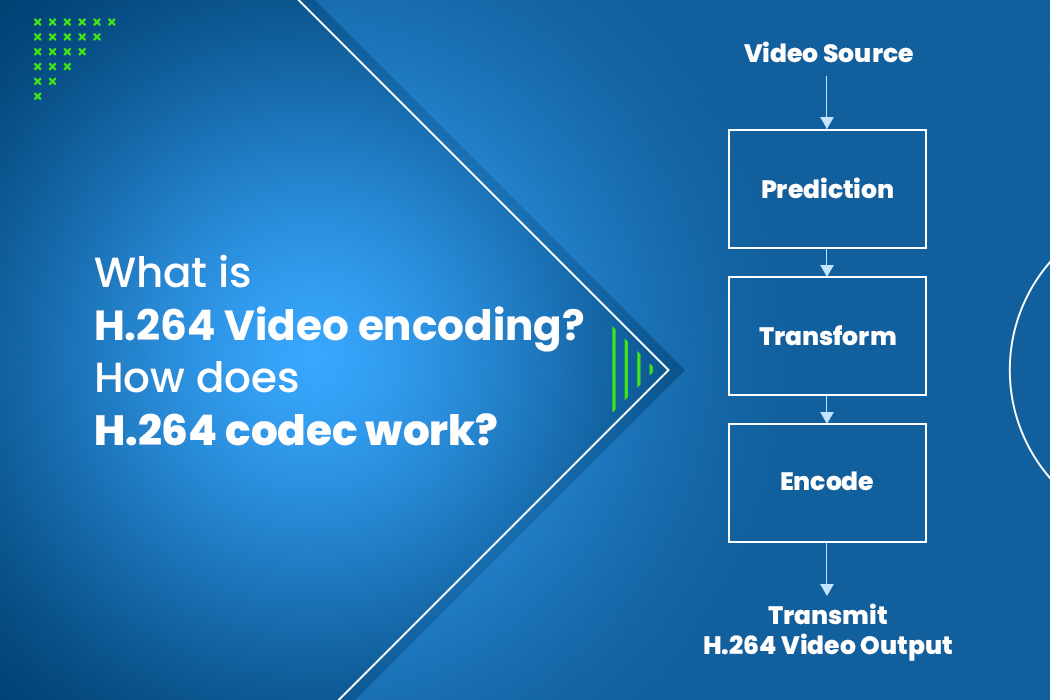
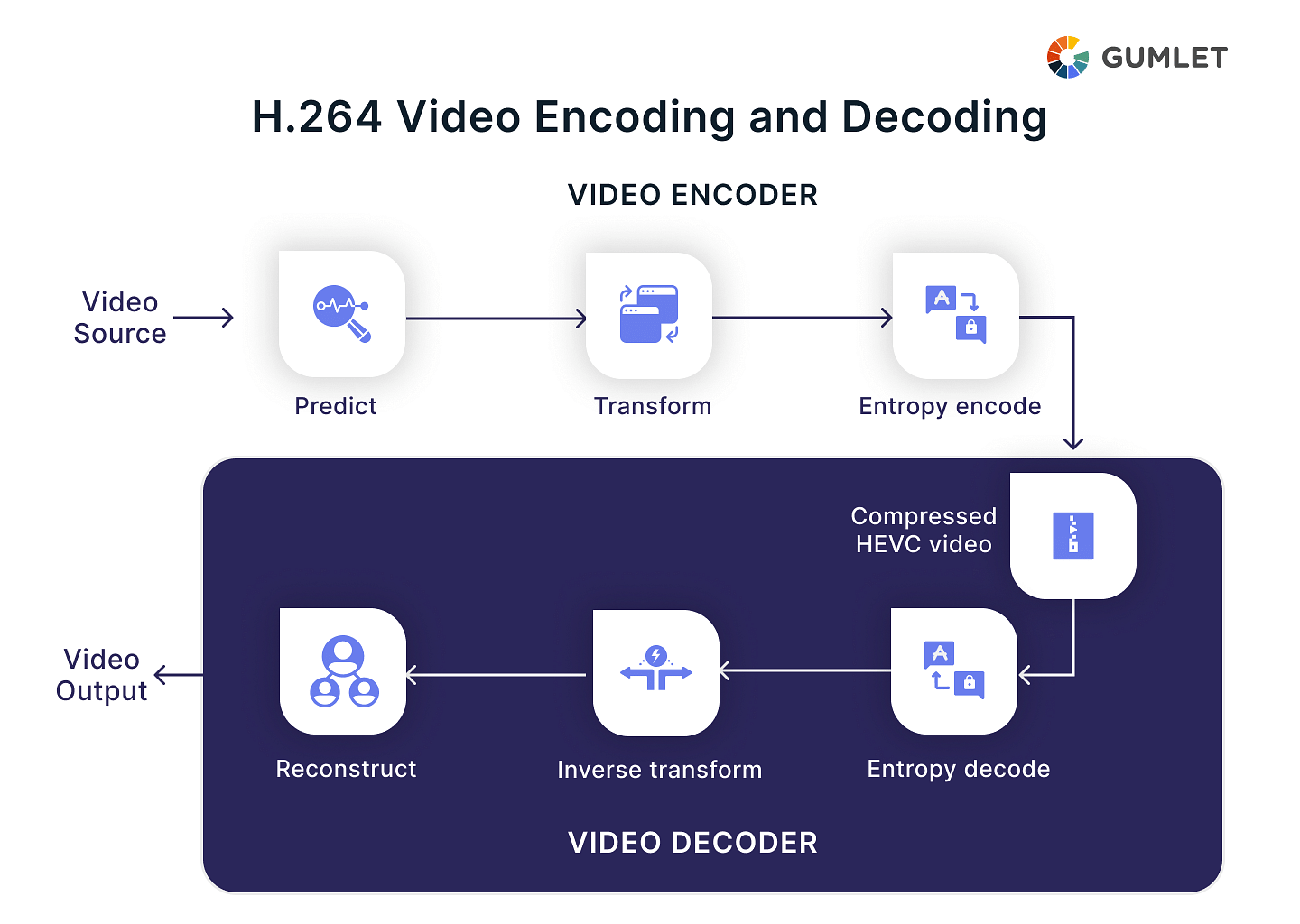
The magic of H.264 lies in its complex interplay of sophisticated algorithms designed to eliminate redundancy both within individual video frames and across sequences of frames. It’s a testament to signal processing engineering, delivering remarkable compression efficiency.
Key Compression Techniques
H.264 employs a combination of inter-frame and intra-frame compression techniques.
-
Intra-frame prediction: Similar to JPEG image compression, this method looks for redundancy within a single frame. Instead of encoding the absolute color values for every pixel, H.264 predicts blocks of pixels from adjacent, already encoded blocks within the same frame. Only the differences (residuals) between the prediction and the actual block are encoded, which are much smaller.
-
Inter-frame prediction (Motion Compensation): This is where H.264 achieves its greatest gains. Video is a sequence of frames, and often, much of the scene remains the same or moves predictably. H.264 doesn’t encode every pixel of every frame. Instead, for most frames (P-frames for predicted, B-frames for bi-directionally predicted), it attempts to predict the current frame from previous (and sometimes future) frames. It does this by identifying “motion vectors” that describe how blocks of pixels have moved from one frame to the next. Only the motion vectors and the small residual errors (the parts of the frame that couldn’t be accurately predicted) are encoded, drastically reducing data.
-
Discrete Cosine Transform (DCT): After prediction, any residual data or intra-frame data is transformed using the DCT. This mathematical operation converts spatial pixel data into frequency components. High-frequency components, which often correspond to fine details and noise, can then be more aggressively quantized (i.e., less precisely represented or even discarded) because the human eye is less sensitive to them.
-
Quantization: This is the lossy step. It reduces the precision of the frequency coefficients generated by the DCT. The more aggressive the quantization, the smaller the file size, but the lower the quality. This is where the core trade-off between quality and compression ratio is managed.
-
Entropy Coding: Finally, the quantized coefficients, motion vectors, and other data are compressed losslessly using entropy coding techniques like CAVLC (Context-Adaptive Variable-Length Coding) or CABAC (Context-Adaptive Binary Arithmetic Coding). These methods assign shorter codes to frequently occurring data patterns and longer codes to less frequent ones, similar to Morse code, achieving further data reduction without any loss of information.
Balancing Quality and File Size
The effectiveness of H.264 comes from its ability to shrewdly balance perceived visual quality with significantly reduced file sizes. This balance is controlled primarily by the “bitrate” and “quantization parameter.” A higher bitrate allows for more data to be used per second of video, leading to less aggressive quantization, more detail retention, and thus higher quality. Conversely, a lower bitrate necessitates more aggressive quantization, resulting in smaller file sizes but potentially introducing artifacts (e.g., blockiness, blurring) due to the discarded information.
Modern H.264 encoders allow for highly granular control over these parameters, enabling content creators and distributors to fine-tune the output for specific applications. For instance, a high-quality Blu-ray disc will use a very high bitrate H.264 encode, preserving maximum detail. A video stream for a mobile device on a cellular network, however, might use a much lower bitrate to ensure smooth playback without buffering, even if it means a slight compromise in visual fidelity. The choice of encoding profile (discussed next) also plays a critical role in this balance, offering different sets of tools to achieve varying levels of efficiency and complexity.
Profiles and Levels
To ensure interoperability and cater to diverse hardware capabilities, H.264 defines various “profiles” and “levels.”
-
Profiles are sets of coding tools that the encoder can use. Different profiles offer different trade-offs between coding efficiency (how much compression can be achieved) and computational complexity (how much processing power is needed to encode and decode).
-
Baseline Profile: Designed for low-cost, low-power applications like video conferencing and mobile video. It uses a limited set of tools, making it easy to decode but less efficient.
-
Main Profile: A common profile for standard-definition digital TV broadcasts. It adds some more advanced features than Baseline.
-
High Profile: The most commonly used profile for high-definition television (HDTV), Blu-ray discs, and most internet streaming services. It includes all the features of the Main Profile plus additional tools that significantly improve compression efficiency, particularly for high-resolution video.
-
There are also Extended, High 10, High 4:2:2, and High 4:4:4 Predictive profiles for specialized applications requiring higher color depth or professional-grade quality.
-
-
Levels specify constraints on the bitstream, such as maximum resolution, frame rate, and bitrate. For example, Level 4.1 is often associated with 1080p video at 30 frames per second at a certain maximum bitrate. Levels ensure that a device designed to decode a particular level can handle the specified video parameters without issues.
The combination of profiles and levels allows for a standardized way to describe the capabilities of a H.264 stream and the hardware required to decode it, preventing playback compatibility issues across a vast array of devices and platforms.
Why H.264 Became Ubiquitous
H.264’s ascent to near-universal dominance wasn’t accidental; it was the result of a superior technical design combined with timely development that aligned perfectly with burgeoning digital media demands.
Superior Efficiency and Performance
When H.264 was introduced, it offered a significant leap in compression efficiency over its predecessors, such as MPEG-2. For the same visual quality, H.264 could reduce file sizes by 50% or more compared to MPEG-2, or conversely, deliver substantially higher quality at the same bitrate. This efficiency meant that higher resolution videos (like HD) could be transmitted over existing internet connections, and more content could be stored on devices with limited storage. Its advanced motion estimation, flexible macroblock partitioning, and sophisticated entropy coding techniques collectively provided a level of performance that was unparalleled at the time, making it the de facto choice for applications where bandwidth and storage were premium concerns.
Broad Industry Adoption and Support

The technical superiority of H.264 quickly garnered widespread support across the technology industry. Major players, from hardware manufacturers to software developers and content distributors, recognized its potential. This led to its rapid integration into a vast ecosystem of devices and platforms. Chip manufacturers developed dedicated hardware decoders that made H.264 playback efficient and power-friendly on everything from smartphones to smart TVs. Software libraries and frameworks added native H.264 support, making it easy for developers to incorporate it into their applications. This snowball effect created a self-reinforcing cycle: the more widely adopted H.264 became, the more compelling it was for new products and services to support it, solidifying its position as the universal video codec.
Enabling Streaming and High-Definition Content
H.264 arrived at a pivotal moment. The early 2000s saw the rapid expansion of broadband internet access and the nascent stages of online video platforms. Simultaneously, consumer demand for high-definition (HD) content was on the rise, driven by the advent of HD televisions. H.264 was the perfect enabler for both trends. Its efficiency meant that streaming HD video over typical home internet connections became feasible, laying the groundwork for services like YouTube, Netflix, and Hulu. For broadcast television, it allowed more channels or higher quality channels to be transmitted within existing spectrum allocations. For physical media, it became the standard for Blu-ray discs, allowing for the storage of feature-length HD movies on a single disc. Without H.264, the widespread availability and smooth experience of streaming high-quality video, which we now take for granted, would have been significantly delayed or hampered.
Applications and Impact Across Industries
The pervasive influence of H.264 extends far beyond the realm of theoretical coding. It is deeply embedded in the digital infrastructure that underpins countless modern technologies and industries.
Digital Streaming Services
H.264 is the backbone of virtually every major streaming platform. From giants like Netflix, YouTube, and Amazon Prime Video to countless smaller services, H.264 has been the primary codec for delivering video content to millions of users worldwide. Its efficiency ensures that users can stream high-definition and even 4K content with minimal buffering, even over varying network conditions. The ability to encode video into multiple H.264 profiles and levels allows these services to offer adaptive bitrate streaming, dynamically adjusting video quality based on the user’s internet speed, thereby providing a seamless viewing experience.
Broadcast Television and Blu-ray
Beyond the internet, H.264 is fundamental to traditional broadcast media. It is widely used for digital television broadcasting (e.g., ATSC in North America, DVB in Europe) where it allows broadcasters to fit more channels or higher quality programming within their allocated bandwidth. For physical media, H.264 (as MPEG-4 AVC) is the mandatory video compression standard for Blu-ray discs. This enabled the storage of full-length high-definition movies with pristine quality on a consumer-friendly disc format, effectively replacing DVDs.
Video Conferencing and Communication
The COVID-19 pandemic highlighted the critical role of video conferencing, and H.264 has been a silent workhorse behind popular platforms like Zoom, Microsoft Teams, and Google Meet. Its low-latency capabilities and efficient compression are crucial for real-time communication, ensuring that video and audio are synchronized and clear, even when multiple participants are involved. The Baseline Profile of H.264, in particular, is often favored for these applications due to its lower computational demands, making it suitable for a wide range of devices.
Mobile Devices and Cameras
Every modern smartphone, tablet, and digital camera supports H.264 encoding and decoding. When you record a video on your phone or share it with friends, it’s almost certainly using H.264. This ubiquity means that videos recorded on one device can be easily played back on another, fostering a seamless ecosystem of content creation and consumption. The efficiency of H.264 is also vital for extending battery life on mobile devices, as hardware-accelerated decoding consumes less power than software decoding.
Security and Surveillance
In the realm of security, H.264 is the dominant video codec for IP cameras and surveillance systems. Its high compression ratio allows security cameras to record and store hours, days, or even weeks of high-definition footage on network video recorders (NVRs) or cloud storage, without requiring massive amounts of storage space. Furthermore, it enables real-time monitoring over networks, allowing users to view live feeds from their security cameras remotely without consuming excessive bandwidth.
The Future Beyond H.264: H.265 (HEVC) and H.266 (VVC)
While H.264 remains profoundly influential, the relentless march of technological progress, particularly the demand for even higher resolutions like 4K, 8K, and beyond, has necessitated the development of next-generation video compression standards.
The Need for Next-Generation Codecs
The world of video is continually evolving. From the rise of ultra-high-definition (UHD) televisions to immersive virtual reality (VR) and augmented reality (AR) experiences, and increasingly sophisticated gaming graphics, the data demands for visual content are escalating exponentially. While H.264 performs admirably for 1080p and even some 4K applications, it begins to hit its limits when pushing the boundaries of 8K resolution, high dynamic range (HDR), wider color gamuts, and higher frame rates. These advancements require even more efficient compression to make them economically viable for streaming and storage, prompting the creation of codecs that can deliver significantly better compression ratios for these demanding formats.
Introducing HEVC (H.265)
High Efficiency Video Coding (HEVC), also known as H.265, was developed as the successor to H.264 and was standardized in 2013. Its primary goal was to achieve roughly double the data compression ratio compared to H.264 at the same level of visual quality. HEVC accomplishes this through more sophisticated techniques, such as larger and more flexible coding tree units (CTUs) for partitioning frames, enhanced intra-prediction modes, and improved motion compensation. This increased efficiency makes H.265 particularly well-suited for 4K and 8K video content. However, its adoption has been slower than H.264’s due to a more complex and fragmented patent licensing landscape, which posed significant challenges for widespread commercial implementation.
The Promise of VVC (H.266)
Versatile Video Coding (VVC), officially known as H.266, is the latest generation video coding standard, finalized in 2020. It aims to build upon HEVC, promising another 30-50% compression efficiency improvement over H.265, and thus roughly 2-3 times better than H.264. VVC incorporates even more advanced tools, including enhanced block partitioning structures, improved intra-prediction, and new motion compensation techniques, to handle extremely high resolutions (e.g., 8K, 16K), high dynamic range, 360-degree video, and other future video formats. While VVC offers cutting-edge efficiency, it also comes with significantly increased computational complexity for both encoding and decoding, requiring more powerful hardware. Like HEVC, its widespread deployment will depend heavily on market adoption and the clarity of its patent licensing terms.
Why H.264 Still Dominates
Despite the existence of more advanced codecs like H.265 and H.266, H.264 continues to be the most prevalent video compression standard today. Several factors contribute to its enduring dominance:
-
Ubiquitous Compatibility: Almost every digital device manufactured in the last decade, from smartphones to smart TVs, cameras, and game consoles, has hardware support for H.264 decoding. This widespread compatibility makes it a safe and reliable choice for content creators and distributors.
-
Maturity and Stability: H.264 is a highly mature and well-understood standard. Its encoding and decoding processes are optimized, and robust tools and workflows are readily available.
-
Licensing Simplicity: While not entirely free, H.264’s patent licensing scheme, primarily managed by MPEG LA, has historically been more straightforward and less fragmented than that of HEVC, making it easier for companies to adopt without significant legal and financial overhead.
-
Sufficient for Many Applications: For the vast majority of online video (1080p, and even much of 4K content), H.264 still provides excellent quality at acceptable bitrates, rendering the increased complexity and licensing costs of newer codecs unnecessary for many use cases.
In conclusion, H.264 remains a cornerstone of digital video technology, a testament to its robust design and strategic timing. While newer, more efficient codecs are emerging to meet the demands of future technologies, H.264’s legacy of enabling accessible high-quality video for over two decades ensures its continued relevance in the tech world for years to come.
aViewFromTheCave is a participant in the Amazon Services LLC Associates Program, an affiliate advertising program designed to provide a means for sites to earn advertising fees by advertising and linking to Amazon.com. Amazon, the Amazon logo, AmazonSupply, and the AmazonSupply logo are trademarks of Amazon.com, Inc. or its affiliates. As an Amazon Associate we earn affiliate commissions from qualifying purchases.