
In the dynamic and often complex world of financial markets, investors and traders are constantly seeking instruments that offer both opportunity and the means to manage risk. Among the myriad of available options, futures contracts stand out as powerful derivatives, and none are perhaps as widely recognized or actively traded as the E-mini S&P 500 futures, commonly known as “ES Futures.” These contracts serve as a vital barometer for the broader U.S. stock market and provide a highly liquid, efficient, and versatile tool for participants ranging from large institutional hedge funds to individual day traders. Understanding ES futures is crucial for anyone looking to navigate the intricacies of modern financial investing, offering insights into market sentiment, hedging strategies, and speculative potential. This comprehensive guide will delve into what ES futures are, why they are so popular, their inherent risks, and how one might approach trading them responsibly.
Understanding the E-mini S&P 500 (ES) Futures Contract
To fully grasp what ES futures entail, it’s essential to break down its components: the underlying asset, the nature of a futures contract, and its specific operational characteristics. The ES futures contract is not merely an abstract financial product; it’s a meticulously designed instrument that tracks one of the world’s most significant equity benchmarks.
The S&P 500 Index: Underlying Asset
At the core of the ES futures contract lies the S&P 500 Index. This index, maintained by Standard & Poor’s Dow Jones Indices, is a market-capitalization-weighted index of 500 of the largest publicly traded companies in the United States. It is widely considered one of the best gauges of large-cap U.S. equities and, by extension, the overall health of the U.S. economy. Companies like Apple, Microsoft, Amazon, and Google (Alphabet) are among its constituents. Because it represents such a broad and influential cross-section of American industry, movements in the S&P 500 are closely watched by economists, analysts, and investors worldwide. The ES futures contract derives its value directly from the expected future price movements of this highly influential index, making it a powerful proxy for broad market exposure.
What is a Futures Contract?
A futures contract is a standardized legal agreement to buy or sell something at a predetermined price at a specified time in the future. The “something” can be a commodity (like oil or gold), a currency, an interest rate, or in the case of ES futures, a financial index. Unlike options, which give the holder the right but not the obligation to buy or sell, futures contracts impose an obligation on both parties to fulfill the contract at expiration. However, most futures contracts, especially those tied to financial indices like the S&P 500, are cash-settled, meaning no physical delivery of the underlying asset takes place. Instead, profits and losses are settled in cash based on the difference between the contract price and the settlement price at expiration, or more commonly, when the position is closed before expiration. This standardization ensures liquidity and transparency across global markets.
Key Specifications of ES Futures
The E-mini S&P 500 futures contract has several critical specifications that define its structure and trading dynamics:
-
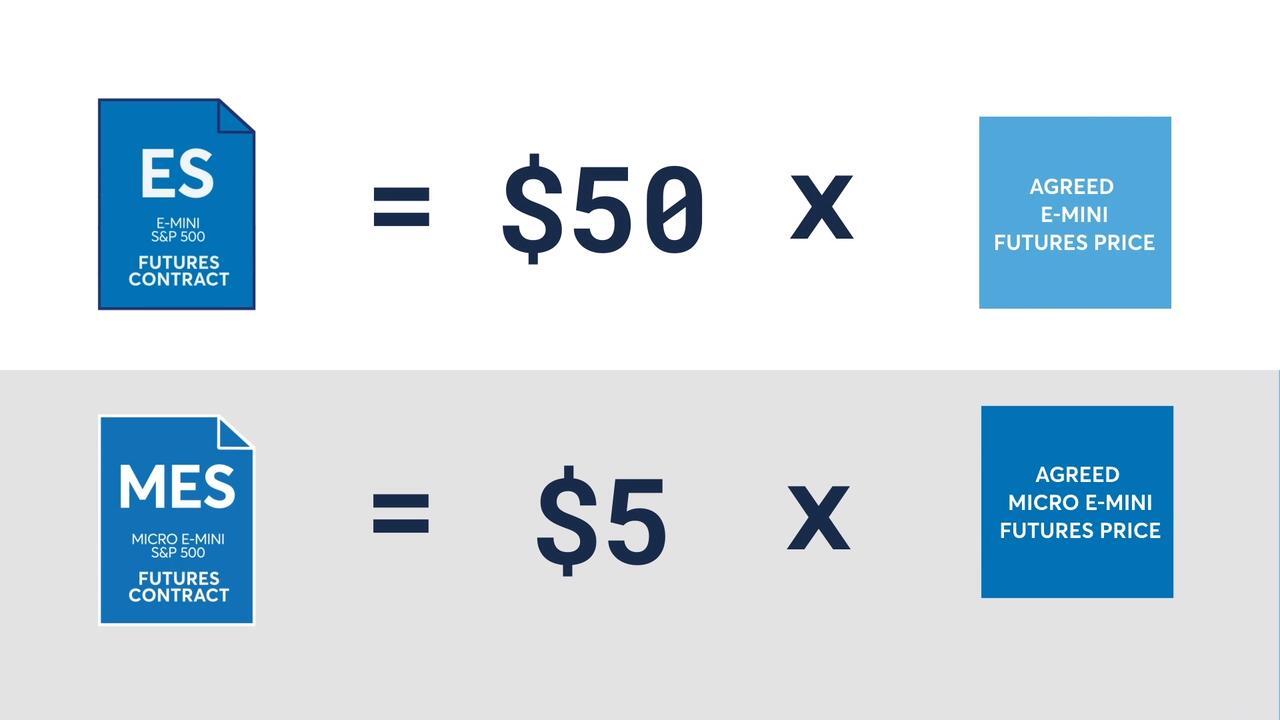
Contract Multiplier: Each full index point movement in the ES futures contract is valued at $50. So, if the S&P 500 index (and thus the ES contract) moves from 4000 to 4001, the value of one contract changes by $50.
-
Tick Size: The smallest allowable price increment for ES futures is 0.25 index points. This means a single tick movement is worth $12.50 (0.25 points * $50/point). This granular pricing allows for precise entry and exit points.
-
Trading Hours: ES futures trade nearly 24 hours a day, five days a week, from Sunday evening to Friday afternoon U.S. time. This extended trading window provides ample opportunity for participants from various time zones and allows for reactions to global economic news even outside traditional U.S. market hours.
-
Contract Months: ES futures contracts are listed for four quarterly months in the March, June, September, and December cycle. These are often referred to as “quarterly expiration cycles.” Traders typically focus on the nearest-month contract due to its higher liquidity.
-
Margin Requirements: To trade ES futures, traders are required to deposit a certain amount of capital, known as margin. There are two types: initial margin (required to open a new position) and maintenance margin (the minimum equity required to hold a position). These requirements are set by the exchange (CME Group) and brokers and are subject to change based on market volatility. Margin allows traders to control a much larger notional value with a relatively small capital outlay, enabling significant leverage.
Why Trade ES Futures? Key Advantages and Uses
The popularity of ES futures stems from a confluence of factors that make them attractive for a diverse range of market participants. From managing large portfolios to executing rapid speculative trades, ES futures offer unique benefits.
Hedging Against Market Risk
One of the primary uses of ES futures, particularly for institutional investors and portfolio managers, is hedging. If a fund manager holds a large portfolio of S&P 500 stocks and anticipates a short-term market downturn, they can sell ES futures contracts. If the market indeed falls, the losses in their stock portfolio can be offset, at least partially, by the profits generated from their short futures position. This strategy allows them to protect their portfolio’s value without having to sell off individual stock holdings, which can be costly and time-consuming. Conversely, they can buy futures to hedge against the risk of being under-invested in a rising market.
Speculation and Directional Trading
For active traders, particularly day traders and swing traders, ES futures offer immense potential for speculation. Given their high liquidity and intraday volatility, traders can take long (buy) or short (sell) positions based on their market outlook, aiming to profit from short-term price movements. The leveraged nature of futures contracts means that even small price changes can result in significant profits (or losses), making them a powerful tool for those with a strong directional bias and robust trading strategies. The near 24-hour trading allows traders to react instantly to market-moving news and trends, maximizing their ability to capitalize on perceived opportunities.
Leverage and Capital Efficiency
Leverage is a defining characteristic of futures trading and a major draw for ES futures. With a relatively small amount of margin capital, traders can control a contract with a much larger notional value. For example, if the S&P 500 is at 4000, one ES contract has a notional value of $200,000 (4000 points * $50/point). However, the initial margin might only be around $10,000-$15,000. This means a trader is controlling a substantial asset with a fraction of the cost, making futures highly capital-efficient. This leverage can significantly amplify returns on successful trades, allowing traders to maximize their capital’s potential.
Liquidity and Price Discovery
The E-mini S&P 500 futures market is one of the most liquid financial markets globally. Millions of contracts are traded daily, ensuring that traders can almost always enter and exit positions quickly and at competitive prices. This high liquidity translates into tight bid-ask spreads, reducing transaction costs and market impact. Furthermore, the continuous trading of ES futures provides an excellent mechanism for price discovery, often leading the cash S&P 500 index during periods of high news flow or market activity. Its constant flow of bids and offers effectively aggregates market sentiment, making it a real-time indicator of overall market health and direction.
Risks and Considerations in ES Futures Trading

While ES futures offer compelling advantages, they also come with significant risks that must be understood and managed. The same features that make them attractive can also lead to substantial losses if not approached with caution and discipline.
Leverage: A Double-Edged Sword
The high leverage inherent in futures trading is perhaps its greatest allure and its greatest danger. While leverage can amplify profits, it can just as easily magnify losses. A small adverse price movement, when leveraged, can quickly erode a significant portion, or even all, of a trader’s capital. This makes robust risk management paramount. Traders must always be aware of the notional value they are controlling and the potential dollar impact of even minor index fluctuations. The allure of outsized gains must be balanced with a clear understanding of the potential for outsized losses.
Market Volatility
Futures markets, by their nature, are susceptible to high volatility. Economic announcements, geopolitical events, company earnings, and even algorithmic trading can cause rapid and unpredictable price swings in the S&P 500 and, consequently, in ES futures. While volatility creates opportunities for profit, it also increases the risk of sudden losses. Traders must be prepared for swift market movements and have clear stop-loss strategies in place to mitigate the impact of adverse price action. Unexpected “gap” openings or rapid shifts can lead to stops being triggered at less favorable prices than intended.
Margin Calls and Liquidation
When a trader’s account equity falls below the maintenance margin requirement due to adverse price movements, they will receive a “margin call” from their broker. This is a demand to deposit additional funds to bring their account back up to the maintenance margin level. If the trader fails to meet a margin call promptly, the broker has the right to liquidate (close out) some or all of their positions to cover the deficit. This often happens at unfavorable prices, crystallizing losses and removing the opportunity for the position to recover. Understanding and respecting margin requirements is critical to avoiding forced liquidation.
Complexity and Learning Curve
Trading ES futures is not for the faint of heart or the unprepared. It requires a significant understanding of market dynamics, technical analysis, fundamental analysis (to some extent), and sophisticated risk management techniques. Beginners often underestimate the complexity and the psychological demands of active trading. There is a steep learning curve involved in developing a profitable trading strategy, understanding market microstructure, managing emotions, and consistently executing a plan. Without proper education and practice, traders are likely to incur losses.
How to Get Started with ES Futures Trading
For those interested in exploring the potential of ES futures, a structured and disciplined approach is essential. Jumping in without preparation is a recipe for financial setbacks.
Education and Research
The first and most crucial step is comprehensive education. Learn everything you can about futures markets, the S&P 500 index, technical analysis indicators, fundamental drivers, and different trading strategies (e.g., trend following, counter-trend, scalping). Read books, attend webinars, follow reputable financial news sources, and study historical market data. Understanding the “how” and “why” behind market movements will build a solid foundation for informed decision-making. Familiarize yourself with the CME Group’s website, which is the official exchange for ES futures.
Selecting a Futures Broker
To trade ES futures, you’ll need an account with a futures broker. When selecting a broker, consider factors such as:
-
Commissions and Fees: Compare trading costs per contract.
-
Trading Platform: Ensure the platform is reliable, fast, user-friendly, and offers the charting and order types you need.
-
Margin Requirements: Understand their specific initial and maintenance margin levels.
-
Customer Service: Good support is invaluable, especially when starting out.
-
Regulatory Status: Ensure the broker is properly regulated in your jurisdiction.
-
Data Feeds: Access to real-time market data is critical.
Funding Your Account and Understanding Margin
Once you’ve chosen a broker, you’ll need to fund your trading account. Remember the distinction between initial margin (to open a trade) and maintenance margin (to keep it open). It is generally advised to deposit more than just the minimum initial margin, as this provides a buffer against adverse price movements and reduces the likelihood of margin calls. Only trade with capital you can afford to lose, as there’s no guarantee of profit.
Developing a Trading Plan
A well-defined trading plan is your roadmap to success. It should include:
-
Trading Strategy: How will you identify trading opportunities?
-
Entry and Exit Rules: Precise criteria for entering and exiting trades.
-
Risk Management: How much capital will you risk per trade? Where will your stop-losses be placed?
-
Position Sizing: How many contracts will you trade based on your capital and risk tolerance?
-
Trading Journal: A record of your trades to analyze performance and learn from mistakes.
-
Emotional Discipline: How you will manage fear, greed, and other emotions.
Practice with a Demo Account
Before committing real capital, practice extensively with a demo (or simulated) trading account. Most futures brokers offer demo accounts that allow you to trade with virtual money in real-time market conditions. This is an invaluable step to test your strategies, become familiar with the trading platform, and gain confidence without financial risk. Treat your demo trading as seriously as you would real trading to develop good habits.

Conclusion
ES futures represent a powerful and sophisticated financial instrument, offering unparalleled opportunities for hedging, speculation, and capital efficiency within the “Money” category. As a direct reflection of the U.S. stock market’s performance, they provide a highly liquid and accessible way to gain exposure to broad market movements. However, the inherent leverage and volatility demand a rigorous commitment to education, risk management, and disciplined execution. For those willing to invest the time and effort to understand their nuances, ES futures can be an invaluable addition to a comprehensive financial strategy, providing tools to navigate and potentially profit from the ever-changing landscape of global markets. Approach with knowledge, respect the risks, and always prioritize responsible trading practices.
aViewFromTheCave is a participant in the Amazon Services LLC Associates Program, an affiliate advertising program designed to provide a means for sites to earn advertising fees by advertising and linking to Amazon.com. Amazon, the Amazon logo, AmazonSupply, and the AmazonSupply logo are trademarks of Amazon.com, Inc. or its affiliates. As an Amazon Associate we earn affiliate commissions from qualifying purchases.