
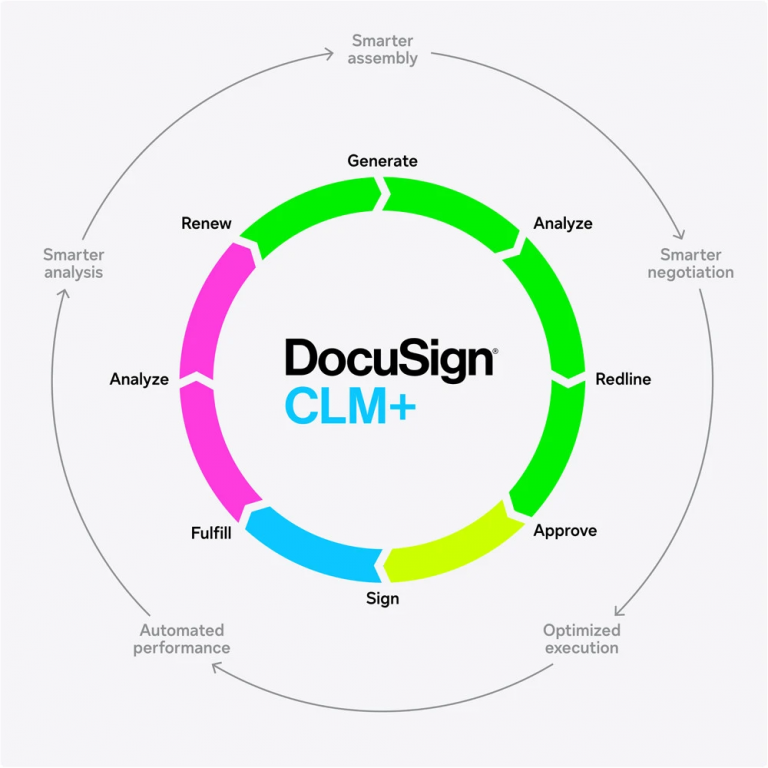
In the modern enterprise software landscape, the digital transformation of legal and administrative processes has evolved far beyond simple electronic signatures. While most professionals recognize DocuSign as the pioneer of e-signature technology, the company’s expansion into Contract Lifecycle Management (CLM) represents a significant leap in how organizations handle the complex, data-heavy journey of legal agreements. DocuSign CLM is a sophisticated software-as-a-service (SaaS) platform designed to automate the entire lifecycle of a contract—from initial drafting and negotiation to execution, storage, and renewal.
By integrating artificial intelligence, automated workflows, and robust security protocols, DocuSign CLM transforms contracts from static documents into dynamic data assets. For technology leaders and digital transformation officers, understanding the technical architecture and functional capabilities of this platform is essential for modernizing the “system of agreement” within a corporate stack.
Understanding the Architecture of DocuSign CLM
To understand what DocuSign CLM is, one must first look at the fragmentation it aims to solve. Traditionally, the lifecycle of a contract involves disconnected tools: Microsoft Word for drafting, email for redlining, shared drives for storage, and disparate spreadsheets for tracking expiration dates. This manual approach creates data silos and security vulnerabilities. DocuSign CLM acts as a centralized orchestration layer that unifies these steps into a single digital thread.
The Core Pillars of Contract Lifecycle Management
The platform is structured around four primary technological pillars: generation, negotiation, workflow automation, and centralized storage.
- Generation: This involves the automated creation of documents using pre-approved templates. By leveraging a “Clause Library,” the system allows users to pull standardized legal language into a document based on specific data inputs (such as region, deal size, or product type), ensuring consistency and reducing the need for manual legal review.
- Negotiation: The platform provides a controlled environment for “redlining.” Instead of sending various versions of a file back and forth via email, DocuSign CLM tracks changes in real-time, manages version control, and ensures that all stakeholders are working on the most recent iteration.
- Workflow Automation: Perhaps the most powerful technical component is the workflow engine. This allows administrators to build complex logic trees—such as “if the discount is greater than 20%, route to the CFO for approval”—without writing custom code.
- Centralized Repository: Once signed, contracts are stored in a secure, searchable database. Advanced Optical Character Recognition (OCR) technology ensures that even legacy scanned documents are indexed and searchable by keyword or metadata.
Cloud-Native Infrastructure and Scalability
As a cloud-native solution, DocuSign CLM is built to scale with global enterprises. It utilizes a high-availability architecture that ensures uptime and data redundancy across multiple geographic regions. This is critical for organizations that handle thousands of high-value contracts simultaneously. The platform’s multi-tenant environment is designed to provide the agility of a SaaS model while maintaining the rigorous isolation required for sensitive legal data.
The Role of Artificial Intelligence and Machine Learning
The true technological differentiator for DocuSign CLM is its integration of Artificial Intelligence (AI) and Machine Learning (ML), largely powered by the company’s acquisition of Seal Software. In the context of CLM, AI is not a buzzword but a functional tool used to solve the “unstructured data” problem. Most contracts are essentially unstructured text; DocuSign CLM uses AI to convert that text into actionable data points.
Automated Risk Assessment with DocuSign Analyzer
Before a contract is even signed, the “Analyzer” component uses Natural Language Processing (NLP) to review incoming third-party documents. It compares the language in a vendor’s contract against the company’s preferred legal standards. If a clause regarding “indemnification” or “data privacy” deviates from the corporate policy, the AI flags it instantly. This significantly accelerates the procurement cycle, as legal teams only need to focus on high-risk deviations rather than reading every line of every standard agreement.
Smart Metadata Extraction and DocuSign Insight
Post-execution, the AI continues to provide value through “Insight.” This technology scans the entire repository of contracts to extract key metadata—such as force majeure clauses, renewal dates, or termination notice periods. For a tech-heavy organization managing hundreds of software licenses and service-level agreements (SLAs), this capability is transformative. In the event of a regulatory change (like the introduction of GDPR or changes in LIBOR rates), the AI can scan thousands of documents in minutes to identify which contracts are impacted, a task that would take human teams months to complete manually.

Streamlining the Digital Workflow
The efficiency of a software tool is often measured by its ability to eliminate manual “friction.” DocuSign CLM focuses on the friction between departments—specifically Sales, Legal, Procurement, and Finance. By automating the hand-offs between these groups, the software reduces “contract cycle time,” which is a key performance indicator for digital operations.
No-Code Workflow Designers
A significant hurdle in traditional enterprise software implementation is the need for extensive IT resources. DocuSign CLM addresses this through a visual, “drag-and-drop” workflow designer. This tool allows business analysts or legal operations professionals to map out the journey of a document. These workflows can trigger external events, such as updating a record in a CRM or notifying a Slack channel when a high-priority contract is finalized. This interconnectivity ensures that the contract process is not an island, but a integrated part of the broader tech ecosystem.
Seamless Integration Ecosystems
A CLM tool is only as effective as its ability to talk to other software. DocuSign CLM offers deep integrations with major enterprise platforms, most notably Salesforce, SAP Ariba, and Workday.
In a typical sales use case, a representative can stay within the Salesforce interface to trigger a contract. The CLM pulls the customer data, product details, and pricing directly from the CRM, populates the template, and initiates the approval workflow. Once the contract is signed, the final PDF is automatically attached to the Salesforce record, and the status of the “Opportunity” is updated to “Closed/Won.” This seamless data flow eliminates manual data entry errors and ensures that the “source of truth” remains consistent across the organization.
Security, Compliance, and Digital Governance
In the realm of digital security, contracts represent some of the most sensitive data an organization possesses. Therefore, the security architecture of DocuSign CLM is designed to meet the most stringent global standards, including SOC 2, ISO 27001, and FedRAMP.
Encryption and Data Sovereignty
Data within DocuSign CLM is encrypted both at rest and in transit using industry-standard AES-256 and TLS encryption. Furthermore, for global organizations, the platform addresses data sovereignty concerns by allowing companies to choose the data residency region that complies with local regulations. This is particularly vital for companies operating in the European Union under GDPR or in other jurisdictions with strict data localization laws.
Audit Trails and Version Control
From a digital forensics perspective, DocuSign CLM provides an immutable audit trail. Every action taken on a document—who viewed it, who edited a specific paragraph, who approved it, and when it was signed—is timestamped and logged. This level of transparency is virtually impossible to achieve with traditional document management systems. In the event of a legal dispute or a compliance audit, the platform can generate a comprehensive history of the agreement’s lifecycle, providing an “electronic paper trail” that is legally defensible.
The Future of Contract Technology
As we look toward the future of software trends, DocuSign CLM is positioned at the intersection of “LegalTech” and “FinTech.” The roadmap for these tools involves moving toward “Smart Contracts,” where the terms of the agreement are written in code and can self-execute based on external triggers (such as an API call confirming a delivery).
While we are not yet at a stage where all corporate legalities are handled by self-executing code, the automation provided by DocuSign CLM is the foundational step. It transitions the enterprise from a world of “paper-based thinking” to a data-centric model. By treating a contract as a structured data object rather than a static image or text file, organizations gain unprecedented visibility into their obligations, risks, and opportunities.
In conclusion, DocuSign CLM is a comprehensive technology solution that addresses the systemic inefficiencies of manual contract management. By leveraging cloud infrastructure, advanced AI, and sophisticated workflow automation, it enables organizations to move faster while maintaining higher levels of security and compliance. For any business looking to complete its digital transformation journey, moving beyond the simple e-signature to a full lifecycle management system is a critical technical evolution. It ensures that the “engine” of the business—its contracts—runs as efficiently as its sales, marketing, and engineering departments.
aViewFromTheCave is a participant in the Amazon Services LLC Associates Program, an affiliate advertising program designed to provide a means for sites to earn advertising fees by advertising and linking to Amazon.com. Amazon, the Amazon logo, AmazonSupply, and the AmazonSupply logo are trademarks of Amazon.com, Inc. or its affiliates. As an Amazon Associate we earn affiliate commissions from qualifying purchases.