
When a consumer asks, “What is Crisco made out of?” they are typically seeking a list of ingredients—hydrogenated soybean and palm oils. However, from a brand strategy perspective, the answer is far more complex. Crisco is not merely a combination of lipids; it is a masterclass in corporate identity, market disruption, and the psychological engineering of consumer trust. For over a century, Crisco has represented one of the most successful examples of how a brand can synthesize a purely industrial product into an indispensable domestic staple.
To understand what Crisco is “made out of” in a business sense, we must look beyond the vegetable oil and examine the brand architecture that allowed a lab-created substance to replace animal fats that had been used for millennia.
The Origins of a Household Giant: From Lab to Larder
The story of Crisco is fundamentally a story of accidental innovation and strategic pivoting. In the early 20th century, the brand was birthed not from a culinary need, but from an industrial surplus. Understanding this origin is crucial for any brand strategist looking to understand how “waste” can be transformed into “wealth.”
The Industrial Birth of Crisco
In the early 1900s, Procter & Gamble (P&G) was primarily a candle and soap manufacturer. The company was heavily reliant on expensive animal fats. To reduce costs, they sought a way to solidify liquid cottonseed oil. Through the acquisition of a European patent for hydrogenation—a process that adds hydrogen atoms to fatty acid chains—P&G realized they had created a substance that looked and behaved remarkably like lard. However, as electricity began to replace candles, P&G found themselves with a revolutionary product and a shrinking market.
The Pivot: From Candle Wax to Cooking Fat
The genius of the Crisco brand began with the decision to pivot from the utility closet to the kitchen. P&G executives realized that the same properties that made hydrogenated oil good for candles—stability, a high melting point, and a clean white appearance—made it an ideal substitute for butter and lard. By naming the product “Crisco” (derived from Crystallized Cottonseed Oil), they moved away from the chemical connotations of “hydrogenated oil” and toward a brand name that sounded crisp, fresh, and modern. This pivot represents one of the earliest and most successful instances of “re-purposing” in corporate history.
The Marketing Masterclass: How Crisco Defined Modern Brand Strategy
Crisco did not become a market leader by accident. Its dominance was manufactured through a multi-pronged marketing strategy that utilized education, psychological positioning, and health-based claims. At a time when food safety was a major public concern, Crisco positioned itself as the “scientific” and “pure” alternative to the “dirty” slaughterhouse products of the era.
Trust Through Education: The First Branded Cookbooks
One of Crisco’s most effective brand strategies was the “education-first” approach. In 1912, P&G released The Story of Crisco, a cookbook that was as much a promotional manifesto as it was a recipe guide. By providing consumers with 615 recipes that specifically required Crisco, they ensured brand loyalty through utility. They weren’t just selling a product; they were teaching a new way to cook. This “content marketing” before the term existed established Crisco as an authority in the American kitchen, transforming the brand into a helpful household partner rather than a faceless corporation.
The “Pure” Promise: Positioning Against Lard
In the early 20th century, the meatpacking industry was under fire following the publication of Upton Sinclair’s The Jungle. Crisco’s marketing department seized this opportunity to build a brand identity centered on “purity.” They emphasized that Crisco was “strictly vegetable,” untouched by human hands, and made in “clean, sunlit factories.”
This positioning was particularly effective in reaching diverse demographics. For example, Crisco was marketed heavily to Jewish communities as a “kosher” fat that could be used with both meat and dairy—a versatility lard could never offer. By solving a specific consumer pain point through brand positioning, Crisco captured a massive market share that had previously been tethered to traditional fats.
Navigating the Health Consciousness Era: Brand Evolution and Adaptation

No brand survives for over a century without facing a crisis of identity. For Crisco, that crisis arrived with the shifting scientific understanding of nutrition, specifically the move against trans fats in the late 20th and early 21st centuries. What Crisco was “made out of” suddenly became a liability rather than an asset.
The Trans-Fat Crisis and Brand Resilience
For decades, Crisco’s identity was tied to the benefits of hydrogenation. However, as clinical studies began to link trans fats (a byproduct of partial hydrogenation) to heart disease, the brand faced an existential threat. The very thing that made Crisco revolutionary—its shelf stability and texture—was now being labeled as toxic by health advocates.
The brand’s resilience during this period is a testament to the strength of its corporate identity. Instead of folding, the brand lean into transparency and innovation. They underwent a massive research and development phase to reformulate the product, eventually removing nearly all trans fats while maintaining the “performance” that bakers expected.
Reformulating Without Losing the Brand Essence
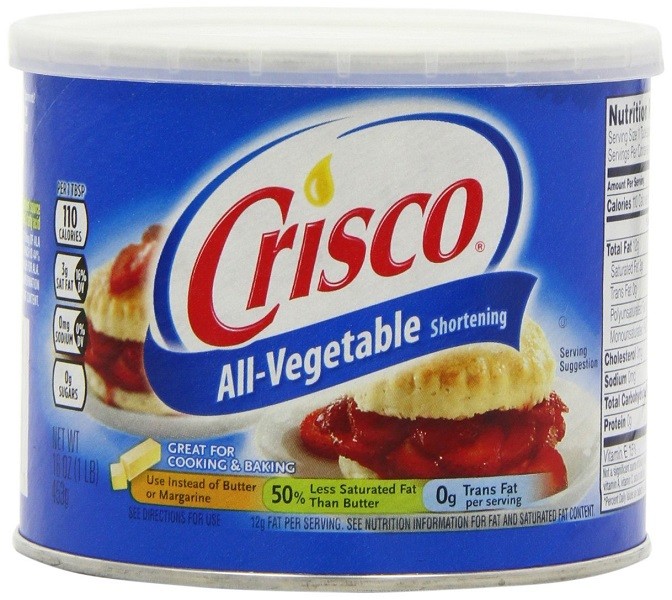
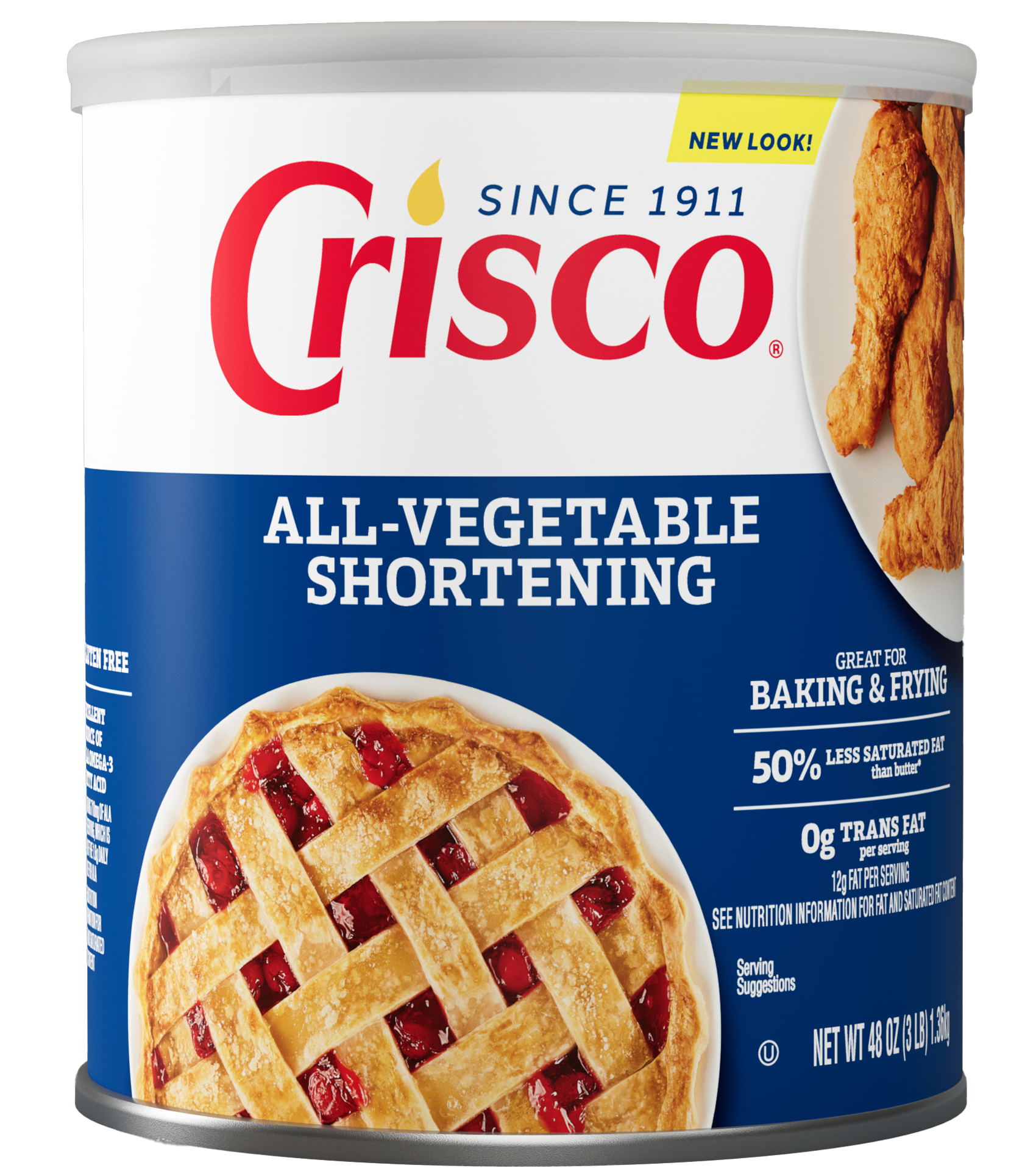
The challenge of the mid-2000s was a classic branding dilemma: How do you change the ingredients of a product without changing the “soul” of the brand? Crisco’s strategy focused on maintaining the iconic blue can and the “reliability” promise. They transitioned to a blend of fully hydrogenated palm oil and liquid soybean oil.
From a brand strategy perspective, they successfully shifted the narrative from “What is it made of?” back to “What can it do for you?” By focusing on the end result—flaky pie crusts and crispy fried chicken—they bypassed the scrutiny of the chemical change in the eyes of the average consumer.
Corporate Identity and Market Positioning in the 21st Century
In the modern era, Crisco has transitioned from being a flagship product of a massive conglomerate (P&G) to a key asset in a specialized food portfolio. This shift reflects broader trends in brand management where heritage brands are optimized for specific market niches.
Acquisition and the J.M. Smucker Portfolio
In 2002, J.M. Smucker Co. acquired Crisco from P&G for roughly $815 million. This move was a strategic alignment of “heritage brands.” Smucker’s understood that Crisco wasn’t just a commodity; it was an “anchor brand” with immense emotional equity. Under Smucker’s, the brand was further segmented, introducing various oils and sprays to compete with newer, health-focused competitors.
In 2020, the brand was sold again to B&G Foods for $550 million. This sequence of acquisitions highlights Crisco’s status as a “cash cow” in the branding world—a product that requires relatively low marketing spend compared to its consistent revenue generation due to its deep-rooted brand recognition.
Modern Visual Identity and Consumer Perception
Today, Crisco’s brand strategy relies on “nostalgic reliability.” In an age of high-tech air fryers and boutique avocado oils, Crisco positions itself as the reliable, affordable standard for traditional American baking. The visual identity has remained remarkably consistent; the blue and white color palette evokes a sense of mid-century Americana and domestic stability.
The brand now navigates a bifurcated market. On one hand, it appeals to the budget-conscious consumer who values shelf life and price-per-ounce. On the other, it appeals to the “pro-hobbyist” baker who knows that for certain textures, there is no technological substitute for shortening. By maintaining this dual-identity, Crisco remains a dominant force in the baking aisle.
Conclusion: The Enduring Value of Brand Architecture
What is Crisco made out of? To the chemist, it is a lipid profile of soybean and palm oils. But to the brand strategist, Crisco is made out of trust, history, and the brilliant execution of market positioning.
The brand’s journey from a candle-making experiment to a cultural icon serves as a blueprint for how companies can leverage technological innovation to disrupt traditional markets. By prioritizing consumer education, maintaining a consistent visual identity, and demonstrating the agility to reformulate under pressure, Crisco has ensured its place in the American pantry for over 110 years. It proves that a product’s most important ingredient isn’t what is inside the package—it’s the brand equity built around it.
aViewFromTheCave is a participant in the Amazon Services LLC Associates Program, an affiliate advertising program designed to provide a means for sites to earn advertising fees by advertising and linking to Amazon.com. Amazon, the Amazon logo, AmazonSupply, and the AmazonSupply logo are trademarks of Amazon.com, Inc. or its affiliates. As an Amazon Associate we earn affiliate commissions from qualifying purchases.