
In the world of personal finance and business management, numbers are the language of success. However, many individuals struggle to translate these numbers into actionable strategies because they lack a fundamental understanding of the “math rate.” While the term might sound academic, a math rate is simply the quantitative expression of how value changes over time. Whether you are calculating the interest on a high-yield savings account, determining the growth trajectory of a startup, or evaluating the cost of a mortgage, you are engaging with the math of rates.
Understanding the math rate is the difference between passive participation in the economy and active wealth building. This guide explores the various dimensions of financial rates, the formulas that drive them, and how you can leverage this knowledge to optimize your financial future.
The Fundamentals of Math Rates in Personal Finance
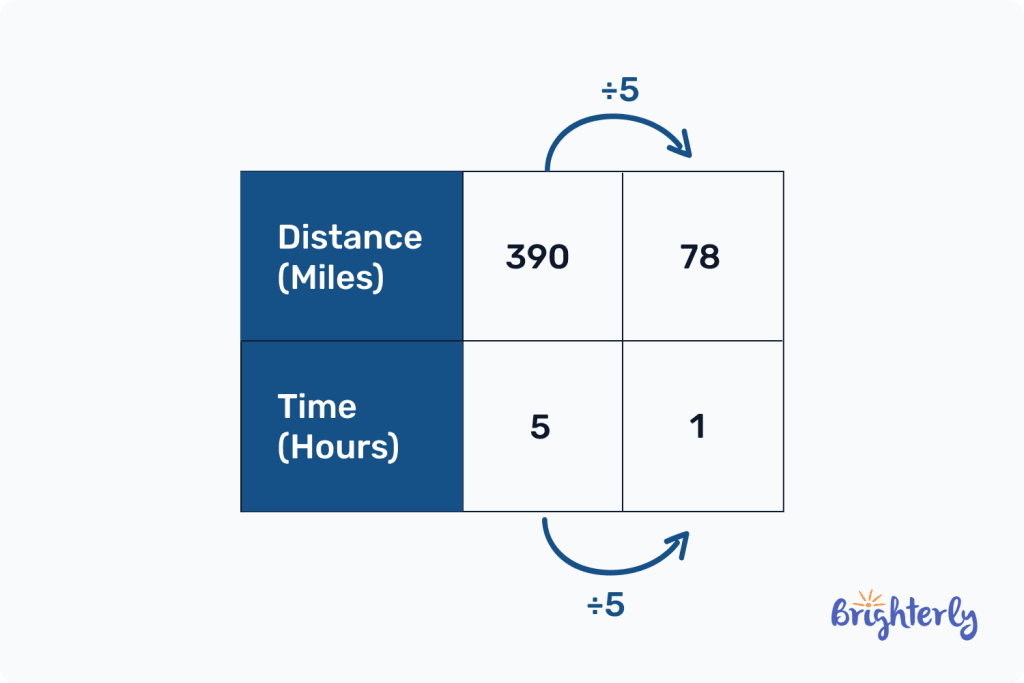
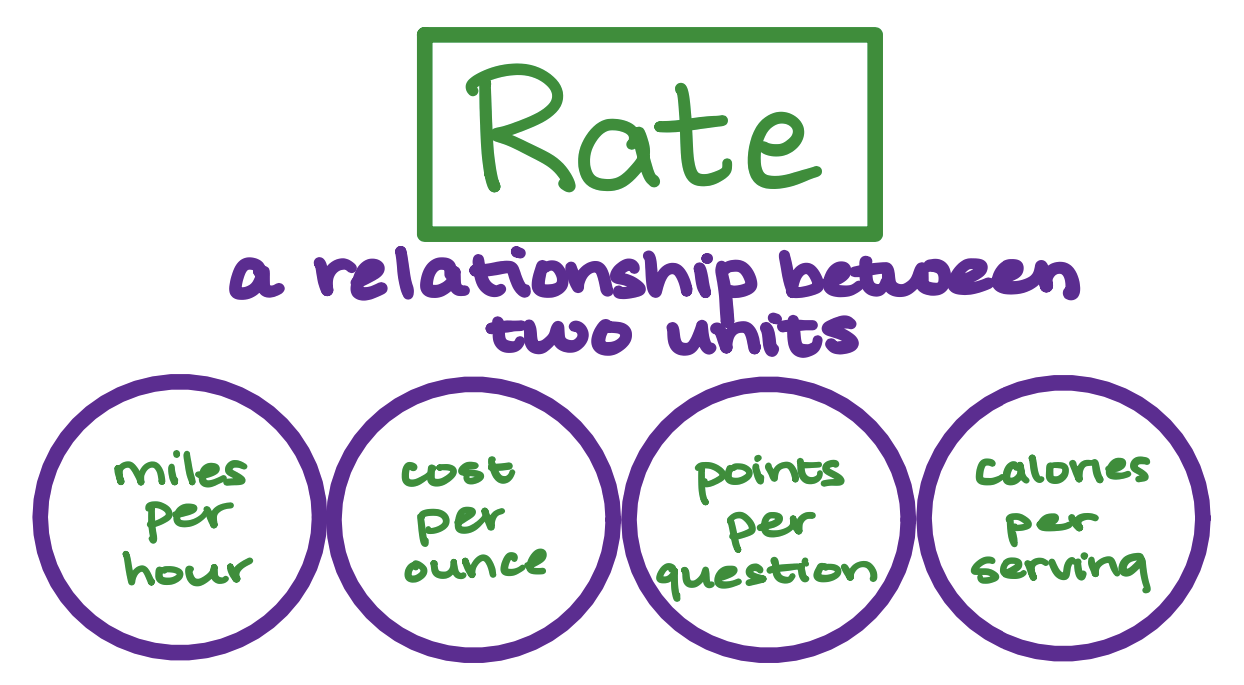
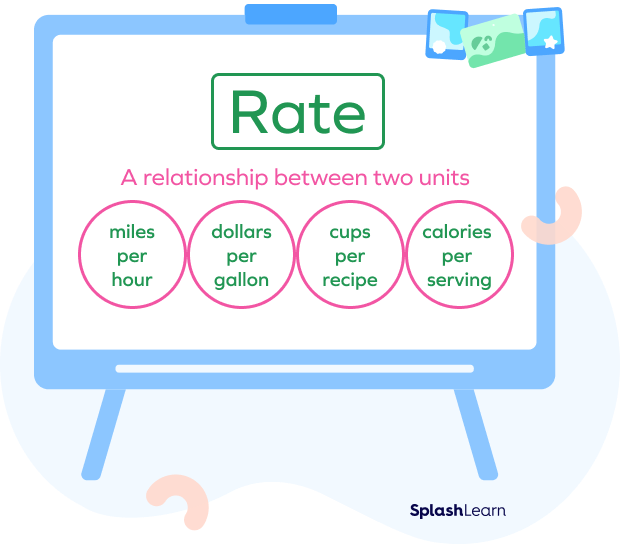
To master your money, you must first master the ratio. At its most basic level, a math rate in finance is a ratio that compares two different quantities, usually involving money and time. It tells you how fast your money is growing or how quickly your debt is accumulating.
Defining Rate in a Financial Context
In financial mathematics, a “rate” is typically expressed as a percentage of a principal amount over a specific period. For example, if you lend $1,000 to a friend and they agree to pay you back $1,100 in one year, the math rate of that transaction is 10% per annum.
However, rates are rarely that static in the real world. They are influenced by market conditions, central bank policies, and risk profiles. Understanding the “base rate” set by institutions like the Federal Reserve is essential, as this rate serves as the mathematical foundation for almost every other rate in the economy, from credit card APRs to the yield on government bonds.
The Difference Between Simple and Compound Rates
The most critical distinction in financial math is the difference between simple interest and compound interest.
- Simple Interest: This is calculated only on the principal amount of a loan or investment. The formula is $I = P times r times t$ (Interest = Principal × Rate × Time). It is linear and predictable.
- Compound Interest: This is often referred to as “interest on interest.” It is calculated on the initial principal and also on the accumulated interest of previous periods. The math rate here is exponential.
For anyone looking to build wealth, the “math rate” of compounding is the most powerful tool in their arsenal. Over long horizons, the difference between a 5% simple rate and a 5% compound rate is staggering, representing the difference between modest savings and true generational wealth.
The Mathematics of Interest: APR vs. APY
When you open a bank account or take out a loan, you will encounter two primary acronyms: APR and APY. While they look similar, the mathematical implications of each are vastly different. Understanding the math rate behind these terms can save you thousands of dollars over a lifetime.
Annual Percentage Rate (APR) Explained
The APR is the standard way to express the cost of borrowing. It includes the interest rate plus any fees or additional costs associated with the transaction. However, the math behind APR is “simple”—it does not take into account the compounding of interest within a year.
If you have a credit card with a 20% APR, the bank doesn’t just charge you 20% at the end of the year. They break that rate down into a daily periodic rate. This is where the math becomes tricky for many consumers; because credit cards compound daily, the actual “math rate” you pay is higher than the stated APR.
The Power of Compounding (APY)
Annual Percentage Yield (APY) is the “real” math rate of return on an investment or the real cost of a loan when compounding is factored in. The formula for APY is:
$APY = (1 + r/n)^n – 1$
(where $r$ is the stated rate and $n$ is the number of compounding periods).
As the frequency of compounding increases—from annually to monthly to daily—the APY rises. For an investor, a higher compounding frequency is a gift; for a debtor, it is a burden. When comparing financial products, always look at the APY to see the true mathematical impact on your balance.
Math Rates in Investment Analysis
Professional investors do not look at raw dollar amounts; they look at rates. To determine whether an investment is “good,” you must calculate its performance against benchmarks using specific mathematical frameworks.
Return on Investment (ROI) and Compound Annual Growth Rate (CAGR)
ROI is the most common math rate used to evaluate a single transaction. It is calculated by dividing the net profit by the initial cost. While useful for short-term flips, ROI fails to account for the time value of money.
This is where the Compound Annual Growth Rate (CAGR) becomes essential. CAGR provides a smoothed annual rate of return over a specified period longer than one year. It allows investors to compare the performance of two highly volatile assets—such as Bitcoin and a Dividend ETF—on an “apples-to-apples” basis. The math rate of CAGR tells you what your annual return would have been if the investment had grown at a steady rate each year with profits reinvested.
The Rule of 72: A Mathematical Shortcut
For those who want to do “mental math” on their investments, the Rule of 72 is an indispensable tool. It is a simplified formula to estimate how long it will take for an investment to double at a fixed annual math rate.
Simply divide 72 by your annual rate of return. For example, if your portfolio is growing at a rate of 8% per year, it will take approximately 9 years (72 / 8 = 9) for your money to double. This shortcut highlights the dramatic impact that even a 1% or 2% increase in your math rate can have over a 30-year career.
Business Finance: Burn Rates and Profit Margins
In the corporate world and for side-hustle entrepreneurs, “rate” takes on a different meaning. It becomes a measure of operational efficiency and sustainability.
Calculating the Burn Rate for Startups
For a new business, the “Burn Rate” is perhaps the most vital math rate to track. It is the rate at which a company uses up its supply of cash in a loss-making scenario. It is usually calculated as a monthly figure.
If a startup has $100,000 in the bank and is spending $10,000 more than it earns each month, its math rate of “burn” is $10k/month, giving it a 10-month “runway.” Entrepreneurs who fail to monitor this rate often find themselves insolvent before their product gains market traction. Mastery of this math allows for better capital allocation and more strategic hiring.
Operational Math Rates and Efficiency
Beyond burn rates, businesses look at “Margin Rates.” A gross margin rate (Gross Profit / Revenue) tells a business how much of every dollar earned is kept after the direct costs of goods sold.
If your side hustle has a margin rate of 20%, you need to generate five times as much revenue to see the same bottom-line growth as a business with a 100% margin rate (like a digital software product). High-growth businesses prioritize increasing these math rates through automation and scale, ensuring that for every hour of labor, the financial output increases exponentially.
Why Mastering the “Math Rate” is Your Best Financial Strategy
Ultimately, understanding the math rate is about gaining control over your financial narrative. Without this understanding, you are subject to the “invisible taxes” of the financial system—inflation and high-interest debt.
Overcoming Inflation with Real Rates of Return
One of the most dangerous mistakes in personal finance is ignoring the “Real Rate of Return.” The nominal rate is what your bank statement says you earned (e.g., 4% in a savings account). However, the real math rate is the nominal rate minus the inflation rate.
If inflation is running at 5% and your savings account is paying 4%, your “Real Math Rate” is -1%. You are effectively losing purchasing power while your balance technically increases. Wealthy individuals focus on assets that provide a math rate that exceeds inflation, such as real estate, stocks, or private equity.
Strategic Debt Management Through Rate Optimization
Mastering math rates also allows for strategic debt management. By understanding the “Weighted Average Cost of Capital” (WACC), an individual can decide whether to pay off a mortgage early or invest that money in the stock market.
If your mortgage math rate is 3% and the stock market’s historical math rate is 8%, the mathematical choice is to invest. However, if your credit card math rate is 24%, no investment on earth can reliably beat that, making debt repayment the mathematically superior “investment.”
In conclusion, the “math rate” is not just a schoolhouse concept. It is the pulse of your financial health. By understanding how interest compounds, how yields are calculated, and how inflation erodes value, you transform from a consumer of financial products into a strategist of capital. Whether you are managing a household budget or a multi-million dollar corporate portfolio, the math remains the same: identify the rate, understand the time horizon, and use the power of compounding to your advantage.
aViewFromTheCave is a participant in the Amazon Services LLC Associates Program, an affiliate advertising program designed to provide a means for sites to earn advertising fees by advertising and linking to Amazon.com. Amazon, the Amazon logo, AmazonSupply, and the AmazonSupply logo are trademarks of Amazon.com, Inc. or its affiliates. As an Amazon Associate we earn affiliate commissions from qualifying purchases.