
In the world of business finance, liquidity is the lifeblood of sustainability and growth. Companies often find themselves in a delicate balancing act, managing accounts receivable while simultaneously needing immediate capital to cover operational expenses, invest in new opportunities, or pay down high-interest debt. One of the most effective, yet frequently misunderstood, tools in a financial manager’s arsenal is the cash discount.
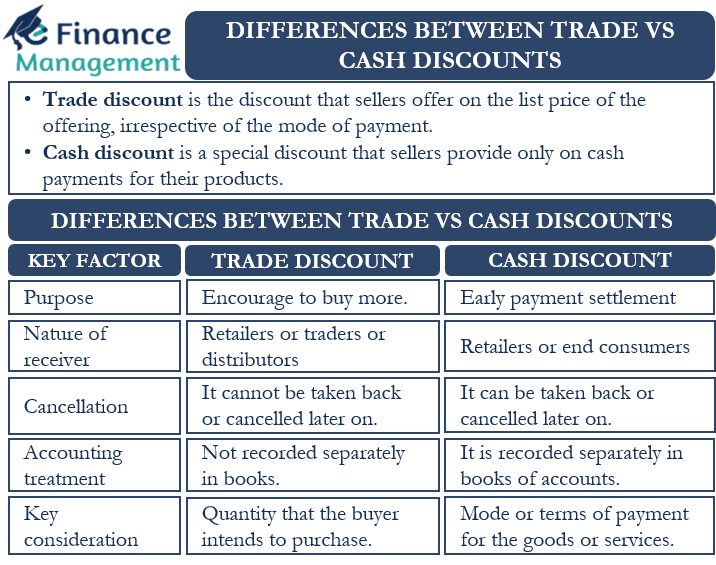
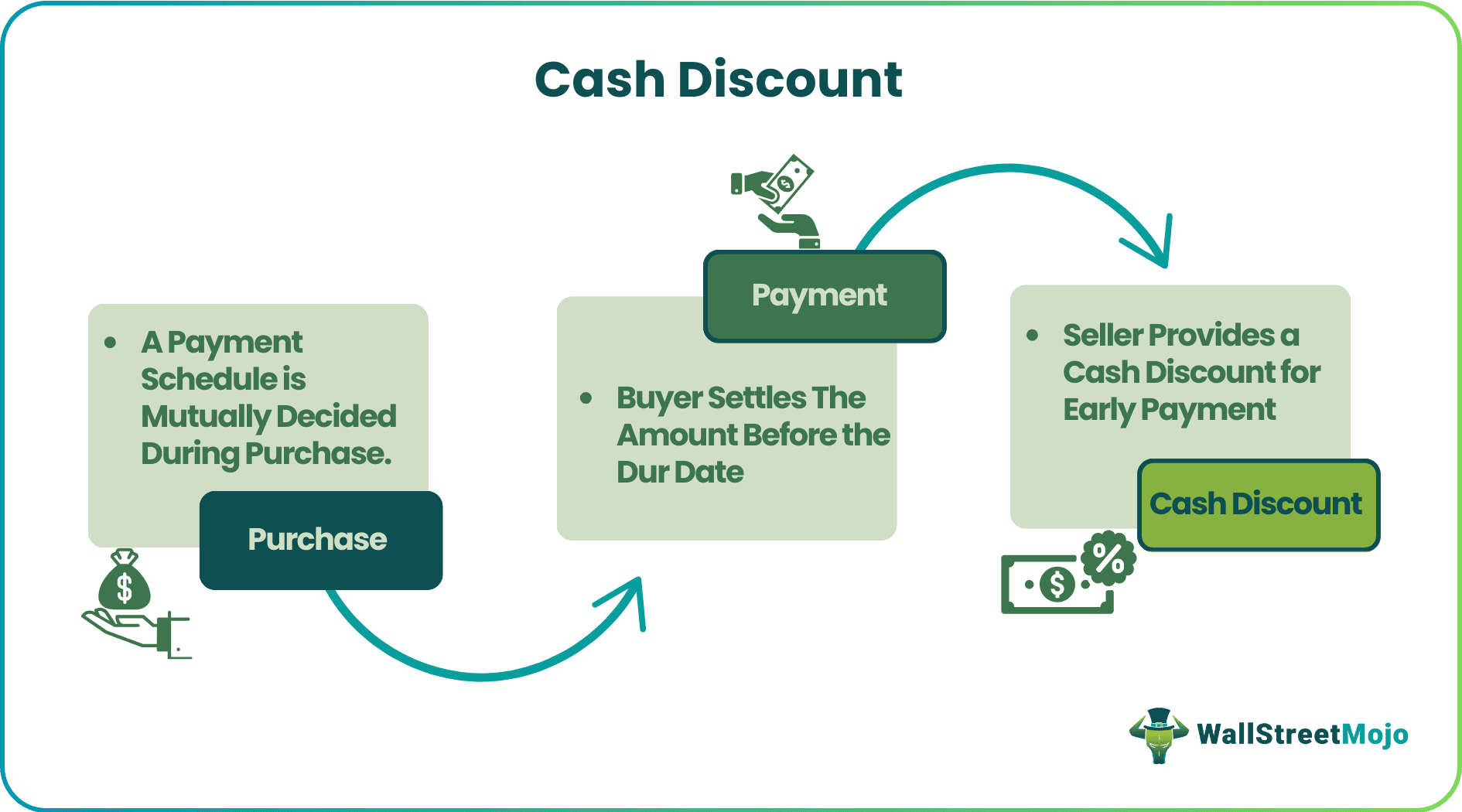
A cash discount is an incentive offered by a seller to a buyer in exchange for paying a bill before its scheduled due date. Unlike a trade discount, which is a reduction in the list price of a product at the time of purchase, a cash discount is a financial arrangement that rewards prompt payment. For businesses, understanding the mechanics, benefits, and mathematical implications of these discounts is essential for maintaining a healthy balance sheet and building strong vendor relationships.
Understanding the Fundamentals of Cash Discounts
At its core, a cash discount serves as a bridge between the seller’s need for immediate liquidity and the buyer’s desire for cost savings. While it may seem like a simple reduction in price, it is actually a strategic financial maneuver that impacts both parties’ cash flow cycles.
The Standard Terms: Decoding 2/10, Net 30
The most common way cash discounts are presented is through specific shorthand notation on an invoice. For example, the term “2/10, net 30” is a standard industry practice.
- 2%: This represents the discount percentage offered.
- 10: This is the number of days the buyer has to pay the invoice to qualify for that 2% discount.
- Net 30: This indicates that the full amount of the invoice is due within 30 days, regardless of whether the discount is taken.
In this scenario, if a business receives an invoice for $10,000 with these terms, they have two choices. They can pay $9,800 within 10 days, or they can pay the full $10,000 on day 30. While a $200 savings might seem minor on a single transaction, the cumulative effect of these discounts over an entire fiscal year can significantly impact a company’s bottom line.
Cash Discount vs. Trade Discount
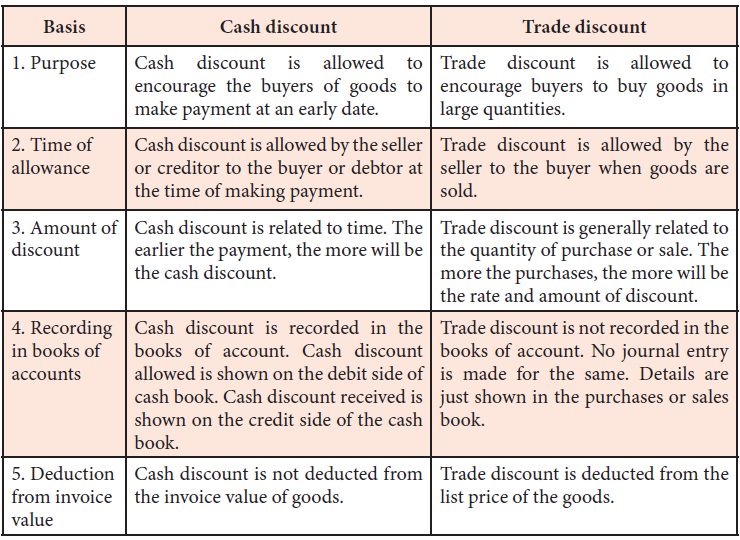
It is crucial to distinguish between cash discounts and trade discounts to ensure accurate financial reporting. A trade discount is usually negotiated at the point of sale, often based on volume or the buyer’s position in the distribution channel (e.g., a wholesaler getting a lower price than a retailer). This discount is deducted from the list price before the invoice is even generated.
In contrast, a cash discount is a conditional offer applied to the final invoice amount. It is only realized if the payment occurs within the specified window. From an accounting perspective, trade discounts are rarely recorded in the general ledger as a separate line item, whereas cash discounts are often tracked as “Sales Discounts” (a contra-revenue account for the seller) or “Purchase Discounts” (a reduction in the cost of goods sold for the buyer).
The Strategic Impact on Business Finance
For many businesses, the primary challenge is not profitability, but timing. A company may be highly profitable on paper while simultaneously struggling to meet its weekly payroll because its capital is tied up in unpaid invoices. This is where the strategic implementation of cash discounts becomes a powerful tool for financial management.
Accelerating Cash Flow and Reducing DSO
The most immediate benefit for a seller is the acceleration of cash inflows. By incentivizing customers to pay early, a business can shorten its Days Sales Outstanding (DSO)—a key metric that measures the average number of days it takes to collect payment after a sale.
A lower DSO indicates that a company is converting its receivables into cash quickly, which provides several advantages:
- Working Capital: The business has more cash on hand to purchase inventory, meet payroll, or fund research and development.
- Reduced Borrowing: Companies with high liquidity do not need to rely as heavily on short-term lines of credit or factoring services, both of which come with interest costs and fees.
- Opportunity Cost: Having cash today allows a business to take advantage of unexpected market opportunities, such as a bulk purchase of raw materials at a discounted rate.
Minimizing Credit Risk and Collection Costs
The longer an invoice remains unpaid, the higher the statistical probability that it will never be paid at all. By encouraging payment within 10 days instead of 30 or 60, a seller significantly reduces the risk of bad debt. Furthermore, the administrative costs associated with chasing late payments—including staff time, collection agency fees, and legal expenses—can be substantial. A cash discount acts as a “carrot” that often proves more effective and less expensive than the “stick” of late fees and collection notices.
The Buyer’s Perspective: A Guaranteed Return on Investment
From the buyer’s side, taking advantage of a cash discount is often one of the most efficient ways to use excess cash. In a low-interest-rate environment, the “return” gained by taking a 2% discount for paying 20 days early is far superior to what that same cash would earn in a standard corporate savings account or money market fund. It is, in essence, a risk-free investment that improves the company’s profit margins.
Analyzing the Mathematics: Is the Discount Worth It?
To truly appreciate the value of a cash discount, one must look beyond the flat percentage and calculate the Effective Annual Interest Rate (EAR). This reveals the true “cost” to the seller or the “gain” for the buyer on an annualized basis.
Calculating the Effective Annual Rate
The formula to determine the annualized cost of giving up a cash discount is:
Annual Rate = [Discount % / (100% – Discount %)] × [365 / (Full Payment Period – Discount Period)]
Using our “2/10, net 30” example:
- Discount Rate: 2 / 98 = 0.0204
- Time Factor: 365 / (30 – 10) = 18.25
- Annualized Rate: 0.0204 × 18.25 = 0.3723, or 37.23%
When viewed through this lens, a 2% discount is incredibly expensive for the seller and incredibly lucrative for the buyer. A 37.23% annual interest rate is higher than almost any standard bank loan or credit card. This highlights why savvy financial officers prioritize paying discounted invoices even if they have to borrow from a short-term line of credit at 8% or 10% to do so. The spread between the cost of borrowing and the savings from the discount represents pure profit.
Seller’s Margin Analysis
While the annualized rate is high, sellers must weigh this against the cost of capital. If a seller is experiencing a cash crunch and would otherwise have to stall production or miss a payment to their own vendors, the “cost” of the discount is a small price to pay for the survival and fluidity of the business. However, if a business already has ample cash reserves, offering a 2% discount may be unnecessarily eroding their profit margins.
Cash Discounts in the Modern Retail Landscape
While cash discounts have long been a staple of B2B transactions, they are increasingly appearing in the B2C (Business to Consumer) sector, particularly among small businesses and service providers. This trend is largely driven by the rising costs of credit card processing fees.
Offsetting Merchant Fees
Every time a customer swipes a credit card, the merchant pays a processing fee, typically ranging from 1.5% to 3.5%. To mitigate this, many businesses have implemented “Cash Discount Programs.”
In this model, the business displays a “regular price” that includes the cost of credit card processing. If the customer chooses to pay with cash, a discount is applied at the register. This is legally distinct from a “surcharge.” A surcharge adds a fee to a credit card transaction, whereas a cash discount reduces the price for cash users. This distinction is important for compliance with major credit card network rules and state laws.
Psychological and Behavioral Effects
Cash discounts can also influence consumer behavior and brand perception. For a service-based business, such as a dental office or an auto repair shop, offering a cash discount can foster a sense of transparency. Customers often appreciate the opportunity to save money, and the business benefits from immediate, irrevocable payment. Unlike credit card transactions, cash payments cannot be subjected to “chargebacks” or disputes months after the service has been rendered.
Implementing a Successful Cash Discount Program
Whether you are a B2B wholesaler or a retail merchant, implementing a cash discount program requires careful planning to ensure it achieves the desired financial goals without negatively impacting the brand.
Establishing Clear Terms and Conditions
Ambiguity is the enemy of financial management. When offering a discount, the terms must be stated clearly on every invoice and contract. It should be explicitly defined when the “clock starts”—is it from the date the invoice is mailed, the date it is received, or the date the goods are delivered? Most businesses use the invoice date to maintain consistency.
Accounting and Record Keeping
Modern accounting software has made managing cash discounts significantly easier. However, it still requires diligent oversight. For the seller, the discount must be recorded as a reduction in revenue. For the buyer, it must be recorded as a reduction in the cost of the asset or expense purchased.
Internal controls should be in place to ensure that discounts are only taken when the criteria are met. A common issue in B2B finance is “unearned discounts,” where a buyer pays the discounted amount after the 10-day window has expired. Businesses must decide whether to return the payment and demand the full amount, accept the partial payment to maintain the relationship, or invoice for the difference.
Evaluating the Long-Term Feasibility
A cash discount program should not be a “set it and forget it” strategy. Financial leaders should periodically review the program’s effectiveness.
- Are the right customers taking the discount?
- Is the DSO actually decreasing?
- Is the cost of the discount exceeding the benefit of the liquidity gained?
If a company finds that its customers are already paying within 15 days without an incentive, offering a 10-day discount might be giving away money for a negligible improvement in cash flow. Conversely, if a business is struggling with 90-day payment cycles, a more aggressive cash discount might be the catalyst needed to normalize their accounts receivable.
Conclusion
The cash discount is a sophisticated financial instrument that serves as a powerful lever for managing corporate liquidity and individual business expenses. By understanding the true annualized value of these incentives, businesses can make more informed decisions about when to offer them and when to take them. In an economic environment where “cash is king,” the ability to strategically accelerate the movement of money can provide a significant competitive advantage, ensuring that a company remains agile, solvent, and prepared for future growth.
aViewFromTheCave is a participant in the Amazon Services LLC Associates Program, an affiliate advertising program designed to provide a means for sites to earn advertising fees by advertising and linking to Amazon.com. Amazon, the Amazon logo, AmazonSupply, and the AmazonSupply logo are trademarks of Amazon.com, Inc. or its affiliates. As an Amazon Associate we earn affiliate commissions from qualifying purchases.