
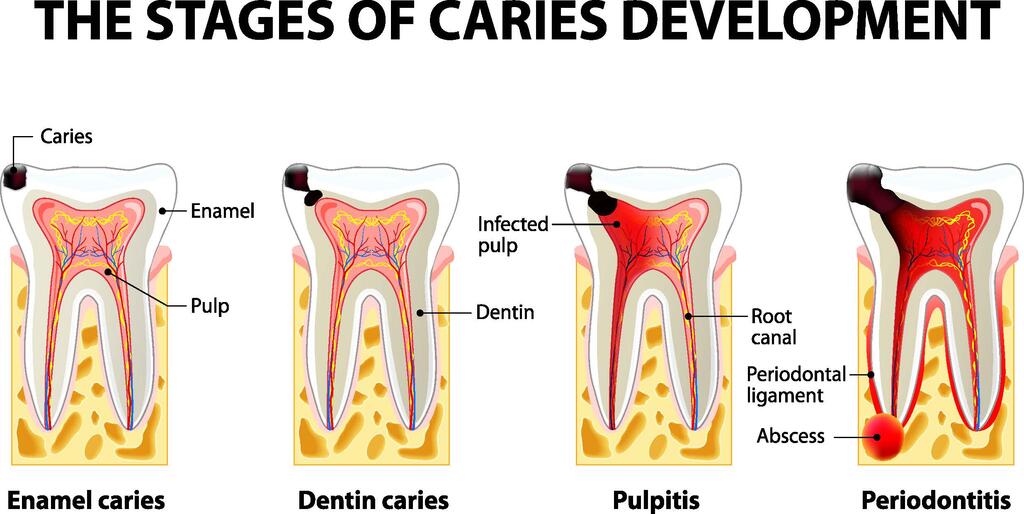
In the medical world, “caries” refers to the progressive destruction of bone or tooth tissue—a slow, often unnoticed erosion that eventually leads to structural failure if left untreated. In the world of technology, a strikingly similar phenomenon exists. While software doesn’t have enamel or pulp, it suffers from a condition known as “digital caries” or “software rot.”
Digital caries is the slow degradation of software performance, compatibility, and security over time. It is not necessarily caused by the code changing, but rather by the world around the code moving forward while the software remains static. For CTOs, developers, and IT stakeholders, understanding digital caries is essential to maintaining the “hygiene” of a technical ecosystem and ensuring the long-term viability of digital assets.
Defining Digital Caries: The Silent Erosion of Software Integrity
At its core, digital caries is the process by which a perfectly functional piece of software becomes buggy, slow, or unusable without any direct modification to its source code. It is a counter-intuitive concept; we often think of digital products as immutable, yet they are deeply susceptible to the passage of time.
Software Rot vs. Hardware Degradation
To understand digital caries, one must distinguish between hardware failure and software rot. Hardware degradation is physical—a hard drive’s mechanical arm fails, or an SSD reaches its write-limit. Digital caries, however, is a logical erosion. It occurs because software is part of a complex, interdependent web. When one strand of that web moves (such as an operating system update or a browser change), the software’s “fit” within the ecosystem begins to decay.
The Mechanisms of Bit Rot
In a more literal sense, digital caries can manifest as “bit rot.” This refers to the gradual decay of storage media or the spontaneous flipping of bits in memory due to cosmic rays or electromagnetic interference. While modern checksums and error-correcting code (ECC) mitigate much of this, the metaphorical “caries” of software is far more common. It represents the widening gap between what the code was designed to do and what the current environment requires.
The Root Causes of Technological Decay
Just as biological caries are caused by a combination of bacteria and neglect, digital caries thrive in environments where maintenance is deprioritized. Understanding the catalysts of this decay allows organizations to move from reactive “firefighting” to proactive prevention.
Dependency Hell and API Shifts
Modern software is rarely a monolith; it is a patchwork of libraries, frameworks, and third-party APIs. Digital caries often begins here. When a third-party service updates its API or a library reaches its end-of-life (EOL), the “connective tissue” of your application begins to rot. A function that worked yesterday may fail today because a remote server changed its response format, or a security patch in a sub-dependency broke backward compatibility.
Environment Drift and Infrastructure Evolution
The environment in which software “lives” is constantly evolving. A legacy application designed to run on a local server may face significant “decay” when migrated to a cloud-native environment. Changes in hardware architecture (such as the shift from x86 to ARM processors), updates to underlying operating systems (like Windows 11 or macOS Sequoia), and evolving network protocols all contribute to the erosion of software utility. Without constant tuning, the software loses its alignment with its environment.
Technical Debt as a Biological Catalyst
Technical debt is perhaps the most significant driver of digital caries. When developers take shortcuts to meet a deadline, they create “soft spots” in the code. Over time, these shortcuts make the system harder to update. Much like how plaque buildup leads to physical cavities, the accumulation of “quick fixes” prevents the system from being properly cleaned or upgraded, leading to a total breakdown of the architecture.
Identifying the Symptoms: How to Spot “Caries” in Your Infrastructure

Identifying digital caries in its early stages is the key to preventing a total system overhaul. By the time a system crashes, the “cavity” has already reached the nerve. Organizations must look for subtle indicators of decay.
Performance Lag and Latency Spikes
One of the first signs of software rot is a mysterious decline in performance. An application that once felt snappy may begin to lag, even if the user load hasn’t increased. This is often due to “bloat”—the accumulation of unnecessary logs, unoptimized database queries that have grown too large for their original indexes, or memory leaks in aging dependencies. When the “tooth” of the software becomes porous, efficiency leaks out.
Breaking Changes in Legacy Code
If your development team finds that fixing one bug consistently creates three new ones, you are dealing with advanced digital caries. This fragility suggests that the internal logic of the system has become brittle. The code is no longer flexible enough to handle modern requirements, and its integrity has been compromised by years of patches that were never fully integrated into the core logic.
The Security Vulnerability Lifecycle
In the tech niche, security is the ultimate measure of health. Digital caries often manifests as a growing list of CVEs (Common Vulnerabilities and Exposures) associated with your tech stack. As hackers discover new exploit vectors, older software becomes a liability. Software that hasn’t been “cleaned” (patched) in months or years is essentially a decaying structure waiting for a breach.
Prevention and Treatment: Strategies for Long-Term System Health
Maintaining a healthy digital ecosystem requires the same discipline as dental hygiene: regular check-ups, consistent cleaning, and occasional professional intervention.
Implement Continuous Refactoring
The best way to prevent digital caries is to never stop moving. Continuous refactoring is the process of restructuring existing computer code—changing the factoring—without changing its external behavior. It is the “brushing and flossing” of the software world. By constantly cleaning up the code, removing dead branches, and updating small modules, you prevent the accumulation of the technical debt that leads to rot.
Automated Testing and Regression Suites
To catch decay before it becomes critical, organizations must employ comprehensive automated testing. Unit tests, integration tests, and end-to-end regression suites act as a diagnostic tool. If an update to an underlying OS or a third-party library causes a failure, automated tests will flag it immediately, allowing developers to “fill the cavity” before it spreads to the rest of the application.
Containerization as a Protective Enamel
Modern technologies like Docker and Kubernetes act as a form of “enamel” for software. By containerizing applications, developers can package the software with its exact environment—libraries, dependencies, and configurations included. This isolates the application from the “drift” of the external environment, significantly slowing down the process of digital caries. While it doesn’t make the software invincible, it provides a controlled atmosphere that preserves integrity.
Future-Proofing: Building Resilient Architectures for the Next Decade
As we move into an era dominated by AI and rapid-release cycles, the pace of digital decay is only accelerating. Future-proofing requires a fundamental shift in how we build and perceive software.
The Role of AI in Detecting Early Decay
Artificial Intelligence is becoming the “dentist” of the coding world. Modern AI-driven static analysis tools can scan millions of lines of code to identify patterns of decay that a human eye might miss. These tools can predict which modules are most likely to fail based on their complexity and age, allowing teams to prioritize maintenance where it is most needed. AI can even suggest “refactoring” paths, automating the process of keeping the code modern.
Embracing Modular and Microservices Design
To prevent a single “caries” from destroying an entire system, many organizations are moving toward microservices architecture. In a monolithic system, decay in one area can bring down the entire structure. In a microservices model, the system is broken into small, independent pieces. If one service begins to rot, it can be replaced or upgraded without affecting the health of the rest of the ecosystem. This modularity ensures that the “infection” of technical debt is contained and manageable.
In conclusion, “caries” in technology is an inevitable byproduct of a fast-moving digital world. Software is not a finished product; it is a living entity that requires constant care. By recognizing the signs of digital rot, investing in preventative maintenance, and leveraging modern architectural standards, organizations can ensure that their technical foundations remain strong, resilient, and ready for the challenges of the future. Just as in medicine, the cost of prevention is always lower than the cost of a cure.
aViewFromTheCave is a participant in the Amazon Services LLC Associates Program, an affiliate advertising program designed to provide a means for sites to earn advertising fees by advertising and linking to Amazon.com. Amazon, the Amazon logo, AmazonSupply, and the AmazonSupply logo are trademarks of Amazon.com, Inc. or its affiliates. As an Amazon Associate we earn affiliate commissions from qualifying purchases.