
In the vast and ever-evolving landscape of technology, certain elements stand as bedrock, forming the very foundation upon which countless innovations are built. One such element, with a legacy stretching back decades and an impact that continues to resonate today, is the C programming language. While newer languages and frameworks emerge with dazzling speed, understanding C is akin to understanding the fundamental grammar of software development. It’s not just a language; it’s a powerful tool that has shaped operating systems, embedded systems, game engines, and a significant portion of the digital infrastructure we rely on daily.
For anyone interested in delving deeper into the world of tech, understanding what C language is becomes paramount. It offers a unique window into how software truly works at a lower level, fostering a more profound comprehension of computer science principles. This article will explore the essence of C, its significance within the broader tech ecosystem, and why it remains relevant even in our age of AI and advanced software.
The Genesis and Enduring Legacy of C
To truly grasp “what is C language,” we must journey back to its origins. Developed by Dennis Ritchie at Bell Labs in the early 1970s, C was designed to be a systems programming language. It was an evolution of an earlier language called B, and its primary purpose was to enable the development of the Unix operating system. Before C, system programming was often done in assembly language, which was incredibly powerful but also incredibly difficult to write, read, and maintain. C provided a higher-level abstraction while still allowing for close-to-the-hardware manipulation, striking a crucial balance.
From Unix to the World: C’s Revolutionary Impact
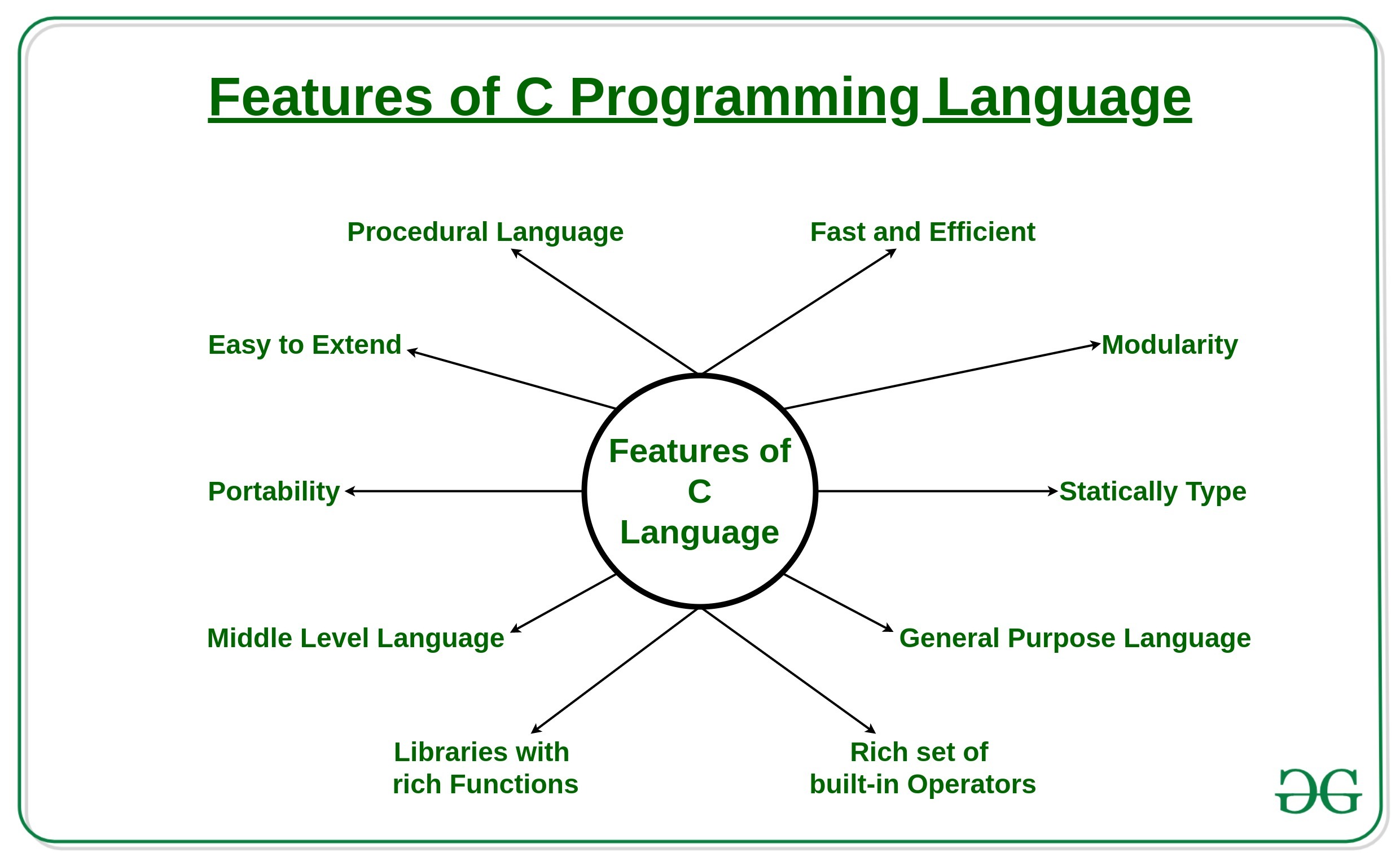
The success of Unix, largely built with C, propelled the language into widespread adoption. As the demand for operating systems and system-level software grew, so did the demand for C programmers. Its portability was a key factor; C code could be compiled and run on different machines with minimal modifications, a significant advantage in the fragmented hardware market of the time. This portability, coupled with its efficiency and power, made C the go-to language for:
- Operating Systems: Beyond Unix, C has been instrumental in developing Windows, macOS, Linux, and numerous real-time operating systems.
- Embedded Systems: The language’s lean nature and direct hardware access make it ideal for microcontrollers found in everything from cars and appliances to industrial equipment and medical devices.
- Compilers and Interpreters: Many other programming languages, including Python, JavaScript, and Ruby, have their core interpreters or compilers written in C. This means C is, in a very real sense, the grandparent language for a vast number of modern software applications.
- Game Development: Early game engines and many high-performance game components were, and still are, written in C due to its speed and control.
The influence of C extends far beyond its direct applications. Its syntax, structure, and concepts have deeply influenced virtually every major programming language that followed. Languages like C++, Java, C#, Objective-C, and even newer ones often borrow heavily from C’s fundamental principles. Learning C provides a solid foundation for understanding these other languages more effectively.
The Core Characteristics: What Makes C Tick?
Understanding “what is C language” involves appreciating its core attributes that have contributed to its longevity and power. C is a procedural programming language, meaning it organizes code into a series of procedures or functions. It is also a statically typed language, where variable types are checked at compile time, helping to catch errors early in the development process.
1. Simplicity and Readability
Despite its power, C’s syntax is relatively simple and close to natural language. This was a deliberate design choice by Dennis Ritchie to make programming more accessible. Key features include:
- Keywords: A limited set of keywords (around 32) that are easy to learn.
- Control Structures: Familiar
if-else,for,while, andswitchstatements for controlling program flow. - Functions: A modular approach where code is broken down into reusable functions.
This simplicity, combined with its structured approach, makes C code generally readable and maintainable, a crucial factor for large and complex projects.
2. Efficiency and Performance
C is renowned for its speed and efficiency. This is largely due to:
- Low-Level Memory Access: C provides direct access to memory through pointers. This allows developers to manage memory precisely, optimizing performance for critical operations. While this power comes with responsibility (e.g., the risk of memory leaks or segmentation faults), it’s indispensable for performance-sensitive applications.
- Minimal Runtime Overhead: Unlike languages with extensive built-in libraries and automatic garbage collection, C has very little runtime overhead. This means programs written in C execute closer to the bare metal of the hardware, making them incredibly fast.
- Direct Hardware Interaction: C allows for direct manipulation of hardware registers and memory addresses, which is essential for device drivers, operating system kernels, and embedded systems where fine-grained control is necessary.
This efficiency is a primary reason why C remains the language of choice for performance-critical components of software, even when higher-level languages are used for the application’s front end or business logic.
3. Portability
As mentioned earlier, C’s portability is a significant advantage. A program written in C can be compiled on different platforms and architectures with minimal or no changes, provided the compiler adheres to the ANSI C standard. This cross-platform compatibility reduces development time and costs, as codebases don’t need to be rewritten for each target environment.
4. Rich Set of Operators and Data Types
C offers a comprehensive set of operators for arithmetic, logical, bitwise, and other operations. It also provides fundamental data types like int, float, char, and double, along with the ability to define custom data types using struct and union. This flexibility allows developers to represent and manipulate data effectively.
The Practical Applications of C in Today’s Tech World
When asking “what is C language,” it’s crucial to understand its practical applications, which are more widespread than many might assume. Its foundational role means it’s often working behind the scenes, powering the technologies we use every day.
1. Operating System Development
The heart of most operating systems – the kernel – is predominantly written in C. This includes the foundational code that manages hardware resources, schedules processes, and handles memory. Linux, Windows, and macOS all rely heavily on C for their core functionalities. Without C, the very operating systems that run our computers, servers, and smartphones wouldn’t exist in their current form.
2. Embedded Systems and IoT
The Internet of Things (IoT) revolution is heavily dependent on C. Devices with limited processing power and memory, such as smart thermostats, wearable fitness trackers, automotive control units, and industrial sensors, often use microcontrollers programmed in C. C’s ability to interact directly with hardware and its low resource footprint make it the perfect fit for these resource-constrained environments.
3. Game Development and High-Performance Computing
While high-level languages are increasingly used for game logic and user interfaces, the performance-critical parts of game engines – graphics rendering, physics simulations, and AI – often still leverage C or C++. Similarly, in scientific computing, high-performance computing (HPC), and financial modeling where raw speed is paramount, C remains a dominant force.
4. Database Systems
Many popular database management systems, including MySQL and PostgreSQL, have significant portions of their code written in C. This is because database operations involve heavy data manipulation and I/O, where efficiency and low-level control are crucial for performance.
5. Compilers, Interpreters, and Libraries
As mentioned earlier, C is the language of choice for creating tools that develop other languages. The compilers that translate human-readable code into machine code for languages like Java, Python, and Perl are often written in C. This creates a fundamental dependency chain where C underpins much of the software development ecosystem.
The Relevance of C in the Age of AI and Beyond
In an era dominated by buzzwords like Artificial Intelligence, Machine Learning, and Big Data, one might wonder if a language like C still holds relevance. The answer is a resounding yes.
AI and Machine Learning’s C Roots
While AI models are often built and trained using higher-level languages like Python with libraries like TensorFlow and PyTorch, the underlying libraries and frameworks that power these tools are frequently written in C or C++. This is because the computationally intensive operations, such as matrix multiplication and optimization algorithms, require the raw performance that C provides. For instance, many core operations in numerical libraries like BLAS (Basic Linear Algebra Subprograms) are implemented in C for maximum speed.
Furthermore, deploying AI models efficiently, especially on resource-constrained edge devices or in real-time applications, often necessitates C programming. Developers might use C to optimize inference engines or integrate AI capabilities into embedded systems where Python’s overhead would be prohibitive.
Bridging the Gap: C as a Learning Tool
For aspiring developers, understanding C offers a unique advantage. It provides a deep, fundamental understanding of how computers work:
- Memory Management: Learning about pointers and manual memory management in C teaches invaluable lessons about resource allocation and the potential pitfalls of memory errors, which are common issues even in higher-level languages.
- Data Structures and Algorithms: Implementing fundamental data structures like linked lists, trees, and hash tables in C solidifies the understanding of their underlying mechanics.
- Computer Architecture: C’s close-to-hardware nature makes it an excellent vehicle for learning about CPU operations, memory hierarchy, and other architectural concepts.
This foundational knowledge gained from C makes it easier to master other programming languages and to tackle complex software engineering challenges. It cultivates a problem-solving mindset that is transferable across different domains within technology.

Conclusion: The Enduring Power of C Language
So, what is C language? It is a powerful, efficient, and foundational programming language that has been at the core of technological advancement for over half a century. Its simplicity, performance, and portability have made it indispensable for systems programming, embedded systems, and performance-critical applications. While newer languages and paradigms continue to emerge, C’s legacy is etched into the very fabric of the digital world.
For anyone looking to gain a comprehensive understanding of computer science and software development, or to work on projects where performance and low-level control are paramount, learning C is an investment that pays significant dividends. It’s not just about writing code; it’s about understanding the engine that drives our technological future. As technology continues to push boundaries, the principles and capabilities embodied by the C language will undoubtedly remain a crucial part of its evolution.
aViewFromTheCave is a participant in the Amazon Services LLC Associates Program, an affiliate advertising program designed to provide a means for sites to earn advertising fees by advertising and linking to Amazon.com. Amazon, the Amazon logo, AmazonSupply, and the AmazonSupply logo are trademarks of Amazon.com, Inc. or its affiliates. As an Amazon Associate we earn affiliate commissions from qualifying purchases.