
In the contemporary corporate landscape, the phrase “business as usual” has become a recipe for obsolescence. As digital ecosystems evolve at an exponential rate, organizations find themselves burdened by legacy systems and fragmented workflows that hinder agility. This is where Business Process Redesign (BPR) becomes critical. Unlike incremental process improvement, which seeks to polish existing methods, BPR is a radical rethink of how an organization uses technology to deliver value. It is the architectural overhaul of the workflows that define a company, prioritizing technological integration to achieve breakthroughs in performance, speed, and output quality.
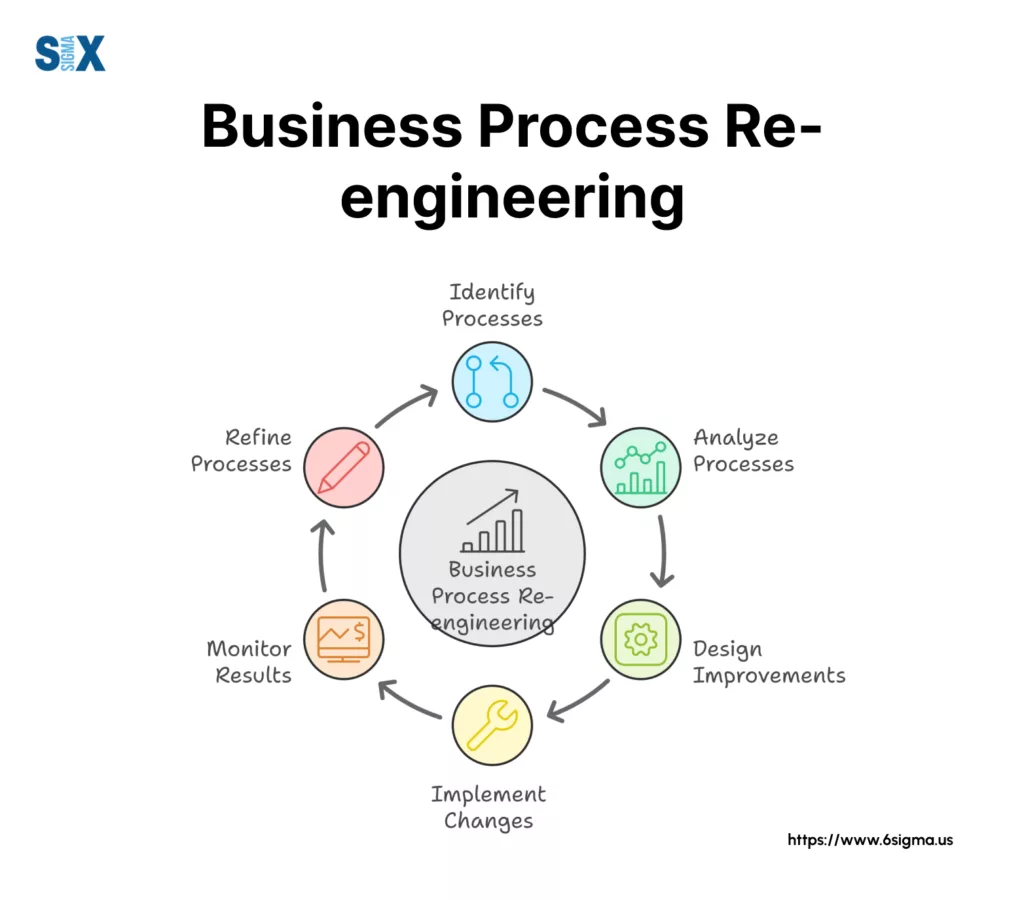
The Evolution of Business Process Redesign in the Digital Era
Business Process Redesign was originally popularized in the early 1990s, focusing primarily on organizational charts and manual labor flows. However, in the modern era, BPR is synonymous with digital transformation. The shift from manual oversight to algorithmic precision has fundamentally altered the DNA of how businesses operate.
From Legacy Systems to Cloud-Native Architectures
For many established enterprises, the primary obstacle to efficiency is “technical debt”—the accumulated cost of maintaining outdated software and hardware. Business Process Redesign today starts with a migration away from siloed, on-premise servers toward cloud-native architectures. This shift allows for real-time data accessibility and cross-departmental synchronization. When a process is redesigned for the cloud, it loses the latency associated with physical data centers, enabling a level of scalability that was previously impossible.
The Role of Digital Transformation as a Catalyst
Digital transformation is the engine of modern BPR. It is not merely about digitizing paper forms; it is about reimagining the entire workflow through the lens of what technology can achieve. For instance, in a traditional procurement cycle, multiple human approvals might be required. Through a tech-focused BPR lens, these checkpoints are replaced by automated smart contracts and AI-driven validation protocols. This doesn’t just speed up the process; it eliminates the human error inherent in manual data entry.
Leveraging the Modern Tech Stack for Process Overhaul
The success of a redesign effort is largely dependent on the tools selected to facilitate the new workflow. A modern tech stack for BPR focuses on automation, intelligence, and accessibility. By integrating these technologies, companies can move from reactive troubleshooting to proactive optimization.
Artificial Intelligence and Machine Learning Integration
AI and Machine Learning (ML) are the crown jewels of modern BPR. By integrating ML algorithms into core business processes, companies can transition to predictive modeling. For example, in supply chain management, BPR might involve implementing AI that predicts equipment failure or shipping delays before they occur, automatically rerouting resources without human intervention. This turns a “process” into a “living system” that learns and adapts over time.
Robotic Process Automation (RPA) vs. Intelligent Automation
Robotic Process Automation (RPA) is often the first step in BPR. It involves deploying software “bots” to handle repetitive, rule-based tasks such as data migration or invoice processing. However, the next frontier is Intelligent Automation (IA), which combines RPA with AI. While RPA follows instructions, IA can make decisions based on unstructured data. Redesigning a business process to include IA means that the system can interpret a customer’s email, categorize the sentiment, and trigger a specific technical support workflow without a human agent ever touching the ticket.
Low-Code and No-Code Platforms
One of the most significant shifts in BPR is the democratization of software development. Low-code and no-code platforms allow business analysts and process owners—those who actually understand the workflow bottlenecks—to build the applications they need. By redesigning processes to utilize these platforms, organizations reduce their reliance on overstretched IT departments. This accelerates the “Build-Measure-Learn” cycle, allowing for rapid iteration of the redesigned process.
A Framework for Tech-Driven Redesign
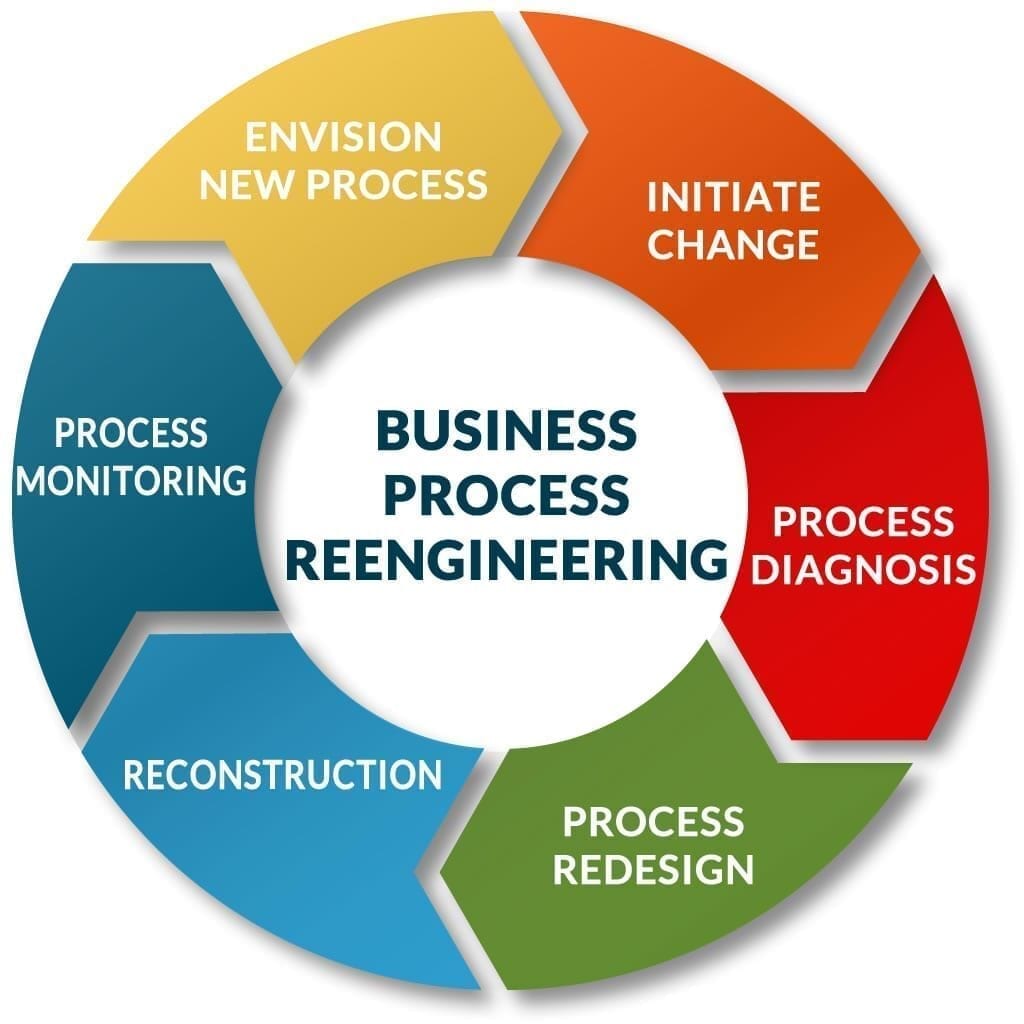
Redesigning a business process is a high-stakes endeavor that requires a structured, data-driven methodology. It is not enough to simply “install new software.” The technology must be mapped to specific outcomes through a rigorous framework.
Phase 1: Diagnostic Mapping with Process Mining
Before a process can be redesigned, it must be fully understood. Modern BPR utilizes “Process Mining” software. These tools plug into an organization’s ERP (Enterprise Resource Planning) and CRM (Customer Relationship Management) systems to extract data from event logs. This creates a transparent, objective map of how processes actually function, rather than how managers think they function. Process mining reveals “shadow processes”—undocumented workarounds that employees use when the official tech stack fails them.
Phase 2: Identifying Technological Bottlenecks
Once the process is mapped, the next step is identifying where the technology is failing. Is there a “data graveyard” where information is collected but never used? Is there a lack of interoperability between the sales software and the fulfillment software? In this phase, the redesign team identifies the specific technical friction points. The goal is to find where manual intervention is currently acting as a “patch” for a technological gap.
Phase 3: Implementing Scalable Solutions
The final phase involves the deployment of the redesigned workflow. This is usually done through an “Agile” implementation strategy. Rather than a “big bang” release, the redesigned process is rolled out in sprints. This allows the technical team to monitor system performance and user adoption in real-time, making adjustments to the software architecture as needed. The focus here is on scalability—ensuring that the new process can handle ten times the current load without a degradation in system performance.
Overcoming Technical Debt and Resistance to Change
Even the most sophisticated technological redesign can fail if it does not account for the human and systemic factors that resist change. Resistance often stems from a lack of digital literacy or a fear of automation.
Managing System Interoperability
A common pitfall in BPR is creating “islands of automation.” This happens when one department implements a brilliant new software solution that cannot communicate with the rest of the company’s tech stack. Effective BPR prioritizes API-first design. By ensuring that all new tools have robust Application Programming Interfaces (APIs), the redesigned process remains cohesive. Interoperability ensures that data flows seamlessly from the front-end user interface to the back-end database, maintaining a single source of truth for the entire organization.
Ensuring Data Security and Compliance
As processes become more automated and data-driven, the surface area for cyber threats increases. Any Business Process Redesign must have security baked into its architecture. This is known as “DevSecOps.” In a redesigned workflow, security protocols—such as multi-factor authentication, end-to-end encryption, and automated compliance auditing—are integrated directly into the process. This ensures that efficiency does not come at the cost of vulnerability, particularly in highly regulated industries like fintech or healthcare tech.
Measuring Success in a Tech-Optimized Environment
The ultimate goal of BPR is to improve performance. However, in a tech-centric environment, traditional business metrics (like “customer satisfaction”) must be supported by technical KPIs (Key Performance Indicators) to provide a full picture of success.
Technical KPIs and System Performance Metrics
To validate the effectiveness of a redesign, organizations must track metrics such as:
- Throughput: The amount of data or number of transactions processed within a specific timeframe.
- Latency: The delay between a trigger (like a customer order) and the system’s response.
- Error Rate: The frequency of system-generated exceptions that require human intervention.
- Uptime and Reliability: Ensuring the new automated process is available when needed.
By monitoring these technical metrics, leadership can see the direct correlation between technological health and business outcomes. When a redesigned process reduces latency by 50%, it almost invariably leads to faster delivery times and improved user experiences.
In conclusion, Business Process Redesign is the bridge between current operational limitations and future technological potential. By moving beyond simple “fixes” and embracing a holistic, tech-driven overhaul, organizations can transform themselves into agile, data-centric powerhouses. In an era where software is the backbone of every industry, the ability to redesign processes around the latest technological innovations is not just an advantage—it is a necessity for survival.
aViewFromTheCave is a participant in the Amazon Services LLC Associates Program, an affiliate advertising program designed to provide a means for sites to earn advertising fees by advertising and linking to Amazon.com. Amazon, the Amazon logo, AmazonSupply, and the AmazonSupply logo are trademarks of Amazon.com, Inc. or its affiliates. As an Amazon Associate we earn affiliate commissions from qualifying purchases.