
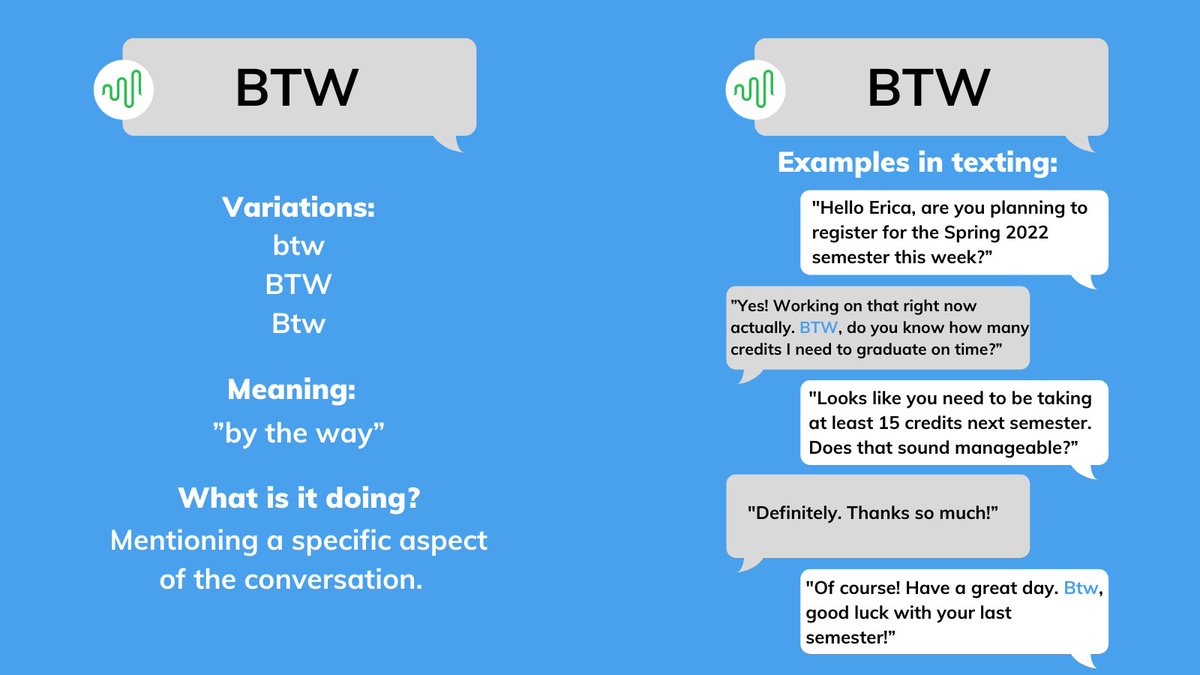
In the rapidly evolving landscape of digital communication, brevity and efficiency have become paramount. From the earliest days of SMS to the modern era of instant messaging and social media, users have continually sought ways to convey meaning quickly and clearly. Among the myriad acronyms and shorthand expressions that have permeated our digital lexicon, “BTW” stands out as one of the most widely recognized and frequently used. At its core, “BTW” is an abbreviation for “by the way,” but its utility and implications extend far beyond a simple two-word replacement, embodying fundamental aspects of how we interact with technology and each other in the digital realm.

The Digital Dialect: Why Acronyms Like BTW Dominate Texting
The proliferation of acronyms such as “BTW” is not a random linguistic phenomenon but rather a direct response to the technological constraints and behavioral shifts inherent in digital communication. Understanding the forces that drive this adoption provides crucial insight into modern tech usage.
The Efficiency Imperative of Mobile Communication
The genesis of texting, primarily through Short Message Service (SMS), imposed strict character limits. Early mobile phones, with their alphanumeric keypads, made typing full words cumbersome. This environment naturally fostered an urgent need for conciseness. “BTW” emerged as a practical solution, allowing users to inject additional context or shift topics without consuming precious characters or requiring extensive typing. While modern messaging apps have largely removed character limits and introduced more sophisticated input methods like QWERTY keyboards and predictive text, the ingrained habit of brevity persists. The human desire for speed and immediate gratification in digital exchanges means that shortcuts like “BTW” continue to thrive, saving keystrokes and mental effort, allowing for faster message composition and consumption.
Technological Evolution and Communication Habits
The trajectory of digital communication platforms has profoundly shaped our habits. The rise of smartphones, coupled with the ubiquity of instant messaging applications like WhatsApp, Messenger, iMessage, and Telegram, has transformed how we communicate. These apps facilitate continuous, often asynchronous, conversations, where a quick “BTW” can smoothly transition between subjects or add an afterthought. Social media platforms, particularly those like Twitter with historical character limits, further reinforced the culture of concise expression. In this ecosystem, “BTW” is not merely a shortcut; it’s a foundational element of a digital lexicon designed for rapid-fire interactions. It signifies a collective understanding among users that communication should be fluid, economical, and adapted to the fast pace of digital life. The continuous advancements in mobile technology and communication software have not eradicated the need for such brevity but rather made its implementation even more seamless, integrating it into the very fabric of our digital dialogue.
BTW Beyond Brevity: Its Functional Role in Digital Conversations
While “BTW” is celebrated for its conciseness, its true power lies in its functional versatility within digital conversations. It serves as a subtle yet effective tool for managing conversational flow and conveying nuanced intent in a text-based medium.
Signposting Shifts in Topic and Thought
In face-to-face conversations, non-verbal cues, tone of voice, and pauses naturally signal a change in topic or the introduction of a new thought. In the purely textual environment of messaging, these cues are absent. This is where “BTW” steps in as an invaluable digital signpost. It allows a sender to smoothly introduce new information, an unrelated query, or an afterthought without making the conversation feel abrupt or disjointed. For example, after discussing weekend plans, a message like, “Sounds good for Saturday. BTW, did you remember to email Sarah?” seamlessly pivots to a new, unrelated point. This ability to signal a shift without explicit explanation makes “BTW” a highly agile tool for navigating complex, multi-threaded digital discussions, enhancing their coherence and readability.
The Psychology of Asynchronous Communication
Texting is often an asynchronous form of communication, where responses are not always instantaneous. This time lag can sometimes make conversations feel less immediate and more fragmented. “BTW” helps bridge this gap by allowing participants to inject additional context or multiple points into a single message efficiently. It mirrors the natural human tendency to digress or add afterthoughts in spoken language, but compresses these elements for digital speed. The psychological comfort of knowing one can add a “by the way” point without having to start an entirely new message or wait for a specific conversational opening makes “BTW” a powerful tool for comprehensive yet concise information exchange. It allows users to quickly offload additional thoughts as they occur, maintaining a continuous flow of information, even if the actual responses are delayed.
Enhancing Readability and Engagement
In a world saturated with digital content, attention spans are fleeting. Long, dense blocks of text can be daunting and lead to messages being skimmed or overlooked entirely. Concise language, particularly the strategic use of acronyms like “BTW,” can significantly enhance readability and engagement. By breaking up the flow with a brief, universally understood transition, “BTW” signals to the reader that a new, often less central, piece of information is being introduced. This makes texts feel less monotonous and easier to parse, fitting the fast-paced consumption habits of digital users. It helps to compartmentalize information, allowing the recipient to quickly grasp the main points while also absorbing the ancillary details introduced by “BTW,” leading to a more efficient and less taxing reading experience.

The Mechanics and Ecosystem of Texting Acronyms
The widespread adoption and functionality of “BTW” and similar acronyms are deeply intertwined with the underlying technology of messaging platforms and the evolving social dynamics of digital interaction.
Software and Predictive Text Integration
Modern messaging applications and smartphone keyboards are remarkably sophisticated, often powered by AI and machine learning algorithms. These software systems are designed to enhance user experience by anticipating user input. Predictive text, autocorrect, and smart suggestions are prime examples of this. Over time, as users frequently type “BTW,” these systems learn to recognize the acronym and will often suggest it after just a few keystrokes (e.g., typing “b” often brings up “BTW” as an option). Some keyboards even automatically complete it. This seamless integration into the typing process makes using “BTW” incredibly efficient, often faster than typing out “by the way.” It exemplifies how software actively facilitates and reinforces the use of digital shorthand, making it an integral part of the user interface and overall communication workflow. This technological support solidifies “BTW”‘s place as a fundamental element of efficient digital messaging.
Cultural Adoption and Digital Literacy
The diffusion of “BTW” and other texting acronyms is a fascinating case study in cultural adoption within a technological context. These terms often originate in specific subcultures or user groups (e.g., gaming communities, early internet users) and then spread rapidly through various digital platforms. For “BTW,” its straightforward meaning contributed to its quick and broad acceptance. However, understanding these terms is a critical component of what we now call digital literacy. For digital natives, the meaning and appropriate usage of “BTW” are often intuitive. For digital immigrants or those less accustomed to informal online communication, learning these terms is essential to participate effectively and avoid miscommunications. Educational content, tutorials, and general exposure through frequent digital interaction help bridge these generational and cultural communication gaps online, making “BTW” a universal touchstone for many digital dialogues.
Etiquette and Contextual Awareness in Digital Communication
Despite its widespread acceptance, the use of “BTW” is not without its nuances, underscoring the importance of digital etiquette and contextual awareness. The appropriateness of using “BTW” largely depends on the communication setting. In informal contexts, such as conversations with friends or family, “BTW” is perfectly acceptable and often expected. It adds to the casual, relaxed tone of the exchange. However, in more formal or professional settings—like an email to a client, a message to a superior, or an official team chat—spelling out “by the way” or rephrasing the sentence for greater formality is generally preferred. Misusing “BTW” in a professional context could be perceived as unprofessional or overly casual, potentially leading to miscommunication or negatively impacting one’s perceived credibility. Understanding these unspoken rules is crucial for effective digital interaction and demonstrates a sender’s awareness of the communication environment.
The Future of Shorthand: BTW’s Place in Evolving Digital Communication
The digital communication landscape is constantly evolving, with new technologies and features emerging regularly. Yet, the persistence of shorthand like “BTW” suggests its enduring relevance and adaptability.
The Persistence of Text-Based Shorthand Amidst Richer Media
The past decade has seen an explosion in the variety of communication tools available. Emojis, GIFs, stickers, voice notes, and video messages now complement or even replace plain text. Despite this shift towards richer, more expressive media, text-based acronyms like “BTW” remain highly relevant. They offer a unique advantage: a quick, unambiguous textual anchor that is universally understood. A voice note might take longer to listen to, and a GIF might require interpretation, but “BTW” immediately conveys a specific textual function. This enduring power highlights the fundamental efficiency and directness that text-based shorthand provides, ensuring its continued presence even as our digital conversations become more multimedia-rich.
AI, Natural Language Processing, and Interpreting Digital Slang
The future of digital communication will be increasingly shaped by artificial intelligence and natural language processing (NLP). These technologies are crucial for systems to understand and accurately process informal digital language, including “BTW.” Chatbots, virtual assistants, and search algorithms constantly analyze user-generated content. For these AI systems to be truly effective and provide relevant responses, they must be able to comprehend the subtleties of human communication, including acronyms, slang, and contextual nuances. Advanced NLP models are trained on vast datasets of real-world conversations, learning to interpret “BTW” correctly and understand its implications for conversational flow and intent. This capability is vital for personalizing user experiences, improving search accuracy, and making human-AI interactions more natural and efficient. As AI becomes more integrated into our communication tools, the ability to correctly interpret shorthand like “BTW” will only grow in importance.
Implications for Cross-Platform Communication
As individuals navigate a fragmented digital landscape, using multiple apps and platforms for different communication needs, the common understanding of “BTW” ensures message fidelity and efficiency. Whether messaging on a smartphone, typing on a desktop, or interacting through a smart device, “BTW” provides a universal shorthand that transcends platform-specific features. Its established meaning allows for seamless communication across diverse digital environments, preventing misunderstandings and ensuring that the core message, along with any “by the way” additions, is consistently conveyed. In an era where digital tools are constantly fragmenting and converging, the stability and widespread recognition of “BTW” underscore its critical role as a pervasive and indispensable element of global digital discourse.
aViewFromTheCave is a participant in the Amazon Services LLC Associates Program, an affiliate advertising program designed to provide a means for sites to earn advertising fees by advertising and linking to Amazon.com. Amazon, the Amazon logo, AmazonSupply, and the AmazonSupply logo are trademarks of Amazon.com, Inc. or its affiliates. As an Amazon Associate we earn affiliate commissions from qualifying purchases.