
In an increasingly specialized medical landscape, understanding the role of various practitioners is crucial. A “GI doctor,” formally known as a gastroenterologist, is a physician dedicated to the diagnosis, treatment, and prevention of diseases affecting the digestive system. Far from being a traditional practice, modern gastroenterology is profoundly intertwined with cutting-edge technology, leveraging advanced tools, software, AI, and digital platforms to deliver precision care. To truly grasp “what is a GI doctor” in the 21st century, one must explore the technological arsenal that defines their expertise and enables their sophisticated interventions.

The Technological Foundation of GI Diagnostics and Treatment
The ability of a GI doctor to accurately diagnose and effectively treat conditions ranging from irritable bowel syndrome to Crohn’s disease, and from acid reflux to gastrointestinal cancers, relies heavily on a sophisticated array of technological advancements. These tools not only provide unprecedented insights into the human body but also facilitate minimally invasive procedures that significantly improve patient outcomes.
Advanced Endoscopic Systems: Visualizing the Interior
At the heart of gastroenterology lies endoscopy, a family of procedures that use specialized instruments equipped with cameras and lights to visualize the inside of the digestive tract. Modern endoscopes are far from simple tubes; they are highly advanced gadgets that have revolutionized diagnostics and therapeutics:
- High-Definition Video Endoscopes: These flexible tubes incorporate high-resolution cameras that provide crystal-clear images of the esophagus, stomach, duodenum (upper endoscopy or EGD), and colon (colonoscopy). Advanced models feature narrow-band imaging (NBI) or chromoendoscopy, which use specific light filters or dyes to enhance the visualization of subtle mucosal changes, making it easier to detect precancerous lesions or early-stage cancers that might be missed with standard white light.
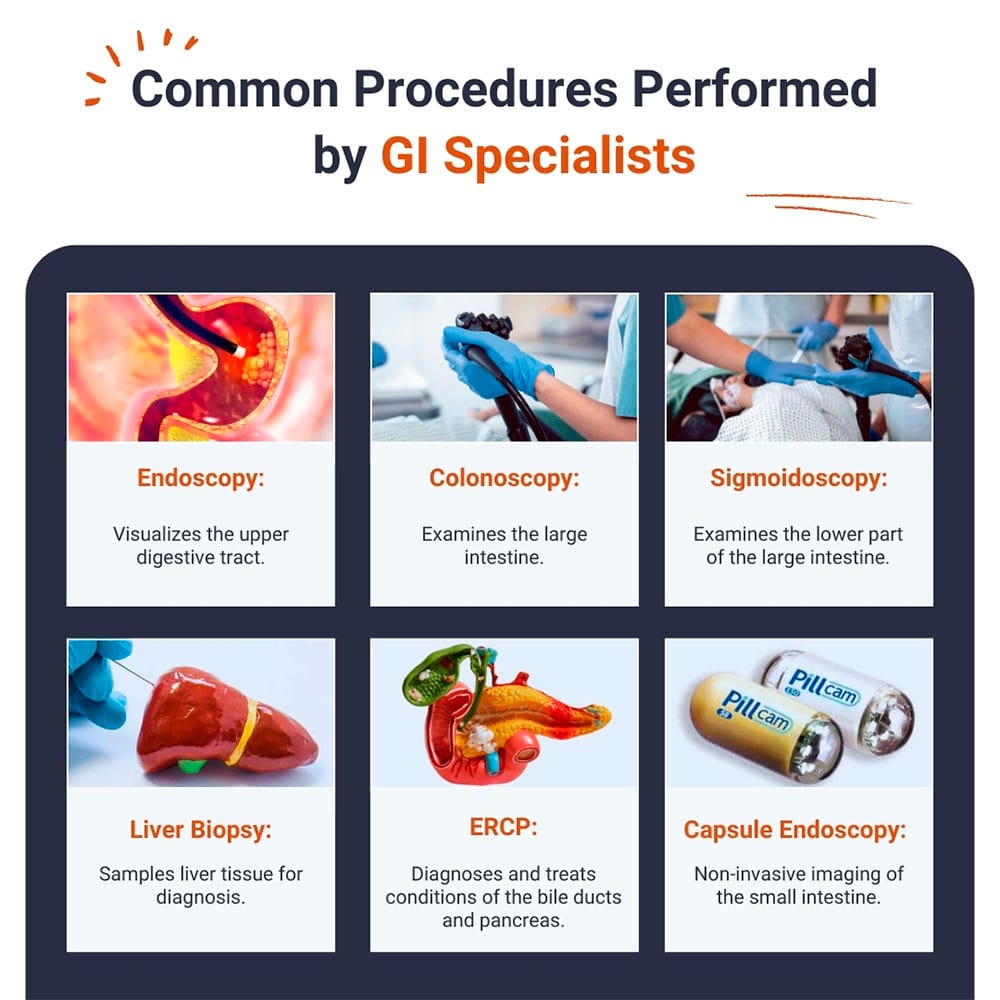
- Capsule Endoscopy: For exploring the small intestine, an area traditionally difficult to access, GI doctors employ capsule endoscopy. Patients swallow a vitamin-sized capsule containing a miniature camera, light source, battery, and transmitter. As it passes through the digestive tract, it captures thousands of images, wirelessly transmitting them to a receiver worn by the patient. This non-invasive gadget provides comprehensive visualization of the small bowel, aiding in the diagnosis of obscure bleeding, Crohn’s disease, and small bowel tumors.
- Endoscopic Ultrasound (EUS): EUS combines endoscopy with ultrasound technology. An endoscope fitted with a tiny ultrasound transducer provides high-resolution images of the layers of the digestive tract wall and surrounding organs such as the pancreas, bile ducts, and lymph nodes. This is invaluable for staging cancers, evaluating pancreatic or biliary diseases, and guiding fine-needle aspiration (FNA) biopsies of suspicious lesions.
- Enteroscopy: For deeper exploration of the small bowel beyond what standard endoscopes can reach, balloon-assisted enteroscopy (single or double balloon) allows GI doctors to navigate and examine extensive segments of the small intestine, providing diagnostic and therapeutic capabilities for conditions identified by capsule endoscopy or other imaging.
Imaging Technologies: Beyond Direct Visualization
While endoscopy offers direct visual inspection, GI doctors also leverage a suite of sophisticated imaging technologies for comprehensive assessment:
- CT Scans and MRIs: These advanced imaging modalities provide detailed cross-sectional views of the abdominal organs, detecting tumors, inflammation, obstructions, and other structural abnormalities not visible via endoscopy. For GI conditions, specialized protocols like MR enterography (MRE) are used to visualize the small bowel for inflammatory bowel disease (IBD) assessment without radiation.
- Fluoroscopy and Barium Studies: While less common for primary diagnosis today, these techniques use X-rays with contrast agents (like barium) to visualize the movement and structure of the digestive tract in real-time. They are particularly useful for assessing swallowing disorders, strictures, or fistulas.
- FibroScan (Transient Elastography): This non-invasive gadget uses ultrasound to measure liver stiffness, providing a quick and accurate assessment of liver fibrosis and steatosis (fatty liver). It’s a vital tool for managing chronic liver diseases like non-alcoholic fatty liver disease (NAFLD) and viral hepatitis, often reducing the need for invasive liver biopsies.
Software, AI Tools, and Digital Patient Management
The modern GI doctor’s toolkit extends beyond physical instruments to encompass a vast ecosystem of software, artificial intelligence (AI) tools, and digital platforms that optimize everything from patient scheduling to diagnostic accuracy and long-term care management.
Electronic Health Records (EHR) and Practice Management Software
The backbone of any modern medical practice, EHR systems are indispensable for GI doctors. These software platforms allow for:
- Comprehensive Patient Data Management: Securely storing medical histories, lab results, imaging reports, endoscopy findings, medication lists, and consultation notes. This digital consolidation ensures all relevant patient information is instantly accessible, reducing errors and improving coordination of care.
- Streamlined Workflows: Integrating scheduling, billing, insurance verification, and prescription management. Modern practice management software helps GI clinics operate efficiently, reducing administrative burden and allowing doctors to focus more on patient care.
- Interoperability: Facilitating secure data exchange with other healthcare providers, labs, and pharmacies, ensuring a holistic view of the patient’s health journey.
Telemedicine and Remote Consultations
The rise of telemedicine apps and secure video conferencing platforms has significantly impacted how GI doctors interact with their patients, particularly for follow-up appointments, medication management, and initial screenings.
- Convenience and Accessibility: Patients can consult with their GI doctor from the comfort of their home, reducing travel time and barriers to access, especially for those in rural areas or with mobility issues.
- Enhanced Follow-up Care: Telehealth platforms enable regular check-ins for chronic conditions like IBD or celiac disease, allowing for timely adjustments to treatment plans based on reported symptoms and lab results.
- Secure Communication: Encrypted platforms ensure patient privacy and compliance with healthcare regulations (e.g., HIPAA in the US), allowing for safe and confidential remote interactions.
AI and Machine Learning in GI Diagnosis and Treatment Planning
Artificial intelligence is rapidly transforming gastroenterology, offering powerful capabilities for analysis, prediction, and personalized medicine.
- AI-Assisted Endoscopy: AI algorithms are being developed and deployed to enhance lesion detection during colonoscopies and upper endoscopies. These tools can highlight subtle polyps or early signs of cancer in real-time, acting as a “second set of eyes” for the GI doctor and potentially improving detection rates, especially for difficult-to-spot flat lesions.
- Predictive Analytics for IBD: Machine learning models are analyzing vast datasets of patient information (genetics, microbiome data, treatment responses) to predict disease flares, personalize treatment strategies for inflammatory bowel disease (Crohn’s disease and ulcerative colitis), and identify patients at risk for complications.
- Automated Image Analysis: AI can process and interpret complex imaging studies (CT, MRI) more rapidly and consistently than the human eye, identifying anomalies, measuring inflammation, or tracking disease progression.
- Digestive Microbiome Analysis: AI plays a crucial role in analyzing the vast and complex data generated from gut microbiome sequencing, helping GI doctors understand the interplay between gut bacteria and various digestive diseases, and explore potential probiotic or dietary interventions.
Gadgets and Wearables for Home Monitoring and Management
Beyond the clinic, GI doctors are increasingly incorporating consumer-facing gadgets and digital health apps to empower patients in managing their own digestive health, track symptoms, and adhere to treatment plans.
Smart Trackers and Wearables
While not strictly medical devices, many general health wearables and specialized apps contribute to patient data collection relevant to GI health:
- Symptom Tracking Apps: Numerous apps allow patients to log their diet, bowel movements, pain levels, and other symptoms, providing valuable data for their GI doctor to analyze and identify triggers or patterns.
- Smart Scales and Body Composition Analyzers: For patients with liver disease or those needing weight management, smart scales provide convenient tracking of weight, body fat, and muscle mass, data that can be synced with health platforms and reviewed by their doctor.
- Breath Test Devices: Portable breath test gadgets, while specialized, can be used at home to detect conditions like Small Intestinal Bacterial Overgrowth (SIBO) or lactose intolerance, providing data that can be reviewed by the GI doctor.
The Future GI Doctor: Augmented by AI and Robotics
The trajectory of gastroenterology points towards an even deeper integration of AI and robotics, promising unprecedented precision, safety, and efficiency in diagnostics and therapeutics.
Robotic-Assisted Endoscopy and Surgery
Robotics are beginning to enter the endoscopic suite and surgical theatre, offering enhanced dexterity, stability, and precision:
- Robotic-Assisted Endoscopes: Experimental systems are being developed that allow GI doctors to maneuver endoscopes with greater control, potentially reaching difficult areas and performing intricate procedures with less physical strain and higher accuracy.
- Robotic Surgery for GI Conditions: For complex gastrointestinal surgeries (e.g., colon resections, gastric bypass), robotic surgical systems like the da Vinci platform are increasingly used, offering surgeons high-definition 3D visualization, tremor filtration, and instruments with a greater range of motion than the human hand, leading to smaller incisions, reduced blood loss, and faster recovery times for patients.
Advanced AI for Personalized Medicine and Drug Discovery
In the coming years, AI will likely play an even more central role in developing highly personalized treatment plans for GI conditions:
- Digital Twins: Creating virtual models of individual patients based on their unique genetic, microbiome, and lifestyle data to simulate disease progression and predict optimal treatment responses.
- AI-Driven Drug Discovery: Accelerating the identification of new therapeutic compounds for challenging GI diseases by simulating molecular interactions and predicting drug efficacy.
In conclusion, “what is a GI doctor” today is synonymous with a practitioner who navigates and masters a complex technological ecosystem. From microscopic cameras ingested by patients to AI algorithms dissecting complex data, technology is not merely an adjunct but an intrinsic component of their diagnostic prowess, therapeutic precision, and ability to deliver compassionate, effective care for the vast spectrum of digestive disorders. As technology continues to evolve, so too will the capabilities and impact of the gastroenterologist, pushing the boundaries of what’s possible in digestive health.
aViewFromTheCave is a participant in the Amazon Services LLC Associates Program, an affiliate advertising program designed to provide a means for sites to earn advertising fees by advertising and linking to Amazon.com. Amazon, the Amazon logo, AmazonSupply, and the AmazonSupply logo are trademarks of Amazon.com, Inc. or its affiliates. As an Amazon Associate we earn affiliate commissions from qualifying purchases.