
A bladder scanner is a non-invasive, portable ultrasound device designed to measure the volume of urine in the bladder. Utilizing real-time imaging technology, these sophisticated gadgets provide healthcare professionals with immediate, accurate data regarding bladder distention, aiding in the diagnosis and management of various urological conditions. Far beyond simple measurement, modern bladder scanners represent a critical piece of diagnostic technology, minimizing the need for more invasive procedures like catheterization and significantly enhancing patient comfort and safety across diverse clinical settings.
Understanding the Core Technology
At its heart, a bladder scanner operates on the principles of ultrasound imaging. It employs high-frequency sound waves to create a visual representation of the bladder, enabling precise volume calculation. This technological marvel allows for an immediate, objective assessment of bladder capacity and residual urine, which is crucial for identifying urinary retention, evaluating bladder function, and guiding clinical decisions.
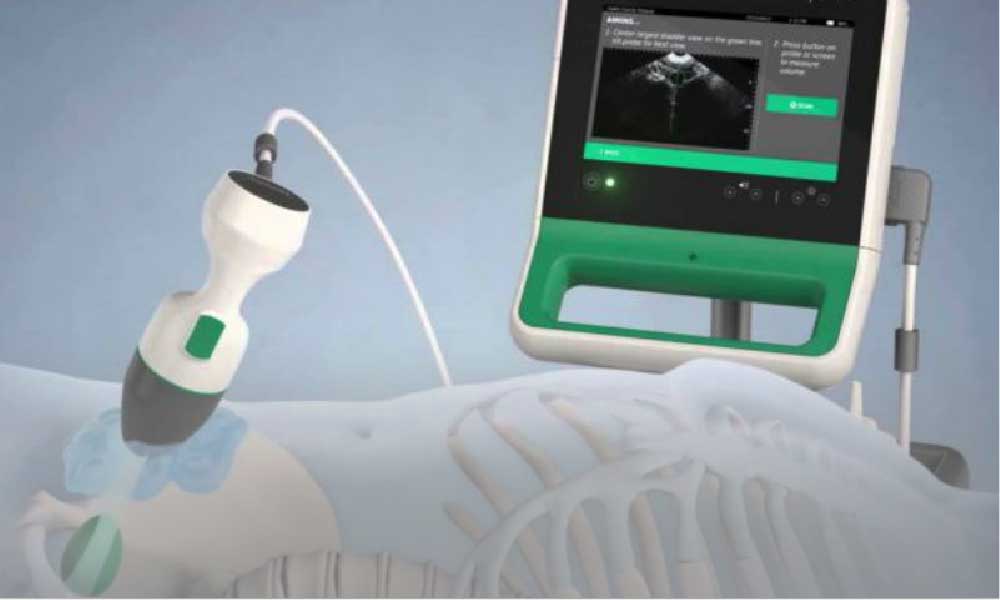
How a Bladder Scanner Works
The process begins when a healthcare provider applies a small amount of ultrasound gel to the patient’s lower abdomen. The handheld probe of the bladder scanner is then placed on the skin, emitting painless, inaudible sound waves into the body. These sound waves travel through tissues and fluids until they encounter the bladder. When they strike the bladder walls and the urine within, they bounce back as echoes. The bladder scanner’s sophisticated transducer receives these echoes, which are then processed by an internal algorithm. This algorithm interprets the returning sound wave patterns to construct a 2D or 3D image of the bladder, simultaneously calculating its volume based on the dimensions and shape it detects. The result, a numerical value representing the bladder volume in milliliters, is displayed on the device’s screen, often accompanied by a visual representation of the bladder itself. This entire process is typically completed within a matter of seconds, providing instant, actionable data.
Key Technological Components
Modern bladder scanners integrate several critical technological components to achieve their precision and user-friendliness.
- Transducer: This is the core component responsible for emitting and receiving ultrasound waves. Advanced transducers feature multi-element arrays, allowing for more comprehensive scanning and clearer image acquisition.
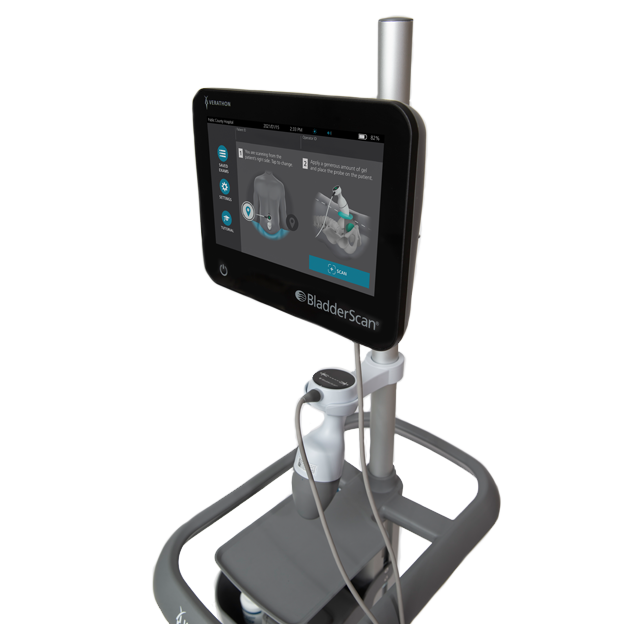
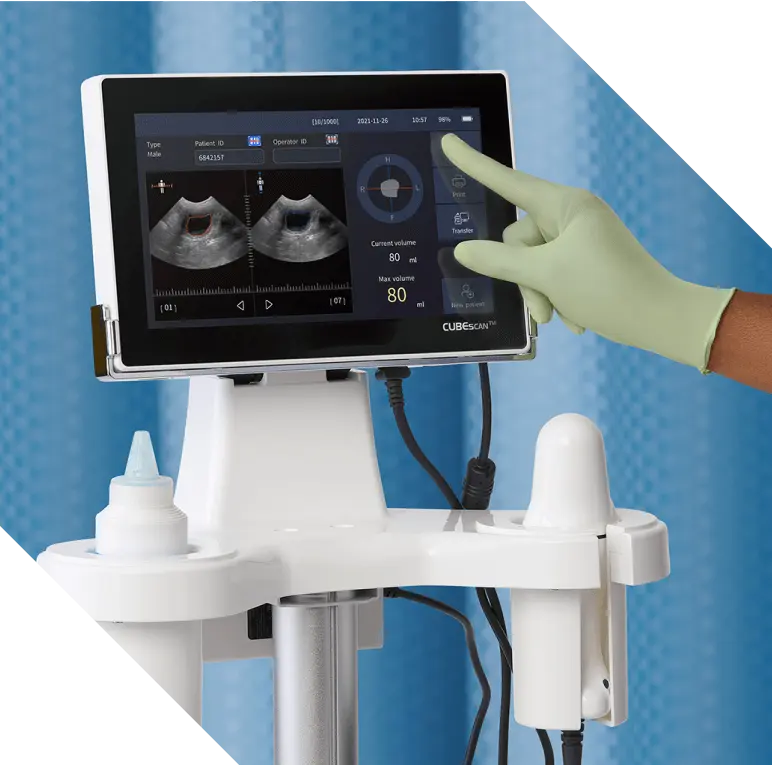
- Display Screen: Typically a high-resolution LCD or LED touchscreen, it provides real-time images, numerical volume readings, and intuitive user interfaces for navigation and data input.
- Processing Unit: A powerful internal computer processes the raw ultrasound data. This unit houses complex algorithms that reconstruct the bladder image and perform the volume calculations. These algorithms are continuously refined to improve accuracy, especially in challenging anatomical situations.
- Memory and Data Storage: Many scanners include internal memory to store patient data, scan results, and device settings. This allows for tracking trends, conducting comparative analyses, and often, seamless integration with electronic health records (EHR) systems via Wi-Fi or USB connectivity.
- Power Source: Primarily battery-operated, emphasizing portability and convenience. Lithium-ion batteries provide extended operational times, crucial for busy clinical environments.
- User Interface (UI) and Software: Contemporary bladder scanners feature intuitive, often touch-enabled UIs. The underlying software guides the user through the scanning process, provides prompts, flags potential issues, and offers various viewing modes (e.g., 2D cross-sections, 3D bladder models). Advanced software might also include features like automated peak detection, customizable settings for different patient demographics (adults, children), and quality control checks.
The Evolution of Bladder Scanning Devices
The journey of the bladder scanner reflects broader trends in medical technology: a move towards greater portability, enhanced accuracy, and sophisticated data management. From rudimentary beginnings, these devices have transformed into indispensable tools in modern healthcare.
From Early Designs to Modern Portability
Early bladder volume measurement methods were often invasive or required bulky, stationary ultrasound machines. The advent of dedicated bladder scanners marked a significant leap forward. Initially, these devices were simpler, providing basic 2D estimations. Over time, advancements in transducer technology, microprocessors, and battery efficiency have dramatically reduced their size and increased their capabilities. Modern bladder scanners are handheld, lightweight, and battery-powered, making them highly portable. This allows them to be easily moved between patient rooms, emergency departments, operating theaters, and even community healthcare settings. This portability is not just about convenience; it enables rapid bedside assessments, critical in acute care scenarios and for preventing complications associated with urinary retention. The shift to 3D volumetric scanning represents another major milestone, offering more accurate and reliable measurements by capturing the bladder’s shape from multiple angles, mitigating errors due to bladder irregularity or patient movement.
Software Innovations and Data Integration
The evolution isn’t solely in hardware; software advancements have been equally transformative. Early devices displayed only a numerical volume. Contemporary scanners integrate sophisticated software that offers:
- Enhanced Image Processing: Algorithms that filter noise, enhance contrast, and provide clearer visualizations of the bladder, even in difficult-to-scan patients.
- Automated Measurement Features: Software that automatically detects the bladder boundaries and calculates volume, reducing user dependency and improving consistency.
- Reporting and Documentation: Capabilities to generate detailed reports, often including images, timestamps, and patient identifiers, which can be printed or digitally transferred.
- Connectivity: Seamless integration with hospital information systems (HIS) and electronic health records (EHR) via Wi-Fi, Bluetooth, or USB. This streamlines data flow, reduces manual transcription errors, and ensures that critical patient information is readily available across the healthcare ecosystem.
- User Profiles and Customization: Settings can be tailored for different users or patient types, optimizing scan parameters for accuracy and efficiency.
These software enhancements have made bladder scanners more intelligent, user-friendly, and integral to the digital healthcare infrastructure.
Practical Applications and User Experience
Bladder scanners are versatile tools, significantly impacting patient care and clinical workflows across various medical disciplines. Their non-invasive nature and rapid results contribute to an improved patient experience and more efficient diagnostic pathways.
Clinical Benefits and Patient Comfort
The primary benefit of a bladder scanner lies in its ability to non-invasively assess bladder volume. This eliminates the need for “in-and-out” catheterization solely for diagnostic purposes, a procedure that, while common, carries risks such as discomfort, pain, and potential for urinary tract infections (UTIs). For patients, this translates to:
- Reduced Discomfort and Anxiety: Avoiding an invasive procedure significantly improves the patient experience, particularly for those who are frail, elderly, or have a fear of medical interventions.
- Lower Risk of Infection: Eliminating unnecessary catheterization directly reduces the risk of catheter-associated UTIs (CAUTIs), a significant concern in healthcare settings.
- Faster Diagnosis and Treatment: Immediate results allow healthcare providers to quickly identify issues like urinary retention, leading to prompt intervention and preventing complications such as kidney damage or severe discomfort.
- Monitoring Bladder Function: Useful for monitoring patients post-surgery, with neurological conditions affecting bladder control, or those on medications impacting urinary output. It provides objective data to guide management strategies, such as timing of catheter removal or evaluating the effectiveness of new treatments.
- Improved Workflow: Nurses and clinicians can perform assessments quickly at the bedside, optimizing their time and improving overall patient flow within a busy facility.
Enhancing Diagnostic Accuracy
Beyond patient comfort, bladder scanners significantly enhance diagnostic accuracy. They provide objective, quantitative data that can be difficult to ascertain through physical examination alone.
- Accurate Detection of Urinary Retention: Precisely identifies when a patient’s bladder is excessively full, distinguishing true retention from other causes of discomfort or inability to void.
- Post-Void Residual (PVR) Measurement: Critical for evaluating bladder emptying efficiency. A high PVR volume can indicate bladder outlet obstruction, neurogenic bladder, or detrusor muscle weakness. Accurate PVR measurements guide decisions on further diagnostic tests or therapeutic interventions.
- Minimizing Unnecessary Catheterization: By providing a reliable volume measurement, clinicians can confidently decide when catheterization is truly necessary, avoiding futile or potentially harmful procedures. This is particularly important in emergency departments or post-operative recovery units where rapid, accurate assessment is paramount.
- Guiding Fluid Management: In critical care or post-operative settings, bladder scanners can help manage fluid balance by monitoring urine output and bladder distension, complementing other vital signs.
The high degree of accuracy provided by advanced 3D scanning technology ensures that clinical decisions are based on reliable data, leading to better patient outcomes.
Future Trends and Technological Advancements
The trajectory of bladder scanner technology points towards even greater sophistication, integration, and accessibility, driven by advancements in artificial intelligence, miniaturization, and connectivity.
AI Integration and Predictive Analytics
The most impactful future trend for bladder scanners lies in the integration of Artificial Intelligence (AI) and machine learning. AI algorithms can be trained on vast datasets of bladder images and volume measurements to:
- Improve Accuracy: AI can potentially refine bladder boundary detection, especially in anatomically challenging cases (e.g., obese patients, post-surgical changes), leading to even more precise volume calculations.
- Automate Interpretation: AI could provide automated diagnostic assistance, flagging unusual bladder shapes or patterns that might indicate specific pathologies, assisting less experienced users.
- Predictive Analytics: By analyzing trends in PVR volumes over time, AI could develop predictive models for patients at risk of urinary retention or complications, enabling proactive interventions. For instance, predicting which post-operative patients are most likely to develop retention based on their scan history and other clinical data.
- Workflow Optimization: AI could help optimize scanning protocols, suggest optimal probe positioning, and even provide real-time feedback to users to enhance scan quality and efficiency.
Miniaturization and Accessibility
The drive towards smaller, more powerful devices will continue. We can anticipate:
- Pocket-sized Devices: Bladder scanners that are truly pocket-sized, integrating even more advanced technology into a highly compact form factor. This would make them even more ubiquitous and accessible, moving beyond traditional hospital settings into home care, remote clinics, and even personal health monitoring.
- Integration with Smart Devices: The possibility of probes that connect directly to smartphones or tablets, utilizing the processing power and display of these personal devices. This would reduce hardware costs and make the technology available to a wider range of healthcare providers.
- Enhanced Battery Life and Wireless Charging: Further improvements in battery technology will ensure extended operational periods and convenient wireless charging, enhancing their practicality in busy environments.
Connectivity and Telemedicine
The future of bladder scanning will be deeply intertwined with enhanced connectivity and the expansion of telemedicine:
- Seamless EHR Integration: Deeper, more automated integration with electronic health records, allowing scan results to be directly uploaded and contextualized within a patient’s comprehensive medical history without manual input.
- Remote Monitoring and Consultation: For patients in remote areas or those receiving home care, smaller, connected devices could allow caregivers or patients themselves to perform scans, with results transmitted securely to a healthcare provider for remote interpretation and consultation. This could be particularly valuable for managing chronic conditions.
- Cloud-Based Data Management: Secure cloud platforms for storing and analyzing anonymized scan data could facilitate large-scale research, identify population health trends, and inform best practices.
- Augmented Reality (AR) Guidance: AR interfaces could overlay real-time scanning guidance onto the physical world, showing users optimal probe angles and bladder location, further simplifying the scanning process and improving accuracy for novice users.
These advancements promise to make bladder scanning an even more intelligent, pervasive, and integral component of patient assessment and care delivery, ultimately contributing to better health outcomes and a more efficient healthcare system.
aViewFromTheCave is a participant in the Amazon Services LLC Associates Program, an affiliate advertising program designed to provide a means for sites to earn advertising fees by advertising and linking to Amazon.com. Amazon, the Amazon logo, AmazonSupply, and the AmazonSupply logo are trademarks of Amazon.com, Inc. or its affiliates. As an Amazon Associate we earn affiliate commissions from qualifying purchases.