
In the rapidly evolving landscape of technology, certain names resonate with innovation, power, and transformation. Among them, NVIDIA stands as a titan, a company whose very existence has redefined multiple sectors, from gaming and professional visualization to artificial intelligence and autonomous vehicles. The query “what is Invidia,” while containing a common misspelling, invariably points to a curiosity about this formidable technology giant. This article aims to demystify NVIDIA, exploring its origins, groundbreaking technologies, profound impact across industries, and its visionary role in shaping the future of computing.
At its core, NVIDIA is a multinational technology company renowned for designing graphics processing units (GPUs) for the gaming and professional markets, as well as chipsets for mobile computing and automotive markets. Founded in 1993, NVIDIA’s journey began with a singular focus on accelerating graphics, a mission that has since blossomed into a comprehensive strategy to accelerate virtually every form of computing. It’s not just a hardware company; NVIDIA has meticulously built an extensive software ecosystem around its powerful processors, creating platforms that empower developers, researchers, and creators worldwide. From the intricate realism of the latest video games to the complex neural networks driving AI breakthroughs, NVIDIA’s innovations are often the silent engines powering the digital age.

NVIDIA: A Pioneer in Visual Computing and AI
NVIDIA’s trajectory is a testament to foresight, persistent innovation, and a relentless pursuit of pushing the boundaries of what computers can achieve. Its story is one of consistent evolution, from a niche graphics card manufacturer to a diversified leader in high-performance computing and artificial intelligence.
The Genesis and Evolution of a Tech Giant
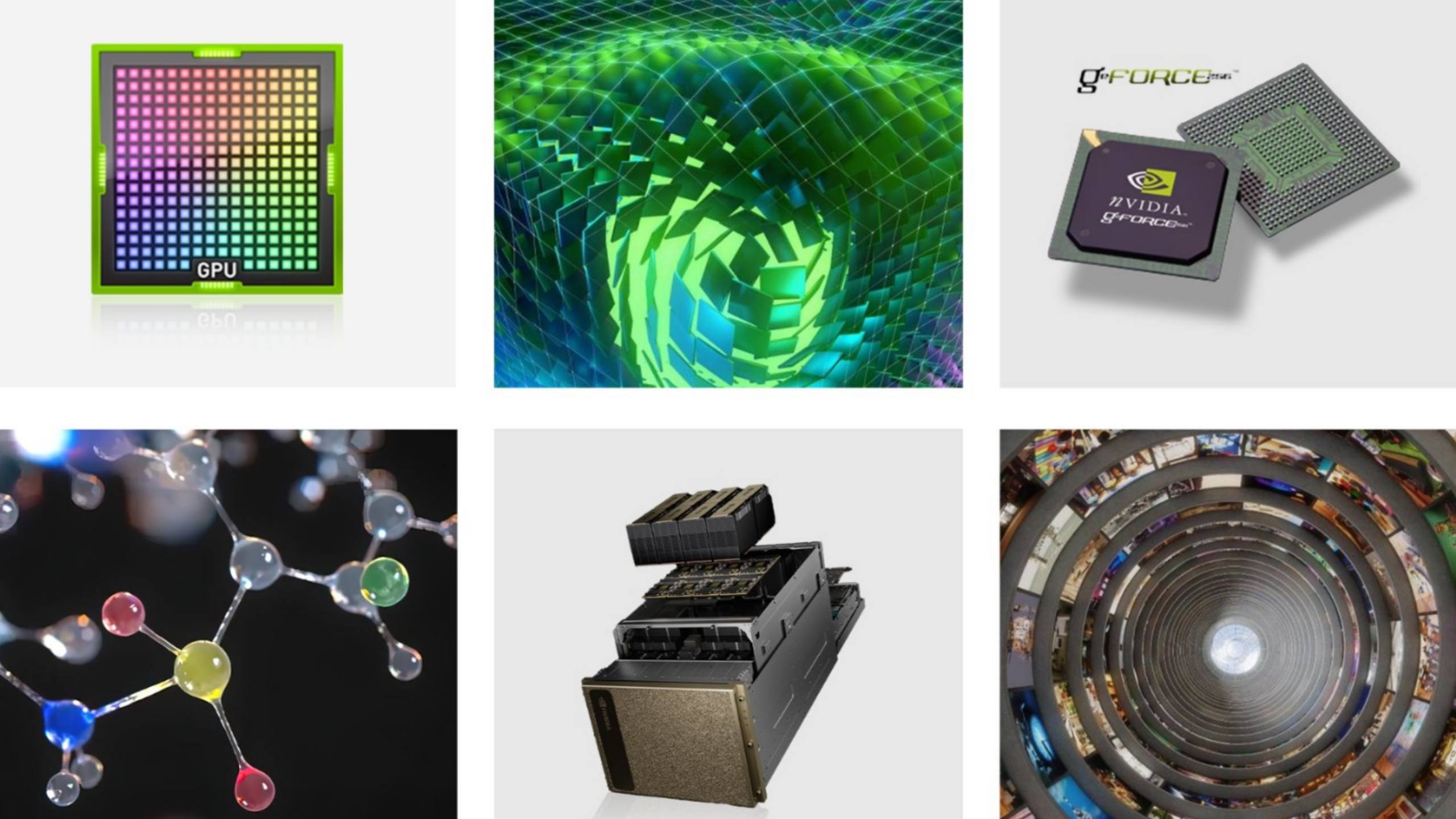
Founded by Jensen Huang, Chris Malachowsky, and Curtis Priem, NVIDIA embarked on its mission in an era when 3D graphics were nascent and largely confined to specialized workstations. The founders envisioned a future where highly parallel processing could bring realistic, interactive 3D graphics to personal computers. Their early breakthroughs, such as the RIVA TNT and GeForce 256, laid the groundwork, demonstrating the immense potential of dedicated graphics processors. The GeForce 256, notably, was dubbed the world’s first “GPU” (Graphics Processing Unit), a term coined by NVIDIA itself, signaling a paradigm shift in how graphics rendering was conceived and executed. This early period established NVIDIA’s reputation for technical excellence and aggressive innovation in the highly competitive PC gaming market.
Redefining Graphics Processing Units (GPUs)
NVIDIA didn’t just create GPUs; it continuously redefined them. From fixed-function pipelines to programmable shaders, each generation of NVIDIA’s architecture, such as Fermi, Kepler, Maxwell, Pascal, Volta, Turing, Ampere, and Ada Lovelace, has introduced significant advancements. These architectures have consistently pushed the envelope in terms of computational power, efficiency, and rendering capabilities. Technologies like unified shader architecture, high-bandwidth memory (HBM), and sophisticated tessellation engines dramatically improved visual fidelity and performance. NVIDIA’s commitment to advancing GPU technology transformed video games from pixelated experiences into breathtaking, immersive virtual worlds, setting new standards for realism and interactivity in digital entertainment.
Beyond Gaming: Expanding Horizons
While gaming remains a cornerstone of NVIDIA’s business, the company’s vision quickly expanded beyond it. Recognizing the inherent parallel processing capabilities of its GPUs, NVIDIA saw their potential far beyond rendering pixels. The introduction of CUDA (Compute Unified Device Architecture) in 2006 was a pivotal moment. CUDA enabled developers to leverage the massive parallel processing power of NVIDIA GPUs for general-purpose computing tasks, effectively transforming GPUs from specialized graphics accelerators into powerful general-purpose parallel processors (GPGPUs). This strategic move unlocked an entirely new universe of applications, paving the way for NVIDIA’s expansion into scientific computing, data centers, and ultimately, artificial intelligence. This foresight cemented NVIDIA’s transition from solely a graphics company to a comprehensive computing platform provider.
The Core Technologies Driving NVIDIA’s Dominance
NVIDIA’s strength lies in its diverse portfolio of hardware and software platforms, meticulously engineered to address a wide spectrum of computing challenges. Each core technology serves a specific market, yet all are underpinned by the company’s fundamental expertise in parallel processing and high-performance computing.
GeForce and the Consumer Gaming Experience
The GeForce line of GPUs is arguably NVIDIA’s most recognizable brand, synonymous with high-performance PC gaming. These consumer-grade graphics cards are at the forefront of visual innovation, continually pushing the boundaries of realism and immersion. Modern GeForce GPUs, like those based on the RTX architecture, incorporate groundbreaking technologies such as real-time ray tracing, which simulates the physical behavior of light to produce incredibly lifelike reflections, shadows, and global illumination. Coupled with DLSS (Deep Learning Super Sampling), an AI-powered rendering technology that boosts frame rates while generating sharp, high-resolution images, GeForce cards deliver unparalleled gaming experiences. Beyond raw performance, NVIDIA also provides a robust software ecosystem, including GeForce Experience for game optimization and ShadowPlay for capturing gameplay, enhancing the overall user experience.
Quadro and Professional Visualization
For professionals who demand absolute precision, reliability, and immense computational power for design, engineering, and scientific visualization, NVIDIA offers the Quadro series. Quadro GPUs are specifically designed and certified for professional applications, providing superior performance and stability in fields like CAD (Computer-Aided Design), DCC (Digital Content Creation), medical imaging, and scientific research. These cards often feature larger memory capacities, ECC (Error-Correcting Code) memory for data integrity, and specialized drivers optimized for professional software. The Quadro RTX line, for instance, integrates Tensor Cores and RT Cores, bringing AI and real-time ray tracing capabilities to professional workflows, accelerating tasks from photorealistic rendering to virtual reality content creation.
Data Center and Accelerated Computing with CUDA
Perhaps the most transformative aspect of NVIDIA’s technology stack is its data center segment, powered by powerful GPUs and the CUDA platform. CUDA revolutionized parallel programming, enabling developers to write applications that harness the immense computational throughput of GPUs for general-purpose tasks. This capability made NVIDIA GPUs indispensable for complex scientific simulations, big data analytics, and, most notably, artificial intelligence. Data centers leveraging NVIDIA’s Tesla, A100, and H100 GPUs (part of the DGX systems) can perform calculations orders of magnitude faster than traditional CPUs for specific workloads. These accelerators are the backbone of modern supercomputers, cloud computing platforms, and corporate data centers worldwide, driving advancements in fields ranging from climate modeling to drug discovery.
The Power of AI and Deep Learning
NVIDIA’s role in the AI revolution cannot be overstated. The parallel architecture of GPUs proved ideally suited for the matrix multiplication operations central to deep learning algorithms. As a result, NVIDIA GPUs became the de facto standard for training and deploying neural networks. The company’s investment in specialized hardware (like Tensor Cores), software libraries (cuDNN, TensorRT), and complete AI platforms (NVIDIA AI Enterprise, DGX systems) has made it the primary enabler of AI innovation globally. From natural language processing and computer vision to recommendation engines and predictive analytics, NVIDIA’s technology underpins a vast array of AI applications, pushing the boundaries of what intelligent machines can learn and achieve.
NVIDIA’s Impact Across Industries
NVIDIA’s technological prowess extends far beyond its initial gaming roots, permeating and often revolutionizing numerous industries by providing the foundational computational power and software platforms necessary for next-generation innovation.
Revolutionizing Scientific Research and Healthcare
In scientific research, NVIDIA GPUs accelerate complex simulations in astrophysics, molecular dynamics, quantum chemistry, and climate modeling, allowing researchers to explore phenomena with unprecedented detail and speed. In healthcare, NVIDIA’s Clara platform leverages AI and high-performance computing for medical imaging analysis, drug discovery, and genomic sequencing. AI-powered diagnostics can identify diseases earlier and more accurately, while accelerated drug discovery pipelines can significantly shorten the time it takes to bring new therapies to market. The ability to process vast datasets rapidly has become critical in advancing our understanding of the human body and the universe.
Powering Autonomous Vehicles and Robotics
The dream of self-driving cars and intelligent robots is being realized with NVIDIA’s Drive platform. This end-to-end AI platform provides the hardware and software necessary for autonomous machines to perceive their environment, understand complex scenarios, and make real-time decisions. NVIDIA Drive AGX systems, equipped with powerful GPUs and AI accelerators, process sensor data from cameras, lidar, and radar to create a comprehensive understanding of the vehicle’s surroundings. Similarly, in robotics, NVIDIA’s Jetson platform brings AI capabilities to edge devices, enabling robots to perform tasks autonomously, learn from their environments, and interact with the physical world with greater intelligence and dexterity.
Shaping the Metaverse and Virtual Worlds
The emerging concept of the metaverse, a persistent, interconnected virtual world, heavily relies on NVIDIA’s technology. The company’s Omniverse platform is a cornerstone for building and operating these virtual spaces. Omniverse is an open platform built on Universal Scene Description (USD) that allows artists, designers, and developers to collaborate in real-time on 3D workflows. It enables the creation of physically accurate simulations and photorealistic virtual environments, serving as a powerful engine for digital twins, virtual factories, and immersive metaverse experiences. NVIDIA’s expertise in graphics, AI, and parallel computing positions it as a key architect of the next iteration of the internet.
Enterprise Solutions and Cloud Computing
NVIDIA’s enterprise solutions extend its GPU-accelerated computing power to businesses and cloud service providers. With platforms like NVIDIA AI Enterprise, businesses can deploy and manage AI workloads at scale, integrating AI into their operations, customer service, and analytics. Cloud providers like Amazon Web Services, Microsoft Azure, and Google Cloud offer instances powered by NVIDIA GPUs, making high-performance computing and AI accessible to a broader audience. This democratization of powerful computing resources allows startups and established enterprises alike to leverage cutting-edge technology without the prohibitive cost of building their own massive data centers.
Innovation and Future Directions
NVIDIA’s journey is characterized by continuous innovation and strategic expansion, always looking ahead to identify and capitalize on the next wave of technological evolution.
Software Ecosystem: NVIDIA Omniverse and AI Platforms
Beyond its dominant hardware, NVIDIA’s robust software ecosystem is a critical differentiator. Platforms like Omniverse, for industrial metaverse applications, and its comprehensive suite of AI software (e.g., cuDNN, TensorRT, RAPIDS for data science, NeMo for large language models) significantly enhance the utility and accessibility of its hardware. These software layers abstract much of the complexity of parallel programming, allowing developers to build sophisticated applications more efficiently. NVIDIA’s dedication to an open-source approach for many of its libraries and frameworks further fosters a vibrant developer community, ensuring its technologies remain at the forefront of innovation.
Strategic Acquisitions and Partnerships
NVIDIA has strategically expanded its capabilities through key acquisitions, such as Mellanox Technologies, a leader in high-performance networking solutions, which significantly bolstered NVIDIA’s data center and interconnectivity offerings. While the proposed acquisition of ARM Holdings faced regulatory hurdles and was eventually abandoned, it underscored NVIDIA’s ambition to become a more vertically integrated computing giant. Furthermore, NVIDIA fosters extensive partnerships with leading companies across various sectors, from automotive manufacturers like Mercedes-Benz and Volvo to cloud providers and software developers, ensuring its technology is deeply embedded across critical industries.
Challenges and Opportunities in a Dynamic Market
Despite its formidable position, NVIDIA operates in a highly dynamic and competitive market. Challenges include managing supply chain complexities, navigating geopolitical tensions impacting semiconductor manufacturing, and fending off competition from rival chipmakers and custom silicon development by tech giants. However, the opportunities are vast. The exponential growth of AI, the increasing demand for accelerated computing in data centers, the maturation of autonomous technologies, and the emergent metaverse all represent massive addressable markets where NVIDIA is uniquely positioned to lead. Its continuous investment in research and development, coupled with its integrated hardware and software approach, ensures it remains a pivotal player in shaping the future of technology.
The Broader Significance of NVIDIA’s Contributions
NVIDIA’s story is not just about a successful company; it’s about a company that has fundamentally reshaped the trajectory of computing and artificial intelligence. Its contributions extend far beyond quarterly earnings, impacting how we work, play, discover, and interact with the digital world.
Driving the AI Revolution
NVIDIA is arguably the single most important hardware company driving the current artificial intelligence revolution. By providing the essential computational horsepower and developer tools, it has enabled researchers to train ever-larger and more complex neural networks, leading to breakthroughs in fields from natural language understanding to medical diagnostics. Without NVIDIA’s relentless innovation in GPU architecture and software platforms, the rapid advancements we see in AI today would likely be years, if not decades, behind.
Enabling Next-Generation Computing
From the supercomputers tackling humanity’s grand challenges to the intelligent devices powering smart cities, NVIDIA’s technology is enabling the next generation of computing. It’s moving beyond the traditional CPU-centric model to a world where specialized accelerators, particularly GPUs, are central to processing the massive volumes of data generated by modern applications. This shift towards accelerated, parallel computing is more energy-efficient and vastly more powerful for certain workloads, unlocking new possibilities across scientific, industrial, and consumer domains.

A Visionary Leader in the Tech Landscape
In essence, NVIDIA has evolved from a graphics card maker into a full-stack computing platform company. Its founder, Jensen Huang, has been hailed as a visionary, consistently anticipating major technological shifts and strategically positioning the company to capitalize on them. By intertwining hardware innovation with a comprehensive software ecosystem, NVIDIA has created a virtuous cycle of development that few companies can replicate. Its impact is global, its influence profound, and its ongoing innovations continue to pave the way for a future where intelligent machines and immersive digital experiences are seamlessly integrated into our lives. “What is Invidia” – or more accurately, NVIDIA – is a query about one of the most powerful and transformative forces in modern technology.
aViewFromTheCave is a participant in the Amazon Services LLC Associates Program, an affiliate advertising program designed to provide a means for sites to earn advertising fees by advertising and linking to Amazon.com. Amazon, the Amazon logo, AmazonSupply, and the AmazonSupply logo are trademarks of Amazon.com, Inc. or its affiliates. As an Amazon Associate we earn affiliate commissions from qualifying purchases.