
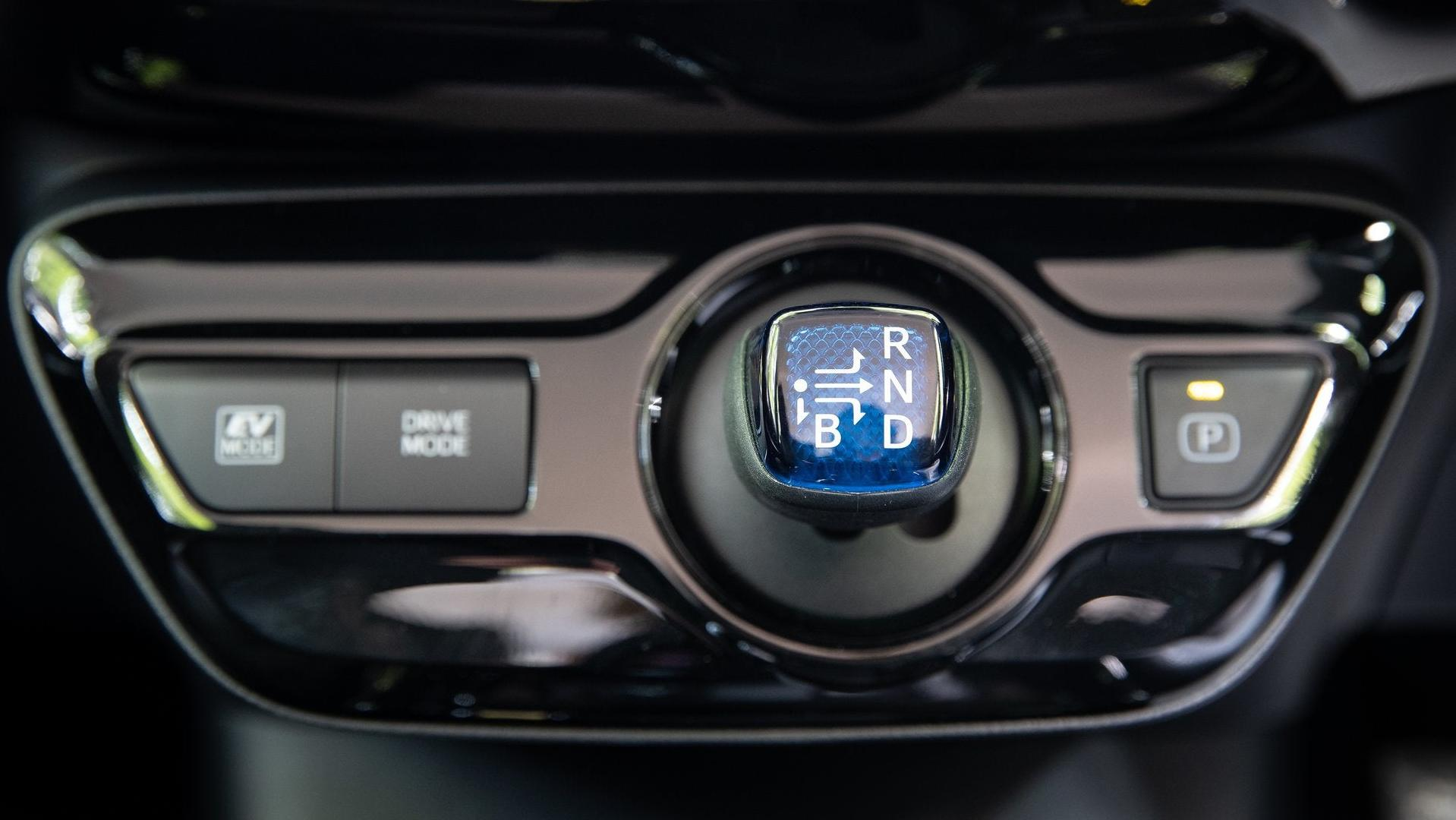
The Toyota Prius has long been heralded as the standard-bearer for hybrid technology, a vehicle that transitioned the automotive industry from purely internal combustion engines to a software-defined, electrified future. Among the various icons and interfaces within its cabin, one of the most frequently misunderstood components is the “B” position on its unique shift-by-wire gear selector. While most drivers are familiar with Park, Reverse, Neutral, and Drive, the “B” setting represents a sophisticated intersection of mechanical engineering and algorithmic energy management.
To understand what “B” is, one must look beyond the physical lever and delve into the complex digital architecture of the Hybrid Synergy Drive (HSD). This is not merely a “low gear” in the traditional sense; it is a specialized mode of operation designed to optimize vehicle control and safety through the intelligent application of engine braking and software-managed resistance.

1. Shift-by-Wire: The Software Foundation of the Prius Interface
The first step in understanding the “B” mode is recognizing that the Prius does not use a traditional mechanical linkage between the gear shifter and the transmission. Instead, it utilizes a “shift-by-wire” system. In this architecture, the gear selector acts more like a joystick or a peripheral device for a computer than a mechanical lever.
The Role of the Electronic Control Unit (ECU)
Every time a driver moves the Prius shifter into the “B” position, they are sending a digital signal to the vehicle’s Power Control Unit (PCU) and the Engine Control Unit (ECU). The car does not physically “shift” into a lower gear because the Prius uses an Electronically Controlled Continuously Variable Transmission (eCVT), which utilizes a planetary gearset rather than a belt-and-pulley system or a traditional gearbox. The ECU interprets the “B” command as an instruction to alter how the electric motors and the gasoline engine interact during deceleration.
User Interface and Feedback Loops
The design of the Prius shifter—a spring-loaded puck that always returns to its center position—is a hallmark of high-tech automotive UI. By selecting “B,” the driver engages a specific software map. This map tells the vehicle that the driver requires increased drag. In a traditional vehicle, this would be achieved by downshifting to a lower gear to use the engine’s compression to slow the car. In the Prius, the software achieves a similar sensation, but through a far more complex series of electrical and mechanical maneuvers.
2. The Engineering Behind “B” Mode: Engine Braking in a High-Voltage Environment
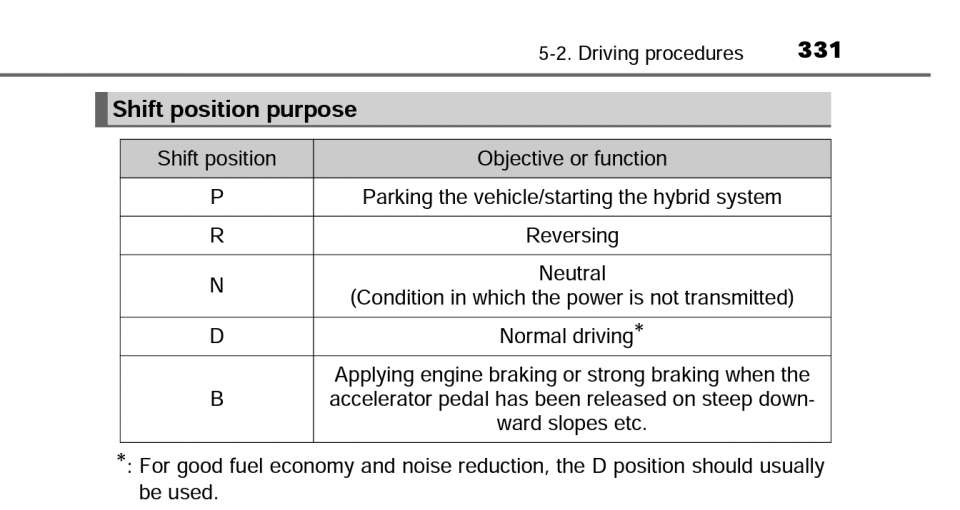
The “B” in the Prius stands for “Brake,” but specifically refers to “Engine Braking.” To grasp the tech behind this, we must look at how the Hybrid Synergy Drive manages kinetic energy. In normal “D” (Drive) mode, lifting your foot off the accelerator engages regenerative braking, where the electric motor acts as a generator, converting the car’s momentum into electricity to charge the high-voltage battery.
The Limitations of Battery Capacity
Regenerative braking is a masterpiece of energy efficiency, but it has physical limits. A hybrid battery can only accept a certain amount of current at a given time. If you are descending a long mountain pass, the battery will eventually reach its maximum state of charge (SoC). Once the battery is full, the system can no longer use regenerative braking to slow the vehicle because there is nowhere for the generated electricity to go.
Activating the Internal Combustion Engine as a Compressor
This is where the “B” mode technology becomes essential. When “B” is engaged, the Prius software instructs the gasoline engine to spin without injecting fuel. The engine essentially becomes an air compressor. By using the vehicle’s kinetic energy to pump air through the engine cylinders, the system creates mechanical drag. This drag slows the vehicle down without relying on the friction brakes (pads and rotors), preventing them from overheating during long descents. It is a brilliant piece of automated resource management that prioritizes hardware longevity over energy recovery when the latter is no longer feasible.
3. Regenerative Braking vs. Engine Compression: The Computational Balance
A common tech misconception is that “B” mode is the best way to “recharge” the battery. From a technical standpoint, the opposite is often true. The Prius’s sophisticated algorithms are designed to prioritize “D” for maximum energy recuperation.
Algorithmic Priority in Drive Mode
In “D” mode, the software’s primary objective is efficiency. When you coast or apply the brakes lightly, the MG2 (Motor Generator 2) is tasked with capturing as much kinetic energy as possible. This is converted into DC current via the inverter and stored in the NiMH or Lithium-ion battery pack. This process is nearly silent and highly efficient.
The Transition to Mechanical Resistance
When the driver selects “B,” the system shifts its priority from “Energy Capture” to “Vehicle Stability and Heat Management.” Because the engine is spinning to create drag in “B” mode, some of the kinetic energy that could have gone into the battery is instead wasted as friction and sound (which is why the engine sounds louder in “B” mode). Tech enthusiasts should view “B” mode as a fail-safe software state. It is an intentional move away from peak efficiency in favor of mechanical safety, regulated by the vehicle’s real-time analysis of battery temperature and state of charge.
4. Hardware Longevity: Preventing Heat Soak through Smart Modes
From a maintenance and hardware tech perspective, the “B” mode is a preventative feature. One of the greatest enemies of automotive hardware is “heat soak.” In traditional vehicles, prolonged braking on steep hills leads to brake fade, where the pads and rotors become so hot they lose their ability to generate friction.
Protecting the Friction Brake Subsystem
The Prius uses an integrated braking system that blends regenerative braking and hydraulic friction braking. By using the “B” mode to handle the bulk of the deceleration work via engine compression, the car ensures that the hydraulic brakes remain cool and ready for emergency stops. This is a form of “protective logic” built into the car’s operating system.
Sensor Integration and Thermal Monitoring
The Prius is equipped with various thermal sensors that monitor the battery, the inverter, and the motor generators. If the software detects that the inverter is getting too hot from excessive regenerative braking, it may automatically limit regeneration. The “B” mode provides a manual override for the driver to assist the system in managing these thermal loads. This synergy between human input and automated thermal management is a core component of Toyota’s hybrid reliability.
5. The Evolution of Deceleration Tech: From “B” to One-Pedal Driving
As we look at the trajectory of green vehicle technology, the Prius “B” mode was a precursor to the advanced “One-Pedal Driving” systems found in modern Battery Electric Vehicles (BEVs) like the Tesla Model 3 or the Nissan LEAF.
Comparative Software Logic
While the Prius “B” mode focuses on engine compression, modern EVs use aggressive regenerative braking to achieve the same goal. In an EV, the “B” equivalent is often a software toggle that increases the magnetic resistance in the drive motor. The Prius’s “B” mode is more complex because it must coordinate two different power sources—an internal combustion engine and an electric motor—through a planetary gearset. This requires a much higher level of computational “handshaking” between the various control modules.
The Future of Smart Deceleration
Future iterations of this technology are moving toward “Predictive Deceleration.” Using GPS data and camera sensors, future hybrid systems will likely anticipate a downhill stretch or a coming stop and automatically engage the optimal blend of “B” mode-style engine braking and regenerative braking. We are moving from a world where the driver manually selects a mode to one where the vehicle’s AI optimizes energy flow based on topographical data.
Conclusion: The “B” Setting as a Triumph of Hybrid Logic
The “B” on a Prius shifter is far more than a simple gear; it is a window into the sophisticated logic that governs hybrid vehicles. It represents a masterclass in how software can manage physical forces—heat, friction, and kinetic energy—to create a safer and more durable machine.
By understanding that “B” is a tool for engine-assisted deceleration rather than a primary charging mode, drivers can better appreciate the technical nuances of the Hybrid Synergy Drive. It is a reminder that in the realm of high-tech transportation, every icon and every setting is backed by thousands of lines of code and rigorous mechanical engineering, all aimed at balancing the delicate equation of efficiency, safety, and performance. As automotive technology continues to evolve, the lessons learned from the Prius’s “B” mode will continue to inform the way we interact with the increasingly intelligent machines that carry us into the future.
aViewFromTheCave is a participant in the Amazon Services LLC Associates Program, an affiliate advertising program designed to provide a means for sites to earn advertising fees by advertising and linking to Amazon.com. Amazon, the Amazon logo, AmazonSupply, and the AmazonSupply logo are trademarks of Amazon.com, Inc. or its affiliates. As an Amazon Associate we earn affiliate commissions from qualifying purchases.