
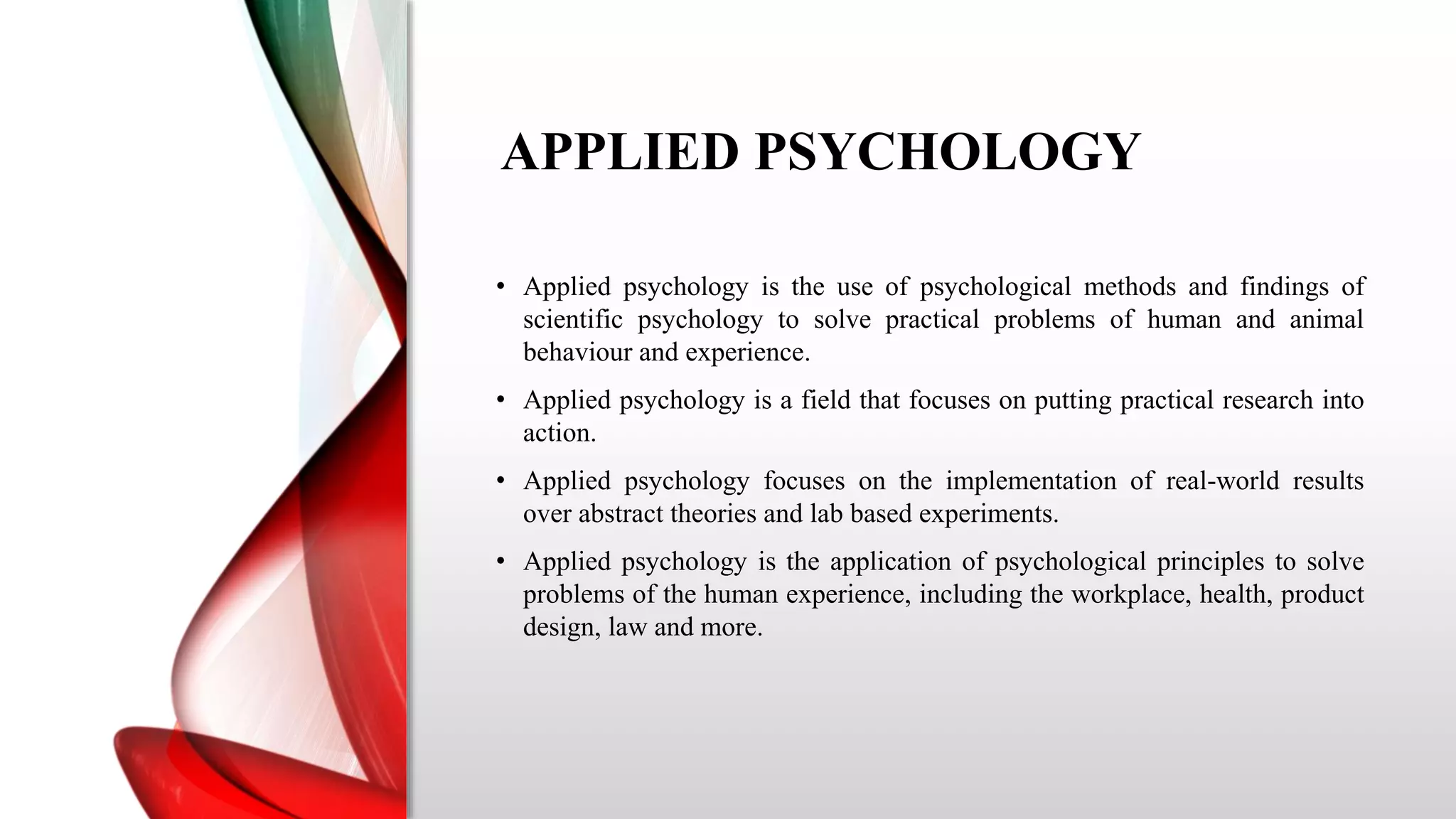
Applied psychology is a dynamic and multifaceted field that takes the theoretical knowledge and research findings from academic psychology and translates them into practical solutions for real-world problems. It’s not just about understanding the human mind; it’s about using that understanding to improve lives, enhance performance, and address challenges across a vast spectrum of human endeavors. While foundational psychological research delves into the intricacies of cognition, emotion, and behavior, applied psychology focuses on the “how” and “why” of applying these insights in specific contexts. This approach bridges the gap between abstract theory and tangible outcomes, making it an indispensable force in shaping many aspects of our modern world, particularly within the realm of technology.
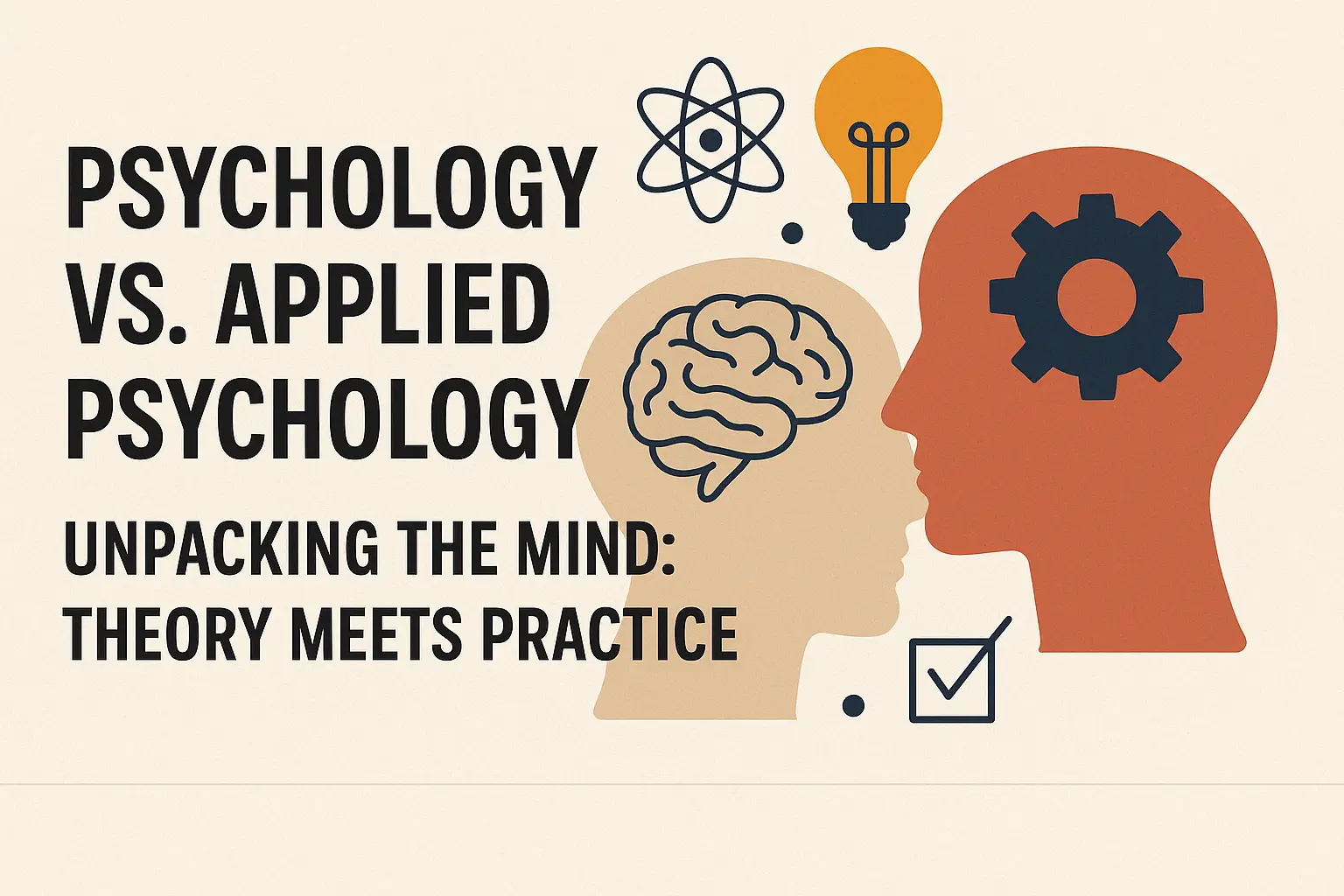
In today’s increasingly digital landscape, the principles of applied psychology are not merely relevant; they are foundational to the design, development, and adoption of technology. From the intuitive interfaces of our smartphones to the sophisticated algorithms that personalize our online experiences, psychological understanding is at the core of how we interact with and are influenced by the technologies that permeate our lives. This exploration will delve into the core tenets of applied psychology and specifically illuminate its profound impact and pervasive influence within the tech industry, examining how psychological principles are leveraged to create more effective, engaging, and ethical technological solutions.
The Core Principles of Applied Psychology
At its heart, applied psychology is about understanding human behavior and mental processes and then strategically intervening to achieve desired outcomes. It draws upon a rich foundation of psychological theories and research methodologies, adapting them to suit the unique demands of various practical settings.
Understanding Human Behavior and Cognition
The bedrock of applied psychology lies in its commitment to comprehending how humans think, feel, and behave. This involves studying a wide array of psychological phenomena, including perception, memory, learning, motivation, emotion, and social interaction. Researchers and practitioners in applied psychology utilize rigorous scientific methods, such as experiments, surveys, and observational studies, to gather empirical data and formulate evidence-based conclusions. This deep understanding of the human psyche is the essential prerequisite for any effective application of psychological principles.
Bridging Theory and Practice
The hallmark of applied psychology is its translational nature. It doesn’t rest on theoretical advancements alone; it actively seeks to translate these discoveries into actionable strategies and interventions. This means taking principles of cognitive load, for instance, and applying them to the design of user interfaces to ensure they are easy to understand and navigate. Similarly, insights into motivation and reward systems can be used to design more engaging online experiences or to foster positive behavioral change through gamified applications. The goal is always to move beyond mere observation to active problem-solving.
Diverse Areas of Application
While this article will focus on the tech industry, it’s important to acknowledge the breadth of applied psychology. It encompasses numerous specialized fields, each with its unique focus and methodologies. These include clinical psychology (diagnosing and treating mental health disorders), industrial-organizational psychology (improving workplace productivity and employee well-being), educational psychology (optimizing learning and teaching methods), sports psychology (enhancing athletic performance), and forensic psychology (applying psychology to legal issues), among many others. Each of these domains demonstrates the power of applying psychological knowledge to specific, practical challenges.
Applied Psychology in the Tech Landscape
The tech industry, characterized by its rapid innovation and constant evolution, is a fertile ground for applied psychology. The success of any technology often hinges on its ability to resonate with and be adopted by its human users. This is where psychological principles become indispensable.
User Experience (UX) and User Interface (UI) Design
Perhaps the most visible application of psychology in tech is within UX and UI design. UX designers aim to create products and services that are not only functional but also enjoyable, efficient, and easy to use. This directly taps into principles of cognitive psychology, particularly concerning perception, attention, memory, and problem-solving.
Perceptual Psychology and Visual Design
Understanding how humans perceive visual information is crucial for UI design. Principles of Gestalt psychology, for example, explain how humans tend to perceive elements as unified wholes rather than individual parts. Designers leverage this by employing principles of proximity, similarity, and closure to group related elements, guide the user’s eye, and create a cohesive and intuitive visual hierarchy. Color theory, another area influenced by psychology, is used to evoke specific emotions, convey meaning, and improve readability. The strategic use of color can enhance engagement, reduce cognitive load, and even influence purchasing decisions.
Cognitive Load and Information Architecture
Cognitive load refers to the total amount of mental effort being used in the working memory. In tech design, minimizing cognitive load is paramount. Applied psychology informs how information is structured and presented to users. Information architecture, which deals with organizing, structuring, and labeling content effectively, draws heavily on cognitive principles of memory and categorization. Designers strive to present information in bite-sized chunks, use clear and concise language, and employ logical navigation pathways to prevent users from becoming overwhelmed. The goal is to make interactions as effortless as possible, allowing users to focus on their tasks rather than struggling with the interface.
Behavioral Economics and User Engagement
The principles of behavioral economics, which blend psychology and economics, are widely applied to understand and influence user behavior within digital platforms. Concepts like framing, choice architecture, and nudges are used to guide users towards desired actions. For instance, default settings on a website can “nudge” users towards opting into certain features, or the way options are presented can influence their choices. Understanding reward systems, operant conditioning, and the psychology of habit formation is also key to designing engaging applications that encourage repeat usage and foster user loyalty. This involves creating feedback loops, incorporating elements of gamification, and delivering personalized experiences that cater to individual user needs and preferences.
Human-Computer Interaction (HCI) and Usability Testing
Human-Computer Interaction (HCI) is an interdisciplinary field that focuses on the design of computer technology and, in particular, the interaction between humans and computers. Applied psychology is central to HCI, providing the theoretical framework and practical methods for evaluating and improving these interactions.
Usability Testing Methodologies
Usability testing is a core activity in applied psychology for tech. It involves observing real users interacting with a product or prototype to identify areas of difficulty and satisfaction. Psychologists design and conduct these tests, employing methods like think-aloud protocols, where participants verbalize their thoughts as they navigate the interface. Analyzing these observations helps identify usability heuristics violations, uncover unexpected user behaviors, and gather qualitative data that complements quantitative metrics. The insights gained from usability testing are directly used to iterate on designs and enhance the overall user experience, making technology more accessible and efficient for everyone.
Understanding User Needs and Mental Models
Applied psychology helps tech companies understand the underlying needs, motivations, and mental models that users bring to technology. A mental model is an explanation of how something works in the real world. When users interact with technology, they often draw upon their existing mental models. If a technology’s design contradicts a user’s mental model, it can lead to frustration and errors. By researching and understanding these models, designers can create interfaces that are more intuitive and predictable, aligning with users’ existing expectations. This deep dive into user psychology ensures that technology is not just built for the sake of innovation but is also built for the humans who will use it.
AI and Machine Learning: The Psychological Underpinnings
The rapid advancement of Artificial Intelligence (AI) and Machine Learning (ML) is increasingly intertwined with applied psychology, particularly in how these systems interact with and influence humans.
AI Ethics and Bias Mitigation
As AI systems become more integrated into our lives, ethical considerations become paramount. Applied psychology plays a crucial role in identifying and mitigating potential biases embedded within AI algorithms. Researchers examine how psychological biases, such as confirmation bias or implicit bias, can be inadvertently encoded into training data or algorithmic decision-making processes. Understanding these psychological underpinnings is essential for developing AI that is fair, equitable, and avoids perpetuating societal inequalities. This involves a deep understanding of social psychology and the societal factors that can influence technological development.
Personalization and Recommendation Systems
Personalization and recommendation engines, powered by AI and ML, are ubiquitous in modern tech. These systems leverage psychological principles to predict user preferences and deliver tailored content. By analyzing user behavior, past interactions, and demographic data, these algorithms can offer highly relevant suggestions for products, entertainment, or information. This relies on understanding concepts like associative learning, reinforcement, and the psychology of choice. The goal is to create a more engaging and satisfying user experience by anticipating needs and presenting options that are likely to be appealing, effectively mirroring how humans might discover and engage with content or products in the real world.
The Psychology of Human-AI Collaboration
As AI systems evolve, the focus is shifting towards effective human-AI collaboration. Applied psychology is vital in designing systems that can work seamlessly alongside humans, augmenting their capabilities rather than replacing them entirely. This involves understanding how to build trust between humans and AI, how to communicate AI’s reasoning and limitations effectively, and how to design interfaces that facilitate intuitive collaboration. Research in areas like trust in automation, shared mental models, and the cognitive aspects of decision-making under uncertainty are all contributing to the development of more effective and harmonious human-AI partnerships.
The Future of Applied Psychology in Tech
The symbiotic relationship between applied psychology and technology is poised to deepen. As technology becomes more sophisticated and integrated into the fabric of our lives, the need for psychologically informed design and ethical considerations will only grow.
Adaptive Technologies and Personalized Learning
The future will likely see a surge in adaptive technologies that dynamically adjust to individual user needs and learning styles. Applied psychology will be instrumental in developing these systems, which could revolutionize education, training, and personal development. By understanding individual cognitive profiles, learning preferences, and motivational drivers, these technologies can offer highly personalized pathways to knowledge acquisition and skill development, making learning more effective and engaging.
Augmented and Virtual Reality (AR/VR) Experiences
Augmented Reality (AR) and Virtual Reality (VR) technologies offer immersive experiences that are deeply rooted in psychological principles. Designing convincing and engaging AR/VR environments requires a profound understanding of perception, spatial cognition, attention, and presence. Applied psychologists are crucial in ensuring these experiences are not only technologically feasible but also psychologically impactful, creating realistic sensations and facilitating meaningful interactions within virtual or augmented spaces. This includes addressing potential issues like cybersickness and ensuring a sense of embodiment and agency.
Ethical AI and Responsible Technology Deployment
As AI continues its exponential growth, the ethical implications will remain a central focus. Applied psychology will be indispensable in guiding the responsible deployment of AI technologies. This involves proactively identifying potential societal impacts, developing frameworks for ethical AI design and governance, and ensuring that AI systems are developed and used in ways that benefit humanity and uphold fundamental human values. This necessitates ongoing research into human values, decision-making biases, and the long-term psychological effects of widespread AI adoption. The proactive application of psychological insights will be key to navigating the complex ethical terrain of future technological advancements.
In conclusion, applied psychology is not a niche academic pursuit but a vital engine driving innovation and user-centricity within the tech industry. By deeply understanding human behavior, cognition, and motivation, applied psychologists are instrumental in shaping the technologies that define our modern world, making them more intuitive, engaging, and ultimately, more beneficial for society.
aViewFromTheCave is a participant in the Amazon Services LLC Associates Program, an affiliate advertising program designed to provide a means for sites to earn advertising fees by advertising and linking to Amazon.com. Amazon, the Amazon logo, AmazonSupply, and the AmazonSupply logo are trademarks of Amazon.com, Inc. or its affiliates. As an Amazon Associate we earn affiliate commissions from qualifying purchases.