
The role of an “Associate Analyst” serves as a crucial entry point into a myriad of professional fields, yet its specific designation can vary significantly across industries and organizations. Within the realm of finance and business operations—our focus category—this title broadly encompasses positions that involve systematic examination of data, trends, and financial information to support decision-making. Far from a singular, rigid definition, the Associate Analyst role is a foundational step for professionals aiming to develop a deep understanding of market dynamics, financial health, and strategic planning. Identifying alternative titles for this role involves dissecting its core responsibilities and understanding the diverse nomenclature adopted by financial institutions, corporations, and advisory firms.

The Foundational Role in Business Finance
An Associate Analyst in the context of business finance is typically an entry-level professional tasked with supporting senior analysts, managers, and executives by performing critical research, data collection, and preliminary analysis. Their work is instrumental in building the groundwork for informed financial and strategic decisions. These professionals are the backbone for a wide range of activities, from assessing market trends and evaluating investment opportunities to scrutinizing internal financial performance and identifying areas for operational improvement.
Their primary responsibilities often include gathering raw financial data from various sources—annual reports, market databases, economic indicators, and internal company records. They then clean, organize, and begin to interpret this data, often using spreadsheet software to build models or generate preliminary reports. This initial analytical work allows senior team members to dedicate their time to higher-level strategy and client interaction, knowing that the underlying data and initial insights are robust. An Associate Analyst must possess an acute attention to detail, a strong quantitative aptitude, and an innate curiosity to uncover patterns and relationships within complex datasets. Their contributions directly impact financial forecasting, risk assessment, budget allocation, and ultimately, the financial health and strategic direction of a business or its clients.
Common Synonyms Across Financial Disciplines
While “Associate Analyst” serves as a general descriptor, several more specific titles are frequently used to denote similar entry-level analytical roles within various financial specializations. Each of these highlights a particular area of focus, offering distinct career pathways within the broader financial sector.
Junior Financial Analyst
Perhaps the most direct synonym, a Junior Financial Analyst often works within corporate finance departments, investment banking, asset management, or private equity firms. Their core responsibilities revolve around financial planning and analysis (FP&A), which includes budgeting, forecasting future financial performance, and evaluating historical data. They build and maintain financial models, conduct variance analysis (comparing actual results to budgets or forecasts), and prepare reports on the company’s profitability, liquidity, and solvency. This role is critical for internal strategic decision-making, helping management understand the financial implications of various business initiatives and guiding resource allocation. They might also assist with due diligence for mergers and acquisitions, preparing valuation models and synthesizing financial information for prospective deals.
Associate Investment Analyst
An Associate Investment Analyst is typically found within investment firms, hedge funds, mutual funds, or wealth management divisions. Their primary focus is on researching and evaluating investment opportunities across various asset classes, such as equities, fixed income, real estate, or alternative investments. This involves extensive market research, company-specific due diligence, and financial modeling to determine the intrinsic value of an asset or company. They might assist portfolio managers in constructing and rebalancing portfolios, monitor market trends, and prepare detailed investment memoranda justifying potential buys or sells. A strong understanding of macroeconomics, industry trends, and valuation methodologies is paramount in this role, as their insights directly contribute to investment performance and client returns.
Entry-Level Business Analyst (with a Financial Lens)
While “Business Analyst” can sometimes lean heavily into technology or process improvement, an Entry-Level Business Analyst with a strong financial lens or within a financial services context performs a highly analytical role focused on improving business performance and efficiency through financial insights. These analysts often bridge the gap between business operations and financial outcomes. They might analyze current business processes, identify inefficiencies leading to increased costs, and propose data-driven solutions. Their work can involve cost-benefit analysis for new projects, requirement gathering for financial system implementations, or developing performance metrics to track financial objectives. In this capacity, they are less about market analysis and more about internal operational and strategic optimization from a financial perspective, often working closely with finance, operations, and IT departments.
Associate Risk or Compliance Analyst
In the heavily regulated financial industry, roles focused on risk and compliance are indispensable. An Associate Risk Analyst helps identify, assess, and mitigate financial risks facing an organization, which can include credit risk, market risk, operational risk, or liquidity risk. They often analyze large datasets to detect patterns of fraud, assess the creditworthiness of borrowers, or model potential losses from market downturns. Their work directly supports the stability and security of financial institutions. Similarly, an Associate Compliance Analyst ensures that the organization adheres to all relevant financial laws, regulations, and internal policies. This involves reviewing transactions, developing compliance frameworks, preparing regulatory reports, and educating employees on best practices. Both roles require meticulous attention to detail, a thorough understanding of financial regulations, and the ability to interpret complex data to prevent financial losses and regulatory penalties.
Junior Research Analyst
Another common title, a Junior Research Analyst, especially in equity research or fixed income research departments of investment banks and brokerage firms, parallels the Associate Analyst role. These individuals are responsible for conducting deep-dive research into specific industries or companies, often under the guidance of a senior analyst. Their work involves analyzing financial statements, interviewing company management, attending industry conferences, and synthesizing vast amounts of qualitative and quantitative data to produce comprehensive research reports and investment recommendations. While similar to an Investment Analyst, the emphasis here is often on the creation of public or client-facing research content that provides actionable insights to investors.

Key Skills and Essential Toolsets for Aspiring Analysts
Regardless of the specific title, the foundation of success for any entry-level analyst in the financial sector rests upon a robust set of skills and a command of essential tools. Developing these competencies is paramount for both immediate job performance and long-term career progression.
Analytical and Quantitative Prowess
At the core of the analyst role is the ability to interpret and manipulate data effectively. This includes strong quantitative skills such as statistical analysis, financial modeling, and forecasting techniques. Proficiency in advanced spreadsheet functions (especially Microsoft Excel) is non-negotiable, as it is the primary tool for data manipulation, calculation, and model building. Understanding financial ratios, valuation methodologies, and basic accounting principles forms the bedrock of their analytical work, enabling them to derive meaningful insights from raw financial figures.
Communication and Presentation Skills
Even the most brilliant analysis is ineffective if it cannot be clearly communicated. Associate Analysts must develop strong written and verbal communication skills to present their findings to senior colleagues, clients, or other stakeholders. This involves creating concise and impactful reports, developing compelling presentations (often using PowerPoint), and being able to explain complex financial concepts in an easily understandable manner. The ability to articulate assumptions, methodologies, and conclusions effectively is crucial for influencing decisions and building credibility.
Software Proficiency and Data Management
Beyond Excel, an Associate Analyst benefits from proficiency in various financial and data analysis tools. This can include financial databases like Bloomberg Terminal, Refinitiv Eikon (formerly Thomson Reuters Eikon), or FactSet, which provide real-time market data, company financials, and research reports. Familiarity with business intelligence (BI) tools such as Tableau or Microsoft Power BI for creating interactive dashboards and visualizations is increasingly valuable. Basic knowledge of programming languages like Python or R for data analysis and automation can also be a significant advantage, especially in roles involving large datasets or quantitative modeling. Moreover, understanding enterprise resource planning (ERP) systems like SAP or Oracle can be beneficial for those working in corporate finance roles.
Business Acumen and Ethical Standards
A deep understanding of economic principles, market dynamics, and industry-specific trends allows analysts to contextualize their data and provide more insightful recommendations. Business acumen involves not just knowing the numbers but also understanding the underlying business operations and strategic objectives. Equally important are unwavering ethical standards and a commitment to integrity. The financial industry operates on trust, and analysts are often privy to sensitive information. Adherence to professional codes of conduct, regulatory requirements, and internal policies is fundamental to maintaining trust and ensuring responsible financial practices.
Navigating Career Pathways and Professional Development
The Associate Analyst role is not merely a job but a launchpad for a rewarding career in finance. Understanding the entry points, growth trajectories, and the importance of continuous learning is vital for aspiring professionals.
Entry Points and Education
Most Associate Analyst roles require a bachelor’s degree in a relevant field such as Finance, Economics, Accounting, Business Administration, or Mathematics. A strong academic record, coupled with relevant internships, can significantly enhance a candidate’s prospects. For some specialized roles, or as a step towards advancement, a master’s degree (e.g., MBA, Master of Finance) or professional certifications can be highly advantageous. Certifications like the Chartered Financial Analyst (CFA) designation are particularly well-regarded in investment analysis and portfolio management, signaling a deep commitment and expertise in the field.
Growth Trajectory
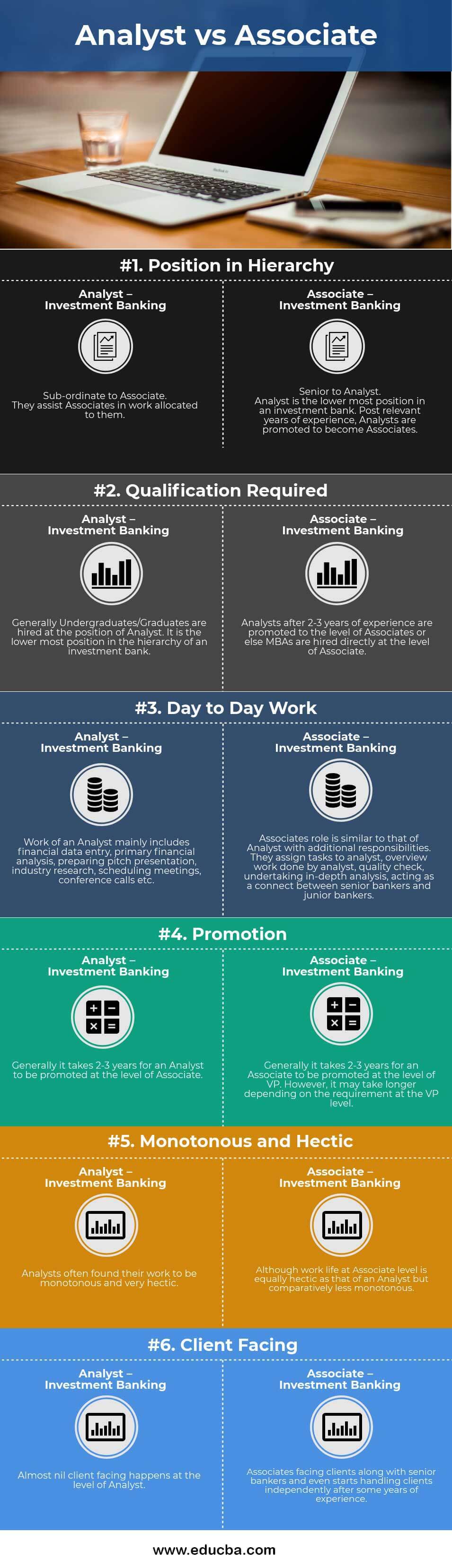
The career path from an Associate Analyst typically involves progression to a Senior Analyst role, where responsibilities become more complex, encompassing greater autonomy in analysis, mentorship of junior staff, and direct interaction with clients or senior management. Beyond this, opportunities can branch out into specialized roles such such as Portfolio Manager, Equity Research Manager, Financial Planning & Analysis Manager, Risk Manager, or even executive positions like CFO or Treasurer. The foundational skills and industry knowledge gained as an Associate Analyst provide a versatile base for exploring various senior leadership and strategic roles within the financial ecosystem.
Continuous Learning
The financial landscape is dynamic, constantly evolving with new technologies, regulations, and market trends. Therefore, continuous learning is not just beneficial but essential for long-term success. Analysts must stay updated on global economic developments, changes in financial regulations, new analytical techniques, and advancements in financial technology (FinTech). This can involve pursuing advanced degrees, earning professional certifications, attending industry seminars, reading specialized publications, or engaging in online learning platforms. The commitment to lifelong learning ensures that analysts remain relevant, adaptable, and capable of navigating the complexities of the modern financial world.
aViewFromTheCave is a participant in the Amazon Services LLC Associates Program, an affiliate advertising program designed to provide a means for sites to earn advertising fees by advertising and linking to Amazon.com. Amazon, the Amazon logo, AmazonSupply, and the AmazonSupply logo are trademarks of Amazon.com, Inc. or its affiliates. As an Amazon Associate we earn affiliate commissions from qualifying purchases.