
At its core, a surrealist is someone who embraces and explores the philosophical and artistic movement known as Surrealism. Pioneered in the 1920s by André Breton, Surrealism sought to liberate human experience by unleashing the power of the unconscious mind, dreams, and automatism. Far from being merely an artistic style, it was a revolutionary way of seeing the world, challenging rational thought and societal norms to reveal a deeper, often unsettling, truth. For a surrealist, the boundaries between reality and imagination blur, opening a conduit to unexpected juxtapositions, illogical narratives, and profound psychological insights. In the realm of branding, understanding “what is a surrealist” transcends appreciating art; it means grasping a potent methodology for differentiation, engagement, and profound connection with an audience.

Beyond the Canvas: Surrealism as a Brand Philosophy
While often associated with iconic paintings by Salvador Dalí or René Magritte, the essence of surrealism offers a powerful, albeit unconventional, framework for brand strategy. A brand operating with a surrealist philosophy doesn’t merely sell products or services; it aims to disrupt conventional perceptions, evoke deep emotions, and create memorable experiences that resonate on a subconscious level. It’s about leveraging the unexpected to forge a unique identity.
Tapping into the Unconscious Consumer
The human mind, according to surrealist thought, is rich with untapped desires, fears, and associations hidden beneath the surface of conscious awareness. A brand embracing surrealism understands that consumer decisions are not always rational; they are often driven by emotional triggers, aspirational desires, and even subconscious urges. By crafting marketing messages and brand narratives that bypass the logical filters and speak directly to these deeper layers, a surrealist-inspired brand can create a powerful, almost hypnotic, allure. This involves moving beyond explicit benefits to evoke feelings, memories, or even a sense of wonder and mystery that rational advertising often misses. It’s about creating a narrative that feels like a dream, both familiar and utterly unique, leaving a lasting imprint.
The Power of Juxtaposition in Messaging
One of the hallmarks of surrealism is the unexpected juxtaposition of disparate elements, creating a sense of shock, intrigue, or humor. In branding, this technique can be incredibly effective for standing out in a crowded marketplace. Imagine an advertisement that places an everyday product in an utterly fantastical setting, or combines two unrelated concepts to forge a new, compelling idea. This isn’t about random absurdity; it’s about carefully chosen contrasts that create tension, curiosity, and ultimately, a memorable connection. Such messaging forces the audience to pause, to think, and to engage with the brand on a more profound level than conventional advertising often allows. It signals creativity, boldness, and a willingness to defy expectations, positioning the brand as innovative and forward-thinking.
Crafting a Distinctive Brand Identity with Surrealist Principles
The visual and narrative language of surrealism provides a rich palette for developing a truly distinctive brand identity. It moves beyond generic aesthetics to build a brand that is instantly recognizable, deeply intriguing, and emotionally resonant.
Visual Aesthetics: Dreamscapes and Disruption
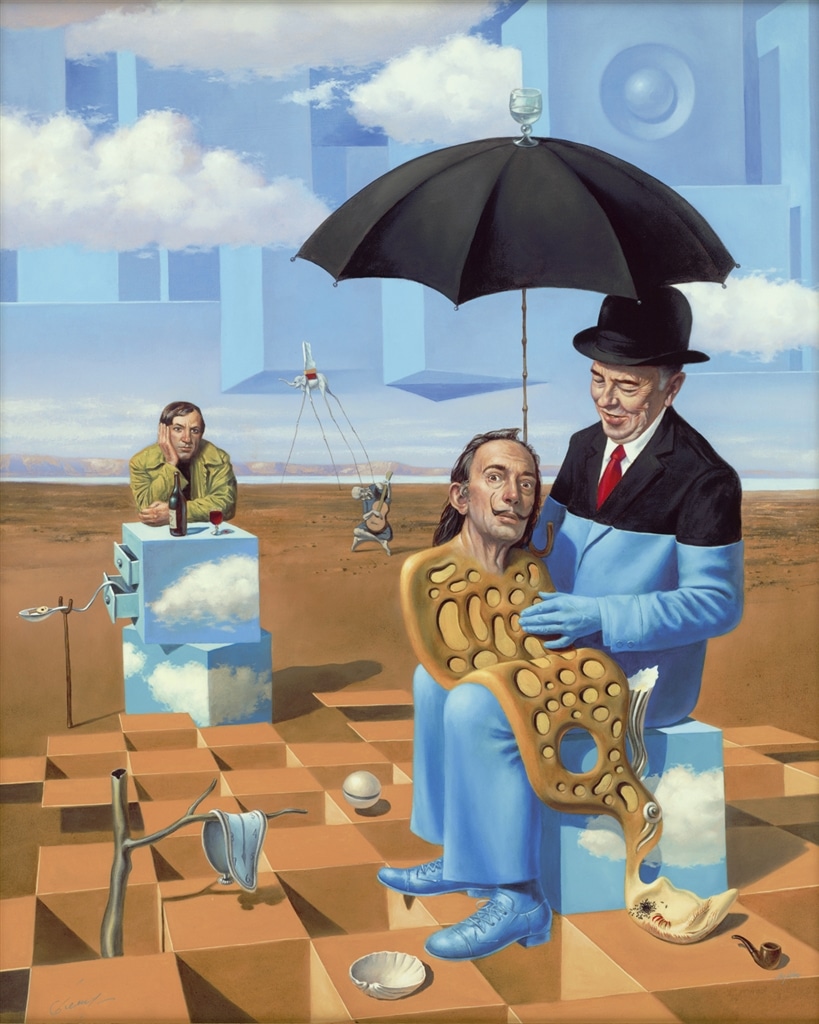
A surrealist brand’s visual identity often mirrors the dreamlike quality of its artistic forebears. This could manifest in logos that subtly defy logic, packaging that features impossible landscapes or unsettling combinations, or advertising imagery that is both beautiful and strangely unsettling. The goal isn’t necessarily to be overtly shocking, but to create visuals that challenge perception, invite closer inspection, and linger in the mind. Color palettes might be vibrant and clashing, or muted and ethereal, but always with a purpose – to evoke a specific emotional or psychological state. Typography might play with scale or orientation, adding to the sense of disorientation and discovery. The disruption isn’t for its own sake, but to carve out a unique visual territory that makes the brand unforgettable and distinct from competitors adhering to more conventional design norms. It’s about building a visual language that communicates the brand’s unique philosophy without needing extensive verbal explanation.
Narrative and Storytelling: Unconventional Connections
Beyond visuals, a surrealist approach deeply influences a brand’s storytelling. Instead of linear narratives describing product features, a surrealist brand might weave tales that are more metaphorical, symbolic, or even enigmatic. It might present a product’s journey through a dream sequence, or illustrate its impact using impossible scenarios. The brand story might not offer explicit answers but rather invite interpretation, fostering a deeper, more active engagement from the audience. This type of storytelling leverages archetypal imagery, symbols, and emotions to build a rich internal world around the brand, making it feel more alive and multi-dimensional. It’s about creating a universe for the brand, where every communication piece contributes to a larger, fascinating mystery that consumers are invited to explore.
Marketing and Advertising: Breaking Through the Clutter
In an age of information overload, cutting through the noise is paramount. Surrealist marketing and advertising offer a powerful antidote to conventional, often predictable, campaigns, enabling brands to capture attention and forge lasting impressions.
Memorable Campaigns Through the Unexpected
Surrealist advertising is inherently memorable precisely because it is unexpected. When consumers are bombarded with similar messages and aesthetics, a campaign that challenges their perception, presents an illogical scenario, or fuses disparate elements stands out dramatically. Think of advertisements that pose visual riddles, or promotions that create a sense of wonder and mystery rather than directly selling. These campaigns encourage dialogue, foster sharing, and become cultural talking points. The “strangeness” isn’t a flaw; it’s a deliberate strategy to embed the brand deep within the consumer’s memory, bypassing the mundane and tapping into the remarkable. This approach assumes that being overlooked is a greater risk than being misunderstood, and that genuine intrigue leads to deeper engagement.
Evoking Emotion and Engagement
The power of surrealism in marketing lies in its ability to evoke strong emotions. By presenting scenarios that defy logic, or imagery that taps into universal dreams and anxieties, brands can create visceral responses. This could be humor derived from absurdity, wonder inspired by impossible beauty, or a touch of unease that stimulates curiosity. Unlike purely rational appeals, these emotional connections are far more robust and enduring. When a brand’s advertising makes you feel something profound or perplexing, you remember it. This emotional resonance encourages engagement, prompts discussions, and fosters a community around the brand that values creativity, introspection, and a different way of seeing the world. It transforms passive consumption into active participation, building loyalty beyond product features.
Personal Branding for the Visionary and the Maverick
A surrealist approach isn’t confined to corporate entities; it’s also a powerful tool for personal branding, especially for individuals who wish to position themselves as creative, innovative, or thought-provoking. For artists, designers, consultants, or entrepreneurs aiming to stand out, embracing surrealist principles in their personal brand can be transformative.

Differentiating Through Authenticity and Boldness
For an individual, adopting a surrealist approach to personal branding means presenting oneself not just with skills and achievements, but with a unique perspective and an unconventional approach to their field. This could involve an online portfolio that presents projects in a non-linear, dreamlike fashion, or a professional narrative that embraces metaphors and unexpected connections rather than dry facts. It’s about showcasing one’s inner world, creativity, and the ability to think outside established frameworks. This level of authenticity and boldness naturally differentiates an individual, attracting clients, collaborators, or employers who value original thought and a distinctive vision. It declares, “I see the world differently, and I bring that unique lens to my work.” This can be particularly impactful in creative industries, but also in any field where innovative problem-solving and fresh perspectives are highly valued.
In essence, understanding “what is a surrealist” for brand purposes means recognizing that the movement offers more than just an aesthetic. It provides a philosophical toolkit for brands and individuals to defy convention, challenge perception, tap into the subconscious, and ultimately, build identities that are not just seen, but deeply felt and remembered. It’s about creating a brand experience that is as rich, complex, and intriguing as a dream.
aViewFromTheCave is a participant in the Amazon Services LLC Associates Program, an affiliate advertising program designed to provide a means for sites to earn advertising fees by advertising and linking to Amazon.com. Amazon, the Amazon logo, AmazonSupply, and the AmazonSupply logo are trademarks of Amazon.com, Inc. or its affiliates. As an Amazon Associate we earn affiliate commissions from qualifying purchases.