
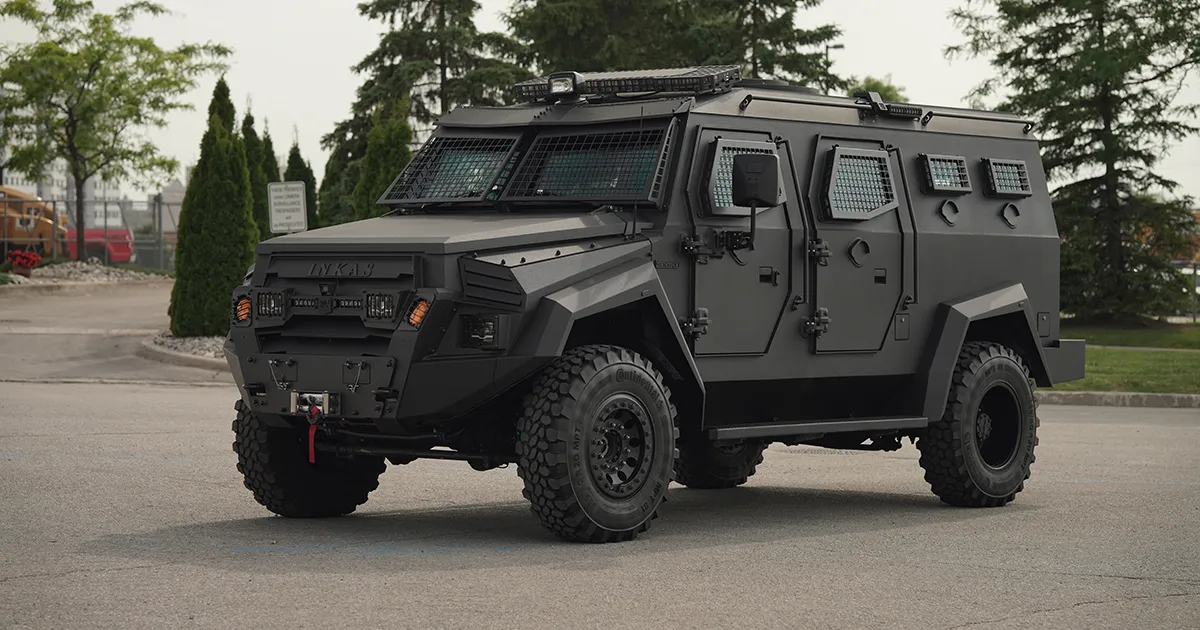
An Armored Personnel Carrier (APC) stands as a foundational piece of military technology, engineered specifically to transport infantry soldiers safely within a combat zone. Distinct from tanks or infantry fighting vehicles (IFVs), an APC’s primary role is mobility and protection for its occupants, prioritizing the safe delivery of troops over direct engagement in heavy combat. Its design is a complex interplay of engineering, material science, and strategic utility, evolving constantly to meet the demands of modern warfare.
The Core Purpose and Evolution of APCs
The concept of protecting soldiers during movement on the battlefield is ancient, but the modern APC emerged from the technological advancements of the 20th century. Its essence lies in mitigating the vulnerability of dismounted infantry to small arms fire, artillery, and improvised explosive devices (IEDs) while rapidly deploying them to critical areas.

Origins and Early Development
The genesis of armored personnel carriers can be traced back to World War I, when rudimentary armored cars and half-tracks were adapted to carry troops, albeit with limited success due to poor cross-country mobility and insufficient protection. It was during World War II that the need for a dedicated, mass-produced armored transport became undeniable. The German Sd.Kfz. 251 half-track and the American M3 Half-track were pioneering examples, offering vital protection against small arms and shrapnel, and demonstrating the tactical advantage of armored mobility for infantry.
Post-WWII, the Cold War era spurred significant innovation. The focus shifted from mere transport to providing a fully enclosed, amphibious, and NBC (nuclear, biological, chemical) protected environment for troops, reflecting the changing nature of potential conflicts. Vehicles like the American M113 and the Soviet BTR series became ubiquitous, defining the APC role for decades.
Distinguishing APCs from Other Armored Vehicles
While often grouped under the broader umbrella of “armored vehicles,” APCs possess defining characteristics that set them apart from tanks and Infantry Fighting Vehicles (IFVs). A tank is designed for direct fire combat, featuring heavy armor and a large-caliber main gun. An IFV, like the M2 Bradley or BMP series, also transports infantry but is equipped with heavier armament (typically a cannon of 20mm or more) and designed to actively engage enemy armored vehicles and fortified positions alongside the dismounted infantry.
In contrast, an APC typically has lighter armor, sufficient to protect against small arms fire, artillery fragments, and often mine blasts, but not designed to withstand direct hits from anti-tank weapons or heavy cannons. Its armament is usually limited to a machine gun (e.g., .50 caliber or 7.62mm) for self-defense and suppressing infantry threats, emphasizing its transport role rather than a combat role. This distinction in protection and armament directly influences their operational doctrine and cost-effectiveness.
Key Technological Features and Design Principles
The design of an APC is a delicate balance of protection, mobility, and capacity, all informed by the latest advancements in materials science, engine technology, and systems integration.
Armor Systems and Survivability
The primary function of an APC is protection, which is achieved through its armor. Early APCs utilized rolled homogeneous armor (RHA) steel. Modern APCs often incorporate modular armor systems, including composite armor (layers of different materials like ceramics, steel, and composites), appliqué armor (additional armor panels attached to the base hull), and reactive armor. These advancements allow for tailored protection against specific threats, from kinetic energy penetrators to shaped charges, and can be upgraded or replaced as threats evolve.
Beyond passive armor, modern APCs integrate various survivability technologies:
- Spall Liners: Interior linings that catch fragments of armor spalling after an impact, protecting occupants.
- Mine and IED Protection: V-shaped hulls or double-V hulls deflect blast energy outwards, significantly improving resistance to underbelly explosions. Blast-absorbing seats are also common.
- NBC Protection: Sealed compartments, air filtration systems, and overpressure systems protect occupants from chemical, biological, and radiological agents.
- Active Protection Systems (APS): Emerging technology that detects incoming projectiles (like anti-tank guided missiles) and intercepts or disrupts them before impact, dramatically increasing survivability.
Propulsion and Mobility
APCs must be capable of traversing diverse terrains rapidly. This demands robust propulsion systems and sophisticated suspension. Most APCs are powered by powerful diesel engines, offering a balance of torque, fuel efficiency, and reliability.
Mobility is achieved through two primary configurations:
- Tracked Vehicles: Employ continuous tracks (like a tank) for superior off-road performance, distributing weight over a larger area for better traction on soft ground, mud, and snow. Examples include the M113 and the FV432.
- Wheeled Vehicles: Utilize multiple wheels (e.g., 6×6, 8×8) for higher road speeds, reduced maintenance, and quieter operation. They are favored for operations requiring rapid deployment over paved roads and less demanding terrain. Examples include the Stryker and the BTR-80.
Advanced suspension systems, such as hydropneumatic or torsion bar suspensions, ensure a relatively smooth ride for the occupants over rough terrain, reducing fatigue and allowing for more accurate weapon employment on the move.
Weaponry and Defensive Systems
While not designed for direct combat, APCs carry self-defense armament. This typically includes:
- Heavy Machine Guns: Such as the .50 caliber M2 Browning or 12.7mm machine guns, mounted in an open cupola or a remote weapon station (RWS). RWS systems allow the gunner to operate the weapon from inside the vehicle, enhancing protection.
- General Purpose Machine Guns: (e.g., 7.62mm) for close-in defense.
- Automatic Grenade Launchers: (e.g., 40mm) for suppressing infantry and light vehicles at greater ranges.
- Smoke Grenade Dischargers: Used to create obscurants for tactical maneuvers, breaking contact, or signaling.
Some modern APCs are increasingly fitted with more potent weapon systems, blurring the lines with IFVs, particularly with the integration of 25mm or 30mm auto-cannons in remotely operated turrets, allowing them to engage light armored targets.
Interior Design and Crew Comfort
The interior of an APC is meticulously designed to maximize troop capacity, facilitate rapid dismount and embark, and provide a habitable environment. Ergonomics play a crucial role, ensuring soldiers can operate effectively despite the confined space. Modern designs include climate control systems, individual seating with blast-absorbing features, and robust communications equipment to link with external units and maintain situational awareness. Ramps or large doors at the rear are common to allow for quick and safe disembarkation, even under fire.
Modern APC Variants and Specialized Roles
The core APC design has proven highly adaptable, leading to numerous specialized variants that leverage the protected mobility platform for a variety of support roles on the battlefield.
Wheeled vs. Tracked Designs
The choice between wheeled and tracked APCs depends heavily on anticipated operational environments. Wheeled APCs (e.g., Piranha, Patria AMV) excel in urban environments, on paved roads, and in situations requiring strategic mobility over long distances. Their lower maintenance requirements and higher speeds on roads make them cost-effective for certain missions. Tracked APCs (e.g., M113, ASLAV) offer superior cross-country mobility, particularly in soft, muddy, or extremely rugged terrain, and generally provide better protection due to their heavier construction, though at the cost of speed and higher maintenance. Many forces operate a mix of both types to maximize flexibility.
Amphibious Capabilities
A significant number of APCs are designed to be amphibious, capable of propelling themselves across water bodies using either their wheels/tracks or dedicated propellers. This capability eliminates the need for bridging equipment in certain scenarios, allowing for greater tactical flexibility and rapid force projection across rivers or small lakes. The BTR series is a classic example of an amphibious wheeled APC.
Medical and Command Variants
The protected shell of an APC makes it an ideal platform for a multitude of support roles.
- Armored Ambulances (Medevac): These variants are equipped to carry wounded soldiers, providing life support during transit to a field hospital, crucial for reducing casualties in combat zones.
- Command Post Vehicles: Fitted with advanced communication systems, computers, and mapping equipment, these vehicles serve as mobile command centers for field commanders, allowing them to direct operations safely from the front lines.
- Engineer Vehicles: Carrying specialized equipment for mine clearing, obstacle breaching, or construction tasks.
- Mortar Carriers: Equipped with internal mortar systems, providing indirect fire support to dismounted infantry.
The Future of Personnel Transport Technology
The trajectory of APC development points towards even greater sophistication, driven by emerging threats and advancements in artificial intelligence, robotics, and materials science.
Integration of AI and Autonomous Systems
The future battlefield will likely see APCs operating with a higher degree of autonomy. AI will enhance situational awareness through advanced sensor fusion, allowing vehicles to automatically detect threats, identify friend or foe, and even suggest tactical maneuvers. Autonomous driving capabilities could reduce crew fatigue, allow for remote operation in hazardous zones, and enable logistics convoys with fewer personnel. The development of robotic combat vehicles (RCVs) and unmanned ground vehicles (UGVs) suggests a future where APCs might deploy or be supported by semi-autonomous drone swarms for reconnaissance and close-in protection.
Advanced Materials and Active Protection
Research into new lightweight, high-strength materials like advanced ceramics, nanostructured alloys, and composites promises to further enhance protection without a corresponding increase in weight, improving mobility and fuel efficiency. Electrically activated armors, which can change their properties upon impact, are also under development. Active Protection Systems (APS) will become standard, capable of detecting and neutralizing incoming threats with high precision, providing an unprecedented level of defense against anti-tank missiles and rocket-propelled grenades. These systems are evolving to address top-attack munitions and even drone threats.

Modularity and Adaptability
Future APC designs will emphasize modularity, allowing for rapid reconfiguration to suit different mission profiles. This means easily swappable weapon stations, armor packages, and internal modules (e.g., troop carrier to ambulance to command post). This adaptability will provide military forces with greater flexibility and reduce the logistical burden of maintaining diverse fleets of specialized vehicles, making APC platforms truly multi-role. The ability to quickly integrate new technologies and countermeasures will be paramount in maintaining a technological edge against evolving adversaries.
aViewFromTheCave is a participant in the Amazon Services LLC Associates Program, an affiliate advertising program designed to provide a means for sites to earn advertising fees by advertising and linking to Amazon.com. Amazon, the Amazon logo, AmazonSupply, and the AmazonSupply logo are trademarks of Amazon.com, Inc. or its affiliates. As an Amazon Associate we earn affiliate commissions from qualifying purchases.