
In the rapidly expanding landscape of the global pet care industry—a sector currently valued at over $120 billion in the United States alone—the role of the veterinary assistant has transitioned from a simple support position to a vital economic driver. While the surface-level definition of a veterinary assistant involves helping veterinarians with daily tasks, a deeper financial and professional analysis reveals a role that is foundational to the “Business of Care.”
To understand what a veterinary assistant is in a modern context, one must look past the clinical duties and examine the role through the lens of personal finance, business efficiency, and market demand. This article explores the veterinary assistant profession as a strategic entry point into the lucrative animal health economy, evaluating its ROI, its impact on clinic revenue, and its long-term financial trajectory.
Understanding the Veterinary Assistant as a Strategic Human Capital Asset
From a business finance perspective, human capital is the most significant asset of any service-oriented enterprise. In a veterinary practice, the veterinary assistant functions as the primary “labor lubricant” that allows high-cost medical professionals—veterinarians and credentialed technicians—to maximize their billable hours.
Defining the Role within the Clinical Workflow
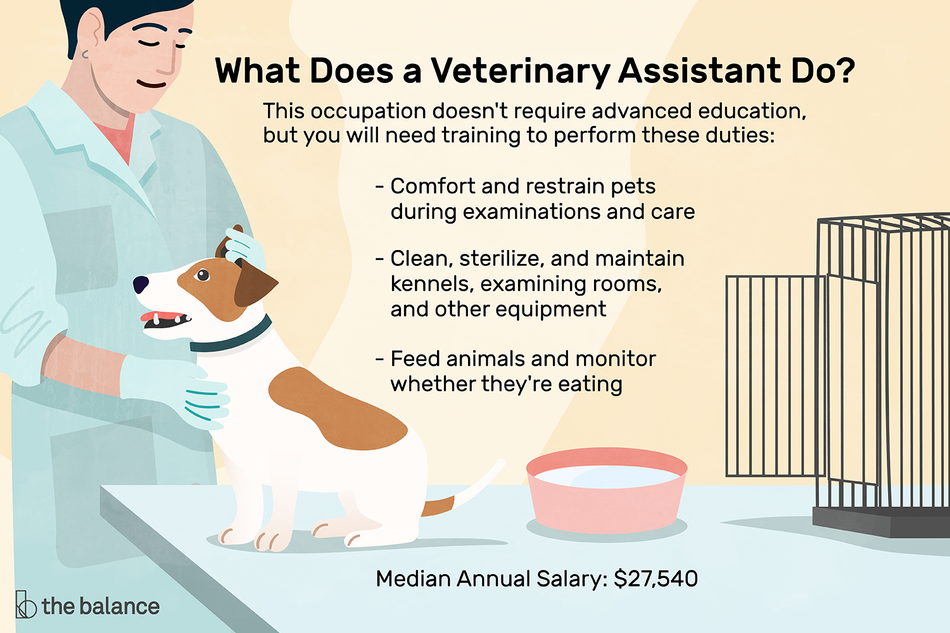
A veterinary assistant is a non-credentialed professional responsible for the operational fluidity of a clinic. Unlike a veterinarian who focuses on diagnosis and surgery, or a veterinary technician who performs complex medical procedures, the assistant handles the essential “mid-tier” tasks. These include patient restraint, laboratory sample preparation, surgical room sterilization, and front-of-house client communication.
In terms of business finance, the assistant allows the clinic to achieve higher throughput. By delegating tasks like kennel maintenance or medical record entry to an assistant, the clinic ensures that the veterinarian’s time—which is the clinic’s most expensive resource—is spent exclusively on revenue-generating activities like examinations and specialized procedures.
The Distinction Between Assistants and Technicians: A Cost-Benefit Analysis
For those entering the field, it is crucial to understand the financial distinction between a veterinary assistant and a veterinary technician. While technicians often require a two- to four-year degree and state licensure, veterinary assistants can frequently enter the field with a high school diploma or a short-term vocational certificate.
This creates a high ROI (Return on Investment) for the individual. By avoiding the heavy student debt associated with a four-year medical degree, an assistant can begin earning a paycheck immediately. For the clinic owner, hiring assistants is a strategic way to manage overhead. It allows the practice to scale its operations without the prohibitive payroll costs of an all-technician staff, thereby protecting the clinic’s profit margins.
The Financial Roadmap: Salary, Benefits, and Income Growth
When evaluating any career through a “Money” lens, the primary concern is the compensation package and the potential for upward mobility. The veterinary assistant role offers a unique financial profile that favors those who view it as a stepping stone rather than a static destination.
Entry-Level Compensation and Geographic Variables
The starting salary for a veterinary assistant typically falls within the entry-level bracket of the healthcare support sector. However, these figures are highly sensitive to geography and the specific “niche” of the clinic. For example, assistants working in high-cost-of-living urban hubs or specialized emergency and trauma centers command significantly higher hourly wages than those in rural general practices.
From a personal finance standpoint, a veterinary assistant role is often more financially stable than traditional “side hustles” or gig-economy work. It offers consistent hours, access to employer-sponsored health insurance, and, in many corporate-owned practices, 401(k) matching programs. These “hidden” financial benefits significantly increase the total compensation package beyond the base hourly rate.
Maximizing Income through Specialization and Certifications
To move from a baseline wage to a premium salary, veterinary assistants must treat their skills as a diversified portfolio. Obtaining a “Certified Veterinary Assistant” (CVA) designation is a low-cost investment that yields immediate dividends in bargaining power.
Furthermore, assistants who specialize in business-adjacent roles—such as inventory management or practice management software—become indispensable to the clinic’s financial health. An assistant who can manage the clinic’s pharmaceutical inventory effectively can save the business thousands of dollars in wasted overhead, making them a prime candidate for performance-based bonuses and higher salary caps.
Maximizing ROI: Navigating Education and Training Costs

In the world of personal finance, the cost of education is often the biggest hurdle to career entry. One of the most attractive aspects of becoming a veterinary assistant is the flexibility in how one acquires the necessary skills.
Comparing Traditional Schooling vs. On-the-Job Training
Prospective assistants face a choice: pay for a vocational program or seek “on-the-job” (OTJ) training. From a pure “Money” perspective, OTJ training represents the highest possible ROI because the individual is being paid to learn. Many private practices are willing to hire individuals with a strong work ethic and provide the necessary training in patient handling and laboratory work.
However, for those looking to fast-track their way into high-paying corporate veterinary groups, a formal certificate program (often costing between $1,000 and $5,000) can be a wise investment. These programs often include job placement services, which can reduce the “opportunity cost” of a long job search and place the candidate in a higher starting pay bracket.
Utilizing Employer-Sponsored Professional Development
A savvy veterinary assistant views their employer not just as a source of income, but as a venture capital partner. Many large veterinary consolidators and corporate hospital chains offer tuition reimbursement for assistants who wish to transition into becoming licensed technicians.
This is a classic “win-win” in business finance: the employee receives a debt-free education that increases their lifetime earning potential, while the clinic secures a more highly-skilled worker who is already integrated into their corporate culture. By leveraging these programs, an assistant can pivot from a $35,000-a-year role to a $55,000-a-year role without touching their personal savings.
The Business of Veterinary Medicine: How Assistants Drive Clinic Revenue
A veterinary assistant’s value is most visible when looking at the “bottom line” of a practice. In a competitive market, the efficiency of a clinic’s operations dictates its financial viability.
Reducing Revenue Leakage and Improving Client Retention
Veterinary assistants are often the primary point of contact for clients. In terms of brand and business finance, a “leaky bucket” occurs when clients do not return for follow-up care or fail to adhere to preventative medicine schedules. Assistants prevent this by managing reminder systems and educating clients on the financial benefits of preventative care (e.g., how a $50 heartworm preventative saves a $1,500 treatment later).
By facilitating these sales and ensuring high client compliance, the veterinary assistant directly contributes to the clinic’s recurring revenue streams. Their ability to handle administrative and preliminary medical tasks also reduces the wait time for clients, increasing the “client lifetime value” (CLV) by fostering loyalty through a seamless service experience.
Lab Work and Diagnostic Throughput
One of the most profitable sectors of veterinary medicine is in-house diagnostics. When a veterinary assistant is proficient in processing blood work, urinalysis, and digital radiography, they decrease the “turnaround time” for results.
In a high-volume business model, speed equals money. Faster diagnostics mean faster treatment plans, which allows for more appointments to be booked in a single day. The assistant’s role in managing these technical assets ensures that the clinic’s expensive diagnostic machinery (often purchased on high-interest business loans) is utilized to its maximum earning potential.
The Macroeconomic Perspective: Why the Pet Industry is a Recession-Resistant Bet
Finally, when considering a career as a veterinary assistant, one must look at the broader economic climate. In an era of AI disruption and shifting labor markets, job security is a form of financial currency.
The “Humanization of Pets” Trend and its Impact on Job Security
Economists have noted that pet spending remains remarkably resilient even during market downturns. This is largely due to the “humanization of pets,” where consumers view their animals as family members rather than property. This psychological shift ensures a steady demand for veterinary services regardless of the GDP.
For the veterinary assistant, this translates to unparalleled job security. While tech and finance sectors may face layoffs during a recession, the demand for essential animal care workers remains constant. In the context of a “Money” strategy, entering a recession-proof industry provides a safety net that is often undervalued in traditional career planning.
Scalability and the Path to Entrepreneurship
For the entrepreneurial-minded, the role of veterinary assistant provides the perfect “market research” phase. Understanding the inner workings of a clinic is the first step toward launching a specialized side hustle or a business.
Assistants often leverage their clinical knowledge to start high-end pet sitting services, mobile grooming businesses, or specialized pet rehabilitation consultancies. Because they possess medical knowledge that the average pet owner lacks, they can charge a premium for their services. This path allows an individual to move from an hourly wage-earner to a business owner, utilizing the skills gained in the clinic to capture a larger share of the $120 billion pet economy.

Conclusion
“What is a veterinary assistant?” It is more than a job title; it is a strategic position within a booming financial sector. By balancing low entry costs with high job security and multiple avenues for income growth, the role offers a compelling financial proposition. Whether used as a long-term career in clinical operations or a launchpad for further medical or entrepreneurial pursuits, the veterinary assistant is an essential—and profitable—cog in the modern economic machine.
aViewFromTheCave is a participant in the Amazon Services LLC Associates Program, an affiliate advertising program designed to provide a means for sites to earn advertising fees by advertising and linking to Amazon.com. Amazon, the Amazon logo, AmazonSupply, and the AmazonSupply logo are trademarks of Amazon.com, Inc. or its affiliates. As an Amazon Associate we earn affiliate commissions from qualifying purchases.