
In the lexicon of driving maneuvers, the “two-point turn” holds a distinguished place. It is a fundamental technique, taught globally, designed to reverse a vehicle’s direction in a confined space where a simple U-turn is impractical or impossible. Traditionally, mastering this maneuver has been a testament to a driver’s spatial awareness, judgment, and vehicle control. However, in an era increasingly defined by rapid technological advancement, the essence and execution of the two-point turn are being profoundly reshaped. From advanced driver-assistance systems (ADAS) to autonomous vehicle development and immersive training simulations, technology is not just assisting, but fundamentally redefining what it means to perform this seemingly simple, yet critical, maneuver. This article delves into the technological dimensions of the two-point turn, exploring how innovations are enhancing safety, efficiency, and accessibility in vehicle navigation.

Understanding the Two-Point Turn: A Core Maneuver in the Digital Age
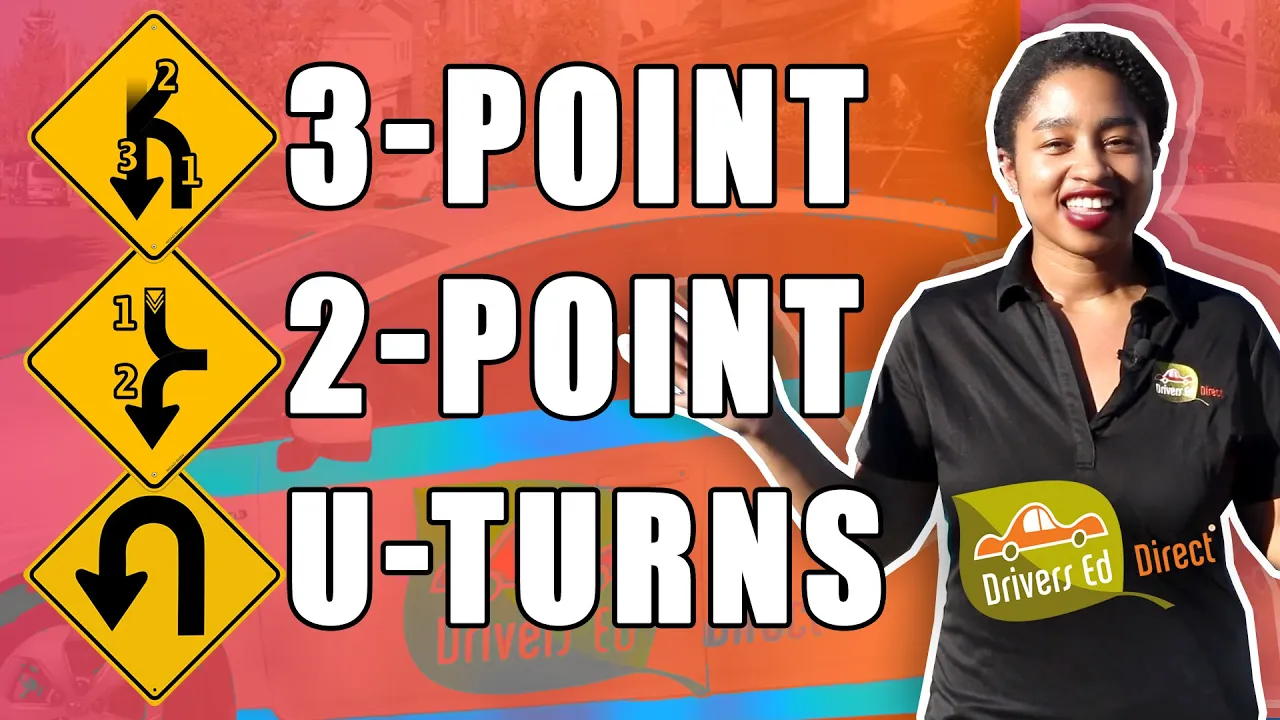
At its core, a two-point turn involves using a driveway, alley, or side road to reverse the direction of travel. It’s a multi-step process, typically executed in two distinct phases: backing into an opening (like a driveway) and then driving forward out of it, or vice-versa, depending on the available space and desired direction. While seemingly rudimentary, perfect execution demands acute spatial reasoning and precise vehicle handling—skills that are now increasingly augmented and, in some cases, supplanted by intelligent systems.
The Fundamentals of Vehicle Maneuvering
The physics and geometry behind a two-point turn are constant, regardless of the technological era. It requires understanding the turning radius of the vehicle, the swing of the front and rear ends, and the precise timing of steering inputs. A driver must constantly assess their surroundings, including traffic, pedestrians, and fixed obstacles, to ensure safety. Errors can lead to collisions, property damage, or delays, highlighting the importance of precision. Historically, this meant hours of practice, developing an intuitive feel for the vehicle’s dimensions and dynamics. However, the rise of digital tools and vehicle-integrated technologies is transforming this learning curve, offering new avenues for mastery and performance optimization.
Why the Two-Point Turn Remains Relevant
Despite the proliferation of larger parking lots and the occasional opportunity for a U-turn, the two-point turn remains an indispensable skill. Urban environments, with their narrow streets, cul-de-sacs, and limited turning spaces, frequently necessitate this maneuver. For professional drivers—from delivery services to ride-sharing platforms—the ability to efficiently and safely reverse direction can significantly impact productivity and route optimization. Furthermore, for autonomous vehicles, executing a two-point turn is a critical benchmark for their navigational intelligence and ability to handle complex, real-world scenarios. It represents a micro-challenge within the broader context of urban navigation, proving a vehicle’s capacity for intricate spatial problem-solving without human intervention.
Technological Innovations: Revolutionizing the Two-Point Turn
The advent of sophisticated vehicular technologies has dramatically altered how a two-point turn is perceived and executed. From driver-assistance systems to fully autonomous parking capabilities, technology is making this maneuver safer, easier, and more accessible.
Advanced Driver-Assistance Systems (ADAS) and Parking Aids
Modern vehicles are equipped with a suite of ADAS features designed to assist drivers with complex maneuvers. Parking sensors (ultrasonic, radar, and lidar) provide real-time proximity alerts, warning drivers of obstacles that might be out of their direct line of sight. Rearview cameras, often supplemented by 360-degree bird’s-eye view systems, offer comprehensive visual feedback, eliminating blind spots and providing a holistic understanding of the vehicle’s immediate surroundings. These systems transform the driver’s perception, making it easier to judge distances and angles crucial for a precise two-point turn, significantly reducing the stress and risk associated with the maneuver, especially in tight spots or low-visibility conditions.
The Role of Sensors, Cameras, and AI
The integration of various sensors and cameras forms the bedrock of technological assistance for maneuvers like the two-point turn. Ultrasonic sensors detect short-range obstacles, while radar sensors offer broader detection capabilities. Lidar, with its highly accurate 3D mapping, provides an intricate understanding of the vehicle’s environment. The data streamed from these devices is processed by on-board artificial intelligence (AI) systems. AI algorithms analyze this data to predict trajectories, identify potential hazards, and calculate optimal steering and throttle inputs. For instance, predictive path lines on a rearview camera display are a direct result of AI processing, showing the vehicle’s projected path based on current steering wheel position, thereby guiding the driver through the turn. This predictive capability moves beyond mere warning, offering active guidance that significantly simplifies the execution of a two-point turn.
Autonomous Parking: The Ultimate Two-Point Turn
The pinnacle of technological intervention in vehicle maneuvering is autonomous parking. Systems like self-parking assist or fully automated parking can take over steering, acceleration, and braking to guide the vehicle into a parking spot, which often involves a multi-point turn similar in principle to a two-point turn. These systems leverage a sophisticated interplay of sensors, AI, and precise actuators to map the environment, calculate the optimal trajectory, and execute the maneuver flawlessly. For a two-point turn, an autonomous system would identify an available opening (e.g., a driveway), precisely reverse into it, and then drive forward, adjusting for any dynamic elements like moving pedestrians or other vehicles. This capability not only reduces driver effort but also demonstrates the profound potential of AI and robotics in enhancing fundamental driving tasks, pushing towards a future where such maneuvers are executed with unparalleled consistency and safety.

Simulating and Learning: Tech-Driven Training for Precision Maneuvers
Beyond direct vehicle assistance, technology has also revolutionized the way drivers learn and master complex maneuvers like the two-point turn. Digital platforms, simulations, and interactive tools offer safe, repeatable, and data-rich environments for training.
Virtual Reality and Driving Simulators
Modern driving simulators, ranging from professional-grade systems used in driver training academies to consumer-grade VR setups, provide highly realistic environments for practicing a two-point turn. These simulators can accurately replicate various scenarios: different vehicle types, varying weather conditions, and diverse urban layouts. Users receive immediate feedback on their steering inputs, speed control, and spatial judgment without the risks associated with real-world practice. Virtual reality (VR) takes this a step further, immersing the learner in a lifelike cockpit experience, enhancing spatial awareness and muscle memory development. For aspiring drivers or those looking to refine their skills, these simulations offer an invaluable, cost-effective, and safe alternative to traditional road practice.
Mobile Apps and Gamified Learning
The ubiquity of smartphones has given rise to a plethora of mobile applications designed to aid driver education. Many apps offer interactive tutorials, animated guides, and even augmented reality (AR) features that overlay instructional graphics onto real-world camera feeds to demonstrate maneuvers. Gamification, incorporating points, badges, and leaderboards, makes the learning process more engaging and less daunting. While these apps cannot fully replace practical experience, they serve as excellent supplementary tools, helping learners visualize the steps of a two-point turn, understand critical checkpoints, and mentally rehearse the process before getting behind the wheel. They democratize access to learning resources, making advanced driving knowledge more accessible.
Data-Driven Feedback for Improvement
One of the most significant advantages of tech-driven learning is the ability to provide precise, data-driven feedback. Unlike a human instructor whose feedback might be subjective, a simulator or a smart vehicle with embedded telematics can record every input: steering angle, throttle position, brake pressure, speed, and vehicle trajectory. This data can then be analyzed to identify specific areas for improvement. For instance, a system can pinpoint exactly where a driver over-steered, braked too late, or misjudged a distance during a two-point turn. This objective, granular feedback allows learners to understand their mistakes with unparalleled clarity, enabling targeted practice and accelerating skill acquisition.
The Future of Precision Driving: Beyond the Traditional Two-Point Turn
The trajectory of technological innovation suggests an ongoing evolution in how we conceive of and execute driving maneuvers. The two-point turn, once a solitary act of skill, is becoming integrated into a broader ecosystem of connected and intelligent transportation.
Connected Vehicles and Infrastructure
The next frontier lies in the integration of Vehicle-to-Everything (V2X) communication. Connected vehicles can communicate with each other (V2V) and with roadside infrastructure (V2I), sharing real-time data on traffic flow, road conditions, and available parking spaces. Imagine a scenario where a vehicle approaching a tight spot for a two-point turn receives data from nearby infrastructure about optimal turning points or from other vehicles about immediate hazards. This collective intelligence will further enhance the safety and efficiency of maneuvers, allowing vehicles to perform two-point turns with a level of situational awareness previously impossible, anticipating and mitigating risks before they become issues.
Ethical Considerations and User Trust
As technology takes on a more prominent role in driving, ethical considerations and user trust become paramount. For autonomous parking or assisted two-point turns, questions arise about liability in case of errors. Ensuring the transparency of AI decision-making processes and building robust security protocols against cyber threats are crucial for gaining public acceptance. Furthermore, the balance between convenience and maintaining core driving skills needs to be continuously evaluated. While technology can undoubtedly make driving easier, there’s an ongoing debate about the extent to which drivers should remain proficient in manual execution of maneuvers, especially as reliance on automated systems grows.
The Evolution of Vehicle Design for Maneuverability
Technological advancements are not just confined to software and sensors; they are also influencing vehicle design itself. Concepts like ‘crab walking’ in some electric vehicles, where all four wheels can steer independently, allow for unprecedented maneuverability, effectively eliminating the need for a traditional two-point turn in many scenarios. Vehicles designed with smaller footprints for urban environments, or with advanced steering geometries, will inherently simplify turning maneuvers. As electric powertrains allow for more flexible chassis designs, we can expect future vehicles to be inherently more agile and capable of navigating tight spaces with greater ease, fundamentally altering the perceived difficulty and necessity of maneuvers like the two-point turn.
In conclusion, the humble two-point turn, a cornerstone of driving instruction, is experiencing a profound transformation through technology. From sensors providing crucial spatial awareness to AI-driven autonomous systems executing flawless maneuvers, and immersive simulations revolutionizing learning, technology is making this skill more accessible, safer, and more efficient than ever before. As we look to the future, the two-point turn will continue to evolve, integrated into a complex tapestry of connected, intelligent, and ultimately, smarter transportation systems.
aViewFromTheCave is a participant in the Amazon Services LLC Associates Program, an affiliate advertising program designed to provide a means for sites to earn advertising fees by advertising and linking to Amazon.com. Amazon, the Amazon logo, AmazonSupply, and the AmazonSupply logo are trademarks of Amazon.com, Inc. or its affiliates. As an Amazon Associate we earn affiliate commissions from qualifying purchases.