
In the realm of automotive safety, the seatbelt is an undisputed hero. It’s the frontline defense against the forces unleashed during a collision, absorbing impact and restraining occupants. But modern seatbelts are far more sophisticated than a simple strap. Behind the scenes, a crucial, often unseen, component works in conjunction with the seatbelt to enhance occupant protection: the seatbelt pretensioner. This article will delve into the fascinating world of seatbelt pretensioners, exploring their function, technology, and their vital role in the evolution of vehicle safety, aligning with the “Tech” focus of this website.
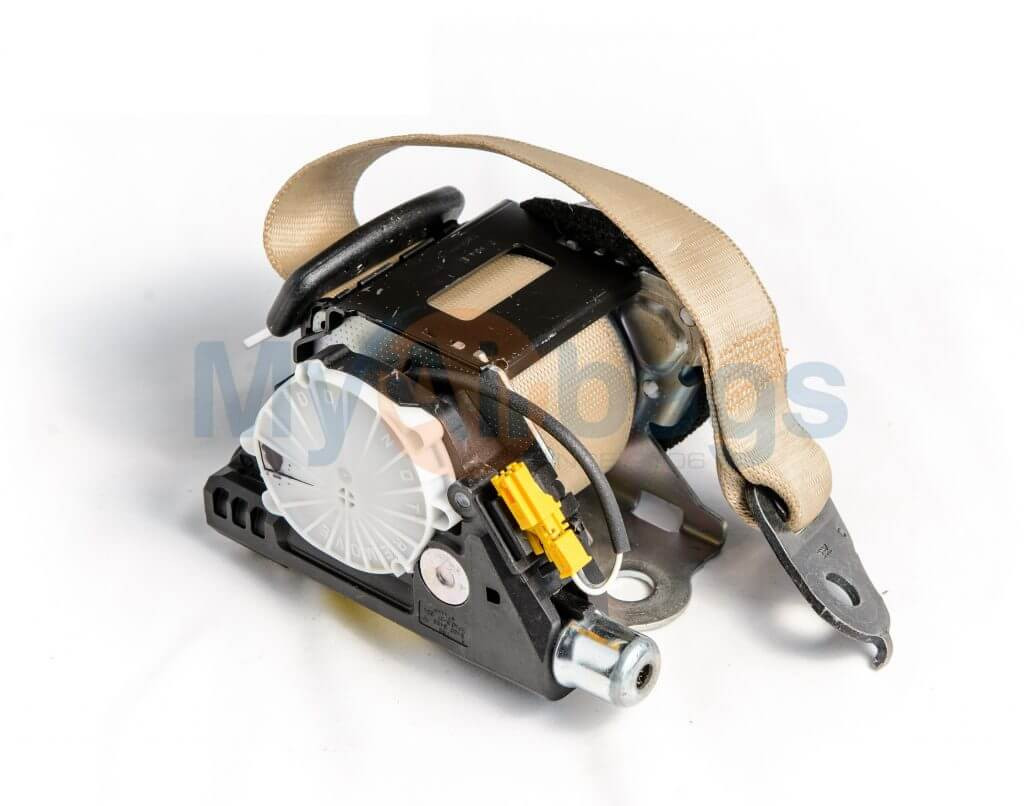
The Unseen Guardian: Understanding the Seatbelt Pretensioner’s Role
At its core, a seatbelt pretensioner is a device designed to dramatically reduce the slack in a seatbelt at the precise moment of a crash. Think of it as a quick-acting, micro-second tug that tightens the seatbelt webbing, pulling the occupant firmly back into their seat. This action is critical for two primary reasons:
Preventing Secondary Impacts
During a collision, the vehicle rapidly decelerates. Without a properly tensioned seatbelt, an occupant can continue to move forward due to inertia. This forward momentum can lead to several dangerous scenarios:
- Impact with the Steering Wheel/Dashboard: The occupant’s chest, head, or limbs can strike these hard surfaces with immense force, causing severe injuries.
- Submarining: This refers to the dangerous phenomenon where an occupant slides down and under the seatbelt. The lap portion of the belt can ride up, digging into the abdomen, leading to internal injuries. A pretensioner helps prevent this by keeping the lap belt low and snug.
- Ejection from the Vehicle: In severe crashes, especially rollovers, unrestrained or inadequately restrained occupants are at a significantly higher risk of being thrown from the vehicle, a situation with a very high fatality rate.
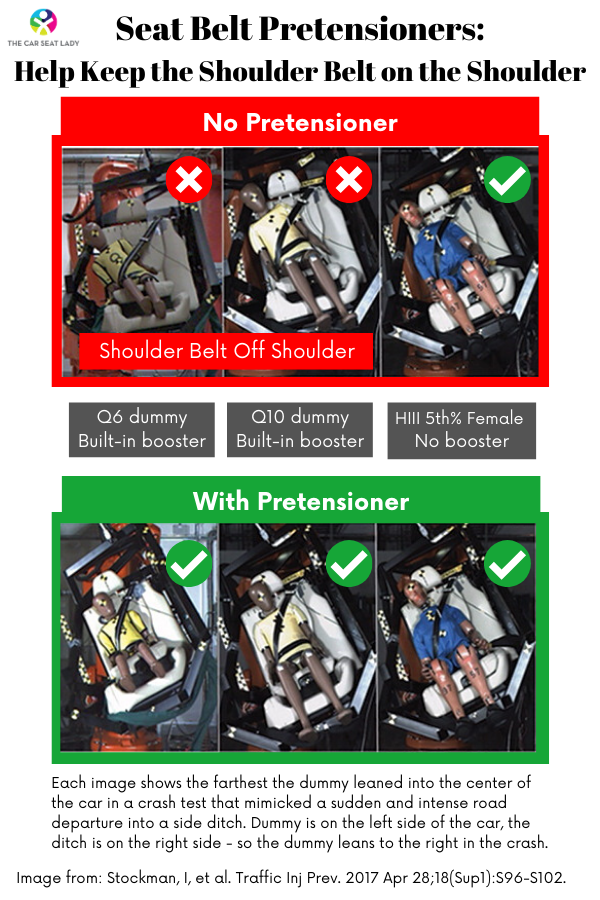
The pretensioner’s rapid tightening ensures the seatbelt is already snug against the occupant’s body before the full force of the impact is experienced. This minimizes the distance the occupant can travel forward, significantly reducing the risk and severity of secondary impacts.
Optimizing Restraint System Performance
The seatbelt, in conjunction with airbags, forms a sophisticated occupant restraint system. The effectiveness of airbags is heavily dependent on the occupant being in the correct position. If an occupant is too far forward or not properly seated due to slack in the seatbelt, the airbag might deploy in a way that is less effective or even harmful.
By quickly removing slack, the pretensioner ensures the occupant is positioned optimally for the airbag to deploy and do its job most effectively. This coordinated action between the seatbelt, pretensioner, and airbags is what makes modern vehicle safety systems so remarkably effective.
The Technology Behind the Tightening: How Pretensioners Work
The magic of a seatbelt pretensioner lies in its ability to react almost instantaneously. This is achieved through sophisticated pyrotechnic or mechanical systems that are triggered by the vehicle’s crash sensors.
Pyrotechnic Pretensioners: The Dominant Technology
The vast majority of seatbelt pretensioners in modern vehicles are pyrotechnic. This means they utilize a small, controlled explosion to generate the force needed to tighten the belt. Here’s a breakdown of how they typically function:
- Crash Detection: The vehicle is equipped with various sensors, including accelerometers and gyroscopes, strategically placed throughout the chassis. These sensors constantly monitor for sudden changes in velocity and rotational movement, which are indicative of a collision.
- Signal to the Control Unit: When these sensors detect a significant impact, they send a signal to the vehicle’s Electronic Control Unit (ECU), often referred to as the Airbag Control Module (ACM) or Occupant Restraint Controller (ORC).
- Triggering the Pyrotechnic Charge: The ECU, based on the severity and type of impact, determines if and when to activate the pretensioner. Upon activation, it sends an electrical current to the igniter within the pretensioner mechanism.
- Ignition and Gas Generation: The electrical current ignites a small charge of propellant within the pretensioner. This propellant burns rapidly, generating a controlled amount of hot gas.
- Driving the Piston: The expanding gas is directed to push a piston or plunger. This piston is connected to a mechanism that engages with the seatbelt retractor.
- Tightening the Belt: As the piston moves, it rapidly spins a gear or lever system that pulls on the seatbelt webbing, effectively tightening it against the occupant. This action happens in milliseconds, often before the occupant even fully realizes the extent of the impact.
The pyrotechnic system is favored for its speed, reliability, and compact size, making it easily integrated into the seatbelt assembly.

Mechanical and Other Pretensioner Technologies
While pyrotechnic pretensioners are the most common, other technologies have been developed and used, particularly in earlier automotive safety systems:
- Mechanical Pretensioners: These systems rely on stored mechanical energy, such as a spring mechanism or a pre-wound cable. Upon impact detection, the stored energy is released to rapidly retract the seatbelt. These systems are generally less powerful and slower to react than pyrotechnic pretensioners.
- Storable Energy Pretensioners (e.g., Gas Canisters): Some systems utilize a small, sealed canister of compressed gas. Upon activation, a valve is released, allowing the gas to expand and drive a mechanism to tighten the seatbelt. These offer a slightly different approach to generating the necessary force.
Modern vehicle safety often incorporates a dual-stage pretensioner system. This means the pretensioner can deploy with two different levels of force, depending on the severity of the crash. A milder impact might trigger a less aggressive tightening, while a severe impact will activate the full force. This adaptability further refines occupant protection.
Beyond the Basics: Advanced Features and Future Trends
The evolution of seatbelt pretensioner technology is ongoing, driven by the relentless pursuit of safer vehicles. Several advanced features and emerging trends are shaping the future of this critical safety component.
Dual-Stage Pretensioners: Adapting to the Impact
As mentioned earlier, dual-stage pretensioners offer a significant advantage by providing variable force application. In a moderate collision, a single-stage pretensioner might apply the full tightening force, which could be more than necessary and potentially lead to discomfort or even minor injuries for the occupant. Dual-stage pretensioners, however, can be programmed to apply a gentler tightening for less severe impacts and a more robust tightening for severe collisions.
This adaptability is made possible by more sophisticated ECUs that can interpret sensor data with greater precision and control the deployment of the pyrotechnic charge in stages. This ensures that the seatbelt is tightened sufficiently to be effective without causing undue stress on the occupant.
Integration with Other Restraint Systems
The true power of modern safety lies in the seamless integration of various components. Seatbelt pretensioners are no longer standalone devices. They work in concert with:
- Airbags: As discussed, pretensioners position the occupant for optimal airbag deployment.
- Seatbelt Load Limiters: While pretensioners tighten the seatbelt, load limiters control the force applied to the occupant once the seatbelt is under significant load. They are designed to allow a small amount of controlled webbing payout after the pretensioner has done its job. This prevents the seatbelt from exerting excessive pressure on the occupant’s chest, which could lead to rib fractures or other injuries. The combination of pretensioners and load limiters creates a dynamic and responsive restraint system.
- Active Headrests: These devices deploy forward in a rear-end collision to cushion the occupant’s head and prevent whiplash. The timing and effectiveness of active headrests can be influenced by the occupant’s seating position, which is improved by a pretensioner.
This interconnectedness allows for a highly intelligent and adaptive safety system that responds to the nuances of each individual crash scenario.
Future Directions and Innovations
The ongoing research and development in automotive safety are constantly pushing boundaries. Future advancements in seatbelt pretensioner technology might include:
- More Advanced Sensor Fusion: Combining data from an even wider array of sensors (e.g., cameras, radar) to predict and react to potential collisions with even greater accuracy and foresight.
- Personalized Restraint Systems: Pretensioners and other restraint components could become even more personalized, adapting their response based on the occupant’s size, weight, and even their specific seating posture, gathered through advanced sensing within the seat.
- Enhanced Diagnostics and Reporting: Pretensioner systems may offer more detailed diagnostic information, allowing for more precise maintenance and potentially even providing data after an accident to aid in accident reconstruction and safety analysis.
- Sustainability and Efficiency: As with all automotive components, there will be a continued focus on developing pretensioner systems that are more environmentally friendly to manufacture and dispose of, while maintaining or improving their safety performance.
The humble seatbelt pretensioner, a testament to ingenious engineering, continues to be a cornerstone of automotive safety, silently working to protect lives every time a vehicle is involved in an accident. Its sophisticated technology, coupled with its integration into broader safety systems, underscores the remarkable advancements made in vehicle design and the unwavering commitment to occupant well-being.
aViewFromTheCave is a participant in the Amazon Services LLC Associates Program, an affiliate advertising program designed to provide a means for sites to earn advertising fees by advertising and linking to Amazon.com. Amazon, the Amazon logo, AmazonSupply, and the AmazonSupply logo are trademarks of Amazon.com, Inc. or its affiliates. As an Amazon Associate we earn affiliate commissions from qualifying purchases.