
In the realm of scientific inquiry, the pursuit of knowledge is a meticulous and often iterative process. At its core lies the principle of establishing cause-and-effect relationships, distinguishing genuine discoveries from mere coincidences or flawed observations. This fundamental pursuit is made possible through the judicious application of a crucial methodological element: the scientific control. Without controls, experiments risk becoming exercises in assumption, their conclusions suspect and their replicability questionable. Understanding what a scientific control is, its various forms, and its indispensable role is paramount for anyone seeking to engage with, interpret, or conduct scientific research, particularly within the dynamic and rapidly evolving landscape of technology.
Within the technology sector, scientific controls are not an abstract academic concept; they are the bedrock upon which innovation is built, validated, and improved. Whether developing a new AI algorithm, testing the efficacy of a novel cybersecurity protocol, or evaluating the user experience of a revolutionary app, the principles of control remain constant. They provide the necessary rigor to ensure that observed outcomes are indeed attributable to the specific variable being manipulated, rather than to extraneous factors that could mislead researchers and developers. This article will delve into the essence of scientific controls, exploring their definition, types, and their critical importance in driving progress within the technology domain.
The Essence of Control: Isolating Variables for Meaningful Discovery
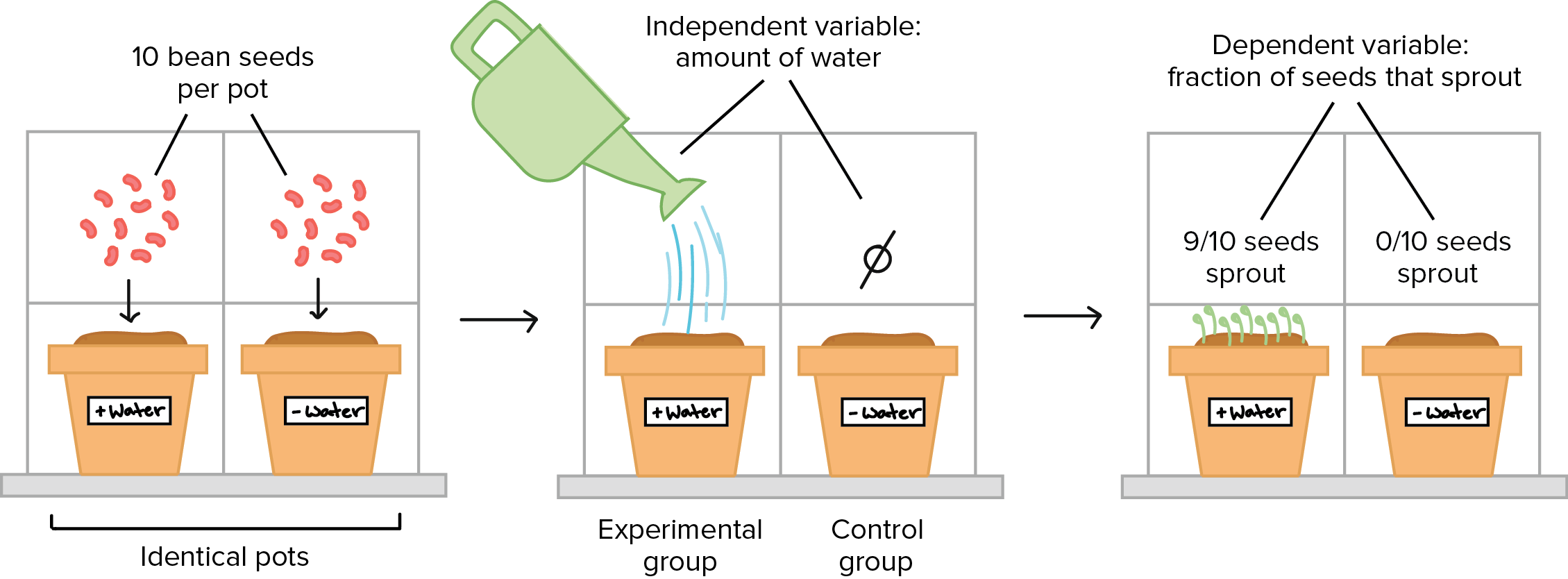
At its heart, a scientific control is a baseline or standard against which experimental results are compared. It represents a condition where the specific factor being investigated (the independent variable) is either absent, held constant, or manipulated in a predetermined way, allowing researchers to observe what happens when that factor is introduced or altered. The fundamental goal is to isolate the effect of the independent variable on the dependent variable, which is the outcome or measurement being observed.
Defining the Independent and Dependent Variables
Before we can effectively implement a control, it’s essential to clearly define the variables involved in an experiment.
The Independent Variable: The Agent of Change
The independent variable is the factor that the researcher intentionally manipulates or changes in an experiment. It is the presumed cause. In a technology context, this could be the learning rate of an AI model, the encryption algorithm used in a software application, a specific feature introduced into an app, or a particular setting in a hardware device. The researcher believes that changes in this variable will lead to a change in the outcome.
The Dependent Variable: The Measured Outcome
The dependent variable, conversely, is the factor that is measured or observed to see if it is affected by the manipulation of the independent variable. It is the presumed effect. For example, if the independent variable is the learning rate of an AI model, the dependent variable might be its accuracy on a test dataset. If the independent variable is an encryption algorithm, the dependent variable could be the time it takes to encrypt or decrypt a file, or the security vulnerability score.
The Purpose of Control: Eliminating Alternative Explanations
The primary purpose of a scientific control is to eliminate or account for alternative explanations for the observed results. Without controls, it’s impossible to definitively state that a particular intervention or change caused a specific outcome. There could be other factors at play, known as confounding variables, that are influencing the results.
Confounding Variables: The Unseen Influencers
Confounding variables are external factors that correlate with both the independent and dependent variables, potentially distorting the observed relationship. In technology development, these could include:
- Environmental Factors: For software testing, this might be the operating system version, the specific hardware configuration of a test device, or even the network latency.
- User Variability: When testing user interfaces or app functionalities, different users might have varying levels of technical proficiency, different motivations, or even different mood states, all of which can influence their interaction and reported experience.
- Time-Related Effects: Changes observed over time might be due to the passage of time itself (e.g., system updates, evolving user trends) rather than the specific intervention being tested.
- Measurement Error: Inaccurate or inconsistent methods of measuring the dependent variable can lead to erroneous conclusions.
The control group and experimental group are designed to experience the same conditions, except for the manipulation of the independent variable. This allows researchers to attribute any significant difference in the dependent variable directly to the independent variable.
Types of Scientific Controls: Tailoring Rigor to the Experiment
The implementation of scientific controls can vary significantly depending on the nature of the research question, the resources available, and the complexity of the system being studied. However, several fundamental types of controls are widely recognized and applied.
The Control Group: The Standard of Comparison
The control group is arguably the most fundamental type of control. It is a group that does not receive the experimental treatment or manipulation. Instead, it is exposed to the same conditions as the experimental group, except for the absence of the independent variable.
Placebo Controls: Accounting for Psychological Effects
In certain technological applications, particularly those involving human interaction or perception, a placebo control might be employed. A placebo is an inactive substance or treatment that resembles the active treatment but has no therapeutic effect. In technology, this could manifest as a dummy feature that looks and behaves identically to the real feature but has no actual functional impact. This helps to isolate the psychological or perceived effects from the actual functional benefits. For instance, when testing a new cognitive enhancement app, a placebo version of the app that simulates progress without actual cognitive tasks could be used to differentiate genuine cognitive improvement from the user’s expectation of improvement.
Baseline Controls: Measuring the “Before” State
A baseline control involves measuring the dependent variable before the introduction of the independent variable. This provides a starting point against which any subsequent changes can be compared. In A/B testing for website optimization, for example, you might measure user conversion rates before implementing any changes (the baseline) and then compare them to the conversion rates after implementing a new design element (the experimental condition).
The Experimental Group: The Subject of Manipulation
The experimental group, in contrast to the control group, is the group that receives the experimental treatment or manipulation. This is where the independent variable is actively applied. The changes observed in the dependent variable within the experimental group are then compared to the changes (or lack thereof) observed in the control group.
Manipulating the Independent Variable

The critical aspect of the experimental group is the deliberate manipulation of the independent variable. This manipulation must be precise and well-documented. For instance, if testing the impact of a new recommendation algorithm on user engagement in an e-commerce app, the experimental group would experience the app with the new algorithm, while the control group would continue to use the existing, older algorithm.
Other Forms of Control: Enhancing Experimental Robustness
Beyond the basic control and experimental groups, several other strategies are employed to enhance the rigor and validity of scientific investigations in technology.
Within-Subjects Designs: Each Participant as Their Own Control
In a within-subjects design, each participant serves as their own control. This means that each individual is exposed to both the experimental condition and the control condition at different times. This design is particularly useful when there are concerns about individual differences between participants that could affect the results. For example, when evaluating the performance of two different software interfaces, each user might first use Interface A for a set period and perform a task, then switch to Interface B to perform a similar task. Their performance on Interface B is then compared to their own performance on Interface A. This helps control for inherent differences in user skill or familiarity.
Statistical Controls: Accounting for Covariates
Statistical controls involve using statistical methods to account for the influence of confounding variables. This is particularly important when it’s impossible to perfectly control all extraneous factors through experimental design alone. For instance, in analyzing the impact of a new marketing campaign on app downloads, researchers might use regression analysis to statistically control for factors like seasonality, competitor activity, or demographic variations in the target audience.
The Indispensable Role of Controls in Technological Advancement
The meticulous application of scientific controls is not merely an academic exercise; it is the engine that drives genuine progress and reliable innovation within the technology sector. Without them, the path to true breakthroughs is obscured by uncertainty and the risk of wasted resources.
Validating New Technologies and Features
When a company develops a new piece of software, a hardware gadget, or an AI model, it needs to be certain that it works as intended and provides tangible benefits. Controls are essential for validating these advancements.
Ensuring Efficacy and Performance
Consider the development of a new cybersecurity tool. To prove its effectiveness against a specific type of threat, researchers must rigorously test it. A control group, unaware of the threat, would continue to operate without the new tool, while the experimental group would deploy the tool. The difference in the number of successful breaches or the severity of damage would then demonstrate the tool’s efficacy. Similarly, when optimizing an algorithm for faster data processing, a control group using the older, unoptimized version allows for a direct comparison of processing times.
Improving User Experience and Usability
In the world of apps and digital platforms, user experience (UX) is paramount. A/B testing, a direct application of scientific controls, is widely used to optimize interfaces, workflows, and features. For example, two different button designs on a website can be presented to separate groups of users. By measuring which design leads to a higher click-through rate or conversion, designers can make data-driven decisions to improve usability.
Driving Reproducibility and Reliability
A cornerstone of scientific progress is reproducibility – the ability for other researchers or developers to achieve the same results when conducting similar experiments. Scientific controls are fundamental to ensuring this reproducibility.
Building Trust in Data and Findings
When experiments are conducted with proper controls, the data generated is more trustworthy. This trust is vital for stakeholders, investors, and the wider scientific and technological community. If a new AI model is claimed to achieve a certain level of accuracy, that claim must be supported by experiments that demonstrate this accuracy under controlled conditions, allowing others to verify the results.
Facilitating Iterative Development and Refinement
Technology development is rarely a linear process. It involves constant iteration, refinement, and problem-solving. Controls enable this iterative approach by providing a clear understanding of what changes have a positive impact. If an update to an application leads to a decrease in user engagement, a controlled comparison with the previous version can pinpoint the problematic change, allowing for targeted improvements. This cycle of controlled testing and refinement is essential for creating robust and successful technologies.
Navigating the Complexities of AI and Machine Learning
The field of Artificial Intelligence and Machine Learning presents unique challenges and opportunities for the application of scientific controls. The inherent complexity and often opaque nature of these systems make rigorous control even more critical.
Evaluating Algorithm Performance and Bias
When developing AI models, it’s crucial to evaluate their performance not just on average, but also across different demographic groups or data subsets. Controls help identify potential biases. For instance, if an AI used for loan applications is tested with controlled datasets representing various ethnicities and socioeconomic backgrounds, researchers can identify if the algorithm disproportionately rejects applications from certain groups. This allows for the development of fairer and more equitable AI.

Understanding Model Generalization
A key challenge in AI is ensuring that models generalize well to new, unseen data. Controlled experiments, often involving distinct training, validation, and testing datasets, are used to assess this generalization capability. The training data represents the “treatment,” while the unseen test data acts as a form of control, assessing how well the model performs outside its direct learning environment.
In conclusion, the concept of a scientific control, while seemingly straightforward, is a multifaceted and indispensable tool in the technological innovation toolkit. It provides the necessary rigor to isolate variables, eliminate confounding factors, and build a foundation of trust and reliability for new discoveries. From validating the efficacy of groundbreaking software to ensuring the fairness of AI algorithms, scientific controls are the silent guardians of progress, ensuring that the exciting advancements we witness in technology are not the product of chance, but the result of systematic, validated inquiry.
aViewFromTheCave is a participant in the Amazon Services LLC Associates Program, an affiliate advertising program designed to provide a means for sites to earn advertising fees by advertising and linking to Amazon.com. Amazon, the Amazon logo, AmazonSupply, and the AmazonSupply logo are trademarks of Amazon.com, Inc. or its affiliates. As an Amazon Associate we earn affiliate commissions from qualifying purchases.