
In the modern corporate landscape, a company’s value is no longer measured solely by its physical assets or real estate holdings. Instead, the true valuation of a business—especially in the service, tech, and consulting sectors—is derived from its “intangible” assets: its client lists, its proprietary processes, and its talented workforce. Protecting these assets is a fundamental aspect of business finance and risk management. This is where the non-solicitation agreement becomes a critical financial tool.
A non-solicitation agreement is a contract, often part of a larger employment agreement or a business sale contract, that restricts an individual (usually a former employee or business partner) from “soliciting” the company’s clients or employees after they leave. From a financial perspective, these agreements serve as a defensive moat, designed to prevent revenue leakage and ensure that the human capital a firm has invested in remains a stable asset.
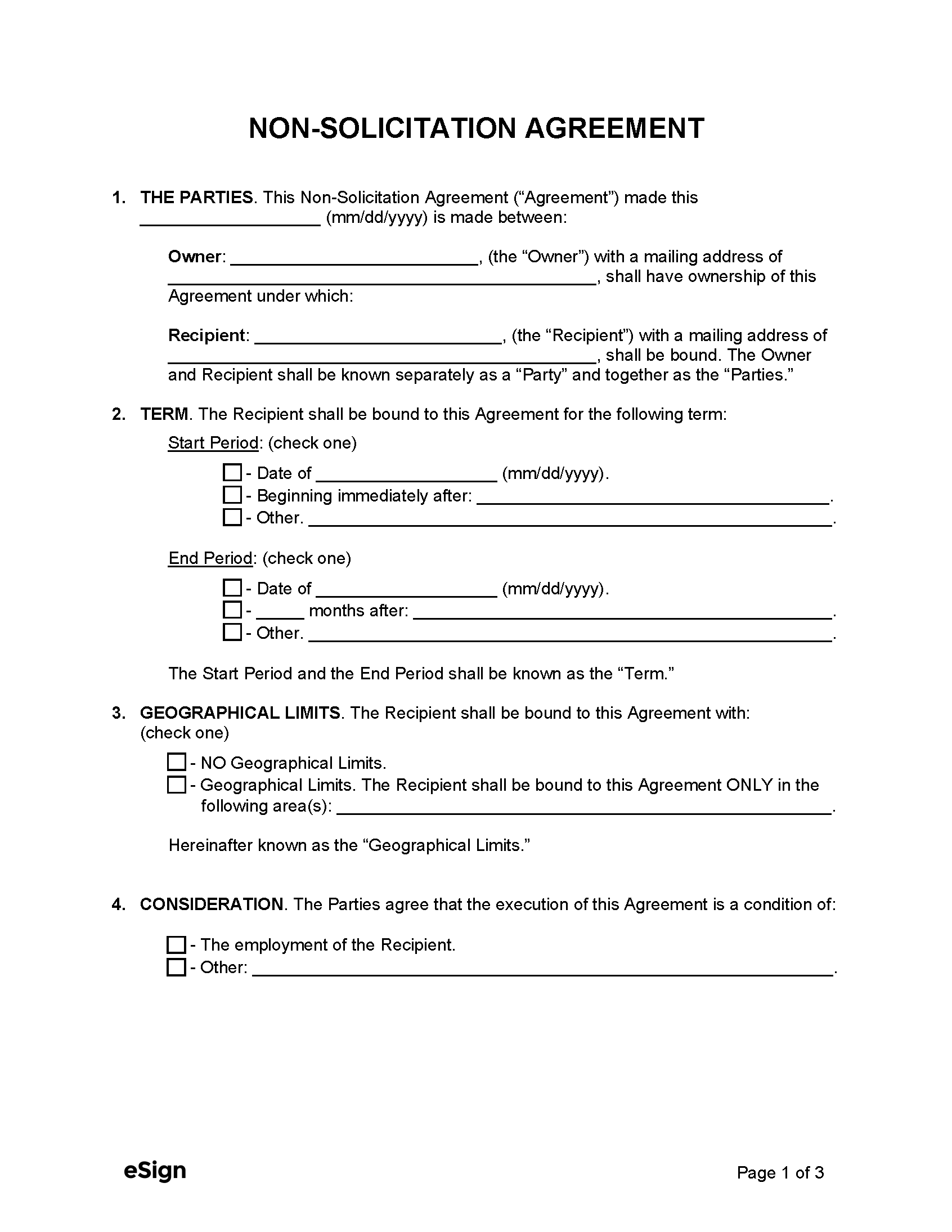
The Financial Mechanics of Non-Solicitation: Protecting Revenue and Assets
At its core, a non-solicitation agreement is an insurance policy for a business’s bottom line. When a key executive or a top-performing salesperson departs a firm, they carry with them deep knowledge of the company’s pricing structures, client pain points, and internal culture. Without legal protections, that individual could theoretically pivot to a competitor and systematically dismantle their former employer’s revenue stream by “poaching” high-value accounts.
Protecting Your Primary Revenue Streams
For many businesses, a handful of “whale” clients may represent a significant percentage of annual recurring revenue (ARR). If an account manager leaves and takes those clients to a rival firm, the financial impact can be devastating, potentially leading to layoffs or a sharp decline in share price. A non-solicitation agreement prevents this direct targeting, ensuring that the company has a fair chance to transition those relationships to a new representative and retain the contract revenue.
Safeguarding Intellectual Capital
In the “Money” niche, we often discuss capital in terms of cash and equity. However, “Human Capital” is just as vital. Training a high-level professional involves significant financial investment, including salary, benefits, and the opportunity cost of the time spent on their development. If a departing manager is allowed to solicit their former team members to join a new venture, the original company loses its investment in that talent overnight. Non-solicitation clauses protect the firm from “team raiding,” which can disrupt operations and lead to massive recruitment and retraining costs.
Key Components of a Legally Sound Non-Solicitation Agreement
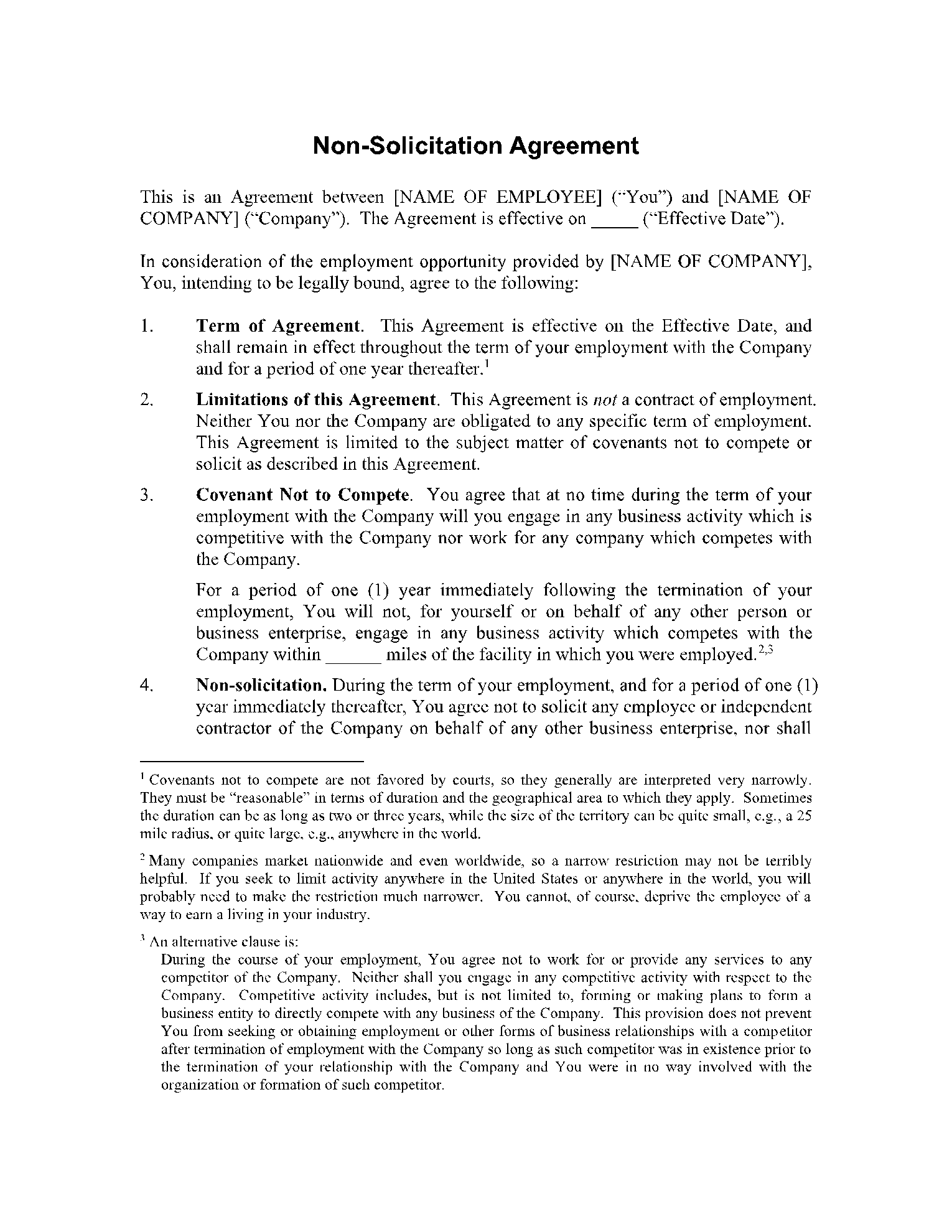
For a non-solicitation agreement to hold weight in a financial or legal dispute, it must be drafted with precision. Courts generally disfavor “restraint of trade,” meaning they are hesitant to prevent people from earning a living. Therefore, the agreement must be reasonable and specific to be enforceable. From a business finance perspective, an overreaching agreement is often as useless as no agreement at all, as it may be struck down entirely during litigation.
Scope of the Restriction
The agreement must clearly define who is off-limits. Does it apply only to clients the employee worked with directly, or every client in the company’s database? In the eyes of the law, and for the sake of clear financial planning, narrower scopes are generally more enforceable. The agreement should also specify whether it covers “solicitation” (actively reaching out) or if it also prevents “acceptance” of business (where the client follows the employee without being asked).
Duration and Geographic Limitations
A non-solicitation agreement cannot last forever. Most enforceable agreements range from six months to two years. From a strategic standpoint, this window is intended to give the business enough time to solidify its relationship with the client under a new point of contact. Furthermore, geographic limitations may apply, though these are becoming less relevant in our digital-first, global economy.
Definition of “Solicitation” vs. “Acceptance”
This is a nuanced area of business finance and law. Solicitation typically involves an active effort—an email, a phone call, or a meeting—to lure a client away. However, if a client hears of an employee’s departure and reaches out to them independently, is that a breach? High-level agreements often include “non-interference” clauses to address these “passive” solicitations, which helps protect the firm’s financial interests even when the client initiates the move.
The Financial Impact of Talent Poaching and Team Raiding
In the world of private equity and corporate finance, the stability of a management team is a key metric in determining the “multiple” at which a business is valued. If a company is perceived as having a “leaky bucket” regarding its talent, its valuation will suffer. Talent poaching is not just a human resources issue; it is a direct threat to the firm’s ROI on its payroll.
The High Cost of Employee Replacement
Financial analysts estimate that replacing a mid-to-high-level employee can cost anywhere from 50% to 200% of that employee’s annual salary. These costs include recruitment fees, sign-on bonuses for new hires, lost productivity during the vacancy, and the “ramp-up” time required for the new hire to become profitable. By utilizing non-solicitation agreements, a company reduces the risk of mass exoduses, thereby stabilizing its operational expenses.
Preventing “Team Raiding”
“Team raiding” occurs when a departing leader attempts to bring their entire department with them to a new firm. This can lead to a total collapse of a specific service line or product development wing. For a business, this represents a catastrophic loss of institutional knowledge. Non-solicitation agreements serve as a deterrent against these “lift-outs,” ensuring that even if one leader leaves, the underlying infrastructure of the business—and its ability to generate profit—remains intact.
Navigating Agreements as an Individual: Career and Income Implications
While businesses use these agreements to protect their interests, individuals—from freelancers to C-suite executives—must view them through the lens of their own personal finance and career trajectory. Signing a non-solicitation agreement can significantly impact your future earning potential and your ability to launch a side hustle or an independent consultancy.
Assessing Your Earning Potential Post-Employment
Before signing a contract, you must calculate the “opportunity cost.” If you are a financial advisor or a consultant, your value is tied to your book of business. A strict non-solicitation agreement effectively means that if you leave your current firm, you must start your income generation from zero. For professionals in these fields, this is a major financial consideration that may warrant a higher base salary or a larger signing bonus to compensate for the future risk.
Negotiation Strategies for Professionals
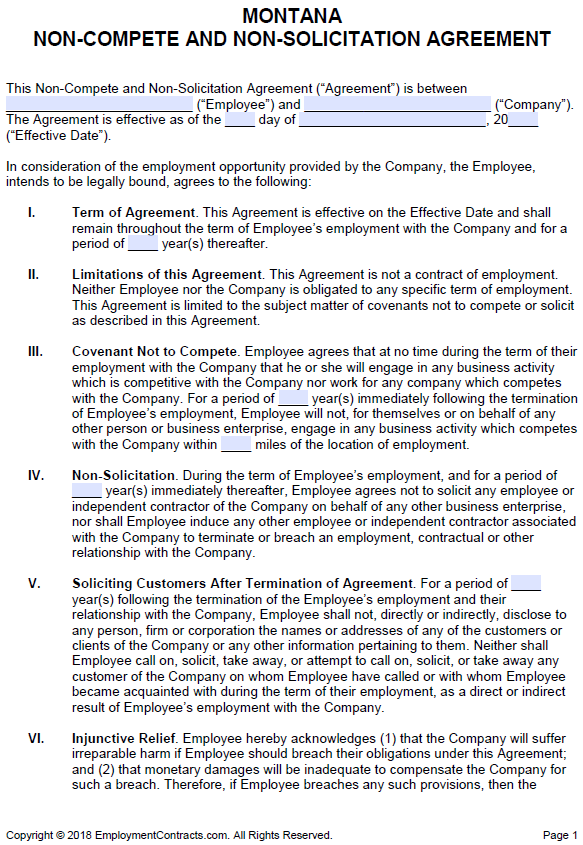
Everything in business finance is negotiable. When presented with a non-solicitation agreement, an individual can negotiate the “carve-outs.” For example, you might request that clients you brought to the firm (pre-existing relationships) be exempt from the agreement. You might also negotiate to shorten the duration of the restriction. By narrowing the scope of the agreement, you protect your future ability to generate income without facing expensive legal battles.
Enforceability and the Evolution of Business Law
The legal landscape surrounding restrictive covenants is shifting, with major implications for business finance and risk management. In the United States, the Federal Trade Commission (FTC) has recently moved toward banning or severely limiting non-compete agreements. While non-solicitation agreements are generally viewed more favorably because they are less restrictive on a person’s ability to work, they are coming under increased scrutiny.
State-Specific Regulations and Recent Rulings
States like California have long had strict laws against any form of restraint on trade, making many non-solicitation agreements difficult to enforce there. Conversely, states like Texas or Florida tend to be more “pro-business.” For companies operating across state lines, this creates a complex financial risk profile. Legal departments must ensure that their contracts are tailored to local jurisdictions to avoid the financial loss associated with an unenforceable contract.
Calculating Damages in Breach of Contract
If a non-solicitation agreement is breached, the primary goal of the resulting lawsuit is usually “liquidated damages” or lost profit recovery. A company must be able to prove the specific financial loss incurred because of the solicitation. This involves forensic accounting to determine the “lifetime value” (LTV) of the lost clients or the specific costs associated with replacing poached employees. For the individual who breached the agreement, the financial consequences can be ruinous, often involving the disgorgement of profits earned from the solicited clients and the payment of the former employer’s legal fees.
In conclusion, the non-solicitation agreement is an essential instrument in the toolkit of business finance. It acts as a guardian of revenue, a stabilizer of human capital, and a key factor in corporate valuation. Whether you are a business owner seeking to protect your “moat” or a professional looking to safeguard your future earning power, understanding the financial mechanics of these agreements is vital for long-term economic success.
aViewFromTheCave is a participant in the Amazon Services LLC Associates Program, an affiliate advertising program designed to provide a means for sites to earn advertising fees by advertising and linking to Amazon.com. Amazon, the Amazon logo, AmazonSupply, and the AmazonSupply logo are trademarks of Amazon.com, Inc. or its affiliates. As an Amazon Associate we earn affiliate commissions from qualifying purchases.