
In the landscape of modern technology, we often marvel at the sleekness of our smartphones, the speed of our fiber-optic internet, and the seemingly magical capabilities of artificial intelligence. Yet, beneath these layers of user interfaces and silicon wafers lies a foundation built on a mathematical concept thousands of years old: the prime number. To the layperson, a prime is simply a number divisible only by one and itself. To a technologist, however, a prime is the fundamental “atom” of the digital world—a critical tool for security, data integrity, and complex computational logic.

Understanding what a prime is within the context of technology requires looking past the arithmetic. It is about understanding how these unique integers provide the structural integrity for the modern internet and why, in an era of unprecedented processing power, they remain the ultimate gatekeepers of digital privacy.
The Fundamental Nature of Prime Numbers in Computing
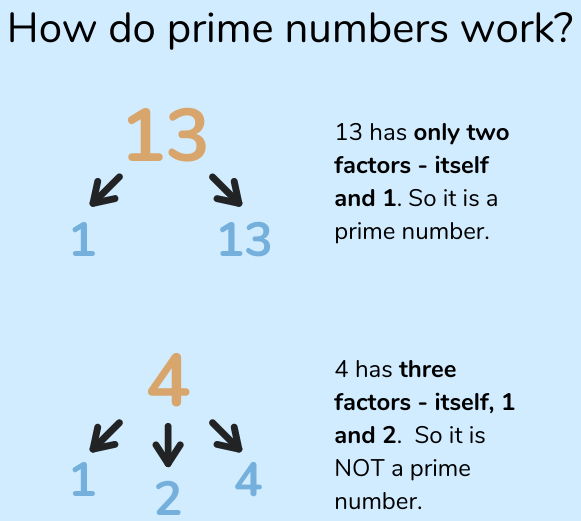
At its core, computing is the manipulation of numbers. To understand why prime numbers are so vital to technology, we must first understand their unique status in the mathematical hierarchy. Prime numbers—such as 2, 3, 5, 7, 11, and so on—are the building blocks of all natural numbers. Every number greater than 1 is either a prime itself or can be factored into a unique product of primes. This is known as the Fundamental Theorem of Arithmetic.
Defining the “Atoms” of Mathematics
In tech development and software engineering, we value components that are “atomic”—elements that cannot be broken down further. Prime numbers are the mathematical equivalent of atoms. This indivisibility makes them incredibly useful in algorithm design. When a software architect works with primes, they are working with values that possess no smaller internal patterns or factors. This lack of predictability and “symmetry” is exactly what makes them useful for tasks ranging from memory management to distributing data across a server cluster.
Why Primes are Computational Challenges
The technological significance of primes lies in a specific asymmetry: it is computationally “cheap” to multiply two massive prime numbers together, but it is computationally “expensive” to do the reverse. If I give you two large primes, your computer can find their product in microseconds. However, if I give you a 600-digit number and tell you it is the product of two primes, it could take the world’s most powerful supercomputers billions of years to identify which two primes were used. This “one-way” mathematical difficulty is the cornerstone of the digital economy.
Primality and the Architecture of Modern Encryption
The most prominent role of prime numbers in the Tech niche is in the realm of cybersecurity. Every time you see a padlock icon in your browser’s address bar, or use an encrypted messaging app like Signal or WhatsApp, you are relying on the unique properties of primes.
RSA Encryption: The Secret Language of the Web
Named after its creators Rivest, Shamir, and Adleman, RSA encryption is the standard for public-key cryptography. It functions by using two keys: a public key that anyone can see and a private key that remains secret. The security of these keys is rooted in the “factoring problem” mentioned previously.
When you send an encrypted email, the software uses a massive number (the product of two secret primes) to scramble the data. The only way to unscramble that data efficiently is to know the two original primes. Because finding those factors is a nearly impossible task for current hardware, your data remains secure even if intercepted. Without prime numbers, the entire infrastructure of e-commerce and digital banking would collapse, as there would be no reliable way to verify identity or secure transactions over an open network.
The Trapdoor Function: Easy to Build, Impossible to Reverse
In computer science, we refer to this as a “trapdoor function.” Like a physical trapdoor, it is easy to fall through (multiplying primes) but incredibly difficult to climb back up (factoring them). This concept is the heartbeat of digital security. Modern technology relies on 2048-bit or 4096-bit encryption, which involves primes so large they dwarf the number of atoms in the observable universe. The “Prime” is not just a number; it is a digital vault.

Beyond Cryptography: Primes in Hardware and Algorithms
While security is the most visible application, the utility of primes extends deep into software engineering and hardware optimization. From the way databases are structured to the way your monitor displays images, primes are working behind the scenes.
Prime Numbers in Error Detection and Data Integrity
When data is transmitted across a network, it is prone to corruption due to electrical interference or hardware glitches. To combat this, engineers use “Check-sums” and “Cyclic Redundancy Checks” (CRCs). Many of these algorithms utilize prime numbers to generate unique signatures for data packets. By using prime-based divisors, the algorithms ensure that errors are much more likely to be caught. The mathematical “irregularity” of primes prevents the kind of repeating patterns that might allow a corrupted piece of data to accidentally “look” like a valid one.
Optimization and Pseudorandom Number Generation (PRNG)
In game development and AI simulations, the need for “randomness” is paramount. However, computers are inherently logical and struggle to produce truly random results. To generate pseudorandom numbers, many algorithms use a technique called the “Linear Congruential Generator,” which relies on large prime numbers as “moduli.” Using a prime ensures that the sequence of numbers generated has the maximum possible “period” before it starts repeating itself. This prevents patterns from forming in everything from the loot drops in a video game to the training data sets used in machine learning.
The Quest for Mersenne Primes and High-Performance Computing
The search for new, larger prime numbers is not just a hobby for mathematicians; it is a rigorous stress test for the latest hardware and distributed computing architectures. These specific types of primes are known as Mersenne primes (primes that can be written in the form 2^n − 1).
GIMPS and Distributed Computing Power
The Great Internet Mersenne Prime Search (GIMPS) is one of the most successful examples of distributed computing in tech history. By utilizing the idle processing power of thousands of computers globally, this project hunts for primes that are tens of millions of digits long. This project has served as a blueprint for other distributed tech initiatives, such as SETI@home or folding@home, proving that decentralized networks can solve problems that a single supercomputer cannot.
Testing the Limits of Modern Silicon
Finding a new prime is a grueling task for a CPU. It requires billions of calculations and pushes the hardware to its thermal and logic limits. Consequently, primality testing software is often used by hardware manufacturers and overclockers as a “torture test” for new chips. If a processor can calculate the primality of a massive number for several hours without an error or a system crash, it is considered stable. In this way, primes serve as the ultimate quality control metric for the tech industry’s most advanced silicon.
The Future: Quantum Computing and the “Prime” Threat
As we look toward the future of technology, the relationship between primes and computing is facing a paradigm shift. The arrival of quantum computing poses a theoretical “extinction level event” for current encryption methods based on prime factorization.
Shor’s Algorithm and the End of RSA
In 1994, mathematician Peter Shor developed an algorithm that, when run on a sufficiently powerful quantum computer, could factor large primes almost instantaneously. While the quantum computers of today are still too small and “noisy” to break RSA-2048, the tech industry is in a race against time. The moment a “cryptographically relevant” quantum computer is built, the prime-based security we rely on will be rendered obsolete.
Post-Quantum Cryptography: Searching for New Primes
The tech world is not standing still. The field of Post-Quantum Cryptography (PQC) is currently developing new standards that do not rely on prime factorization. However, even in these new frontiers, the logic of primality remains relevant. Whether we are moving toward lattice-based cryptography or isogeny-based schemes, the goal remains the same: finding a mathematical problem that is easy to perform in one direction but impossible to reverse.
As we have explored, a prime is far more than a simple integer. It is the invisible force field around our digital lives, the benchmark for our most powerful hardware, and the structural integrity of our most complex algorithms. In the world of technology, understanding “what is a prime” is the first step in understanding the very architecture of the digital age. Regardless of how our hardware evolves, the unique, stubborn, and indivisible nature of the prime number will remain at the heart of the machine.
aViewFromTheCave is a participant in the Amazon Services LLC Associates Program, an affiliate advertising program designed to provide a means for sites to earn advertising fees by advertising and linking to Amazon.com. Amazon, the Amazon logo, AmazonSupply, and the AmazonSupply logo are trademarks of Amazon.com, Inc. or its affiliates. As an Amazon Associate we earn affiliate commissions from qualifying purchases.