
The term “microdose of shrooms” has transcended its countercultural roots to enter mainstream discussions, often framed within the context of personal optimization and cognitive enhancement. While the chemical compounds within psilocybin-containing mushrooms are biological, the exploration and understanding of microdosing are increasingly driven by technological advancements. This article delves into the technological underpinnings of microdosing, examining how data science, digital tools, and emerging technologies are shaping our comprehension and application of this practice. We will move beyond the purely subjective experience to explore the objective, data-driven landscape that is emerging around this fascinating subject.

The Rise of Data-Driven Exploration and Measurement
The burgeoning interest in microdosing has spurred a significant effort to move from anecdotal reports to quantifiable data. This shift is powered by technological innovations that allow for more sophisticated tracking, analysis, and understanding of the effects of sub-perceptual doses of psilocybin.
Digital Tracking and Self-Reporting Platforms
The most accessible technological avenue for microdosing exploration lies in the realm of digital self-reporting. As individuals experiment with microdosing, a critical need arose for standardized methods to record dosages, timings, and perceived effects. This has led to the proliferation of specialized apps and online platforms designed to facilitate this process. These tools go beyond simple journaling, incorporating features like:
- Dosage Calculators: Providing precise guidance on how to prepare and measure sub-perceptual doses, often taking into account the potency of different mushroom strains. This is crucial for consistency, a key factor in scientific inquiry and personal experimentation.
- Symptom and Mood Trackers: Allowing users to log a wide range of subjective experiences, from mood fluctuations and energy levels to focus, creativity, and even social interactions. This granular data collection is invaluable for identifying patterns.
- Sleep and Activity Monitoring Integration: Many platforms are beginning to integrate with wearable technology (like smartwatches and fitness trackers) to correlate microdosing with objective physiological data such as sleep quality, heart rate variability, and physical activity levels. This provides a more holistic picture than self-reporting alone.
- Community Forums and Data Sharing: Secure and anonymized data sharing features are emerging, allowing researchers and enthusiasts to contribute to larger datasets, thereby accelerating the understanding of microdosing across diverse populations.
The sophistication of these platforms is evolving rapidly, moving towards more robust statistical analysis capabilities and predictive modeling to identify optimal microdosing protocols for different individuals and desired outcomes.
Wearable Technology and Biosignal Analysis
The integration of wearable technology represents a significant leap in the technological investigation of microdosing. Devices capable of continuously monitoring physiological markers offer a less subjective and potentially more accurate assessment of the impact of psilocybin.
- Electroencephalography (EEG) and Brainwave Patterns: While still largely in the research phase, portable EEG devices are being explored to understand how microdosing might influence brainwave activity. Researchers are looking for specific changes in alpha, beta, theta, and gamma waves that could correlate with reported improvements in focus, mood, or relaxation. The data gathered from these devices, when analyzed with sophisticated algorithms, can reveal subtle neurological shifts that are not readily apparent through self-observation.
- Heart Rate Variability (HRV) and Stress Response: HRV is a key indicator of the body’s autonomic nervous system’s ability to adapt to stress. Studies are exploring whether microdosing can positively impact HRV, suggesting a potential for stress reduction and improved emotional regulation. Wearables provide continuous HRV data, allowing for the observation of trends before, during, and after microdosing.
- Galvanic Skin Response (GSR) and Emotional Arousal: GSR measures the electrical conductivity of the skin, which changes in response to emotional states and arousal. Technological analysis of GSR data could offer insights into how microdosing affects an individual’s responsiveness to stimuli and their overall emotional reactivity.
- Sleep Tracking and Circadian Rhythms: Objective sleep data from wearables can illuminate whether microdosing has a discernible effect on sleep architecture, duration, and overall sleep quality. This is crucial for understanding its impact on cognitive function, as sleep is a fundamental pillar of mental performance.
The challenge here lies in isolating the effects of microdosing from other lifestyle factors. Advanced algorithms and machine learning are essential for sifting through this complex biosignal data to identify statistically significant correlations.
Technological Innovations in Dosage Precision and Standardization
One of the primary hurdles in understanding microdosing has been the variability in mushroom potency and the difficulty in accurately measuring sub-perceptual doses. Technology is stepping in to address these challenges, aiming to bring a greater degree of scientific rigor to the practice.
Advanced Extraction and Standardization Techniques
The inherent variability of natural compounds in psilocybin mushrooms has always been a significant issue for consistent dosing. Technological advancements in extraction and analysis are beginning to mitigate this.
- High-Performance Liquid Chromatography (HPLC) and Mass Spectrometry: These analytical chemistry techniques are becoming more accessible, allowing for the precise quantification of psilocybin and psilocin content in mushroom material. This enables the creation of standardized extracts or powders with known potency, removing much of the guesswork from dosing.
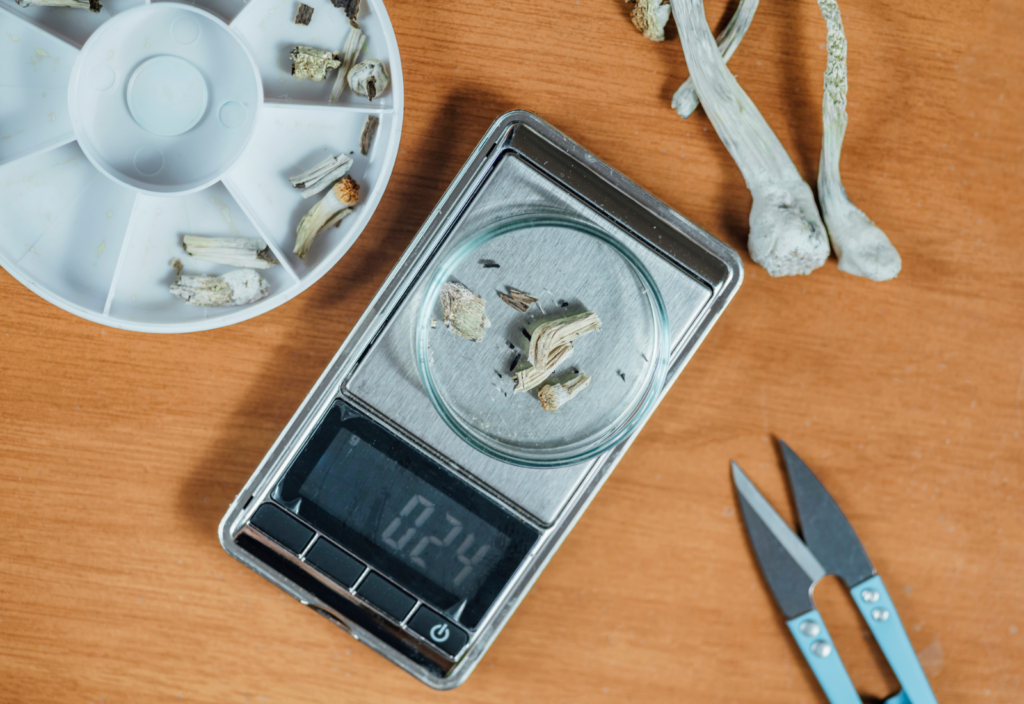
- Precision Drying and Grinding Technologies: Consistent moisture content and particle size are crucial for accurate weighing and subsequent dosing. Advanced drying ovens and precision grinders ensure uniformity, leading to more reliable preparation of microdose materials.
- 3D Printing for Microdosing Tools: While still in its nascent stages, the potential for 3D printing custom-designed tools for microdosing is intriguing. This could include precise measuring spoons, capsule fillers, or even delivery systems that ensure consistent and controlled intake of sub-perceptual doses.
These technological advancements are not only crucial for individual users seeking consistency but are also fundamental for researchers conducting clinical trials and studies.
Emerging Delivery Mechanisms and Controlled Release Technologies
Beyond traditional ingestion of mushroom material, technological innovation is exploring novel delivery mechanisms for psilocybin, which could have implications for microdosing protocols.
- Transdermal Patches: The development of transdermal patches for various compounds is a rapidly advancing field. Applying this technology to psilocybin could allow for a slow, controlled release of sub-perceptual doses over an extended period, potentially leading to more stable and sustained cognitive effects without the fluctuations associated with oral ingestion. This technology would require sophisticated understanding of skin permeability and psilocybin’s pharmacokinetic profile.
- Nasal Sprays and Sublingual Strips: These methods offer faster absorption and more immediate onset of effects compared to oral ingestion. While not necessarily “microdosing” in the traditional sense of prolonged effects, they allow for more precise control over the timing and intensity of sub-perceptual experiences, which could be valuable for specific cognitive tasks.
- Encapsulation and Enteric Coatings: Pharmaceutical technologies like enteric coatings can control the release of compounds within the digestive system. Applying these to psilocybin-containing capsules could ensure that the active compounds are released at a specific point in the gastrointestinal tract, potentially influencing their absorption rate and overall effect profile.
These emerging delivery mechanisms, driven by pharmaceutical and material science, represent a future where microdosing could be administered with a level of precision akin to prescription medications.
The Future Landscape: AI, Blockchain, and Ethical Data Management
As the field of microdosing matures, several advanced technologies are poised to play a crucial role in its future development, particularly in ensuring data integrity, ethical research, and personalized applications.
Artificial Intelligence (AI) in Pattern Recognition and Personalization
AI is rapidly becoming an indispensable tool for analyzing the vast amounts of data being generated in microdosing research and personal experimentation.
- Predictive Analytics for Optimal Dosing: Machine learning algorithms can analyze individual user data (from self-reporting apps, wearables, and potentially genetic information) to predict the most effective microdosing regimen for specific goals, such as enhanced creativity, improved focus, or reduced anxiety. This moves beyond generalized protocols to hyper-personalized recommendations.
- Identifying Biomarkers of Response: AI can help identify subtle patterns in biosignal data that correlate with positive or negative outcomes from microdosing, potentially leading to the discovery of biomarkers that predict individual responses.
- Natural Language Processing (NLP) for Qualitative Data Analysis: NLP can be used to analyze the vast unstructured text data from user journals and forum discussions, identifying themes, sentiment shifts, and common experiences that might be missed by purely quantitative analysis.
The ability of AI to process complex datasets and identify non-obvious correlations is critical for accelerating our understanding of psilocybin’s effects at sub-perceptual levels.
Blockchain for Secure and Verifiable Data and Supply Chain
The sensitive nature of psilocybin and the potential for misuse necessitate robust data security and supply chain integrity. Blockchain technology offers solutions.
- Secure and Immutable Data Storage: Blockchain can provide a decentralized and tamper-proof ledger for storing self-reported data, research findings, and even supply chain information for psilocybin-containing products. This enhances trust and verifiability in research and consumer information.
- Traceability of Source and Potency: For regulated markets or research settings, blockchain can track the origin of mushroom material, cultivation practices, and laboratory-tested potency levels. This ensures transparency and helps users make informed decisions about product quality.
- Decentralized Research Platforms: Blockchain could enable decentralized research platforms where participants can control their data and grant access to researchers, fostering a more ethical and participant-centric approach to microdosing studies.
As the regulatory landscape for psychedelics evolves, technologies like blockchain will be crucial for building trust and ensuring responsible innovation.

Ethical Considerations in Technological Application
The application of technology to microdosing is not without its ethical considerations. The focus must remain on responsible innovation and user well-being.
- Data Privacy and Security: Ensuring that personal and sensitive data collected through apps and wearables is protected from breaches and misuse is paramount. Robust encryption and anonymization techniques are essential.
- Informed Consent and User Education: Technology should be used to empower users with accurate information. Applications and platforms must clearly communicate the experimental nature of microdosing, potential risks, and the importance of consulting with healthcare professionals.
- Avoiding Over-Medicalization and Commercialization: While technology can aid in understanding, it’s important to avoid reducing a practice with potential for personal growth and introspection to a purely technological performance enhancer. The human element and mindful practice remain central.
The technological frontier of microdosing offers immense potential for discovery and advancement. By leveraging data science, advanced measurement tools, and intelligent systems, we are moving towards a more objective, precise, and ethically managed exploration of what a microdose of shrooms can mean for human cognition and well-being.
aViewFromTheCave is a participant in the Amazon Services LLC Associates Program, an affiliate advertising program designed to provide a means for sites to earn advertising fees by advertising and linking to Amazon.com. Amazon, the Amazon logo, AmazonSupply, and the AmazonSupply logo are trademarks of Amazon.com, Inc. or its affiliates. As an Amazon Associate we earn affiliate commissions from qualifying purchases.