
In the landscape of global confectionery, few names evoke as much immediate sensory recognition as Jolly Rancher. To the casual consumer, it is a hard candy known for its intense fruit flavors and long-lasting nature. However, to the brand strategist, Jolly Rancher represents a masterclass in corporate identity, market positioning, and the successful navigation of a brand’s lifecycle from a local startup to a cornerstone of a multinational portfolio.
Understanding “what is a Jolly Rancher” requires looking beyond the sugar and corn syrup. It requires an analysis of how a brand born in the American West managed to maintain its relevance for over 75 years, eventually becoming a billion-dollar asset under the stewardship of The Hershey Company.
1. The Historical Foundation: From Ice Cream to Confectionery Empire
The story of the Jolly Rancher brand is a quintessential example of entrepreneurial pivoting and the power of local branding. Founded in 1949 by Bill and Dorothy Harmsen in Golden, Colorado, the brand did not begin as a candy company.
The Strategic Pivot: The Colorado Beginnings
Initially, the Jolly Rancher Company focused on ice cream and chocolate. The name “Jolly Rancher” was selected by the Harmsens to convey a sense of Western hospitality and friendliness—a branding move designed to make the company feel local and approachable to the post-war American consumer. However, the founders quickly encountered a logistical hurdle: ice cream sales plummeted during the cold Colorado winters.
In a strategic shift that would define the company’s future, the Harmsens pivoted toward hard candy. Unlike ice cream, hard candy was shelf-stable, easy to transport, and maintained consistent demand regardless of the season. This pivot demonstrated an early understanding of supply chain resilience and market adaptability—key pillars of any successful brand strategy.
Establishing the Brand Narrative
The Harmsens didn’t just sell candy; they sold the “Jolly” persona. By leaning into the Western theme, they established a unique regional identity that resonated with the mid-century American fascination with the frontier. Even as the company expanded, this core identity of ruggedness paired with extreme sweetness remained a central part of its brand narrative, eventually allowing it to stand out in a crowded market dominated by traditional European-style confections.
2. Visual Identity and Sensory Branding: The Power of Translucency
In the world of Marketing and Design, the visual appeal of a product is often as important as the product itself. Jolly Rancher’s visual identity is built on a foundation of “vivid simplicity.”
Bold Color Theory and Consumer Psychology
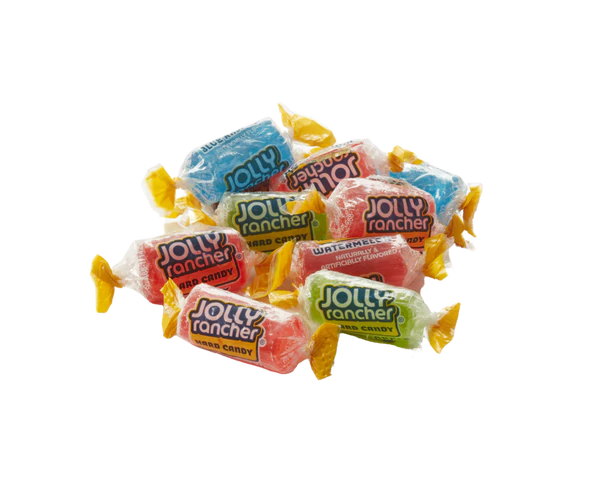
One of the most distinctive aspects of the Jolly Rancher brand is its use of color. Each flavor is associated with a hyper-saturated, translucent hue—Electric Blue for Raspberry, Neon Green for Green Apple, and Deep Red for Cherry. In branding, this is known as sensory signaling. The translucency of the candy mimics the appearance of stained glass or gemstones, suggesting a “purity” of flavor and a premium experience compared to opaque, chalky competitors.
The color palette is intentionally designed to trigger an emotional response. These are not muted, natural tones; they are bold, artificial colors that signal “intensity.” This aligns perfectly with the brand’s promise of a flavor experience that is “bold” and “untamed.”
The Evolution of the Logo and Packaging
The Jolly Rancher logo has undergone several iterations, but it has always maintained a bold, sans-serif typography that suggests strength and accessibility. The transition from a local “ranch-style” aesthetic to a modern, streamlined look reflects the brand’s move into the corporate big leagues.
The individual wrapping—a clear, twisted cellophane—is another strategic design choice. It allows the product’s vibrant color to be the star of the show while maintaining a sense of “individualized portions” that appeals to modern snacking habits. This transparency builds trust with the consumer, as the product they see is exactly the product they get.
3. Strategic Market Positioning: Owning the “Long-Lasting” Niche
Every successful brand must occupy a specific “space” in the consumer’s mind. For Jolly Rancher, that space is defined by duration and intensity. While many candies are meant to be chewed and consumed quickly, Jolly Rancher positioned itself as the “slow-burn” of the confectionery world.
Creating the “Keep On Sucking” Campaign
The brand’s long-term marketing strategy was epitomized by its “Keep On Sucking” campaign. While the slogan was provocative, it was also a brilliant bit of functional branding. It highlighted the product’s unique selling proposition (USP): its longevity.
In a competitive landscape filled with chocolates that melt and gummies that disappear in seconds, Jolly Rancher offered value through duration. This positioning appealed to children (who wanted their treat to last) and adults (who used the candy as a low-calorie way to satisfy a sweet tooth over an extended period).
Flavor Portfolio Expansion as a Growth Lever
Jolly Rancher has avoided brand stagnation by continuously evolving its flavor portfolio. While the “Original Five” (Watermelon, Apple, Cherry, Grape, and Blue Raspberry) remain the bedrock of the brand, the company has strategically introduced “limited time offers” (LTOs) and spin-offs like “Hotties” or “Sour Bites.”
This strategy serves two purposes:
- Consumer Retention: Keeping existing fans engaged with new variations.
- Market Penetration: Attracting different demographics, such as Gen Z consumers who gravitate toward sour or spicy flavor profiles.
4. Corporate Stewardship: The Hershey Acquisition and Global Scale
A critical chapter in the Jolly Rancher story is its 1996 acquisition by The Hershey Company. This move transitioned Jolly Rancher from a successful American candy to a global power-brand, illustrating how corporate identity can be scaled through strategic acquisition.
Scaling through Global Distribution
Under Hershey, Jolly Rancher benefited from one of the most robust distribution networks in the world. Hershey’s ability to place Jolly Rancher products in every convenience store, supermarket, and vending machine across North America—and eventually into international markets—was a game-changer.
The brand was no longer just a “Colorado favorite”; it became a staple of the American confectionery landscape. This phase of the brand’s life emphasizes the importance of “Operational Excellence” in brand strategy. A great brand identity is useless if the product isn’t available at the point of purchase.
Brand Synergy and Cross-Category Licensing
Hershey has been masterful at leveraging Jolly Rancher’s brand equity across different categories. We now see Jolly Rancher-flavored drinks, popsicles, and even cereal. This is a classic example of brand extension. By licensing the Jolly Rancher flavor profile to other manufacturers, Hershey reinforces the brand’s presence in parts of the grocery store where it wouldn’t normally exist.
Each cross-category product acts as an advertisement for the original hard candy, creating a virtuous cycle of brand recognition. This “ecosystem” approach to branding ensures that the Jolly Rancher name remains top-of-mind for consumers across various consumption occasions.
5. Modern Marketing and Cultural Resonance in the Digital Age
In the contemporary era, a brand must do more than just exist on a shelf; it must participate in the cultural conversation. Jolly Rancher has successfully navigated the transition from traditional media (TV and print) to digital-first engagement.
Leveraging Social Media and Influencer Partnerships
The brand’s modern marketing efforts focus heavily on visual platforms like Instagram and TikTok. Because Jolly Rancher products are inherently “photo-ready”—thanks to their bright colors and translucent texture—they lend themselves well to user-generated content.
The brand has leaned into this by partnering with influencers and creators who align with its “bold” and “untamed” identity. By positioning the candy as a lifestyle accessory for the “vibrant” and “energetic,” the brand has managed to stay relevant with younger demographics who might otherwise view a 75-year-old candy brand as dated.
The Psychology of Nostalgia
Finally, Jolly Rancher utilizes nostalgia as a powerful branding tool. For many Millennial and Gen X consumers, the brand is inextricably linked to childhood memories. By maintaining consistent packaging cues and the same iconic flavor profiles, the brand triggers a “comfort response.”
In an era of rapid change, the reliability of a Jolly Rancher provides a form of “emotional branding.” The brand doesn’t just sell sugar; it sells a return to a simpler time, all while using modern marketing techniques to ensure it doesn’t feel like a relic of the past.

Conclusion: The Enduring Legacy of the Jolly Rancher Brand
So, what is a Jolly Rancher? It is more than a piece of hard candy; it is a meticulously maintained brand asset that has survived decades of market shifts. From its humble beginnings in Golden, Colorado, to its current status as a crown jewel in the Hershey portfolio, the brand has remained successful by adhering to three core principles: a clear visual identity, a well-defined market niche, and the ability to adapt to new corporate and cultural environments.
For brand strategists and marketers, the Jolly Rancher case study proves that with the right mix of sensory branding and strategic positioning, even the simplest product can become a global icon. Its story is a reminder that in the world of branding, consistency is the key to longevity, but adaptability is the key to growth.
aViewFromTheCave is a participant in the Amazon Services LLC Associates Program, an affiliate advertising program designed to provide a means for sites to earn advertising fees by advertising and linking to Amazon.com. Amazon, the Amazon logo, AmazonSupply, and the AmazonSupply logo are trademarks of Amazon.com, Inc. or its affiliates. As an Amazon Associate we earn affiliate commissions from qualifying purchases.