
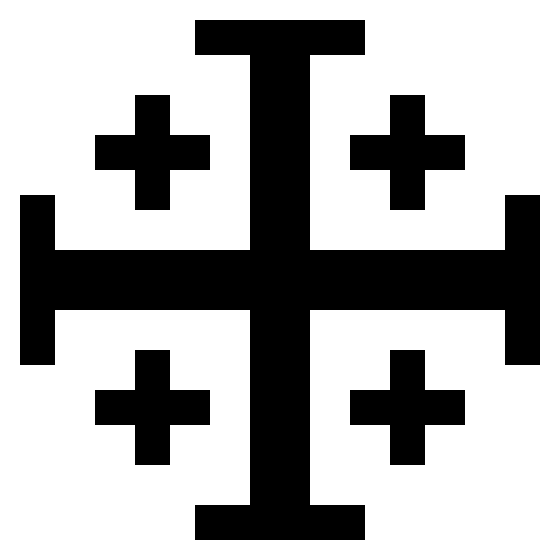
The Jerusalem Cross, also known as the Crusader’s Cross or the Five-Fold Cross, is a visually striking and historically significant heraldic device. Its distinctive design, featuring a large central cross with four smaller crosses in each quadrant, immediately sets it apart from more common cross forms. Beyond its immediate visual impact, the Jerusalem Cross carries a rich tapestry of meaning, evolving from its association with the Crusades to its adoption by various institutions and its enduring presence in symbolic representation. Understanding the Jerusalem Cross requires delving into its historical origins, deciphering its symbolic interpretations, and appreciating its diverse contemporary applications. This exploration reveals how a simple geometric arrangement of crosses can become a powerful and multifaceted brand element, conveying messages of faith, heritage, and affiliation.
The Genesis and Evolution of the Crusader’s Emblem
The Jerusalem Cross is inextricably linked to the historical period of the Crusades, a series of religious wars initiated, supported, and sometimes directed by the Latin Church in the medieval period. Its origins are debated among scholars, but its emergence is widely understood to be connected to the Kingdom of Jerusalem, established by the Crusaders after the First Crusade in 1099.
Heraldic Design and Early Associations
The classic depiction of the Jerusalem Cross consists of a potent combination of five crosses. At its core is a large, typically Greek cross, where all four arms are of equal length. Superimposed onto this central element, or positioned within its angles, are four smaller Greek crosses. This arrangement creates a powerful visual symmetry and a sense of completeness.
The heraldic use of this design is believed to have begun in the 12th century, becoming closely associated with the Kingdom of Jerusalem. It served as a powerful emblem for the Crusaders, a visual representation of their mission and their claim to the Holy Land. The repeated use of the cross, a fundamental symbol of Christianity, amplified the religious fervor and justification for their military endeavors. It was a brand in itself, signifying allegiance to a specific kingdom and a particular cause.
The adoption of this emblem was not merely decorative; it was a strategic branding decision. In a time when literacy was limited, visual symbols were paramount in conveying identity and authority. The Jerusalem Cross served as a distinct mark, easily recognizable and evocative of the Crusader presence in the Holy Land. It differentiated the Kingdom of Jerusalem from other Christian kingdoms and entities, establishing a unique visual identity that resonated with its supporters and, perhaps, instilled a sense of awe or fear in its adversaries.
Symbolism and Interpretations
The power of the Jerusalem Cross lies not only in its historical context but also in the layers of symbolism attributed to its design. Each element, and the combination thereof, can be interpreted in profound ways, adding depth to its brand appeal.
The Central Cross: A Symbol of Faith
The dominant central cross is universally understood as representing Christianity and, more specifically, the sacrifice and resurrection of Jesus Christ. In the context of the Jerusalem Cross, this central element anchors the entire design, signifying the foundational faith that propelled the Crusades. It is the primary identifier, the core message of the brand.
The Four Quadrant Crosses: Expanding the Message
The four smaller crosses positioned in each quadrant of the central cross are where much of the symbolic richness resides. Several interpretations have emerged over centuries:
- The Four Gospels: One prevalent interpretation suggests that the four smaller crosses represent the four Gospels – Matthew, Mark, Luke, and John – which form the cornerstone of Christian scripture and doctrine. This reading emphasizes the importance of the written word and theological teachings within the faith.
- The Four Cardinal Directions: Another common interpretation links the four crosses to the four cardinal directions (North, South, East, and West). This symbolizes the universality of the Christian message, its reach and ambition to spread across the entire globe. It speaks to a global brand aspiration.
- The Five Wounds of Christ: A more poignant interpretation relates the five crosses to the five wounds Christ is said to have sustained during his crucifixion – the wounds on his hands, feet, and side. This interpretation adds a deeply devotional and redemptive layer to the symbol.
- The Kingdom of Jerusalem and its Territories: In a more literal, territorial sense, the five crosses can be seen to represent the Kingdom of Jerusalem itself (the central cross) and its four principal territories or sees: Jerusalem, Jaffa, Acre, and Gaza. This interpretation highlights the political and geographical dimensions of the Crusader enterprise.
The beauty of the Jerusalem Cross’s symbolism is its multifaceted nature. Different interpretations resonate with different audiences, allowing the symbol to transcend singular meaning and adapt to various contexts, a characteristic of enduring brand assets.
Contemporary Manifestations and Branding Applications
While its origins are deeply rooted in medieval history, the Jerusalem Cross has transcended its initial context to become a recognizable and adopted symbol across a wide spectrum of contemporary applications. Its enduring visual appeal and rich symbolic potential make it a compelling choice for branding and identity.
Religious and Ecclesiastical Use
Unsurprisingly, the Jerusalem Cross remains a significant symbol within various Christian denominations, particularly those with historical ties to the Holy Land or a strong emphasis on traditional iconography.

- Churches and Religious Orders: Many churches, particularly those with a historical connection to the Crusader era or a focus on pilgrimage to Jerusalem, incorporate the Jerusalem Cross into their architecture, vestments, and liturgical items. It serves as a visual affirmation of their heritage and their spiritual connection to the Holy City.
- Religious Orders and Organizations: Various religious orders and Christian organizations, some with a contemporary mission to serve in or advocate for the Holy Land, proudly display the Jerusalem Cross as part of their insignia. It functions as a clear indicator of their affiliation and their dedication to specific Christian ideals and missions.
Secular and Societal Adoption
Beyond purely religious contexts, the Jerusalem Cross has found its way into a variety of secular and societal applications, demonstrating its broader appeal and its ability to evoke specific qualities.
- Heraldry and State Symbols: The Jerusalem Cross, or variations thereof, has been incorporated into coats of arms and other heraldic devices for various entities, including historical noble families, cities, and regions that have a historical connection to the Crusades or the Holy Land. While not a widespread national symbol today, its historical significance ensures its continued relevance in heraldry.
- Fraternal Organizations and Societies: Certain fraternal organizations and societies, particularly those with a focus on chivalry, historical reenactment, or a broad interest in medieval history, may adopt the Jerusalem Cross as a symbol. It evokes a sense of tradition, shared purpose, and historical legacy.
- Artistic and Decorative Purposes: The aesthetic appeal of the Jerusalem Cross has led to its widespread use in art, jewelry, and decorative items. Its geometric symmetry and historical gravitas make it a visually engaging motif, appreciated for its historical resonance and its striking design.
The Jerusalem Cross as a Brand Element
The enduring presence and diverse applications of the Jerusalem Cross highlight its effectiveness as a brand element. Its adoption by various groups speaks to its ability to convey a range of powerful associations, making it a valuable asset for identity creation and communication.
- Communicating Heritage and Tradition: When an organization or individual adopts the Jerusalem Cross, it often signifies a connection to history, tradition, and a particular lineage. This can be a powerful way to build a brand around legacy and authenticity.
- Signifying Faith and Mission: For religious entities, the Jerusalem Cross is an unmistakable signal of their faith and their mission. It acts as a beacon, attracting those who share similar beliefs and values.
- Evoking Strength and Resilience: The historical context of the Crusades, while complex and often controversial, also imbues the Jerusalem Cross with connotations of strength, determination, and resilience. This can be leveraged by brands seeking to project an image of fortitude.
- Promoting Unity and Inclusivity (within its sphere): The interpretation of the four smaller crosses as reaching out to the four corners of the earth can also suggest a message of unity and outreach. Within the context of its intended audience, it can signify a broad and inclusive message.
In essence, the Jerusalem Cross functions as a potent and versatile brand element, capable of communicating deep historical roots, profound spiritual beliefs, and a commitment to enduring values. Its visual distinctiveness and layered symbolism ensure its continued relevance as a mark of identity and affiliation.
The Jerusalem Cross in the Digital Age: Adaptability and Enduring Relevance
In an era dominated by digital platforms and instantaneous global communication, the Jerusalem Cross continues to demonstrate its remarkable adaptability and enduring relevance. While its historical roots are firmly planted in the past, its visual language and symbolic resonance allow it to transcend time and medium, finding new avenues for expression and engagement. This adaptability is a testament to its strength as a timeless brand element.
Digital Representation and Online Presence
The digital realm offers numerous opportunities for the Jerusalem Cross to be represented and utilized. Its clear, geometric design translates well to various digital formats, from website logos and social media icons to digital artwork and online forums.
- Website Design and Branding: For organizations or individuals whose brand narrative aligns with the symbolism of the Jerusalem Cross, its inclusion in website design can be highly effective. It can serve as a primary logo, a recurring motif in visual branding, or an accent element that reinforces the overarching message. The distinctiveness of the design ensures it stands out in a crowded digital landscape.
- Social Media Engagement: Social media platforms provide a fertile ground for sharing and discussing symbols with historical and cultural significance. Images of the Jerusalem Cross, accompanied by explanations of its meaning and history, can generate engagement and foster discussions around faith, history, and identity. It can be used as a profile picture, a post element, or a hashtag to connect with like-minded individuals or communities.
- Digital Art and Design: Digital artists and designers frequently draw inspiration from historical symbols. The Jerusalem Cross, with its inherent visual appeal and symbolic depth, is a popular subject for digital illustrations, graphic design projects, and even video game aesthetics, where it can evoke themes of faith, conflict, or legacy.
The Jerusalem Cross as a Symbol of Identity in a Globalized World
In our increasingly interconnected world, the Jerusalem Cross continues to serve as a powerful symbol of identity, not just for religious groups but for anyone who resonates with its underlying themes. Its ability to convey a sense of belonging and shared purpose remains potent.
- Community Building: For online communities, whether they are religious forums, historical interest groups, or even gaming guilds with a thematic connection, the Jerusalem Cross can act as a unifying symbol. It provides a visual cue for group affiliation and a shared understanding of their identity and purpose.
- Personal Branding and Expression: Individuals seeking to express their personal beliefs, heritage, or interests may choose to incorporate the Jerusalem Cross into their personal branding. This could manifest in online avatars, personal websites, or even merchandise, allowing them to visually communicate key aspects of their identity to others.
- Educational Tools and Platforms: The digital space is also crucial for educational initiatives. Online resources dedicated to history, religious studies, or heraldry can effectively utilize the Jerusalem Cross as an illustrative element. Interactive timelines, virtual museum exhibits, and online courses can all benefit from the visual clarity and historical weight of this symbol.

Enduring Symbolism in a Modern Context
The enduring power of the Jerusalem Cross lies in its ability to maintain its symbolic weight even as its context shifts. While the historical narrative of the Crusades is complex and subject to continuous re-evaluation, the core symbolism of faith, mission, and outreach continues to resonate.
- A Brand Beyond Time: The Jerusalem Cross exemplifies a brand element that has proven its longevity. Its ability to adapt to new platforms and interpretations without losing its core essence is a hallmark of strong, enduring branding. It speaks to a timeless appeal that transcends fleeting trends.
- Communicating Values: In a world often characterized by fleeting digital interactions, symbols like the Jerusalem Cross offer a grounding in deeper values and historical narratives. For those who choose to engage with it, it represents a commitment to something larger than the immediate moment.
- A Visual Anchor: In the vast and often chaotic expanse of the digital world, the Jerusalem Cross can serve as a visual anchor, connecting individuals to shared histories, beliefs, and communities. Its recognizable form provides a point of reference and a sense of continuity.
The Jerusalem Cross, therefore, is far more than just an ancient artifact or a religious icon. It is a dynamic and adaptable brand element, whose visual distinctiveness and profound symbolic depth continue to resonate in the digital age, proving its timeless appeal and its capacity to forge connections and communicate identity across diverse platforms and audiences.
aViewFromTheCave is a participant in the Amazon Services LLC Associates Program, an affiliate advertising program designed to provide a means for sites to earn advertising fees by advertising and linking to Amazon.com. Amazon, the Amazon logo, AmazonSupply, and the AmazonSupply logo are trademarks of Amazon.com, Inc. or its affiliates. As an Amazon Associate we earn affiliate commissions from qualifying purchases.