
In the world of finance, the term “derivative” carries a dual significance, often leading to confusion for those outside the quantitative realm. On one hand, it refers to a specific class of financial instruments whose value is derived from an underlying asset. On the other, and fundamentally more crucial for deep financial understanding, a derivative is a core concept in calculus—a branch of mathematics that illuminates the instantaneous rate of change of a function. Understanding “derivative math” is not merely an academic exercise; it is an indispensable tool for anyone seeking to master financial analysis, investment strategy, risk management, and business finance.
The Fundamental Concept: Measuring Instantaneous Change
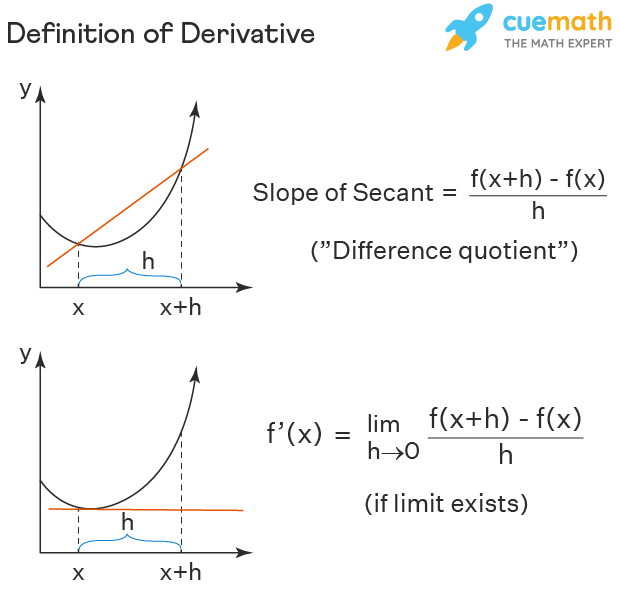
At its heart, a mathematical derivative quantifies how one quantity changes in response to changes in another. More precisely, it measures the instantaneous rate of change. Imagine tracking the price of a stock over time. While you can calculate the average change over a day or a week, a derivative allows you to pinpoint the exact rate at which the price is changing at any single moment. This is akin to looking at a car’s speedometer, which shows instantaneous speed—the derivative of distance with respect to time.
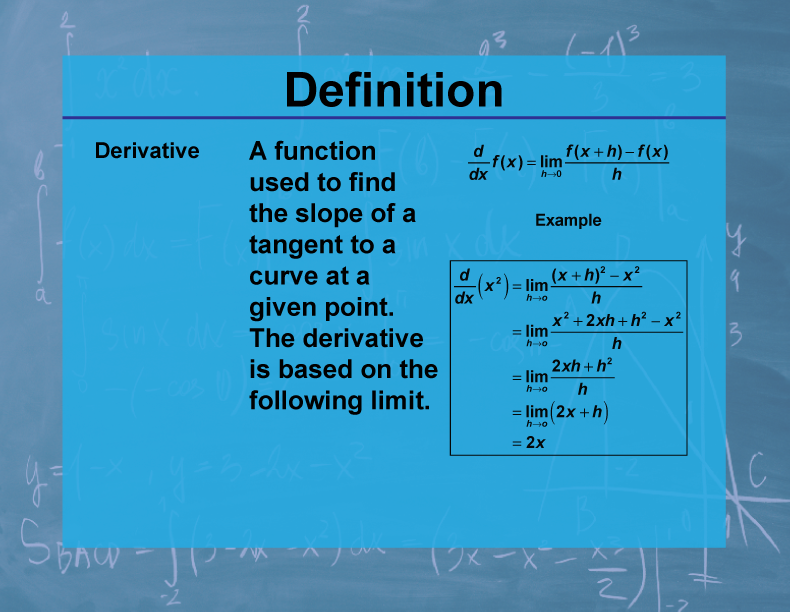
Graphically, the derivative at any point on a curve represents the slope of the tangent line to that curve at that specific point. For a function like a stock’s price trajectory or an economic indicator’s trend, the derivative tells us not just if it’s going up or down, but how steeply it’s rising or falling at a given instant. This provides far more granular and actionable insights than simply observing overall trends. This concept is built upon the idea of limits, where we consider the change over infinitesimally small intervals, providing precision crucial for dynamic financial environments.
Mathematical Derivatives in Strategic Financial Analysis
The power of derivative math truly shines when applied to complex financial scenarios. It provides the analytical rigor needed to move beyond superficial observations and delve into the underlying mechanics of market movements and business operations.
Deconstructing Investment Performance and Risk
For investors and portfolio managers, derivatives are integral to understanding and managing risk and evaluating performance:
- Volatility Measurement: A key indicator of risk, volatility describes the degree of variation of a trading price series over time. Mathematical derivatives help quantify this fluctuation, showing how fast and how much an asset’s price is likely to move. A higher absolute value of the derivative suggests greater volatility.
- Beta Calculation: Beta, a measure of an asset’s systematic risk, quantifies its sensitivity to overall market movements. Conceptually, beta is the derivative of the asset’s return with respect to the market’s return, indicating how much an asset’s price is expected to change for a given change in the broader market.
- Momentum Analysis: Derivatives are fundamental to identifying momentum. If the derivative of a stock’s price is positive and increasing, it signals strong upward momentum. Conversely, a negative derivative signifies downward pressure. This is vital for trend-following strategies and identifying potential turning points.
- Identifying Inflection Points: When the derivative of a financial metric (like profit or revenue growth) changes sign, it indicates an inflection point—a potential peak or trough. Recognizing these points early can inform critical decisions about buying, selling, or adjusting business strategies.
Optimizing Business Finance and Resource Allocation
Beyond capital markets, derivative math offers profound insights for optimizing internal business operations:
- Cost Minimization and Revenue Maximization: Businesses constantly seek to maximize profit. Profit is often a function of production volume, pricing, and other variables. By taking the derivative of a profit function and setting it to zero, businesses can mathematically determine the optimal production level or price point that yields maximum profit or minimum cost.
- Marginal Analysis: This cornerstone of economics and business finance relies entirely on derivatives. Marginal cost, marginal revenue, and marginal utility are all derivatives of total cost, total revenue, and total utility, respectively. They represent the change incurred by producing or consuming one additional unit. Understanding these marginal values is essential for pricing strategies, production decisions, and assessing incremental profitability.
- Inventory Management: Optimizing inventory levels is a delicate balance between holding costs and avoiding stockouts. Derivative analysis can help construct models that identify the most cost-effective inventory levels by finding the point where the derivative of the total inventory cost function is minimized.
Valuation and Forecasting in Financial Markets
Derivative math underpins some of the most sophisticated models used in financial valuation and economic forecasting:
- Option Pricing Models: Models like the Black-Scholes formula, used extensively for valuing options, are built upon a framework of partial differential equations. The “Greeks” (Delta, Gamma, Theta, Vega, Rho)—measures of an option’s sensitivity to various factors like the underlying asset price, time to expiration, and volatility—are themselves partial derivatives. These enable traders and investors to understand the risks and potential returns of options contracts with precision.
- Interest Rate Sensitivity (Duration): For fixed-income securities, duration is a critical measure of a bond’s price sensitivity to changes in interest rates. Effectively, duration is the derivative of the bond’s price with respect to changes in interest rates. This helps investors gauge interest rate risk and manage bond portfolios.
- Economic Forecasting: Economists use derivatives to analyze the rates of change in macroeconomic indicators such as GDP growth, inflation, and unemployment rates. Understanding if these rates are accelerating or decelerating (which would involve second derivatives) provides deeper insights into economic momentum and helps forecast future economic conditions, informing monetary policy and investment decisions.
The Critical Distinction: Mathematical vs. Financial Derivatives
It is crucial to clarify the common semantic overlap in finance. When a financial professional refers to “a derivative,” they typically mean a financial derivative—a contract whose value is derived from an underlying asset, index, or rate. Examples include futures, options, swaps, and forwards. These are products traded in markets.
In contrast, a mathematical derivative is a concept from calculus; it is a tool or a method for quantifying change.
The connection is profound and symbiotic: the mathematical derivative is the engine that powers the analysis, pricing, and risk management of financial derivatives. Without a deep understanding of calculus, the complex behaviors, sensitivities (like the “Greeks”), and risk profiles of financial derivatives would be impossible to model, understand, and effectively manage. Financial derivatives rely on mathematical derivatives to define their properties and predict their behavior. One is the instrument, the other is the analytical lens through which it is understood.
Practical Application for Informed Financial Decision-Making
Leveraging derivative math effectively empowers individuals and institutions to make more informed and strategic financial decisions.
- Risk Management and Hedging: Businesses and investors use derivative analysis to construct robust hedging strategies. By understanding how the value of assets and liabilities change with market variables, they can employ financial derivatives to offset potential losses from adverse price movements, currency fluctuations, or interest rate changes. The effectiveness of these hedges is directly quantifiable using mathematical derivatives.
- Algorithmic Trading and Quantitative Finance: The burgeoning field of quantitative finance, including high-frequency and algorithmic trading, is built on the bedrock of derivative math. Sophisticated algorithms perform real-time derivative calculations on vast datasets to identify fleeting trading opportunities, manage risk dynamically, and execute complex strategies based on subtle shifts in market momentum and volatility.
- Strategic Investment Planning: For long-term investors, derivative analysis offers insights beyond simple historical returns. Understanding the rate of change in market trends, economic cycles, and asset valuations helps in strategic asset allocation, rebalancing decisions, and identifying optimal entry and exit points for various investments. The ability to interpret second derivatives can even reveal whether a trend is accelerating or decelerating, providing crucial foresight.

Essential Tools and Skills for Derivative-Driven Finance
To effectively wield the power of derivative math in finance, a specific blend of skills and tools is necessary:
- Strong Mathematical Foundation: A solid grasp of calculus, particularly differential calculus and potentially multivariable calculus, is paramount. This foundational knowledge is what enables a financial professional to understand, interpret, and apply derivative concepts correctly.
- Statistical and Econometric Expertise: Derivatives are often combined with statistical methods to analyze financial data, build predictive models, and perform rigorous hypothesis testing. Econometrics further extends this by applying statistical methods to economic data.
- Computational Tools and Programming: Modern finance is highly quantitative and computational. Proficiency in programming languages like Python (with libraries such as NumPy, SciPy, Pandas, and scikit-learn for numerical computation, data analysis, and machine learning) and R (for statistical analysis) is almost a prerequisite. Specialized financial modeling software and advanced spreadsheet capabilities (e.g., Excel with VBA) are also crucial.
- Data Literacy and Interpretation: The ability to work with large, complex datasets, understand data quality issues, and extract meaningful insights is vital. Raw data must be cleaned, processed, and then analyzed using derivative-based models to yield actionable intelligence.
- Domain-Specific Knowledge: Ultimately, mathematical prowess must be combined with a deep understanding of financial markets, economic principles, specific asset classes, and regulatory environments. Applying the right mathematical tool to the correct financial problem requires expertise in both domains.
In conclusion, “derivative math” is not an abstract academic concept but a potent analytical engine for navigating the complexities of the financial world. From valuing sophisticated instruments to optimizing business operations and managing risk, a deep understanding of instantaneous rates of change is a cornerstone of financial acumen.
aViewFromTheCave is a participant in the Amazon Services LLC Associates Program, an affiliate advertising program designed to provide a means for sites to earn advertising fees by advertising and linking to Amazon.com. Amazon, the Amazon logo, AmazonSupply, and the AmazonSupply logo are trademarks of Amazon.com, Inc. or its affiliates. As an Amazon Associate we earn affiliate commissions from qualifying purchases.