
The question of when tech giant Apple, Inc. (AAPL) might execute another stock split is a recurring point of speculation among investors and market analysts. A stock split is a corporate action that can significantly alter the trading dynamics and accessibility of a company’s shares, even if it doesn’t change the underlying value of the company itself. For a company with Apple’s market capitalization and history of strong growth, understanding the mechanics and implications of a stock split is crucial for any informed investor.
Understanding Stock Splits: The Financial Mechanics
At its core, a stock split is a corporate decision to increase the number of a company’s outstanding shares by dividing each existing share into multiple new shares. The most common types are forward stock splits, where existing shares are multiplied (e.g., a 2-for-1 split, 7-for-1, or 4-for-1), and reverse stock splits, where shares are consolidated. When a forward stock split occurs, the price per share is proportionally reduced, ensuring that the total market capitalization of the company remains unchanged. For instance, in a 4-for-1 stock split, an investor holding one share priced at $400 would suddenly own four shares, each priced at $100. The total value of their holding—$400—remains constant immediately after the split.
The primary motivations behind a stock split are rooted in market psychology and investor accessibility. A high stock price, while indicative of strong company performance, can be a psychological barrier for some retail investors, making it seem “expensive” or out of reach. By lowering the per-share price, a company can make its stock appear more affordable and attractive to a broader base of individual investors. This increased accessibility can stimulate demand, potentially leading to greater liquidity and trading volume. Furthermore, a lower share price can make it easier for employees to participate in stock purchase plans or for options to be priced more granularly. While a stock split does not inherently create value, it can enhance market perception and broaden the investor base, which can indirectly support long-term price stability and growth. Institutional investors are less affected by per-share price, as their transactions involve large blocks of shares, but the increased liquidity benefits all market participants.
Apple’s Stock Split History: A Pattern of Growth and Accessibility
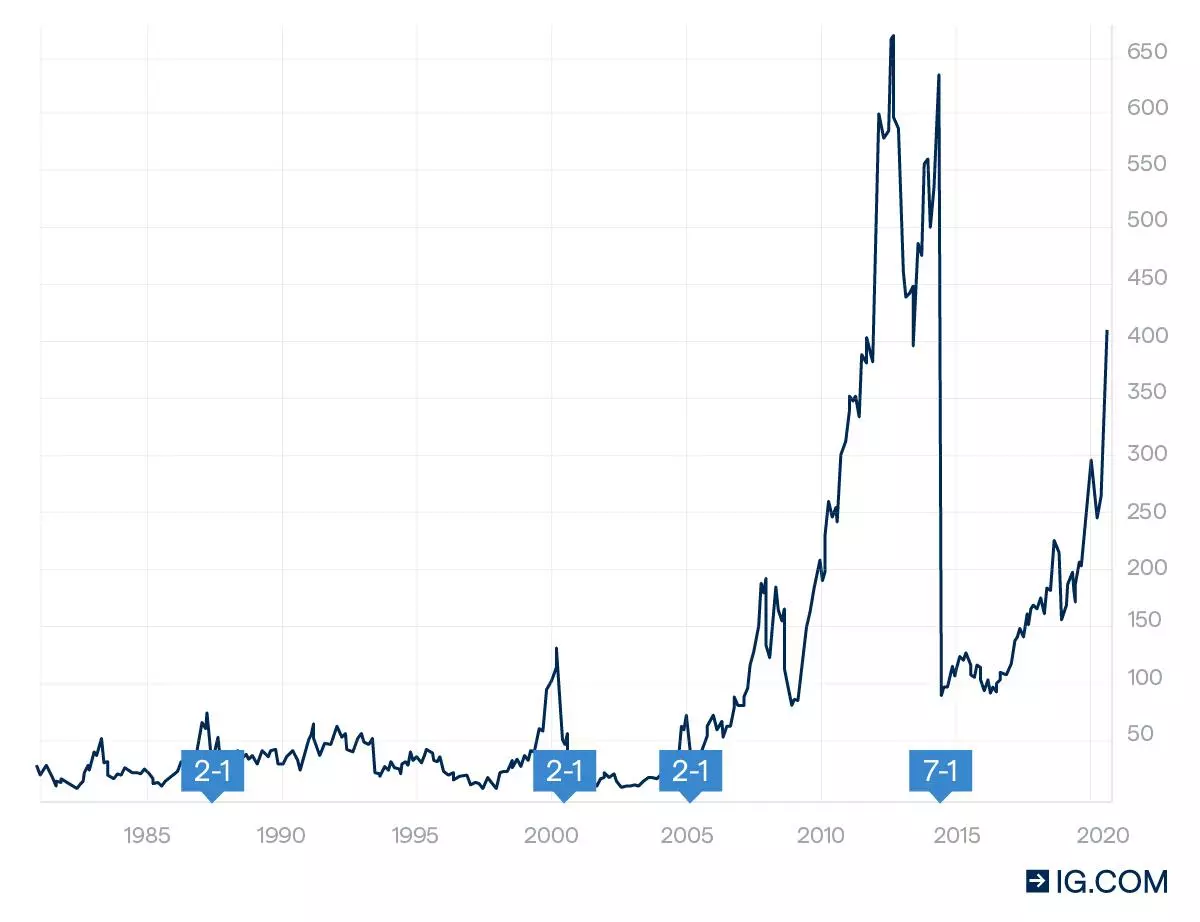
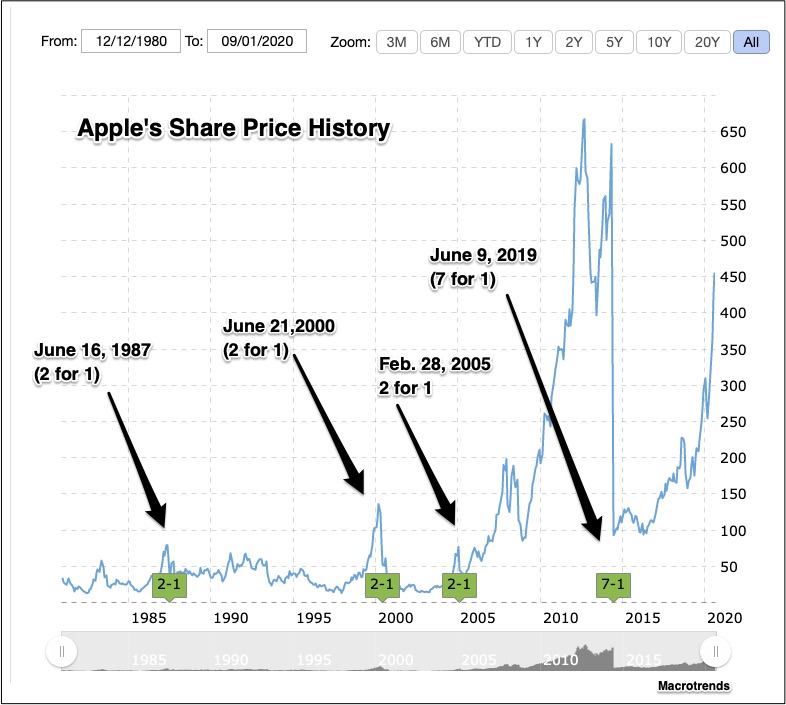
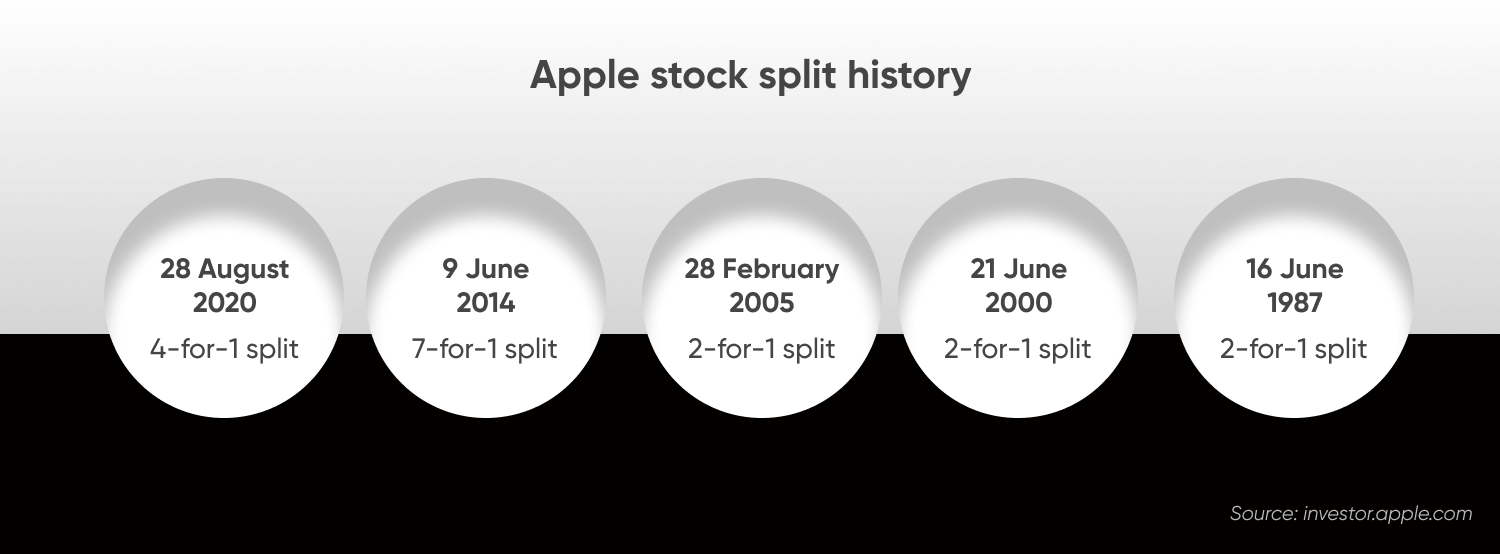
Apple has a notable history of executing stock splits, particularly as its share price surged following periods of significant innovation and market expansion. The company has undergone five stock splits since its IPO in 1980, each reflecting a strategic decision to maintain an optimal trading range and appeal to a wider audience.
The first split occurred in 1987, a 2-for-1 split, followed by another 2-for-1 split in 2000. The third split, also 2-for-1, took place in 2005. These early splits often coincided with periods of robust product launches and increasing investor confidence, such as the rise of the Mac and the initial success of the iPod.
However, the more recent splits have drawn significant attention due to Apple’s exponential growth and its status as one of the world’s most valuable companies. In June 2014, Apple executed a 7-for-1 stock split, a substantial move that dramatically lowered its per-share price from over $600 to just over $90. This split was preceded by years of strong performance driven by the iPhone’s global dominance and the expansion into new product categories and services. The 2014 split was widely seen as an effort to make the stock more accessible to a broader retail investor base, particularly as the company’s valuation approached the trillion-dollar mark.
The most recent split occurred in August 2020, a 4-for-1 split. Prior to this, Apple’s stock price had again soared, reaching levels above $500 per share (pre-split adjusted). The 2020 split came at a time when retail investing was experiencing a boom, fueled by commission-free trading platforms and widespread digital accessibility. By reducing its share price to around $125 post-split, Apple once again aimed to make its stock more approachable for individual investors and facilitate its inclusion in certain market indices that prefer specific price ranges. This pattern demonstrates Apple’s proactive approach to managing its share structure in conjunction with its growth trajectory and market dynamics.
Factors Influencing a Future Apple Stock Split
Predicting the exact timing of Apple’s next stock split is challenging, as the decision rests solely with the company’s board of directors. However, several key financial and market indicators typically precede such corporate actions.
Share Price and Optimal Trading Range
The most obvious trigger for a stock split is a significantly high share price. While there’s no magic number, companies often consider a split when their stock price rises well beyond what they perceive as an “optimal” trading range for accessibility and liquidity. Apple’s historical splits occurred when its pre-split adjusted price reached hundreds of dollars. If Apple’s stock price continues its upward trajectory and consistently trades at very high levels, the board might consider a split to bring the per-share price down to a more conventional range, perhaps between $100 and $200, which is often viewed as attractive for retail investors.
Market Capitalization and Investor Base Expansion
Apple is already one of the largest companies by market capitalization in the world. As its valuation grows, the company may want to ensure its stock remains attractive to a diverse investor base, including those with smaller capital allocations. A stock split facilitates this by reducing the investment required to purchase a single share, thereby broadening the pool of potential shareholders. This strategy can be particularly relevant in periods of strong market performance for the company, where robust earnings and future growth prospects are anticipated.
Peer Comparison and Index Inclusion
While Apple is a market leader, its board may also consider how its stock price compares to that of other large-cap technology companies. Maintaining a share price that aligns with industry norms can be part of a broader investor relations strategy. Additionally, although Apple is already a major component of indices like the S&P 500 and the Dow Jones Industrial Average, lower share prices can sometimes be preferred by certain index funds or ETFs for portfolio construction and rebalancing purposes.
Strategic Financial Management
Ultimately, a stock split is a tool for strategic financial management. It signals to the market that the company is confident in its long-term growth prospects and wishes to optimize its capital structure for broader market participation. The decision will likely be weighed against Apple’s ongoing financial performance, cash flow, debt levels, and future capital allocation plans, including dividends and share buybacks. A company that is financially healthy and expects continued growth is more likely to consider a stock split to capitalize on its market success and enhance shareholder value perception.
What a Stock Split Means for Investors: Perception vs. Value
For current and prospective investors, understanding the actual impact of a stock split is crucial. The most important financial takeaway is that a forward stock split does not fundamentally change the total value of an investor’s holdings or the company’s market capitalization. It’s akin to exchanging a $100 bill for two $50 bills – the total value remains the same, just in a different denomination.
No Change in Intrinsic Value
Immediately after a split, an investor holds more shares, but each share is worth proportionally less. Therefore, the intrinsic value of their investment in the company remains unchanged. The company’s underlying assets, earnings per share (though the number of shares used in the calculation changes), and business operations are not affected by a stock split.
Psychological Impact and Increased Liquidity
However, the psychological impact can be significant. Many retail investors perceive a lower share price as “cheaper” and more attainable, which can lead to increased buying interest post-split. This heightened demand can, in turn, contribute to greater liquidity, making it easier for investors to buy and sell shares without significantly impacting the price. Historically, many companies have seen their stock price rise in the months following a split, though this is often attributable to the positive sentiment and the underlying growth that made the split possible in the first place, rather than the split itself.
Dividend Adjustments and Fractional Shares
For investors who receive dividends, the dividend per share will also be adjusted proportionally. For example, if a company paid $1 per share before a 4-for-1 split, it would likely pay $0.25 per share after the split, maintaining the same total dividend payout for the investor. In the era of fractional share trading, the accessibility argument for stock splits has somewhat diminished, as investors can now buy a fraction of a high-priced share. However, the psychological barrier and the desire for “whole” shares still play a role for many.
Ultimately, while the financial mechanics of a stock split are straightforward, the decision by Apple to split its stock again would reflect its confidence in sustained growth and its strategic intention to maintain broad investor appeal. Investors should continue to focus on Apple’s financial performance, innovation pipeline, and market position rather than solely on the prospect or timing of a stock split when making investment decisions.
aViewFromTheCave is a participant in the Amazon Services LLC Associates Program, an affiliate advertising program designed to provide a means for sites to earn advertising fees by advertising and linking to Amazon.com. Amazon, the Amazon logo, AmazonSupply, and the AmazonSupply logo are trademarks of Amazon.com, Inc. or its affiliates. As an Amazon Associate we earn affiliate commissions from qualifying purchases.