
In the rapidly evolving landscape of digital infrastructure, the term “confederal system” has migrated from the halls of political science into the core of high-level systems architecture. While traditionally used to describe a union of sovereign states that delegate specific powers to a central authority, in the realm of technology, a confederal system represents a sophisticated model of decentralization. It is a framework where independent nodes, applications, or networks maintain their autonomy while collaborating through a shared protocol or a “thin” central hub.
As we move away from monolithic, centralized cloud environments toward a distributed digital future, understanding the confederal approach is essential for developers, CTOs, and tech enthusiasts alike. This architecture powers everything from advanced artificial intelligence to the next generation of the internet.

The Architectural Blueprint: Defining the Tech-Confederal System
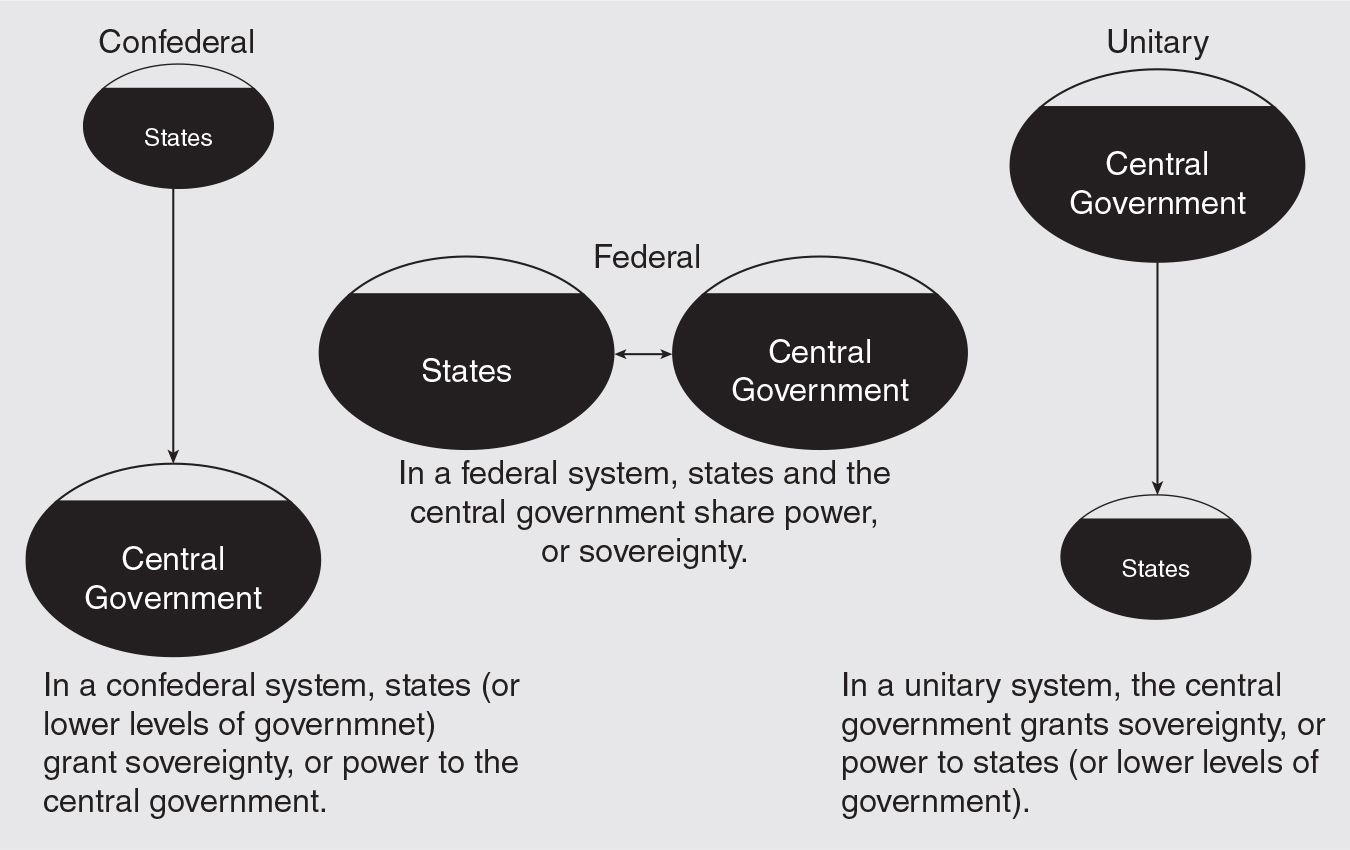
To understand what a confederal system is in technology, one must first distinguish it from its counterparts: centralized and federated systems. In a centralized system, a single core controls all data and logic. In a federated system, like email (SMTP), different entities follow the same rules but often rely on significant central coordination. A confederal system, however, places the majority of the power at the “edge” or within the individual member modules.
The Philosophy of Autonomy and Interoperability
The primary hallmark of a confederal tech system is that each component remains a self-governing entity. If you take a modern microservices architecture, for example, each service can be written in a different language, use a different database, and be deployed on different schedules. They form a “confederation” because they agree to a shared communication standard (like REST or gRPC) to achieve a collective goal, without any single service having total jurisdiction over the others.
Decentralization vs. Distribution
While all confederal systems are distributed, not all distributed systems are confederal. In a standard distributed database, the nodes are usually identical and subservient to a master logic. In a confederal tech system, the nodes are often heterogeneous. They might belong to different organizations or serve vastly different functions, yet they interoperate. This “sovereignty of the node” is what makes the confederal model uniquely resilient and flexible.
The Role of the Central Protocol
In a technical confederation, the “central government” is not a physical server or a single company; it is a protocol. This protocol acts as the treaty that binds the autonomous units. It defines how data is exchanged and how conflicts are resolved, but it does not dictate how each unit manages its internal state. This shift from “centralized control” to “protocol-based coordination” is the defining shift of modern enterprise tech.
Technical Architectures of Confederal Systems
The application of confederal principles is visible across various high-tech sectors. These architectures solve the “bottleneck” problem inherent in centralized systems by distributing decision-making and processing power.
Federated Learning: A Confederal Approach to AI
One of the most exciting applications of this system is “Federated Learning” (which, despite the name, functions as a confederal system in practice). In traditional AI, data from millions of users is moved to a central server to train a model. In a confederal AI setup, the data stays on the user’s device (the sovereign node). The central model “travels” to the device, learns from the local data, and then sends only the mathematical insights back to the center. This preserves privacy while allowing for a collective intelligence—a perfect digital confederation.
Mesh Networks and Edge Computing
In the world of hardware and networking, mesh networks represent the confederal ideal. Unlike a traditional Wi-Fi setup where every device must talk to a central router, in a mesh network, every node (phone, laptop, sensor) acts as a router itself. Each node is independent, but they collaborate to pass data across the network. This creates a self-healing system where the “confederation” remains intact even if several individual nodes fail.
Microservices as a Software Confederation
Modern software development has largely abandoned the “monolith” in favor of microservices. This is essentially a confederal system of code. Each service is an independent “state” with its own logic and data. They are bound together by an API Gateway or a Service Mesh. This allows teams to scale specific parts of an application without affecting the whole, mimicking the way a confederal government allows states to experiment with local laws without destabilizing the entire union.
The Role of Blockchain and DAOs in Confederal Governance
When discussing confederal systems in tech, one cannot ignore the impact of Web3 and blockchain technology. These tools provide the first robust “digital constitutions” that allow autonomous entities to work together without needing to trust a central third party.
Smart Contracts: The Modern Articles of Confederation
In a digital confederation, trust is replaced by code. Smart contracts serve as the binding agreements between independent actors in a network. They define the “powers” delegated to the collective—such as how a treasury is spent or how a protocol is upgraded—while ensuring that no single actor can override the consensus of the individual nodes. This creates a highly secure environment for cross-border and cross-organizational collaboration.
Interoperability Protocols and “Layer 0” Solutions
The blockchain space is currently seeing a move toward “AppChains” or specific blockchains for specific tasks. Networks like Polkadot or Cosmos are designed as confederal systems. They are not single blockchains, but rather “blockchains of blockchains.” Each “parachain” or zone has its own governance, its own token, and its own rules, but they are all connected to a central “Relay Chain” (the confederation hub) that provides shared security and allows them to communicate.
Decentralized Autonomous Organizations (DAOs)
A DAO is perhaps the purest organizational expression of a confederal system. It consists of individual token holders who act as sovereign members. These members vote on proposals to move the organization forward. There is no CEO; the “system” is governed by the collective through a set of hard-coded rules. This allows for global-scale cooperation on tech projects, investment funds, and social networks without a central corporate headquarters.
Benefits and Challenges of Technical Confederations
While the confederal system offers immense flexibility, it is not without its trade-offs. Choosing this architecture requires a careful balance between the benefits of autonomy and the costs of coordination.
Security through Redundancy and Isolation
One of the greatest advantages of a confederal system is its resilience to failure. In a centralized system, a single breach or server crash can take down the entire network. In a confederation, if one “state” or node is compromised, the others can isolate it and continue functioning. This “fault isolation” is why confederal architectures are preferred for critical infrastructure and high-security financial applications.
The Challenge of Latency and Synchronization
The downside of decentralization is complexity. Coordinating between many autonomous nodes is inherently slower than a single central brain making all the decisions. This leads to the “latency” challenge. Ensuring that all nodes in a confederal system have a consistent view of the truth—a process known as achieving consensus—requires significant bandwidth and sophisticated algorithms (like Paxos or Raft), which can slow down system performance.
Governance and Technical Debt
In a confederal system, upgrading the “central protocol” requires the agreement of the members. If the members disagree, the system can suffer from a “fork,” where the confederation splits into two competing versions. This makes governance a technical hurdle. Managing a confederal system requires not just good code, but good social and political engineering to ensure all participants remain aligned with the protocol’s evolution.
The Future of Confederal Tech Ecosystems
As we look toward the future, the confederal system is poised to become the standard for the “Internet of Things” (IoT) and the next era of personal data sovereignty.
Edge Computing and the IoT Revolution
With billions of smart devices coming online, a centralized cloud cannot handle the sheer volume of data. The future is “Edge Computing,” where the vast majority of processing happens locally on the device. This will create a global confederal system of hardware, where your smart home, your autonomous car, and your wearable tech all operate as independent units that occasionally sync with a broader network for updates and global data sharing.
Personal Data Sovereignty
The “Confederal System” of the future may well be focused on the individual. Imagine a digital identity system where you hold your own data (health records, financial history, social graphs) in a secure, sovereign “data vault.” When you use an app, you don’t give them your data; you allow their service to “join your confederation” temporarily. You retain the power, and the apps act as invited members of your personal digital ecosystem.

Final Thoughts: A Paradigm Shift
What is a confederal system? In the tech world, it is the ultimate expression of “Unity in Diversity.” It is a move away from the “Big Tech” model of total centralization toward a more democratic, resilient, and scalable digital world. By empowering the individual nodes and connecting them through transparent, robust protocols, we are building a technological landscape that is not only more powerful but more aligned with the decentralized nature of the human experience itself. Whether through microservices, DAOs, or federated AI, the confederal model is the architecture of the next digital age.
aViewFromTheCave is a participant in the Amazon Services LLC Associates Program, an affiliate advertising program designed to provide a means for sites to earn advertising fees by advertising and linking to Amazon.com. Amazon, the Amazon logo, AmazonSupply, and the AmazonSupply logo are trademarks of Amazon.com, Inc. or its affiliates. As an Amazon Associate we earn affiliate commissions from qualifying purchases.