
In the rapidly evolving landscape of green technology, the intersection of biology and digital innovation has birthed a new frontier: the optimization of the biomass pyramid. While traditionally a concept relegated to ecology textbooks, the biomass pyramid has become a foundational blueprint for engineers, data scientists, and BioTech innovators. Understanding the flow of energy and the quantification of organic matter across different layers of an ecosystem is no longer just an academic exercise—it is a critical data requirement for the multi-billion dollar renewable energy sector.

As we transition away from fossil fuels, technology is being leveraged to map, measure, and convert the biological mass represented in these pyramids into scalable energy solutions. This article explores how modern technology decodes the biomass pyramid to drive the next generation of sustainable energy and environmental monitoring.
Digitalizing the Ecosystem: How Tech Translates the Biomass Pyramid
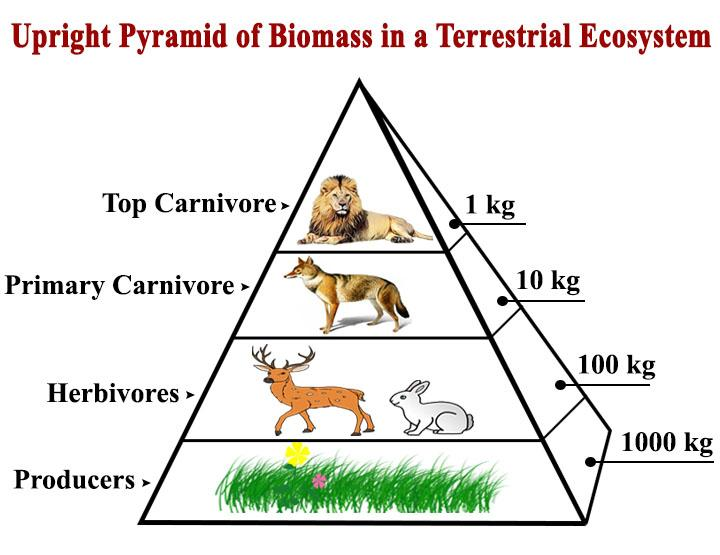
At its core, a biomass pyramid represents the total dry mass of all living organisms at each trophic level within an ecosystem. In the tech sector, this biological structure is viewed as a complex data set. To utilize biomass effectively for energy or carbon sequestration, we must first digitize the “hardware” of the natural world.
From Trophic Levels to Data Points
In traditional ecology, the pyramid starts with primary producers (plants) at the base and narrows as it moves toward apex predators. From a technological perspective, this narrowing represents energy loss and conversion efficiency. Modern BioTech companies use advanced sensors to treat these levels as variables in a massive optimization equation. By quantifying the caloric value and carbon content of the “base” (producers), developers can create predictive software that determines the total “energy output” a specific geographic region can support without collapsing its local biological infrastructure.
Remote Sensing and Satellite Monitoring
The most significant leap in biomass tech has been the integration of satellite imagery and LiDAR (Light Detection and Ranging). Gone are the days of manual forest sampling. Today, companies utilize hyperspectral imaging to identify the specific species of vegetation from orbit. LiDAR technology emits laser pulses to create high-resolution 3D maps of forest canopies. These “digital twins” of the biomass pyramid allow tech firms to calculate the volume of organic matter with centimeter-level precision. This data is essential for calculating the “Available Sustainable Biomass” (ASB), a metric used by power plants to ensure they are not over-harvesting the base of the pyramid.
Bio-Energy Optimization: Software Solutions for Pyramid Analysis
Once the physical mass of an ecosystem is quantified, the focus shifts to processing. The technology used to manage this organic data is increasingly reliant on sophisticated software architectures and artificial intelligence.
Predictive Modeling for Feedstock Availability
Software platforms are now designed to manage the “Supply Chain of the Sun.” Because the biomass pyramid is seasonal and sensitive to climatic shifts, AI-driven predictive models are used to forecast feedstock availability. By analyzing historical weather patterns, soil moisture sensors, and growth rates, these platforms can predict how the mass at the base of the pyramid will fluctuate over the next decade. For tech-driven energy companies, this minimizes the risk of investment in biomass-to-energy conversion plants, ensuring a steady stream of “biological fuel.”
AI and Machine Learning in Carbon Sequestration
The biomass pyramid is essentially a visual representation of carbon storage. Tech startups are currently developing Machine Learning (ML) algorithms that analyze the “efficiency” of different biomass pyramids in capturing atmospheric CO2. By comparing different ecosystems (e.g., a tropical rainforest vs. a managed timber land), these algorithms can suggest “technological interventions”—such as the introduction of genetically modified, fast-growing algae—to artificially widen the base of the pyramid. This “pyramid expansion” is a key component of the emerging Carbon Capture and Storage (CCS) tech stack, allowing companies to sell verified carbon credits on digital exchanges.

The Engineering of Efficiency: Converting Biological Mass into Tech-Fuel
The “mass” in the biomass pyramid is only useful if it can be converted into a medium compatible with modern infrastructure, such as electricity or liquid fuel. This is where advanced chemical engineering and synthetic biology enter the frame.
Advanced Thermochemical Conversion Technologies
Technology has moved far beyond simple combustion. We are now seeing the rise of sophisticated gasification and pyrolysis tech. These systems use high temperatures in low-oxygen environments to break down the complex polymers found in the biomass pyramid (lignin, cellulose, and hemicellulose) into “syngas” or “bio-oil.” The tech challenge here is the variability of the input; the base of a biomass pyramid in a wetland is chemically different from one in a grassland. Advanced control systems equipped with real-time molecular sensors adjust the conversion parameters on the fly, ensuring that the resulting fuel meets the rigorous standards required for aviation or high-performance computing (HPC) cooling systems.
Synthetic Biology and Pyramid Reshaping
Perhaps the most “high-tech” application of this concept is the use of synthetic biology to optimize the pyramid itself. BioTech firms are engineering microorganisms that can break down the “woody” parts of the biomass pyramid—material that was previously considered waste—more efficiently than any natural process. By deploying engineered enzymes, we can extract more “data” (energy) from the same amount of “hardware” (mass). This increases the overall efficiency of the pyramid, allowing for a higher energy yield from a smaller ecological footprint.
Precision Agriculture and the Future of Biomass Data
To maintain the health of the biomass pyramid while extracting value from it, the tech industry has turned to Precision Agriculture. This sub-sector treats every square meter of the pyramid’s base as a managed asset.
IoT Integration in Forest and Crop Management
The Internet of Things (IoT) has permeated the forest floor. Soil sensors, sap-flow meters, and automated weather stations feed real-time data into centralized dashboards. This allows for “Just-in-Time” harvesting of biomass. Instead of clear-cutting—which destroys the pyramid structure—tech-enabled selective harvesting identifies exactly which parts of the biomass can be removed to optimize the health of the remaining organisms. This technological oversight ensures that the pyramid remains a renewable resource rather than a depleted one.
Blockchain for Supply Chain Transparency
As companies face increasing pressure to prove the sustainability of their energy sources, blockchain technology is being used to track biomass from the pyramid to the power grid. Each “unit” of biomass can be assigned a digital twin on a ledger, recording its origin, the health of the ecosystem it was taken from, and the carbon footprint of its transport. This creates a “Proof of Origin” for biological mass, preventing the illegal harvesting of protected ecosystems and ensuring that the biomass pyramid being utilized is part of a verified, sustainable loop.
The Convergence of Biology and Bitrate
The biomass pyramid, once a simple observation of nature, has been reimagined as a sophisticated framework for technological development. As we look toward a future defined by the “Bio-Economy,” the ability to map, model, and manipulate these pyramids will be the hallmark of the world’s leading tech firms.
From the satellite arrays that monitor the Earth’s green canopy to the microscopic engineered enzymes that dissolve cellulose, technology is the bridge between the organic world and the digital one. By respecting the structural logic of the biomass pyramid while applying the rigors of data science and engineering, we are unlocking a source of power that is as old as life itself, yet as advanced as the most complex algorithm. The “what” of the biomass pyramid is biology; the “how” of its future is undeniably tech.
aViewFromTheCave is a participant in the Amazon Services LLC Associates Program, an affiliate advertising program designed to provide a means for sites to earn advertising fees by advertising and linking to Amazon.com. Amazon, the Amazon logo, AmazonSupply, and the AmazonSupply logo are trademarks of Amazon.com, Inc. or its affiliates. As an Amazon Associate we earn affiliate commissions from qualifying purchases.