
The term “ballast light” is a bit of a misnomer, as a ballast itself is not a type of light. Instead, it’s a crucial component that works with certain types of lighting to ensure they function correctly and efficiently. Primarily, ballasts are associated with gas-discharge lamps, such as fluorescent and high-intensity discharge (HID) lamps. These lights require a ballast to initiate and regulate their operation. Without a ballast, these light sources would either fail to ignite, produce excessive current and burn out instantly, or flicker uncontrollably. This article will delve into the technical intricacies of ballasts, their function in various lighting systems, and their evolution within the broader landscape of lighting technology.

The Fundamental Role of a Ballast in Gas-Discharge Lighting
Gas-discharge lamps operate on a principle fundamentally different from incandescent bulbs. Incandescent lights produce light by heating a filament until it glows. Gas-discharge lamps, on the other hand, generate light by passing an electric current through a gas or vapor. This process, known as an electric arc, excites the gas molecules, causing them to emit photons. However, the electrical characteristics of these gases require precise control, which is where the ballast comes in.
Ignition: Overcoming the Initial Resistance
To initiate an arc in a gas-discharge lamp, a high voltage surge is initially required. The gas inside the lamp, in its cold state, acts as a poor conductor of electricity. This high voltage, often several times the normal operating voltage, is necessary to ionize the gas, creating a conductive path for the current.
The Role of Voltage Step-Up
A ballast typically achieves this initial high voltage through a step-up transformer. When the ballast is energized, it momentarily creates an inductive circuit. This rapid change in current flowing through the inductor generates a high voltage spike. This surge is then applied across the electrodes of the gas-discharge lamp, breaking down the resistance of the gas and initiating the electric arc. Once the arc is established, the gas becomes much more conductive.
Regulation: Controlling the Current Flow
While a high voltage is needed for ignition, the gas discharge becomes highly conductive once started. If this current were left unchecked, it would rapidly increase, leading to overheating, damage, and premature failure of the lamp. This phenomenon is known as “thermal runaway.” The ballast’s primary function after ignition is to limit and regulate this current to a safe and stable operating level.
Preventing Thermal Runaway
The ballast acts as a current limiter, effectively presenting an impedance to the flow of electricity. This impedance causes a voltage drop across the ballast, which, in turn, reduces the voltage across the lamp. By precisely controlling the amount of current flowing through the lamp, the ballast ensures that the gas discharge remains stable, producing consistent light output without damaging the lamp or the ballast itself. The regulated current is critical for maintaining the optimal temperature of the lamp’s electrodes and the gas within the tube, thereby maximizing the lamp’s lifespan and efficiency.
Types of Ballasts and Their Technologies
The evolution of lighting technology has seen a parallel development in ballast design. From rudimentary magnetic ballasts to sophisticated electronic ballasts, the goal has always been to improve efficiency, longevity, and performance.
Magnetic Ballasts: The Traditional Approach
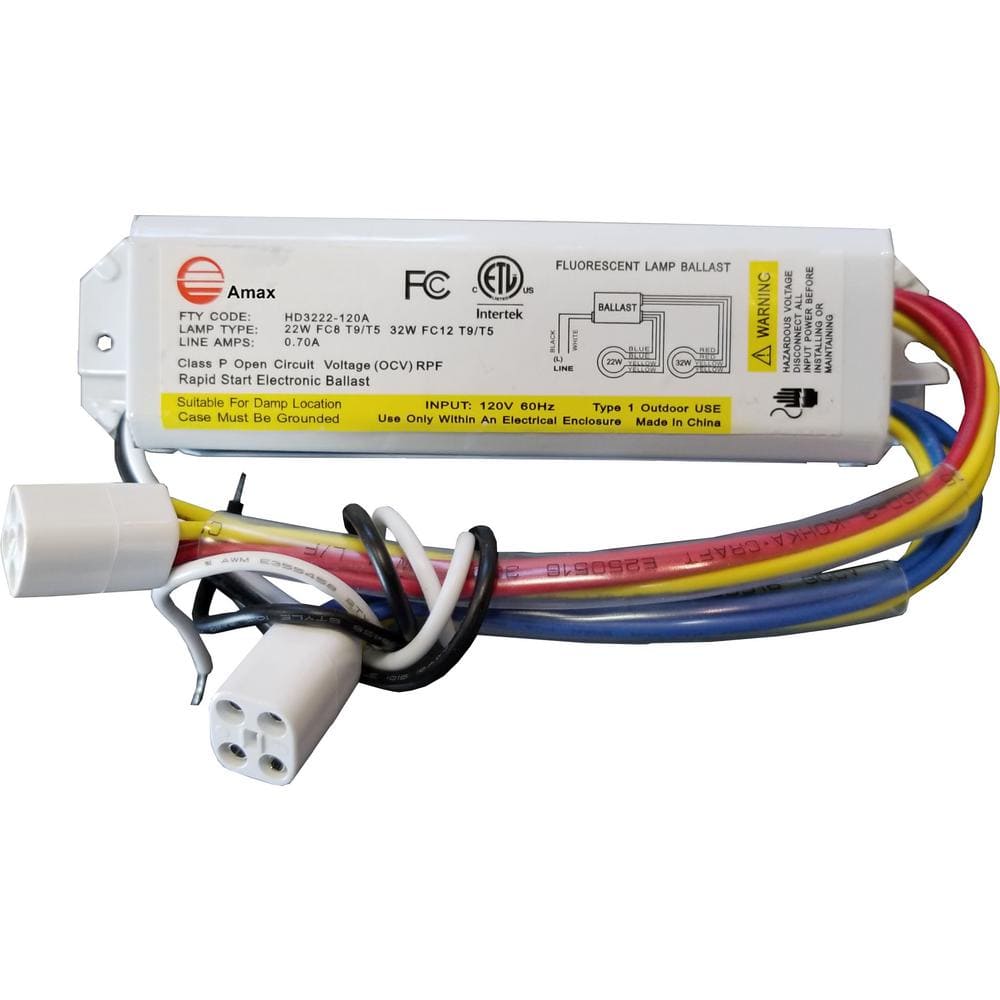
Magnetic ballasts, also known as electromagnetic ballasts, were the first widely used type for fluorescent and HID lighting. They are constructed from coils of wire wound around an iron core. Their operation relies on the principles of electromagnetic induction.
Components and Operation of Magnetic Ballasts
A magnetic ballast typically consists of a transformer and a reactor. The transformer steps up the incoming line voltage to the required ignition voltage. The reactor, essentially an inductor, is responsible for limiting the current after the arc is established. This type of ballast operates at the mains frequency of the power supply (e.g., 50 or 60 Hz).
Advantages and Disadvantages of Magnetic Ballasts
The primary advantages of magnetic ballasts are their robust construction, simplicity, and relatively low initial cost. They are known for their durability and long lifespan. However, they also have significant drawbacks. They are inefficient, converting a substantial portion of electrical energy into heat rather than light. This inefficiency leads to higher energy consumption and operational costs. Furthermore, magnetic ballasts can produce a noticeable audible hum and cause lights to flicker at the mains frequency, which can be distracting and contribute to eye strain.
Electronic Ballasts: The Modern Standard
Electronic ballasts represent a significant advancement in ballast technology. They utilize semiconductor components and operate at much higher frequencies (typically 20 kHz or higher). This high-frequency operation offers numerous advantages over their magnetic counterparts.
High-Frequency Operation and its Benefits
By operating at frequencies well above the human visual range, electronic ballasts virtually eliminate the perceptible flicker associated with magnetic ballasts. This results in a more comfortable and consistent light output. More importantly, the high-frequency operation significantly improves efficiency. Lamps driven by electronic ballasts consume less energy for the same light output, leading to substantial cost savings in electricity bills.
Key Components and Efficiency Gains
Electronic ballasts incorporate components like transistors, diodes, capacitors, and integrated circuits. They often include a rectifier to convert AC power to DC, followed by an inverter to convert DC back to high-frequency AC. This complex internal circuitry allows for precise control of the lamp’s electrical parameters, optimizing performance and minimizing energy loss. The efficiency gains of electronic ballasts can be as high as 20-30% compared to magnetic ballasts, making them the preferred choice for modern lighting installations.
Dimming Capabilities and Advanced Features
Many electronic ballasts offer advanced features, including dimming capabilities. This allows for further energy savings by adjusting light levels to suit the needs of the environment and the time of day. Some sophisticated electronic ballasts also incorporate features like lamp end-of-life detection, programmed start for extended lamp life, and integration with building management systems for centralized control and monitoring.
Applications of Ballast-Driven Lighting Systems
The reliance on ballasts is characteristic of specific lighting technologies that have been widely adopted in various settings due to their efficiency and performance benefits over incandescent lighting.
Fluorescent Lighting: Ubiquitous in Commercial and Residential Spaces
Fluorescent lamps, available in various forms like linear tubes and compact fluorescent lamps (CFLs), have been a mainstay in commercial buildings, offices, schools, and many homes for decades. They offer good energy efficiency and a long lifespan compared to incandescent bulbs.
Linear Fluorescent Tubes: The Workhorse of Illumination
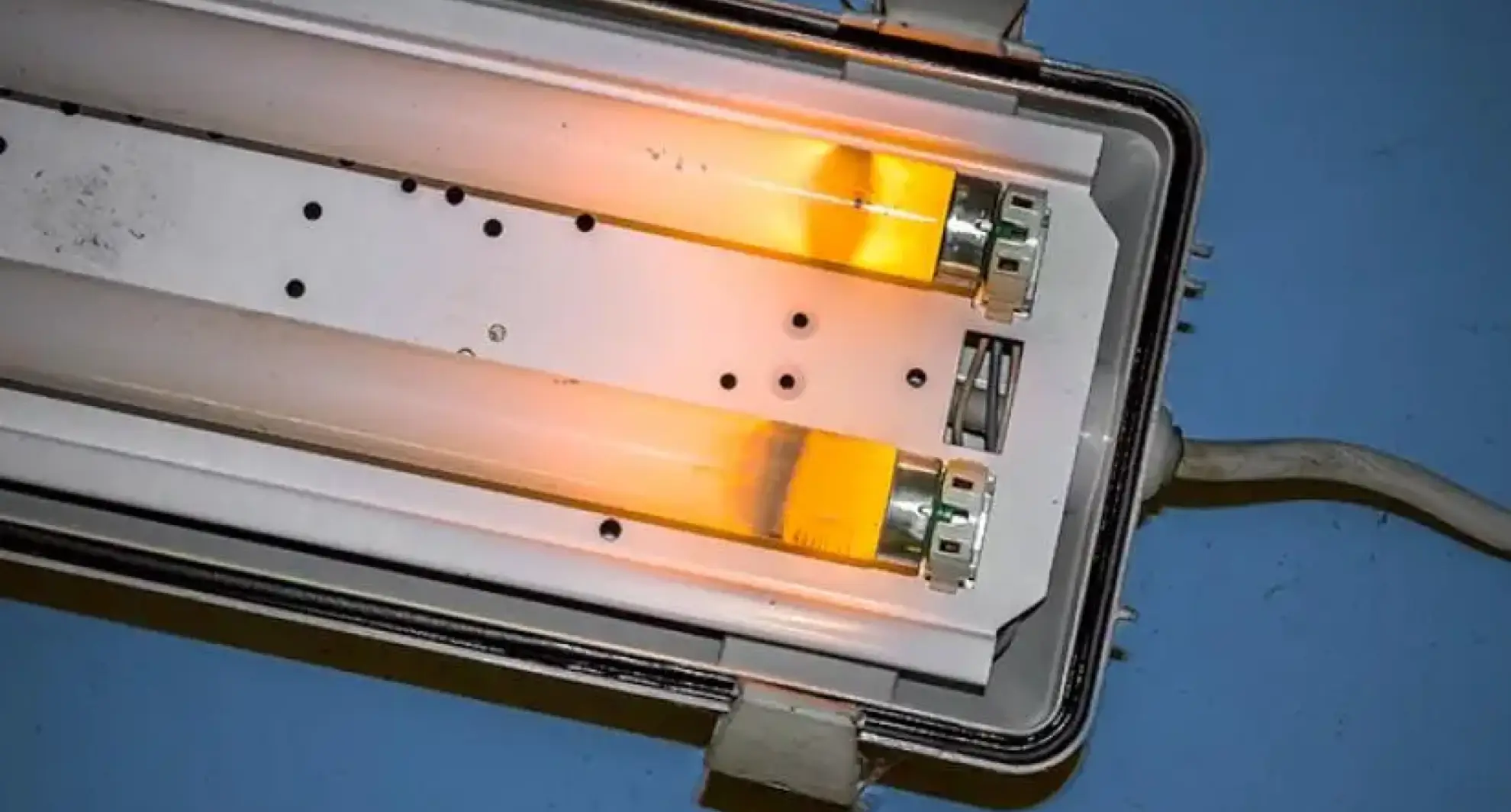
Linear fluorescent tubes, often found in ceiling fixtures in offices, retail stores, and industrial environments, have historically relied on ballasts to operate. The transition from magnetic to electronic ballasts has been a major driver in improving the energy efficiency of these ubiquitous lighting systems.
Compact Fluorescent Lamps (CFLs): The Residential Revolution
CFLs, designed to fit into standard incandescent light sockets, brought the energy-saving benefits of fluorescent technology to the residential market. Each CFL contains an integrated ballast, allowing it to be a direct replacement for incandescent bulbs. While increasingly being replaced by LEDs, CFLs played a significant role in promoting energy-efficient lighting in homes.
High-Intensity Discharge (HID) Lamps: Powering Outdoor and Industrial Areas
HID lamps, such as metal halide, high-pressure sodium, and mercury vapor lamps, are known for their high luminous efficacy and long lifespan, making them ideal for applications where high light output is required.
Metal Halide Lamps: Stadiums, Retail, and Horticulture
Metal halide lamps are commonly used for lighting sports stadiums, large retail spaces, and in horticultural applications due to their excellent color rendering. These lamps require a ballast to initiate and sustain the arc discharge of metal halide vapors.
High-Pressure Sodium (HPS) Lamps: Streetlights and Industrial Lighting
HPS lamps are easily recognizable by their characteristic orange-yellow glow and are widely used for street lighting, industrial areas, and security lighting. They offer very high energy efficiency but have a less desirable color rendering compared to metal halide lamps. A ballast is essential for the operation of HPS lamps.
The Rise of LED Lighting and the Diminishing Role of Traditional Ballasts
The advent and rapid development of Light Emitting Diode (LED) technology has fundamentally altered the landscape of lighting. LEDs are solid-state devices that produce light directly from semiconductor materials, and their operational characteristics are distinct from gas-discharge lamps.
How LEDs Differ from Gas-Discharge Lamps
Unlike fluorescent or HID lamps, LEDs do not rely on an arc discharge through a gas. Instead, they use the phenomenon of electroluminescence. When an electric current passes through a semiconductor material, electrons recombine with electron holes, releasing energy in the form of photons (light).
Integrated Drivers vs. External Ballasts
Because LEDs operate on direct current (DC) and at much lower voltages than typical mains AC power, they require a device called a “driver” rather than a traditional ballast. An LED driver performs multiple functions: it converts AC mains voltage to the required DC voltage, regulates the current flowing through the LED to prevent damage, and often includes features like dimming and surge protection. While the driver fulfills a similar purpose to a ballast in controlling and regulating the electrical input to the light source, the underlying technology and operational principles are entirely different.
The Impact on Traditional Ballast Markets
As LED technology matures and becomes increasingly cost-competitive and efficient, it is steadily replacing fluorescent and HID lighting in many applications. This transition directly impacts the market for traditional ballasts. The demand for magnetic and even electronic ballasts is declining as fixtures are designed with integrated LED drivers. This shift represents a significant technological evolution, moving away from the need for external ballast components to more integrated and efficient solid-state solutions.
The Future of Lighting Control and Efficiency
While traditional ballasts are becoming less prevalent in new installations, the principles of efficient lighting control remain paramount. The development of sophisticated LED drivers continues to push the boundaries of energy efficiency, controllability, and smart integration.
Smart Lighting and Networked Systems
The future of lighting is increasingly “smart.” LEDs, with their integrated drivers, are easily networked and controlled wirelessly. This allows for advanced features such as occupancy sensing, daylight harvesting, and remote management, leading to further energy savings and enhanced user experience. The focus has shifted from the “ballast” as a separate component to a more integrated “driver” within an intelligent lighting system.
Continued Innovation in LED Drivers
The innovation in LED drivers is ongoing, focusing on improving power factor correction, reducing harmonic distortion, enhancing dimming performance across a wider range of dimmers, and increasing overall system efficiency. This continuous improvement ensures that LED technology, and by extension, its associated control electronics, will remain at the forefront of efficient and sustainable illumination for the foreseeable future.
aViewFromTheCave is a participant in the Amazon Services LLC Associates Program, an affiliate advertising program designed to provide a means for sites to earn advertising fees by advertising and linking to Amazon.com. Amazon, the Amazon logo, AmazonSupply, and the AmazonSupply logo are trademarks of Amazon.com, Inc. or its affiliates. As an Amazon Associate we earn affiliate commissions from qualifying purchases.