
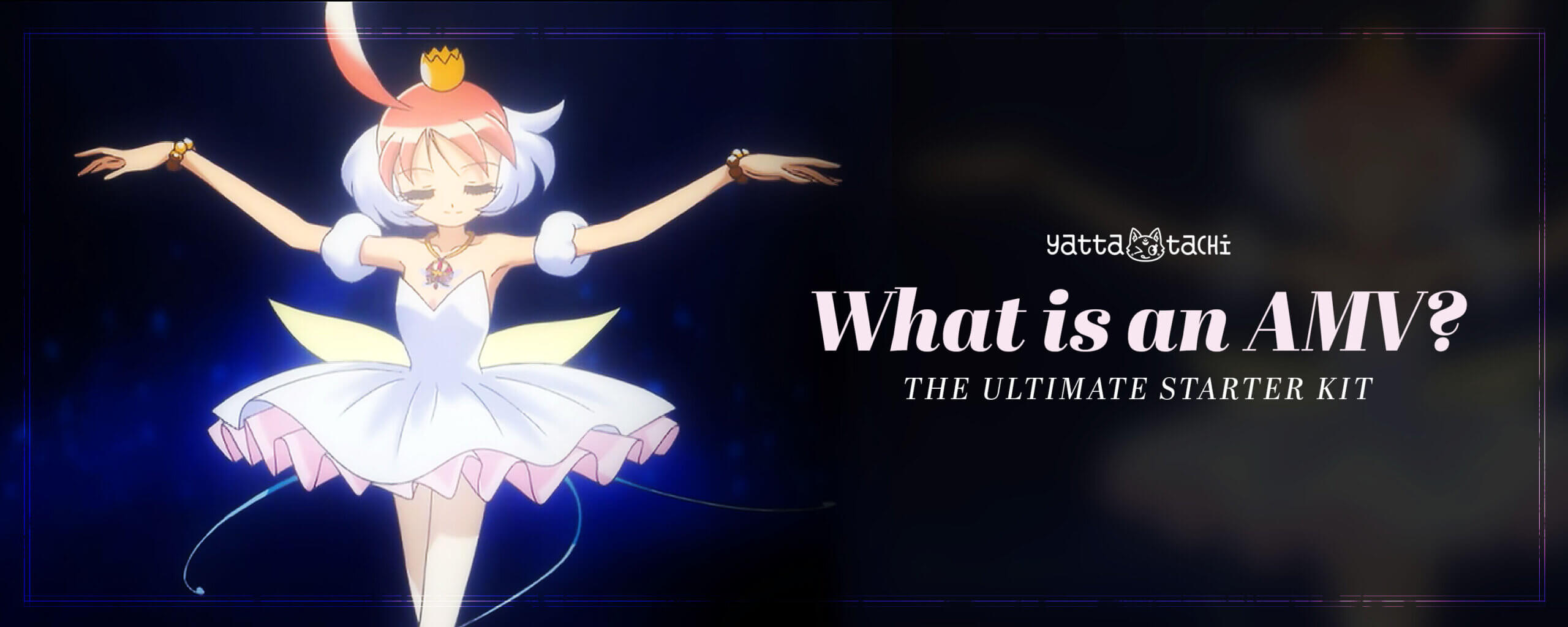
The term “AMV” stands for Anime Music Video. At its simplest, it is a fan-made music video consisting of clips from one or more animated shows or movies set to an audio track. However, to view an AMV merely as a hobbyist’s project is to overlook a complex intersection of digital media technology, sophisticated video engineering, and the evolution of non-linear editing (NLE) software.
In the modern tech landscape, AMVs represent a pinnacle of “remix culture,” where users leverage high-end hardware and software to recontextualize existing media. From the early days of synchronized VHS tapes to today’s AI-driven frame interpolation and 4K upscaling, the story of the AMV is fundamentally a story of technological progress. This article explores the technical architecture of AMV creation, the software ecosystems that power them, and how emerging technologies like Artificial Intelligence are redefining the medium.

The Technological Evolution of AMVs: From Analogue to Digital
The history of AMVs is a timeline of consumer-grade video technology. In the late 1980s and early 1990s, the first AMVs were created using “tape-to-tape” editing. This required two VCRs and a physical controller to pause and record clips in sequence. This was a destructive and linear process—once a clip was recorded, it could not be easily moved or altered without losing quality or starting over.
From Linear to Non-Linear Editing (NLE)
The mid-1990s saw the shift to digital editing. With the advent of affordable personal computers and video capture cards, creators moved into the realm of Non-Linear Editing (NLE). This technological leap allowed editors to treat video as digital data, enabling them to cut, move, and layer clips on a timeline without degrading the source material. Software like Adobe Premiere and Sony Vegas (now Magix Vegas) became the industry standards for AMV creators, offering tools for transitions, color correction, and multi-track audio synchronization.
The Impact of High-Definition Source Material
The transition from Standard Definition (SD) to High Definition (HD) and eventually 4K changed the technical requirements for AMV production. In the early 2000s, editors worked with low-resolution “fansubs” or ripped DVDs (720×480 resolution). Today, the availability of 1080p and 4K digital masters via streaming platforms and Blu-ray has necessitated a massive increase in processing power. Modern editors require high-performance GPUs and significant RAM to handle the bitrates and data throughput of uncompressed high-definition animation.
The Modern Tech Stack: Hardware and Software for Advanced Editing
Creating a high-quality AMV in the current digital era requires a sophisticated “tech stack.” It is no longer just about cutting clips to a beat; it is about visual effects (VFX), motion graphics, and precision engineering.
Professional-Grade Software Suites
While entry-level editors use mobile apps, the core of the AMV community relies on professional-grade software.
- Adobe After Effects: This is the gold standard for “technical” AMVs. It allows for advanced compositing, 3D camera tracking, and custom particle effects. The software’s expressions (a JavaScript-based coding language) allow editors to automate animations based on audio frequencies.
- DaVinci Resolve: Increasingly popular due to its industry-leading color grading engine and its utilization of GPU acceleration for real-time playback.
- Vegas Pro: Known for its intuitive timeline and audio-centric features, making it a favorite for editors who prioritize rhythm and “hard-cut” synchronization.
Hardware Requirements and Rendering Engines
Video rendering is a computationally intensive task. A typical 3-minute AMV with heavy effects might take several hours to render on a standard laptop. To optimize this, creators invest in:
- Multi-core CPUs: Essential for managing the background processes of NLE software.
- CUDA and OpenCL Acceleration: Modern editors leverage the parallel processing power of NVIDIA and AMD GPUs to handle real-time effects previews and final exports.
- Fast Storage (NVMe SSDs): High-bitrate video files require high read/write speeds to prevent “bottlenecking” during the editing process.
AI and Automation in Modern AMV Production
Perhaps the most significant technological shift in recent years is the integration of Artificial Intelligence (AI) and Machine Learning (ML) into the video editing workflow. AMV creators are often early adopters of these tools to overcome the limitations of their source material.

AI Upscaling and Restoration
Much of the classic anime from the 1990s exists only in low-resolution formats. Using AI upscaling software like Topaz Video AI, creators can use neural networks to “guess” missing pixels, effectively turning a 480p source into a crisp 1080p or even 4K file. These algorithms analyze textures and edges to reduce noise and sharpen imagery without the “plastic” look of traditional digital filters.
Frame Interpolation (SVP and RIFE)
Anime is traditionally drawn at 12 to 24 frames per second (fps). However, many modern digital displays operate at 60Hz or higher. Tech-savvy editors use AI-based frame interpolation (such as RIFE – Real-Time Intermediate Flow Estimation) to generate “in-between” frames. This creates a “60fps AMV,” where the movement appears hyper-fluid. While controversial in artistic circles, the technical feat of using AI to synthesize new animation frames is a testament to the sophistication of the hobby.
Automated Beat Detection and Masking
Manual “masking”—the process of cutting a character out of their background—is one of the most time-consuming tasks in video editing. New AI tools utilize “rotoscoping” algorithms (like Adobe’s Roto Brush 3.0) to automatically track and isolate subjects. Furthermore, AI plugins can now analyze audio waveforms to identify transients (beats), automatically placing markers on the timeline to help the editor sync visuals with surgical precision.
Technical Challenges: Encoding, Bitrates, and Digital Distribution
The final stage of AMV creation is the export, a process governed by the science of video codecs and compression algorithms. Understanding how to maintain visual fidelity while meeting the requirements of hosting platforms is a specialized skill set.
Codecs and Containers
Editors must choose between various codecs, such as H.264 (AVC), H.265 (HEVC), or the open-source AV1. HEVC is often preferred for 4K content because it offers superior compression, maintaining high quality at smaller file sizes. The choice of container (usually .MP4 or .MKV) also affects how metadata and multiple audio tracks are handled.
Navigating Content ID and Digital Rights Management (DRM)
From a technical standpoint, distribution is the most difficult hurdle. Platforms like YouTube utilize Content ID, a massive database of digital fingerprints. When an AMV is uploaded, an algorithm compares its audio and video data against a database of copyrighted material.
To navigate this, editors must understand the technicalities of “Fair Use” and how to modify content (through color grading, mirroring, or zooming) to ensure the video isn’t automatically blocked by automated DRM systems. This has led to a technological “arms race” between creators and automated copyright filters.
The Role of Bitrate in Visual Clarity
A common technical pitfall in AMVs is “macroblocking” or pixelation during fast-motion scenes. High-end creators use custom encoding settings, often employing two-pass VBR (Variable Bitrate) encoding. This ensures that the encoder allocates more data to complex frames (like explosions or fast action) and less to static scenes, optimizing the visual experience for the viewer’s bandwidth.
The Future of Fan-Made Media Technology
As we look toward the future, the technology behind AMVs will continue to merge with high-end digital production techniques. The line between “amateur fan work” and “professional digital media” is blurring.
VR and 360-Degree AMVs
With the rise of Virtual Reality (VR) hardware like the Meta Quest and Apple Vision Pro, we are seeing the emergence of immersive AMVs. These require editors to work in a 360-degree canvas, using spatial audio technology to create a music video that surrounds the viewer. This requires a leap in both rendering power and spatial design skills.
Generative AI: The Next Frontier
Generative AI tools like Sora or Stable Diffusion are beginning to allow editors to create entirely new “anime” clips that never existed in the original show. This technology enables “Hybrid AMVs,” where real-world footage is transformed into animation via AI style transfer, or where a missing scene can be synthesized to fit a specific lyric.
In conclusion, an AMV is far more than a simple fan tribute. It is a digital product that showcases the capabilities of modern hardware and software. From the precision of NLE timelines to the cutting-edge application of neural networks, AMV creators are at the forefront of exploring what is possible in the world of digital video technology. As AI and rendering engines continue to evolve, the “what” of an AMV will remain constant—animation and music—but the “how” will continue to push the boundaries of the digital arts.
aViewFromTheCave is a participant in the Amazon Services LLC Associates Program, an affiliate advertising program designed to provide a means for sites to earn advertising fees by advertising and linking to Amazon.com. Amazon, the Amazon logo, AmazonSupply, and the AmazonSupply logo are trademarks of Amazon.com, Inc. or its affiliates. As an Amazon Associate we earn affiliate commissions from qualifying purchases.