
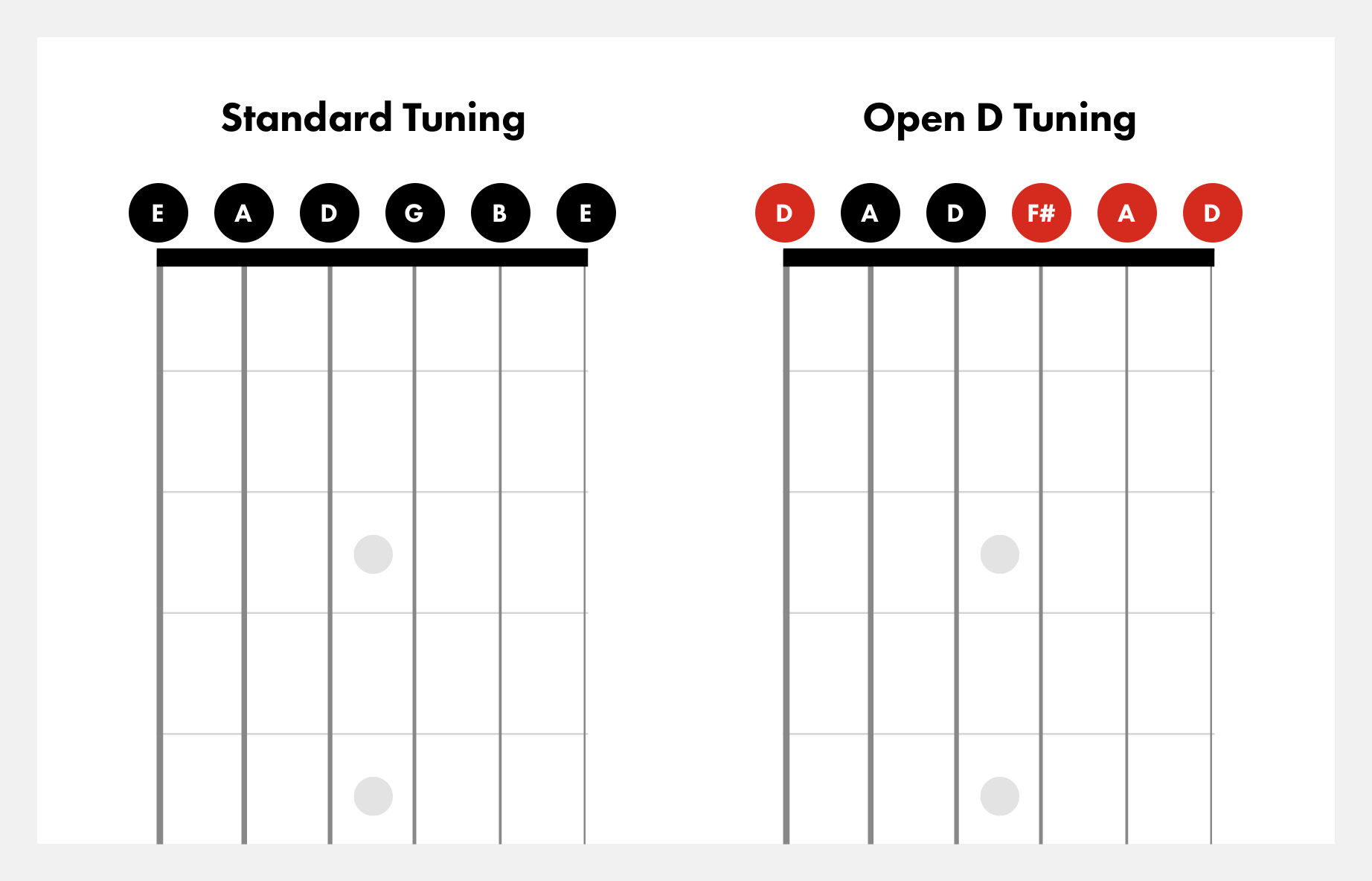
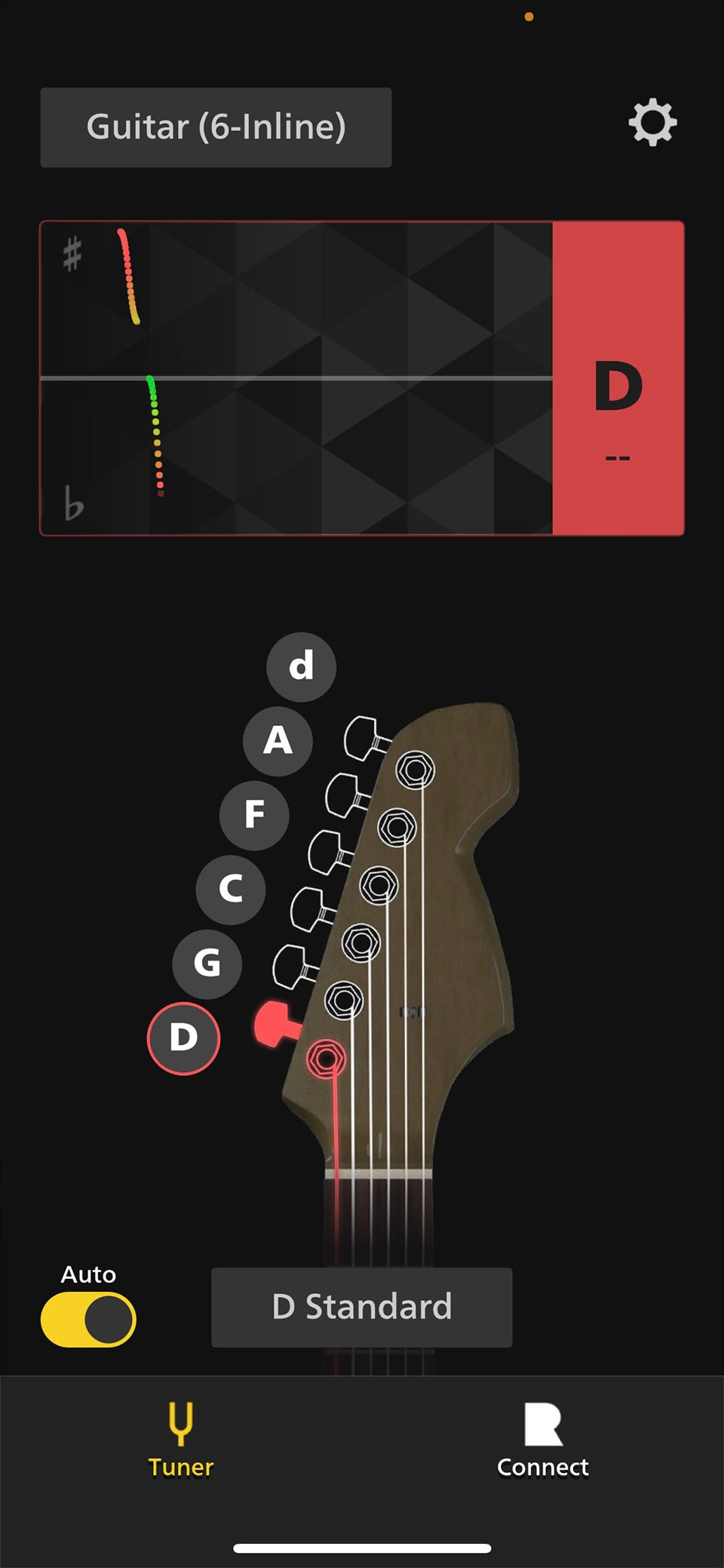
In the realm of modern acoustics and instrument engineering, tuning is far more than a simple aesthetic choice; it is a technical calibration that dictates the physical performance of a musical instrument. D Standard tuning, often referred to as “One Step Down,” represents a significant shift in the fundamental frequency of stringed instruments, primarily the guitar and bass. By lowering every string by a whole tone (two semitones), the instrument moves from the traditional E Standard (E-A-D-G-B-E) to D-G-C-F-A-D.
From a technical perspective, this transition involves a complex interplay between string tension, gauge mathematics, and hardware optimization. This guide explores the technical architecture of D Standard tuning, the digital tools used to achieve it, and the engineering requirements necessary to maintain signal integrity at lower frequencies.
The Fundamental Physics: Understanding Frequency and String Tension
To understand D Standard tuning, one must first understand the physics of a vibrating string. The pitch of a string is determined by its mass, length, and tension. When we transition from E Standard to D Standard, we are effectively reducing the tension to lower the frequency of the vibration.
Frequency Shifts: Moving from 440Hz to Lower Constants
In Western music technology, A4 is typically calibrated to 440Hz. In E Standard tuning, the low E string vibrates at approximately 82.41 Hz. When calibrated to D Standard, that same string must be tuned down to approximately 73.42 Hz. This reduction in Hertz (cycles per second) changes the harmonic profile of the instrument.
Technically, lowering the pitch by a whole step reduces the frequency by a factor of the twelfth root of two squared ($2^{2/12}$). This shift isn’t just a musical change; it alters the way the sound wave interacts with the instrument’s body and the electronic pickups. Lower frequencies have longer wavelengths, which require more energy to project and different technical parameters to capture accurately in a digital environment.
Tension Dynamics and the Elasticity of Metal Alloys
The most immediate technical challenge of D Standard tuning is the loss of string tension. If a guitar is set up for E Standard using a “10-46” gauge string set, tuning down to D will result in a tension drop of roughly 20-25%. This leads to “string flop,” where the amplitude of the string’s vibration becomes too wide, causing it to strike the frets (fret buzz) and lose sustain.
To counteract this, engineers and technicians use tension formulas to calculate the necessary string mass. By increasing the gauge (the thickness) of the string—moving, for example, to an “11-52” or “12-54” set—the player can restore the physical tension to its original technical specifications. This ensures that the string oscillates within a controlled physical space, providing a clean signal to the digital or analog recording interface.
Hardware Optimization: Engineering the Guitar for Lower Registers
Calibrating an instrument for D Standard is an engineering task that extends beyond the tuning pegs. Because the physical properties of the strings have changed (higher mass, lower tension), the mechanical components of the guitar must be re-configured to accommodate the new specifications.
Nut Slot Calibration and Gauge Selection
The “nut” is the small piece of material (bone, synthetic, or metal) at the top of the neck that guides the strings to the tuners. When switching to D Standard, the increased string gauge required for tension stability often exceeds the width of factory-carved nut slots.
From a technical standpoint, forcing a thicker string into a narrow slot creates friction, which leads to tuning instability and “binding.” Technicians must use precision gauged files to widen these slots to the exact micrometer of the new string set. Furthermore, because D Standard strings vibrate with a wider elliptical pattern, the “action” (the height of the strings above the frets) often needs to be technically adjusted via the truss rod and bridge to prevent mechanical interference.
Intonation Mechanics and Bridge Compensation
Intonation is the technical accuracy of a string’s pitch across the entire length of the fretboard. When the mass of a string increases for D Standard tuning, its “inharmonicity” changes. This means the string does not vibrate as a perfect mathematical line.
To correct this, the bridge saddles must be adjusted. Because the thicker strings used in D Standard are stiffer, they require more compensation—meaning the saddle must be moved further back to increase the scale length slightly. Without this precise mechanical adjustment, the instrument might be in tune at the open string but technically “out of tune” as the player moves up the neck. Modern digital strobe tuners are essential here, providing accuracy within 0.1 cents to ensure the engineering of the intonation is flawless.
Digital Tools and Signal Processing in D Standard
In the modern era, achieving and maintaining D Standard tuning relies heavily on sophisticated software and digital signal processing (DSP). Whether through hardware pedals or software plugins, technology has revolutionized how we manage lower-frequency calibrations.
High-Precision Algorithms in Digital Tuners
Old-fashioned needle tuners often struggle with the lower frequencies of D Standard, particularly on the low D string (73.42 Hz). Modern digital tuners utilize Fast Fourier Transform (FFT) algorithms to analyze the complex waveform of a vibrating string and extract the fundamental frequency with extreme precision.
Advanced DSP tuners, such as those found in high-end floor processors, utilize “strobe” technology. Instead of showing an average of the pitch, they display the phase difference between the input signal and a reference frequency. This allows technicians to calibrate instruments for D Standard with a level of accuracy that was physically impossible twenty years ago.
Pitch Shifting Software and Virtual Instrument Integration
For creators working in Digital Audio Workstations (DAWs), “Virtual Tuning” has become a prominent tech trend. Using polyphonic pitch-shifting algorithms, software can take an E Standard signal and transpose it to D Standard in real-time with minimal latency.
This process involves complex mathematical “windowing,” where the software slices the audio into tiny grains, re-pitches them, and re-assembles them without altering the timing. While physical re-tuning is always preferred for signal purity, these AI-driven DSP tools allow for rapid prototyping in professional studio environments, enabling producers to test the “sonics” of D Standard before committing to a physical hardware setup.
Impact on Modern Audio Production and Signal Integrity
Transitioning to D Standard isn’t just about the instrument; it changes the technical requirements of the entire recording chain. From preamp impedance to digital quantization, the lower frequency floor of D Standard demands a specific technical approach.
Managing Harmonic Overtones in Lower Frequencies
As the fundamental frequency drops, the harmonic overtones—the “hidden” frequencies above the note—also shift. In D Standard, these overtones occupy a denser area of the lower-midrange spectrum (200Hz to 500Hz).
From a technical mixing perspective, this requires more precise equalization (EQ). Audio engineers must use high-pass filters to clear out “sub-muck” that can interfere with the kick drum, which often lives in the 60Hz-100Hz range. Because a D Standard guitar’s low D (73.42 Hz) sits right in the middle of traditional bass drum territory, the technical challenge is to carve out frequency pockets using surgical EQ to maintain “phase coherence” and “sonic clarity.”
Transients and Signal Clarity in Digital Audio Workstations (DAWs)
Low-tuned strings have a different “transient” profile—the initial hit of the note is less sharp than in higher tunings. When recording D Standard, digital interfaces must capture these slower-moving waves without losing definition.
Technicians often use “look-ahead” compressors and limiters in the digital domain to catch the peaks of these larger waves. Furthermore, because D Standard produces a thicker, more resonant tone, the signal-to-noise ratio must be carefully managed. Using high-quality Analog-to-Digital (A/D) converters ensures that the rich harmonic content of the lowered strings is preserved in a 24-bit or 32-bit float environment, preventing “aliasing” or digital artifacts that can occur when low-frequency information is poorly captured.
Conclusion
D Standard tuning is a sophisticated technical configuration that bridges the gap between traditional music and modern acoustic engineering. It requires a deep understanding of the physics of tension, the mechanical limits of instrument hardware, and the capabilities of modern digital signal processing.
Whether it is adjusting the nut slots for increased string gauges, using FFT-based strobe tuners for cent-perfect intonation, or managing the frequency spectrum in a DAW, D Standard is a testament to how technology allows us to push the boundaries of sound. By mastering the technical requirements of this tuning, engineers and musicians can ensure that their instruments perform with the stability and clarity required for high-end professional production.
aViewFromTheCave is a participant in the Amazon Services LLC Associates Program, an affiliate advertising program designed to provide a means for sites to earn advertising fees by advertising and linking to Amazon.com. Amazon, the Amazon logo, AmazonSupply, and the AmazonSupply logo are trademarks of Amazon.com, Inc. or its affiliates. As an Amazon Associate we earn affiliate commissions from qualifying purchases.