
In the vast landscape of technology, the term “ad hoc” frequently emerges, signifying a fundamental approach to problem-solving and system design. Derived from Latin, meaning “for this,” ad hoc describes solutions, networks, or processes specifically designed to address a particular problem or task at hand, rather than being part of a pre-existing, generalized, or long-term plan. In essence, an ad hoc solution is purpose-built, often temporary, and characterized by its spontaneity and adaptability. This concept permeates various facets of the tech world, from networking to software development and data analysis, providing agility and responsiveness in dynamic environments. Understanding “ad hoc” is crucial for anyone navigating the intricacies of modern technological infrastructure and development methodologies, as it underpins many of the temporary, flexible, and often innovative solutions that drive progress.

Ad Hoc in Network Architectures
One of the most prominent applications of the ad hoc principle in technology is found within network architectures, particularly in scenarios requiring rapid deployment, mobility, or the absence of fixed infrastructure.
Mobile Ad Hoc Networks (MANETs)
Mobile Ad Hoc Networks, or MANETs, are quintessential examples of ad hoc technology. These are self-configuring networks of mobile devices connected wirelessly. Unlike traditional networks that rely on a fixed infrastructure like routers or access points, MANETs establish connections directly between devices, forming a dynamic, temporary network as needed. Each device in a MANET acts as both a host and a router, forwarding data packets for other nodes.
- Characteristics: MANETs are defined by their dynamic topologies, as nodes can move freely and join or leave the network at any time. They are self-organizing, requiring no central administration or pre-existing infrastructure. This makes them inherently flexible and adaptable.
- Use Cases: MANETs are invaluable in environments where establishing a fixed network is impractical or impossible. Common applications include disaster relief operations, where communication infrastructure might be destroyed; military battlefields, where rapid deployment and secure, self-healing networks are critical; and temporary events or conferences, enabling localized communication among participants without reliance on external networks. They can also be found in sensor networks for environmental monitoring or vehicle-to-vehicle communication systems.
- Challenges: Despite their advantages, MANETs present significant technical challenges. Routing data efficiently in a constantly changing topology is complex, often leading to increased latency and packet loss. Security is another major concern, as the decentralized nature makes them vulnerable to attacks like eavesdropping and denial-of-service. Power consumption is also a critical factor, as mobile nodes rely on battery life while acting as routers.
Wireless Ad Hoc Networks (WANETs)
While often used interchangeably with MANETs, Wireless Ad Hoc Networks (WANETs) represent a broader category that encompasses both mobile and stationary ad hoc setups. The core principle remains the same: a decentralized network formed on the fly without a central control point. WANETs can include networks where nodes are relatively static but still form a temporary, self-organizing mesh for specific purposes.
- Overlap and Distinction: The key distinction, if any, often lies in the degree of mobility. MANETs strictly imply mobile nodes, whereas WANETs can include scenarios where nodes are stationary but still communicate directly and dynamically to form a network for a specific, temporary need.
- Examples: Beyond the MANET applications, WANETs might be deployed for temporary surveillance systems, connecting various cameras and sensors in a remote area, or for rapid deployment of communication in construction sites or mining operations. The emphasis is always on the immediate, purpose-driven nature of the network.
Ad Hoc in Software Development and Data Management
Beyond networking, the “ad hoc” philosophy profoundly impacts software development processes, data querying, and reporting, offering flexibility and immediate insights.
Ad Hoc Queries
In the realm of databases and information systems, an “ad hoc query” refers to a database query that is not pre-planned or stored but rather created and executed on the fly to address a specific, immediate question or need for information.

- Definition and Purpose: Unlike standard, predefined reports or queries, ad hoc queries are typically generated by users or analysts to explore data, investigate anomalies, or retrieve specific pieces of information that weren’t anticipated by existing reports. They are exploratory in nature, allowing users to drill down into data, combine different data sets, and gain real-time insights for particular problems.
- Tools and Languages: SQL (Structured Query Language) is the most common language for executing ad hoc queries on relational databases. However, with the proliferation of NoSQL databases and big data platforms, other query languages and tools within business intelligence (BI) suites also facilitate ad hoc data retrieval and analysis, empowering non-technical users to access and manipulate data without deep programming knowledge.
Ad Hoc Reporting
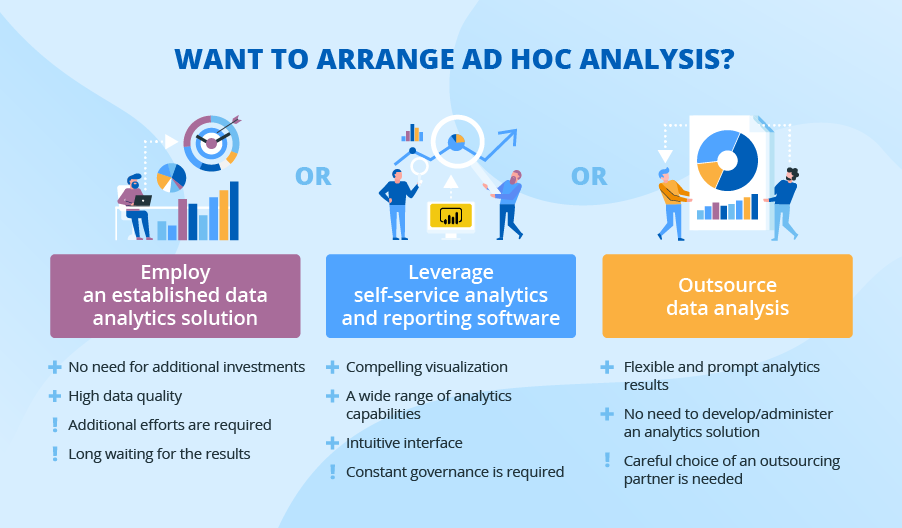
Building upon the concept of ad hoc queries, “ad hoc reporting” involves the creation of custom reports by end-users or analysts as needed, rather than relying on a fixed set of pre-designed reports.
- Definition and Benefits: Ad hoc reporting tools allow users to define their own parameters, select specific data fields, apply filters, and choose presentation formats to generate unique reports tailored to their immediate information requirements. The primary benefit is flexibility and speed. Business users can quickly get answers to specific questions without waiting for IT departments to develop new reports, fostering greater self-service and data-driven decision-making. This empowers departments to react swiftly to changing market conditions or internal operational needs.
- Role in Business Intelligence: Ad hoc reporting is a cornerstone of modern Business Intelligence (BI) platforms. It democratizes data access, enabling a broader range of employees to derive value from organizational data. By providing intuitive interfaces for data exploration and report generation, BI tools transform raw data into actionable insights, driving efficiency and strategic advantage.
Ad Hoc Testing
In software quality assurance, “ad hoc testing” is an informal, unstructured testing approach conducted without formal test cases, test plans, or documentation.
- Definition and Purpose: The goal of ad hoc testing is to find bugs and defects by randomly exploring the application’s functionality, often by attempting unusual or unexpected user flows. It’s typically performed after more formal testing phases or when a quick verification is needed for a specific fix or feature. While it lacks the systematic rigor of other testing methods, its strength lies in uncovering defects that might be missed by structured test cases, particularly in edge cases or complex interactions.
- Relationship to Exploratory Testing: Ad hoc testing shares similarities with exploratory testing, where testers actively design and execute tests on the fly based on their understanding of the system. However, exploratory testing often involves a more structured thought process and documentation of findings, whereas ad hoc testing is typically even more informal and spontaneous. It’s often performed by experienced testers who have a deep intuition for where bugs might lurk, or by developers for a quick sanity check.
Practical Applications and Broader Implications
The widespread adoption of ad hoc approaches across various technological domains underscores a fundamental shift towards agility, responsiveness, and user empowerment. Ad hoc solutions are not merely quick fixes; they are often critical enablers of innovation and efficient problem-solving in fast-evolving environments.
Ad hoc networks facilitate communication in disaster zones where traditional infrastructure has failed, proving indispensable for first responders. Ad hoc queries and reports empower business users to extract real-time insights from vast datasets, allowing for rapid, data-driven decisions that can be pivotal in competitive markets. Ad hoc testing, while informal, serves as an agile layer of quality assurance, catching elusive bugs that might escape more rigid testing protocols.
The underlying principle of “ad hoc” is about adapting to immediate needs rather than strictly adhering to pre-defined structures. This flexibility is increasingly vital in a world characterized by rapid technological change, unforeseen challenges, and a constant demand for immediate information. While structured, long-term planning remains essential for core systems, the ability to spin up ad hoc solutions allows organizations to remain nimble, experiment, and quickly iterate, fostering a culture of continuous improvement and innovation.
The Future of Ad Hoc Technologies
As technology continues to evolve at an unprecedented pace, the relevance and application of ad hoc principles are only set to grow. The proliferation of the Internet of Things (IoT) devices, the rise of edge computing, and the increasing sophistication of Artificial Intelligence (AI) will further drive the need for flexible, temporary, and self-organizing systems.
Imagine intelligent sensor networks that spontaneously form to monitor environmental conditions, adapting their topology based on real-time data and energy availability. Consider AI-driven analytical tools that automatically generate ad hoc queries and reports to highlight emerging patterns or anomalies, presenting them to users without explicit prompting. Or envision temporary, secure networks dynamically created between autonomous vehicles for critical, time-sensitive information exchange.
The future will likely see more sophisticated self-organizing algorithms, machine learning-enhanced ad hoc network protocols, and intuitive interfaces that allow even more users to leverage ad hoc data analysis with minimal technical expertise. The core strength of ad hoc — its ability to deliver specific solutions for specific needs, quickly and efficiently — will remain a cornerstone of technological progress, enabling systems and users to adapt, innovate, and thrive in an ever-changing digital landscape.
aViewFromTheCave is a participant in the Amazon Services LLC Associates Program, an affiliate advertising program designed to provide a means for sites to earn advertising fees by advertising and linking to Amazon.com. Amazon, the Amazon logo, AmazonSupply, and the AmazonSupply logo are trademarks of Amazon.com, Inc. or its affiliates. As an Amazon Associate we earn affiliate commissions from qualifying purchases.