
For anyone involved in the intricate world of Florida real estate—whether buying, selling, or simply insuring an older home—the term “4-point inspection” is more than just industry jargon; it’s a critical financial gatekeeper. In a state prone to unique environmental challenges and possessing a significant inventory of older properties, insurance companies demand a clear picture of a home’s fundamental systems before extending coverage. This isn’t merely about ticking boxes; it’s about assessing financial risk, protecting substantial investments, and understanding the long-term monetary implications of homeownership.
A 4-point inspection is a specialized home assessment focusing on four key areas: the roof, HVAC (heating, ventilation, and air conditioning), electrical, and plumbing systems. Unlike a comprehensive home inspection that scrutinizes every nook and cranny, the 4-point targets these core systems because they are historically the most common sources of major insurance claims. For Florida homeowners, understanding the nuances of this inspection is paramount to securing affordable insurance, managing property finances, and safeguarding one of their most significant assets. This article will delve into the financial imperatives behind the 4-point inspection, offering insights into its components, its impact on your wallet, and how it serves as a vital tool in prudent financial planning for property ownership in the Sunshine State.
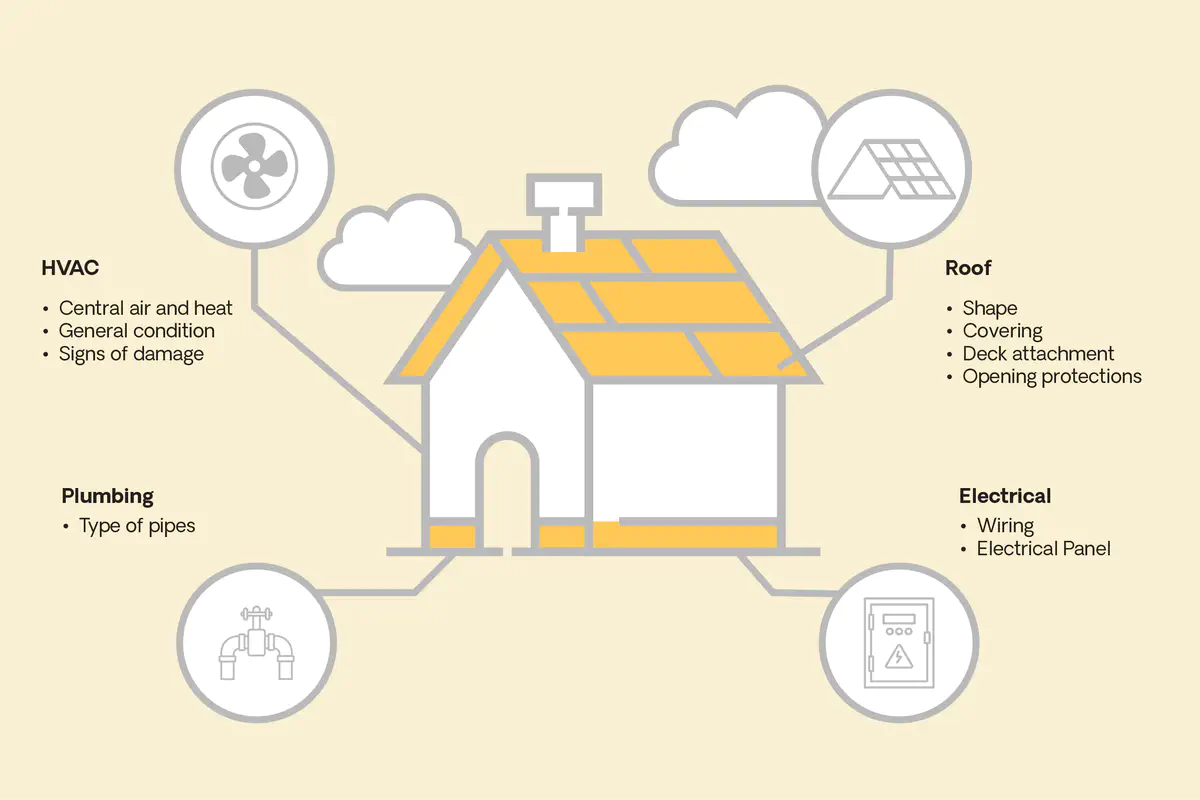
The Core Components of a 4-Point Inspection: Protecting Your Investment
At its heart, the 4-point inspection is a financial risk assessment tool, breaking down a home into its most critical operational and structural components. Each point represents a potential money pit if neglected or failing, making a thorough understanding of their condition vital for both insurers and homeowners.
Roof System: Your First Line of Defense
The roof is arguably the most critical component assessed during a 4-point inspection, primarily because roof damage claims are exceedingly common and costly in Florida, especially after hurricanes and severe weather events. Inspectors evaluate the roof’s age, material, overall condition, and any visible signs of damage, leaks, or wear.
From a financial perspective, a roof’s condition directly impacts insurability and premium costs. Insurers are particularly concerned about roofs nearing the end of their expected lifespan (typically 15-20 years for asphalt shingles in Florida’s climate) or those with existing damage. A roof deemed too old or in poor condition might lead to a denial of coverage, require expensive repairs or replacement before insurance is granted, or result in significantly higher premiums. Proactively understanding your roof’s state allows for budgeting for future replacement, potentially saving thousands in emergency repairs or increased insurance costs down the line. It’s an investment that protects the entire structure and its contents.
HVAC System: Comfort, Efficiency, and Cost Savings
The heating, ventilation, and air conditioning (HVAC) system ensures climate control and air quality within the home. For the 4-point inspection, the inspector assesses its age, operational status, and overall condition. While not as prone to catastrophic failure as a roof or plumbing leak, an outdated or malfunctioning HVAC system carries significant financial implications.
An inefficient HVAC system can lead to exorbitant energy bills, eating into a homeowner’s monthly budget. Furthermore, older units are more prone to breakdowns, necessitating expensive repairs or full replacement. Insurance companies want to ensure the system is not a fire hazard and is in reasonable working order, minimizing the risk of related claims. For homeowners, understanding the HVAC’s lifespan and efficiency is key to long-term financial planning, allowing them to budget for a more energy-efficient replacement that can yield substantial monthly savings on utility costs and increase the home’s market value.
Electrical System: Powering Your Home Safely and Financially
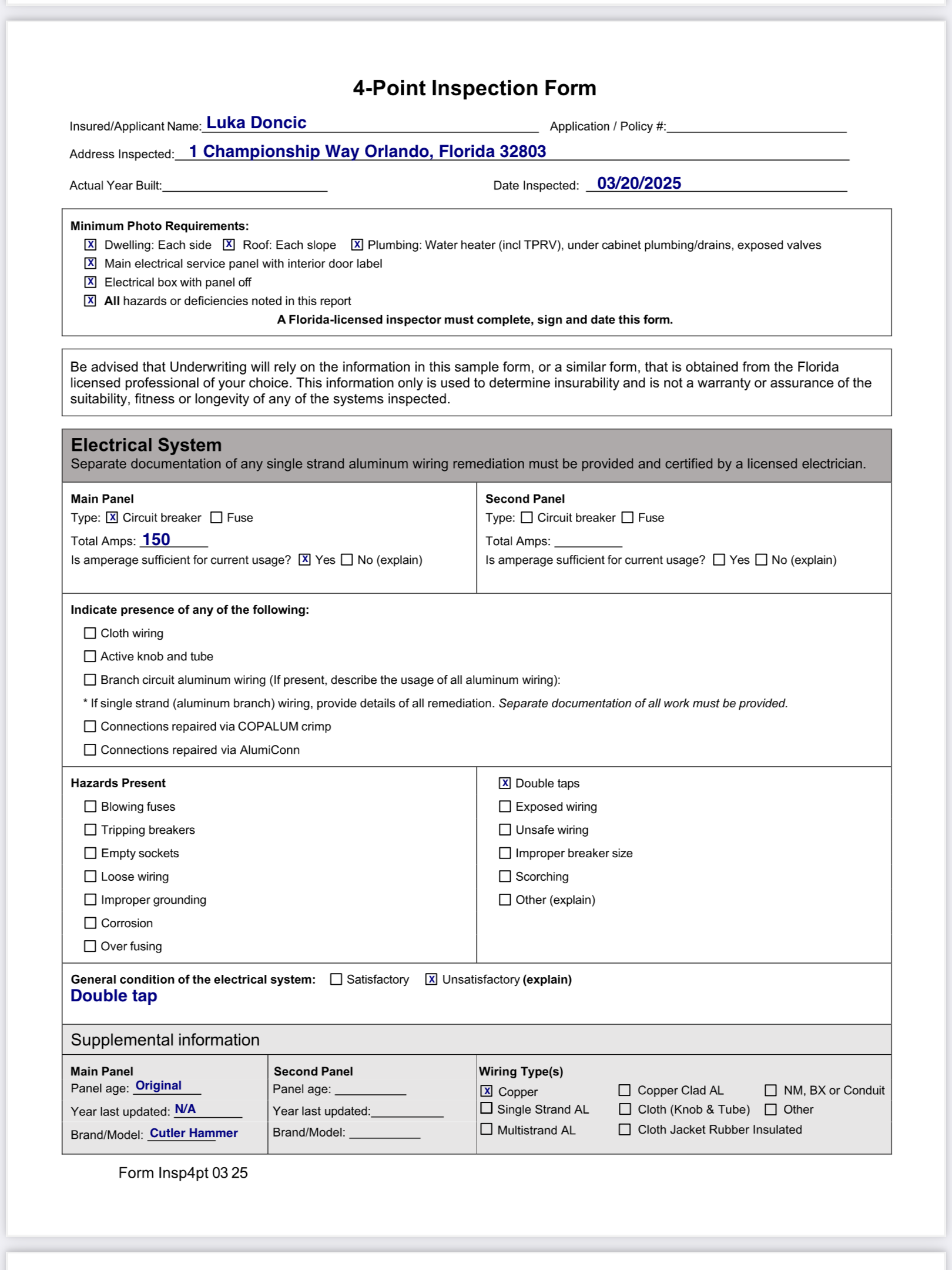
The electrical system is the lifeblood of any modern home, but outdated or faulty wiring can pose serious safety hazards, including fire and electrocution, leading to devastating financial losses. Inspectors examine the type of wiring (e.g., copper, aluminum, knob and tube), the electrical panel (e.g., circuit breakers vs. fuses, specific brands with known issues like Federal Pacific), and the condition of visible wiring, outlets, and switches.
Certain older electrical systems, such as aluminum wiring or knob and tube wiring, are red flags for insurers due to their higher risk of fire. Homes with these systems may face denial of coverage or require extensive, costly upgrades to meet current safety standards before insurance is approved. The financial burden of bringing an outdated electrical system up to code can be substantial, often ranging from several thousands to tens of thousands of dollars. A clean electrical report, therefore, not only ensures the safety of residents but also directly translates to lower insurance risk and greater peace of mind regarding a potentially catastrophic financial event.
Plumbing System: Preventing Water Damage and Financial Headaches
Water damage claims are among the most frequent and expensive for homeowners’ insurance. The plumbing system assessment focuses on the type of piping (e.g., copper, PEX, galvanized, polybutylene), the water heater’s age and condition, and visible leaks or signs of water damage.
Older piping materials like polybutylene or galvanized pipes are known to fail catastrophically, leading to massive water leaks that can cause extensive structural damage and mold growth. Insurance companies are wary of homes with these systems, often requiring replacement before offering coverage or limiting coverage for water damage. The cost of remediating water damage, including drying out the property, repairing damaged structures, and addressing mold, can quickly escalate into the tens of thousands of dollars. A thorough plumbing inspection is thus a crucial financial safeguard, helping homeowners avoid costly emergencies and ensuring their insurance policies remain viable and comprehensive.
Why a 4-Point Inspection is Non-Negotiable in Florida’s Insurance Market
The 4-point inspection is not merely a suggestion; it’s often a mandatory requirement for securing homeowner’s insurance in Florida, particularly for properties 10 years or older. This stringent requirement stems from unique financial and environmental factors prevalent in the state.
The Florida Insurance Landscape: High Risks, High Demands
Florida presents a challenging environment for property insurers. Its geographic location makes it highly susceptible to hurricanes, tropical storms, and coastal flooding. The state also has a large inventory of older homes, many of which were built to less stringent codes than today’s standards, making them more vulnerable to damage. These factors contribute to a high volume and severity of insurance claims, pushing many insurers to either withdraw from the market or impose strict underwriting criteria.
In this high-risk landscape, insurance companies use the 4-point inspection as a vital due diligence tool. It allows them to accurately assess the current condition of the home’s most claim-prone systems, thereby quantifying their financial exposure. Without this detailed snapshot, insurers are reluctant to take on unknown risks, which translates directly into difficulty for homeowners seeking coverage or facing exorbitant premiums.
Insurability and Premiums: Direct Financial Impact
The findings of a 4-point inspection directly influence an insurer’s decision to offer coverage and, crucially, the cost of that coverage. A report identifying significant deficiencies in any of the four points can result in:
- Denial of Coverage: Insurers may outright refuse to issue a policy until specific repairs or replacements are completed. This leaves homeowners in a precarious financial position, potentially unable to close on a home or facing a lapse in existing coverage.
- Increased Premiums: Even if coverage is offered, an older system or minor issues noted in the report can lead to higher annual premiums, reflecting the perceived elevated risk. Over the life of a mortgage, these incremental costs can amount to thousands of dollars.
- Conditional Coverage: An insurer might offer a policy but with specific exclusions (e.g., no coverage for water damage if the plumbing is deemed inadequate) or stipulations for future repairs. This shifts financial risk back to the homeowner.
Conversely, a clean 4-point inspection report can be a powerful financial asset. It signals to insurers that the home is well-maintained and poses a lower risk, potentially qualifying the homeowner for more competitive rates and a wider selection of insurance providers. This directly translates to significant savings and financial stability.
Pre-Purchase Due Diligence: A Smart Financial Move
For prospective homebuyers, the 4-point inspection is an indispensable part of their financial due diligence. While a full home inspection provides a comprehensive overview, the 4-point report offers a clear, insurer-focused assessment of critical systems.
Receiving an unfavorable 4-point report before purchase gives buyers significant leverage. They can use the findings to:
- Negotiate Repairs: Request that the seller complete necessary repairs or replacements (e.g., a new roof, electrical panel upgrade) as a condition of sale, shifting the financial burden away from the buyer.
- Adjust Purchase Price: Negotiate a lower purchase price to account for the estimated cost of future repairs, ensuring the buyer isn’t overpaying for a property that will immediately require substantial investment.
- Avoid Costly Mistakes: In extreme cases, a report might reveal issues so severe and expensive to remedy that a buyer decides to walk away from the deal, saving them from a potentially catastrophic financial burden.
This pre-emptive financial insight is critical, preventing buyers from inheriting costly problems and ensuring they enter homeownership with a realistic understanding of their future financial commitments.
The Financial Imperatives: Cost, Value, and Long-Term Planning
While the thought of another inspection might seem like an added expense, viewing a 4-point inspection solely as a cost overlooks its profound financial value as a preventative measure and a strategic planning tool.
Cost of the Inspection vs. Potential Savings
A 4-point inspection typically costs between $50 to $150, often less if bundled with a full home inspection. This relatively minor expense pales in comparison to the potential financial setbacks it can help avoid. Consider these scenarios:
- Avoiding a $10,000 Roof Replacement: A timely inspection identifies a failing roof before purchase, allowing the buyer to negotiate a repair with the seller, saving them the full cost.
- Preventing a $20,000 Water Damage Claim: An inspection highlights old polybutylene pipes, prompting replacement before a catastrophic leak occurs, averting massive repair bills and potential insurance rate hikes.
- Securing a $500/Year Insurance Discount: A clean report allows access to lower insurance premiums, saving thousands over the life of a 30-year mortgage.
The cost of the inspection is an investment in financial foresight, a small upfront payment that can protect against monumental future expenses and ensure access to affordable insurance.
Understanding Your Home’s Financial Lifespan
Beyond identifying immediate problems, the 4-point inspection provides crucial data for long-term financial planning. By reporting the age and condition of major systems, it offers a snapshot of their remaining useful life. For example, knowing your HVAC system is 15 years old and nearing the end of its typical 20-year lifespan allows you to:

- Budget for Future Replacements: Allocate funds in a home maintenance savings account specifically for a new HVAC unit, rather than being hit with an unexpected $5,000-$10,000 expense.
- Plan for Energy Efficiency Upgrades: Research and save for more efficient models that will lower utility bills and potentially qualify for tax credits, further enhancing financial returns.
This foresight transforms reactive, emergency spending into proactive, budgeted investments, smoothing out the financial peaks and valleys of homeownership.
Increasing Property Value and Marketability
A well-maintained home with robust, up-to-code systems is inherently more valuable and marketable. When it comes time to sell, a recent, favorable 4-point inspection report can be a powerful asset:
- Enhanced Buyer Confidence: Buyers are often wary of older homes due to potential hidden costs. A positive 4-point report provides tangible proof that the critical systems are in good order, reducing buyer apprehension and perceived risk.
- Faster Sales Cycle: Homes with documented good condition tend to sell faster, reducing the carrying costs (mortgage, taxes, insurance) for the seller during the listing period.
- Stronger Negotiating Position: A seller armed with a clean inspection report is in a stronger position to resist lowball offers and command a fair market price, protecting their equity.
Ultimately, investing in the maintenance and regular assessment of your home’s core systems, as highlighted by a 4-point inspection, is an investment in its sustained financial value and market appeal.
What Happens After the Inspection? Strategic Financial Decisions
Receiving your 4-point inspection report is not the end of the process; it’s the beginning of a crucial phase of strategic financial decision-making for your property.
Interpreting the Report: Actionable Insights for Your Wallet
The inspection report will detail the findings for each of the four systems, often including photos and recommendations. It’s essential to understand:
- Critical Deficiencies: These are issues that will likely prevent you from securing insurance or pose immediate safety and financial risks (e.g., active roof leaks, outdated electrical panels). These demand immediate attention and budgeting.
- Minor Issues/Recommendations: These might not prevent insurance but suggest areas for future monitoring or preventative maintenance (e.g., an older but still functional water heater). These inform long-term savings plans.
- Remaining Life Expectancy: For roofs, HVAC, and water heaters, the estimated remaining life helps you project future replacement costs and timelines.
Analyzing the report with a financial lens allows you to categorize expenses and prioritize spending, ensuring you address the most financially impactful issues first.
Navigating Repairs and Upgrades: Prioritizing Your Spend
Based on the report’s findings, you’ll need to decide which repairs or upgrades to undertake. This often involves a financial prioritization:
- Insurance-Mandated Repairs: These are non-negotiable if you want to secure or maintain coverage. Budgeting for these immediately is crucial.
- Safety-Related Repairs: Issues like faulty wiring or structural roof damage must be addressed promptly to prevent injury and catastrophic financial loss.
- Efficiency Upgrades: Replacing an old HVAC unit or water heater can lead to long-term utility savings, making them wise investments when budget allows.
Consider obtaining multiple quotes from licensed contractors to ensure competitive pricing. For significant repairs, explore financing options such as home equity loans, HELOCs, or specialized repair loans, always weighing interest rates and repayment terms against your overall financial strategy.
Shopping for Insurance: Leveraging Your Report
Once any necessary repairs are completed, or even with a clean initial report, you can use the 4-point inspection strategically when shopping for homeowner’s insurance.
- Provide the Report Proactively: Presenting a favorable report to multiple insurance carriers can demonstrate your home’s lower risk profile, potentially leading to more competitive quotes.
- Negotiate Terms: If the report highlights minor issues, discuss with the insurer how addressing them might reduce your premium further or remove specific exclusions.
- Revisit Coverage Annually: Even after securing a policy, use any improvements or updates to your home’s systems (e.g., a new roof) to request a re-evaluation of your premiums. Many insurers offer credits for newer, more resilient systems.
The 4-point inspection becomes a dynamic financial tool, helping you not only secure but also continually optimize your insurance costs, protecting your budget against rising premiums.
Beyond the Basics: Advanced Financial Planning Through Inspection Insights
The value of a 4-point inspection extends far beyond initial insurance acquisition, offering deeper insights for advanced financial planning in homeownership and real estate investment.
Proactive Maintenance Schedules: Saving Money in the Long Run
A detailed inspection report empowers homeowners to transition from reactive repairs to proactive maintenance. By understanding the condition and age of critical systems, you can create a preventative maintenance schedule:
- Regular HVAC Servicing: Extends system life, maintains efficiency, and prevents costly breakdowns.
- Roof Maintenance: Regular cleaning and minor repairs (e.g., sealing small cracks) can significantly delay the need for a full replacement.
- Plumbing Checks: Addressing small leaks promptly prevents major water damage and mold growth.
This proactive approach minimizes emergency expenditures, preserves the longevity of expensive systems, and maintains your property’s value, all contributing to long-term financial health.
Impact on Property Investment and Resale Value
For those viewing their Florida home as an investment, the 4-point inspection is indispensable. It’s a critical component of due diligence for property investors looking to buy, renovate, and sell, or to manage rental properties.
- Accurate Renovation Budgeting: The report helps investors identify immediate capital expenditure requirements, allowing for more precise renovation budgets and ROI calculations.
- Risk Mitigation for Rental Properties: Ensuring core systems are sound minimizes tenant complaints, reduces emergency repair calls, and protects cash flow, crucial for rental property profitability.
- Enhanced Resale Value: A well-maintained property, supported by a favorable inspection history, commands a higher resale value and attracts more serious buyers, ensuring a stronger return on investment.
Budgeting for Homeownership: A Comprehensive Financial View
Ultimately, the insights gained from a 4-point inspection integrate into a more comprehensive financial view of homeownership. Beyond mortgage payments and property taxes, homeowners must budget for:
- Home Insurance: Directly influenced by the inspection.
- Utilities: Impacted by HVAC and electrical efficiency.
- Maintenance & Repairs: Anticipated based on the age and condition of systems.
- Capital Expenditures: Planned replacements for roofs, HVAC, water heaters, and electrical panels.
By factoring in these variables, guided by the specifics of your 4-point report, you can create a more realistic and resilient personal financial plan for your home, protecting against unforeseen costs and ensuring long-term financial stability.
Conclusion
In the unique and often demanding real estate landscape of Florida, a 4-point inspection transcends a mere bureaucratic requirement; it emerges as an indispensable financial tool for anyone involved in property ownership. From securing vital home insurance and mitigating the risks of costly damage to informing long-term maintenance budgets and enhancing property value, its financial implications are profound and far-reaching.
By meticulously evaluating the roof, HVAC, electrical, and plumbing systems, this specialized assessment provides a clear, insurer-focused snapshot of a home’s financial liabilities and assets. For homeowners, understanding its components allows for proactive risk management, informed financial decision-making, and the strategic allocation of resources to protect their most significant investment. In an environment where insurance challenges are rife and property maintenance can be a substantial financial burden, the 4-point inspection stands as a cornerstone of prudent financial planning, safeguarding both your physical property and your economic peace of mind in the Sunshine State.
aViewFromTheCave is a participant in the Amazon Services LLC Associates Program, an affiliate advertising program designed to provide a means for sites to earn advertising fees by advertising and linking to Amazon.com. Amazon, the Amazon logo, AmazonSupply, and the AmazonSupply logo are trademarks of Amazon.com, Inc. or its affiliates. As an Amazon Associate we earn affiliate commissions from qualifying purchases.