
In the world of finance, precision is paramount. While many financial calculations are performed using decimals or percentages, understanding the underlying principles of fractions remains a cornerstone of robust financial literacy. The seemingly simple mathematical query, “what is 3/8 of 1/2,” serves as a potent microcosm for countless financial scenarios, from intricate investment portfolio allocations to everyday personal budgeting. Grasping this fundamental calculation not only provides the direct numerical answer but also cultivates a crucial proportional reasoning that is indispensable for navigating complex financial landscapes. It’s about more than just numbers; it’s about understanding how portions relate to wholes and how these relationships impact your financial health and strategic decisions.
Deconstructing the Fundamental Calculation
The phrase “of” in mathematics inherently implies multiplication. Therefore, “3/8 of 1/2” translates directly to the multiplication of two fractions: (3/8) × (1/2). This operation is a foundational concept, yet its implications ripple through various financial applications.
The Mechanics of Multiplying Fractions
To multiply fractions, one simply multiplies the numerators (the top numbers) together and the denominators (the bottom numbers) together.
-
Multiply the numerators: 3 × 1 = 3
-
Multiply the denominators: 8 × 2 = 16
Thus, (3/8) × (1/2) = 3/16.
This resulting fraction, 3/16, represents the combined proportion. In a financial context, it signifies a smaller portion derived from an initial portion. For instance, if you consider a whole (like an entire pie, a total investment, or your full income), taking 1/2 of it means you have half. Then, taking 3/8 of that half means you are dealing with 3/16 of the original whole.
Converting to Decimals and Percentages for Clarity
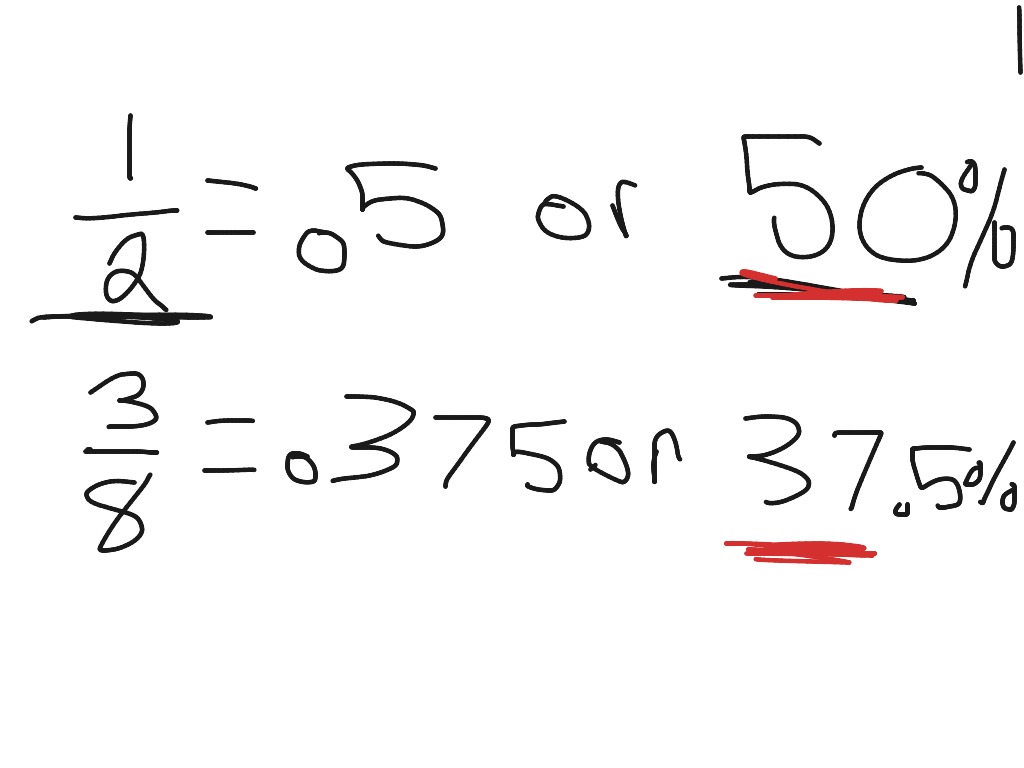
While 3/16 is mathematically correct, financial professionals often prefer to work with decimals or percentages for easier comparison and interpretation. To convert a fraction to a decimal, divide the numerator by the denominator:
3 ÷ 16 = 0.1875.
To express this as a percentage, multiply the decimal by 100:
0.1875 × 100% = 18.75%.
Therefore, 3/8 of 1/2 is equivalent to 0.1875 or 18.75% of the original whole. This conversion is vital because percentages offer a universally understood metric for rates of return, discounts, interest rates, and proportional allocations, making financial discussions clearer and more actionable.
Fractional Thinking in Personal Finance and Budgeting
The ability to calculate and understand fractional relationships extends far beyond academic exercises; it is a vital skill for effective personal financial management, aiding in everything from budget construction to debt reduction strategies.
Allocating Income and Expenses
Consider a common budgeting scenario. Suppose you’ve decided that 1/2 of your net monthly income should be allocated to core living expenses, following a basic budgeting rule like the 50/30/20 rule (50% for needs, 30% for wants, 20% for savings/debt). Within that 1/2 allocated to needs, let’s say 3/8 is specifically earmarked for rent.
Using our calculation: 3/8 of 1/2 = 3/16.
This means that 3/16 of your total net monthly income is designated for rent. If your net income is $4,000, then 3/16 of $4,000 is (3/16) * $4,000 = $750.
Understanding this layered fractional allocation allows for precise financial planning. It helps individuals visualize exactly what proportion of their hard-earned money is going to each category, highlighting areas where adjustments might be necessary to achieve savings goals or reduce discretionary spending.
Managing Debt and Repayments
Fractions are also implicit in debt management. For instance, if 1/2 of your total outstanding debt is comprised of high-interest credit card balances, and you decide that 3/8 of that high-interest portion is the immediate target for aggressive repayment, you are effectively prioritizing 3/16 of your total debt for accelerated payoff. This granular understanding allows for the strategic allocation of extra payments, optimizing the reduction of interest costs and accelerating the path to financial freedom. Similarly, understanding interest rates as a fraction of the principal (e.g., 5% is 5/100) on loans underpins all repayment calculations.
Strategic Investment and Portfolio Management
In the realm of investments, where diversification and asset allocation are key to managing risk and maximizing returns, fractional understanding is not merely helpful—it is critical. Investors constantly deal with proportions of their capital dedicated to various asset classes.
Diversification and Asset Allocation
Imagine an investment strategy where 1/2 of your entire portfolio is allocated to equities (stocks), and within that equity portion, you decide that 3/8 should be specifically invested in emerging market stocks. The calculation “3/8 of 1/2” reveals that 3/16 of your total investment portfolio is dedicated to emerging market equities.
This level of fractional precision is vital for:
-
Risk Management: Ensuring no single asset class or region is over-represented beyond your risk tolerance.
-
Targeting Returns: Aligning specific sub-allocations with particular growth or income objectives.
-
Rebalancing: Knowing the exact fractional target for each component of your portfolio makes periodic rebalancing efficient and objective.
Without this understanding, investors might inadvertently create an imbalanced portfolio, exposing themselves to undue risk or missing out on potential returns by misjudging their exposure.
Understanding Returns and Distributions
Consider a private equity fund or a partnership where profit distributions are based on fractional ownership or agreed-upon splits. If a fund promises to distribute 1/2 of its annual profits to its limited partners, and your specific stake as a limited partner entitles you to 3/8 of that distributed profit pool, then your share is 3/16 of the fund’s total annual profit. This calculation directly translates to your financial return from the venture, emphasizing how fractional relationships determine actual monetary outcomes. For dividend-paying stocks or mutual funds, understanding how much of the company’s earnings (a fraction of the total) is distributed per share (a fraction of total shares) is fundamental to calculating your income stream.
Business Finance and Operational Insights
For businesses, fractions underpin numerous operational and financial decisions, from structuring partnerships to analyzing profit margins and applying discounts.
Profit Sharing and Equity Stakes
In business partnerships or startup equity structures, the precise definition of ownership and profit distribution is often articulated in fractions. If a company allocates 1/2 of its profits to its general partners, and a specific general partner is entitled to 3/8 of that general partner pool, then that individual receives 3/16 of the company’s total profits. This understanding directly impacts compensation, voting rights, and overall control. Misinterpreting these fractional shares can lead to significant disputes or an inaccurate perception of one’s stake in the business’s success. Similarly, when venture capitalists or angel investors take a fractional ownership (equity) stake in a company, understanding how that fractional stake combines with other investors’ stakes, and what portion of potential future profits it represents, is paramount for both founders and investors.
Discount Structures and Margin Analysis
Businesses frequently employ multi-tiered discount strategies. Imagine a wholesaler offering a 1/2 discount on bulk orders, with an additional promotional discount of 3/8 applied to the already reduced price for early payments. To calculate the total effective discount, the “3/8 of 1/2” calculation becomes relevant. The combined discount is not additive; it’s multiplicative. The product’s price is first reduced by 1/2 (to 1/2 of the original price), then that new price is further reduced by 3/8 (meaning you pay 5/8 of the discounted price).
So, if the original price is P, after the first discount it’s (1/2)P. After the second discount, it’s (5/8) * (1/2)P = (5/16)P.
This means you are paying 5/16 of the original price, effectively receiving a discount of 1 – 5/16 = 11/16, or 68.75%.
Accurate calculation of these stacked discounts is critical for businesses to set competitive pricing, maintain healthy profit margins, and avoid unintentional losses. For consumers, it helps in identifying true savings.
The Broader Implications for Financial Literacy
The exercise of understanding “3/8 of 1/2” transcends mere arithmetic; it cultivates a deeper appreciation for proportional reasoning, a cornerstone of comprehensive financial literacy.
Beyond Simple Arithmetic: The Power of Proportional Reasoning
Financial decisions are rarely binary; they involve trade-offs and understanding how different parts contribute to or detract from a whole. Proportional reasoning, honed by working with fractions, empowers individuals to:
-
Analyze Financial News: Deciphering reports on market share, economic growth rates, or budget deficits often requires understanding how one fraction relates to another.
-
Evaluate Investment Opportunities: Comparing the percentage ownership offered versus the capital required, or understanding the fractional distribution of profits in a venture.
-
Make Informed Policy Decisions: Understanding the proportion of taxes allocated to different public services or the fractional impact of economic policies on various sectors.
This ability to think in terms of proportions allows for a more nuanced and insightful interpretation of financial data, moving beyond surface-level numbers to grasp underlying relationships and trends.

Avoiding Costly Misinterpretations
A common pitfall in finance is misinterpreting compound effects or sequential proportional changes. For example, assuming a 1/2 discount followed by a 3/8 discount results in a 7/8 total discount (1/2 + 3/8) is a fundamental error that can lead to significant financial miscalculations for both businesses and consumers. The correct understanding that it’s 3/8 of the remaining 1/2 prevents such errors, demonstrating the substantial difference between additive and multiplicative proportional impacts. Such misinterpretations can result in underestimated costs, overstated profits, or misjudged financial obligations, leading to substantial monetary losses or missed opportunities. In finance, where every basis point can matter, precision in fractional understanding is a non-negotiable asset.
aViewFromTheCave is a participant in the Amazon Services LLC Associates Program, an affiliate advertising program designed to provide a means for sites to earn advertising fees by advertising and linking to Amazon.com. Amazon, the Amazon logo, AmazonSupply, and the AmazonSupply logo are trademarks of Amazon.com, Inc. or its affiliates. As an Amazon Associate we earn affiliate commissions from qualifying purchases.